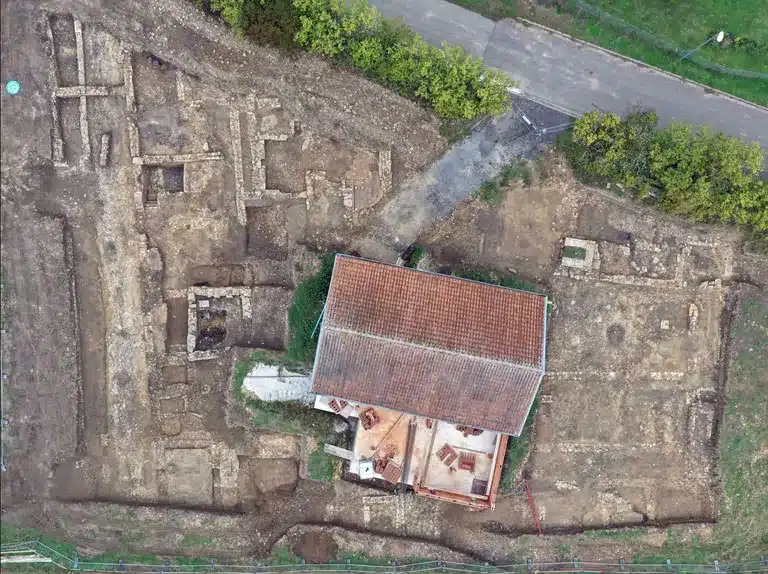
Францын Сенон тосгонд хийсэн малтлагаар эртний Ромын үеийн орон сууцны шалан дор нуусан, олон арван мянган зоос агуулсан ваарнууд олдсон нь тухайн үеийн эдийн засгийн сонирхолтой баримт болж байна.
Францын Урьдчилан сэргийлэх археологийн судалгааны үндэсний хүрээлэнгийн (INRAP) судлаачид эртний Ромын суурингийн орон сууцны хэсгээс гурван ширхэг амфора буюу ваар олжээ. Эдгээр ваарыг шалан дор тусгайлан ухсан нүхэнд байрлуулсан бөгөөд амсрыг нь шалны түвшинтэй ижилсүүлэн хийсэн нь тэдгээрийг байнга ашиглах зорилготой байсныг илтгэж байна. Судалгааны багийн дурдсанаар, эхний ваар нь 38 кг орчим буюу 23,000–24,000 ширхэг, хоёр дахь нь 50 кг буюу 18,000–19,000 ширхэг зоос агуулж байжээ.
Нумизмат Винсент Женевьегийн тайлбарласнаар, вааруудын ирмэг дээр наалдсан зоосны ул мөр нь хүмүүс тэдгээрийг газарт булсны дараа ч үе шаттайгаар нэмж хадгалдаг байсныг харуулж байна. Энэхүү олдвор нь аюул заналхийллээс үүдэлтэй түр зуурын нууц хадгаламж гэхээс илүүтэйгээр, урт хугацааны туршид хөрөнгө хуримтлуулах зорилгоор ашиглаж байсан санхүүгийн тогтолцоо байх магадлалтай гэж судлаачид үзэж байна.
Зооснуудыг МЭ 280–310 оны хооронд хадгалсан байх өндөр магадлалтай бөгөөд тэдгээрийн дунд Галлийн эзэнт гүрний удирдагчид болох Викторинус, Тетрикус I, Тетрикус II нарын хөрөг бүхий мөнгөн тэмдэгтүүд багтжээ. Тухайн үеийн улс төрийн тогтворгүй байдал болон Галлийн эзэнт гүрэн Ромын захиргаанд эргэн орсон түүхэн үйл явцтай холбоотой эдгээр зоос нь тухайн бүс нутагт эргэлтэд байсан мөнгөн тэмдэгтийн төрлийг тодорхойлоход чухал ач холбогдолтой юм.
Судалгааны явцад гурван ваарны нэгийг эрт дээр үед хэдийн авч явсан болохыг тогтоосон бөгөөд тухайн нүхнээс ердөө гурван зоос л олдсон байна. Тус суурин нь хожим хүчтэй гал түймэрт өртөж сүйрсэн боловч уг олдвор нь Ромын үеийн иргэдийн амьдралын хэв маяг болон гэр орондоо хөрөнгөө хэрхэн хамгаалдаг байсныг 1800 жилийн дараа бидэнд нээж өгч байна.
Дэлгэрэнгүйг эх сурвалжаас харах
↓Эх сурвалжийг нээх ↓
Archaeologists have uncovered three jars packed with thousands of Roman coins in the small French village of Senon. Buried beneath the floor of an ancient home nearly 1,800 years ago, the containers may have held more than 40,000 coins.
The discovery was made during an excavation carried out by the National Institute for Preventive Archaeological Research (INRAP) in northeastern France. The jars, known as amphorae, were carefully placed inside pits dug into the floor of a Roman-era residence. While coin hoards are often linked to moments of danger or conflict, the way these jars were installed suggests they may have been used as a kind of ancient savings system.
According to Vincent Geneviève, a numismatist with INRAP studying the coins, the first jar contained around 38 kilograms of coins, equal to roughly 23,000 to 24,000 pieces. The second jar weighed about 50 kilograms and likely held between 18,000 and 19,000 coins, based on the coins recovered from its broken opening.
A Hidden Coin Collection Built Into An Ancient Home
The three jars were discovered inside a residential area of the settlement, not in a separate hiding place. Archaeologists found that the amphorae had been placed in specially built pits inside a room, with their openings level with the floor.
This unusual setup indicates that the jars were meant to remain accessible. Instead of being buried and forgotten immediately, they could have been opened and used over time.
Some clues support this idea. According to INRAP, a few coins were found stuck to the edges of two jars, showing that people added more coins after the containers had already been placed in the ground but before the pits were completely covered.
The house where the jars were found was part of a larger settlement with stone buildings, basements, workshops with stoves, and underfloor heating systems. A Roman fortification was also located nearby.
Roman Coins Tell A Lost Story
The coins were likely buried between A.D. 280 and 310, a period that came shortly after the end of the Gallic Empire. This breakaway state controlled Gaul and nearby territories between A.D. 260 and 274 before being brought back under Roman rule by Emperor Aurelian.
Among the coins are pieces showing the portraits of Victorinus, Tetricus I, and Tetricus II, three rulers connected with the Gallic Empire. These coins help researchers understand what types of money were circulating in the region during a period of political change.

As explained by a statement, the discovery does not necessarily represent a treasure hidden because of an immediate threat. The position of the jars inside the house and the evidence of later coin deposits point instead toward a more ordinary use, and it was for storing wealth over a long period.
Around 30 other Roman coin hoards are already known in the area, but few provide such detailed information about where and how the money was kept.
A Roman Fortune Hidden for 1,800 Years
The ancient settlement did not last forever. A large fire destroyed the area at the beginning of the fourth century, although the site was rebuilt before another fire eventually led to its abandonment.
One of the three jars had already been taken away in ancient times. Only three coins remained in the pit where it once stood, leaving behind a small trace of what had been stored there.

The other two containers stayed hidden until modern excavations brought them back to light. After almost two thousand years underground, the coins now reveal a simple but fascinating part of Roman life: how people protected their money inside their own homes.
Enjoyed this article? Subscribe to our free newsletter for engaging stories, exclusive content, and the latest news.

