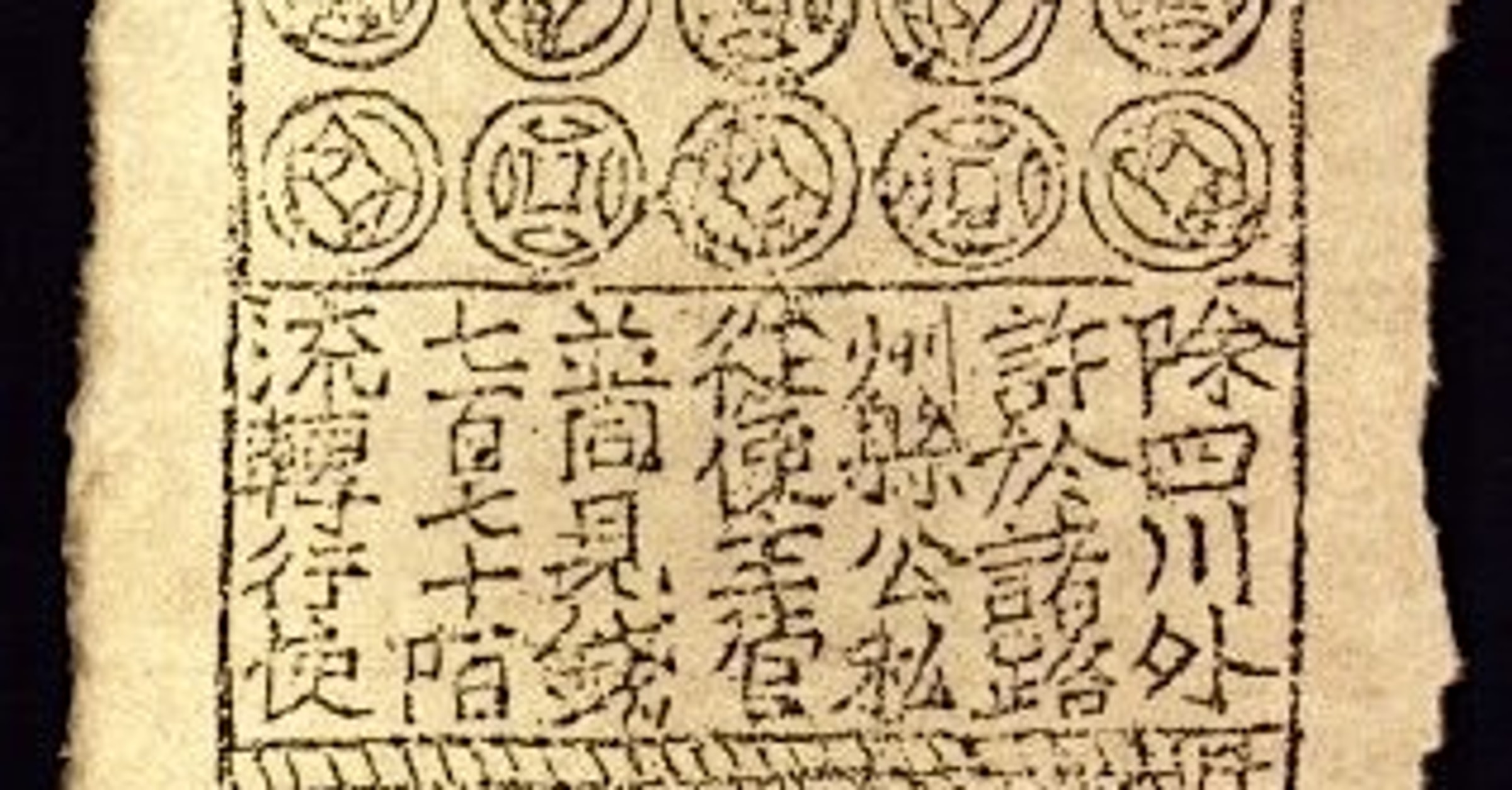
Хятадад анх зохион бүтээгдсэн цаасан мөнгө нь Сүн улсын үед худалдаа арилжааны өргөн хүрээтэй хэрэгсэл болон хувирч, улмаар дэлхийн эдийн засгийн түүхэнд шинэ хуудас нээсэн юм.
Цаасан мөнгөний эхлэл ба бүрэлдэхүүн хэсгүүд
Цаасан мөнгийг олноор үйлдвэрлэхийн тулд цаас, хэвлэх төхөөрөмж, мөн бүх нийтээр хүлээн зөвшөөрөгдсөн үнэ цэнийн ойлголт гэсэн гурван үндсэн хүчин зүйл шаардлагатай байв. Хятадад цаасыг МЭ II зууны үед анх бүтээсэн гэж үздэг ч үүнээс өмнө ч ашиглаж байсан гэх баримтууд бий. Цаас үйлдвэрлэгчид өвс, ургамлын иш, олсны ургамал, модны холтос, хуучин даавууны өөдөс зэргийг туршилтаар хольж, хамгийн хямд бөгөөд чанартай цаас гаргаж авахаар хичээдэг байв. VIII зуунаас эхлэн хулсны ширхэгийг гол түүхий эд болгон ашиглах болсон бол Сүн улсын үед ялам модны холтосыг буцалгаж гаргаж авсан цаас хамгийн өргөн тархжээ.
Хятадын цаас маш өндөр чанартай байсан тул Торгоны замаар дамжин гадны улс орнуудад худалдаалагддаг байв. Тан улсын үед (618-907) цаасыг татвар, албан татвар төлөхөд ашиглаж байсан бөгөөд хэрэглээнээс нь хамааран өнгөөр ялгадаг байжээ. Тухайлбал, цагаан цаасыг хууль эрх зүйн баримт бичигт, шар өнгийг төрийн хэрэгт, харин цэнхэр өнгийг таоист сүм хийдтэй харилцахад зориулдаг байв.
Түүнчлэн XI-XII зуунд барын хэв буюу хөдөлгөөнт үсгэн хэвлэх технологи нэвтэрсэн нь илүү зузаан цаас шаардах болсон юм. Эдийн засаг хөгжихийн хэрээр алт, мөнгө, торго зэргийг үнэ цэнэтэй гэж хүлээн зөвшөөрөх болсон ч эдгээр нь өдөр тутмын жижиг худалдаанд тохиромжгүй байлаа. МЭӨ VII зуунд гарч ирсэн Хятадын зоос нь эхэндээ багаж хэрэгсэл, хутганы хэлбэртэй байсан бөгөөд хожим голдоо дөрвөлжин нүхтэй хэлбэрт шилжжээ. Гэвч Тан улсын үед зоосны эрэлт хэрэгцээ огцом нэмэгдсэнээр зэсийн хомсдол үүсэж, зоосыг хүнд жинтэй, тээвэрлэхэд төвөгтэй болгосон нь цаасан мөнгө үүсэх хөрс суурийг бүрдүүлсэн байна.
Цаасан мөнгө зоосны байрыг эзлэх нь
Зоосны оронд цаасан мөнгө хэрэглэх нь тэмээ гэх мэт ачааны амьтнаар бараа тээвэрлэдэг худалдаачдад жингийн хувьд маш том давуу тал олгож байв. Мөн хулгайчдаас нуухад хялбар байсан нь үүнийг улам нэр хүндтэй болгожээ. Анхны цаасан мөнгийг Тан улсын үед цайны худалдаачид “нисдэг мөнгө” (flying money) хэмээн нэрлэж ашиглаж эхэлсэн байна. Энэ нь нэг газарт мөнгөө хадгалуулж, өөр газрын төрийн сангаас ижил үнэ бүхий бичиг баримтаар мөнгөө авах боломж олгодог байсан нь өнөөгийн банкны тэмдэглэгээтэй ижил зарчим юм.
Сүн улсын үед худалдаа, эдийн засаг урьд өмнө байгаагүйгээр тэлж, худалдааны компаниуд, гильдүүд, бөөний худалдаачид бий болжээ. Ялангуяа Сычуань мужид төмөр зоос маш хүнд байсан тул иргэд мөнгөө төрийн сан хөмрөгт хадгалуулж, оронд нь “жаози” (jiaozi) хэмээх зээлийн гэрчилгээ авдаг байв. 1120 онд Хятадын засгийн газар энэхүү гэрчилгээг өөрийн хяналтад авч, монополь эрх тогтоосноор дэлхийн анхны цаасан мөнгө албан ёсоор мэндэлжээ. 1260 он гэхэд эдгээр цаасан тэмдэглэгээ нь алт, мөнгөөр хэдийд ч солигдож болох, улс даяар гүйлгээнд орох жинхэнэ банкны тэмдэглэгээ болсон байв.
Марко Пологийн тэмдэглэл ба Юань улс
Монголчууд Хятадыг эзэлж, Юань улсыг (1271-1368) байгуулсны дараа ч цаасан мөнгөний хэрэглээ үргэлжилсээр байв. Венецийн аялагч Марко Поло өөрийн тэмдэглэлдээ Их Хааны зоосны үйлдвэрийн үйл ажиллагааг тун сонирхолтойгоор тайлбарлажээ. Тэрээр ялам модны дотоод холтосыг нухаж, цаас болгон боловсруулж, түүн дээрээ албан ёсны тамга дарж баталгаажуулдаг байсан тухай бичсэн байна. Энэхүү мөнгөн тэмдэглэгээг хуурамчаар үйлдэх нь цаазаар авах ялтай хүнд гэмт хэрэгт тооцогддог байжээ. Цаасан мөнгө нь алт, мөнгөтэй ижил үнэ цэнэтэй байсан бөгөөд хуучирсан мөнгийг ердөө гурван хувийн хураамжтайгаар шинээр сольж өгдөг байсан нь тухайн үеийн эдийн засгийн систем хэрхэн боловсронгуй байсныг харуулдаг.
Инфляц ба хямрал
Гэсэн хэдий ч цаасан мөнгөнд бэрхшээл тулгарч байлаа. Хуурамч мөнгө үйлдвэрлэх оролдлого гардаг байсан төдийгүй, хамгийн том цохилт нь инфляц байв. Юань улсын удирдагчид Шар мөрөн дагуух усжуулалт, далангийн бүтээн байгуулалт зэрэг өндөр өртөгтэй төслүүдийг санхүүжүүлэхийн тулд мөнгийг хэт их хэмжээгээр хэвлэсэн нь мөнгөний ханшийг унагажээ. Ингэснээр худалдаачдын цаасан мөнгөнд итгэх итгэл алдарч, мөнгө үнэ цэнээ алдсан байна. Мин улсын үед (1368-1644) цаасан мөнгийг дахин нэвтрүүлэхийг оролдсон боловч амжилт олоогүй бөгөөд Хятадад найдвартай цаасан мөнгөний систем 1866 онд Х
Дэлгэрэнгүйг эх сурвалжаас харах
↓Эх сурвалжийг нээх ↓
Paper money was invented in China and became widely used by merchants during the Song dynasty (960-1279), principally as proof of cash holdings in state treasuries and for larger trade transactions. The greater security and convenience of paper money were significant advantages as commerce boomed and merchants travelled far and wide. Coinage and silver ingots remained popular, however, especially when high inflation rendered paper money almost obsolete in the late 13th century.
Song Paper Money
From Barter to Currency
To manufacture a durable paper currency in large quantities, three things were required: paper, printing devices, and the recognition of a currency with a universally agreed value. Paper was first invented in China, an appearance traditionally dated to the early 2nd century, although there is some evidence it was made even earlier. Fibres from many different plants, the stems of grasses, vegetable matter, hemp, tree bark, and even rags were used and blended in a constant quest of experimentation to find the cheapest mix of materials that produced the highest quality of paper. Rattan replaced the early hemp paper and was favoured for centuries until it was replaced by bamboo fibres as the most common raw material from the 8th century. In Song China, paper production techniques became even better, and the main raw material was now the boiled bark of the mulberry tree.
Replacing heavy & expensive-to-produce coins with paper had obvious advantages.
Chinese paper was of such high quality that it was traded to foreign states along the Silk Road. Paper was also used to pay tribute and taxes to the state during the Tang dynasty (618-907). The Tang rulers imposed a colour code on the use of paper, with white paper being reserved for legal documents, yellow for government purposes, and blue for communications with Taoist temples.
The second stage of development came in the 11th or 12th century, when moveable type printing was invented. This new idea necessitated a thicker kind of paper that could resist the heavy metal blocks of type. The third development was the idea of a common currency. Indeed, paper itself had already been recognised as one of the materials that could be traded in defined quantities. Another such material was silk. Gold, silver, and other metals were also recognised by most traders as materials with a value reliable enough that they could be used to buy other goods. These basic ‘currencies’ were useful for large transactions but not very convenient for small ones or daily purchases, at say, markets, where bartering on a small scale was still required.
Chinese Bronze Hoe Coin 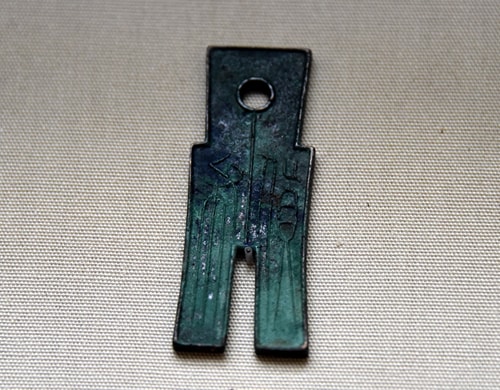
The first Chinese coins appeared in the 7th century BCE and typically took the form of iron tools or knives before someone hit on the idea of convenient small coins. Ancient Chinese coins are distinctive with their square central hole. One problem arose, though, as the popularity of coins took off during the Tang dynasty, and that was getting the copper needed to mint millions of them. The Tang government eventually had to prohibit the use of copper for anything other than coinage, such was the shortage. Another problem was that the coins could be heavier than the goods they were supposed to be exchanged for. Coins were ideal for small purchases but not medium and large trade deals.
Paper Challenges Coinage
Replacing heavy and expensive-to-produce coins with paper had obvious advantages, especially for long-distance traders where weight and space on pack animals like camels was precious. It was also more convenient to hide paper from the thieves that lurked along well-worn trade routes.
But how did the first paper money come about? The origins lie in what was called ‘flying money’, which was used primarily by tea merchants of the Tang dynasty who exported their product far and wide. Rather than carry sacks of coins or cumbersome silver ingots, some merchants preferred the security of using a form of payment receipt written on paper. This document allowed a merchant to make a deposit in one treasury and collect the same value in another treasury within China. These documents of convenience became known as ‘flying money’. In effect, the paper was a promise to pay, just as a modern banknote is a promise from a country’s central bank to pay the holder a certain amount.
A good idea in theory, but in practice, many merchants were reluctant to entirely swap the security of solid silver in the hand for flimsy paper notes that might pay in the future, especially concerning very large transactions. The idea of ‘flying money’, though, would make a comeback from the 11th century as trade boomed. During the Song, trade goods were being transported by land, river, and sea throughout China and across Asia at unprecedented levels. The tea, silk, rice, spice, horse, and copper trades were particularly vibrant. Companies became larger and more sophisticated with different levels of management and ownership. Guilds, wholesalers, partnerships, and stock companies all developed as the Chinese economy began to slowly take on the appearance of something more akin to today’s industrial model.
Imperial Dynasties of China Visual Timeline 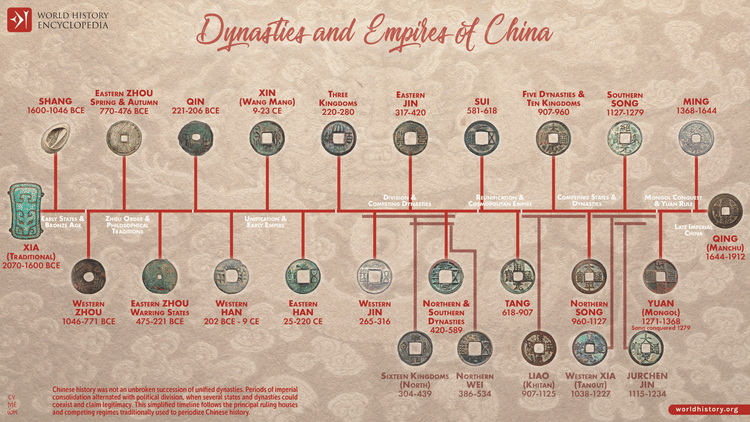
Some Song merchants, like those earlier Tang tea merchants, were keen to solve the problem of where to keep and how to avoid carrying their wealth in coinage or ingots of precious metal. In the Sichuan (Szechwan) province, the use of heavy iron coinage necessitated the wealthy to leave their money in state deposit houses where it was more secure. Around 1023, in order to indicate what money they had on deposit, people were issued a paper certificate of credit by the Song government. These certificates, known as jiaozi, could also be used in transactions instead of physically moving the coinage.
As the economy became more sophisticated and trade became more widespread, so too did the payment systems. Indeed, the relationship between increasing commercialization and use of paper money in the Song dynasty was a direct and reciprocal one, as here explained by the historian M. Rossabi:
The hospitable welcome they received in south China, as well as in the north, encouraged ever-larger numbers of foreign merchants to bring their goods…Merchants [of any origin] were no longer limited to the capitals of specific counties and thus traded in small towns and villages as well. Although government officials continued to supervise markets, merchants faced fewer restrictions in trade. Enclosed markets became rarer, allowing merchants to trade in neighbourhoods that had earlier had restricted commercial areas. The growth in commerce led to an increase in the use of money, which in turn encouraged the government to collect taxes in cash. The quantity of paper money increased – another step in facilitating commerce.
(202)
Women Checking Silk, Song China. 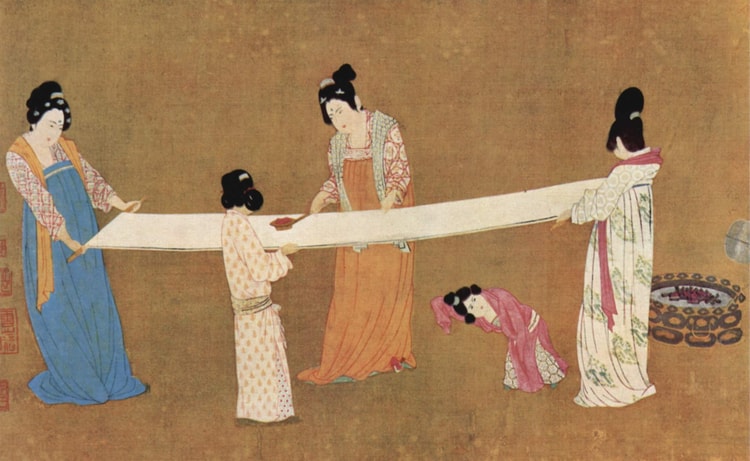
The booming agricultural sector was the main reason for the increasing commercialisation of the economy. Migration to new farming areas in the south, where the soil was particularly rich, meant agriculture produced surpluses which could be sold for profit. Wealthier farmers were forming a distinct elite group, and they could now purchase goods, both domestic and foreign, the traders brought to the markets. The growing population was another factor which fuelled the boom in commerce.
By the 12th century, merchants across China were again using more convenient paper receipts of their metal deposits for payment and for their transactions instead of heavy bags of metal. These, in turn, ultimately led to the development of paper money around 1120, when the Chinese government established a monopoly on the issue of such receipts. The Song government at the capital Kaifeng awarded selected treasuries across China the right to issue the receipts. In effect, these were the world’s first version of banknotes issued by a central authority. By 1260, the paper money had become what we would today call real banknotes – they could be kept for as long as one wished, used across the country to make purchases, and converted into gold or silver at any time.
In the late 13th century, when the Mongols had taken over China to establish the Yuan Dynasty (1271-1368), paper money was still being widely used, as attested by the Venetian merchant and explorer Marco Polo (1254-1324), who gave one of the earliest accounts of Chinese paper money following his travels across Asia:
In the city of Kanbalu is the mint of the grand Khan, who may truly be said to possess the secret of the alchemists, as he has the art of producing money by the following process. He causes the bark to be stripped from those mulberry-trees the leaves of which are used for feeding silk-worms, and takes from it the thin inner rind which lies between the coarser bark and the wood of the tree. This being steeped, and afterwards pounded in a mortar, until reduced to a pulp, is made into paper resembling (in substance) that which is manufactured from cotton, but quite black. When ready for use, he has it cut into pieces of money of different sizes, nearly square, but somewhat longer than they are wide. Of these, the smallest pass for a dernier tournois, the next size for a Venetian silver groat; others for two, five, and ten groats; others for one, two, three, and as far as ten besants of gold. The coinage of this paper money is authenticated with as much form and ceremony as if it were actually of pure gold or silver; for to each note a number of officers, specially appointed, not only subscribe their names, but affix their signets also; and when this has been regularly done by the whole of them, the principle officer, deputed by his majesty, having dipped into vermilion the royal seal committed to his custody, stamps with it the piece of paper, so that the form of the seal tinged with vermilion remains impressed upon it, by which it receives full authenticity as current money, and the act of counterfeiting it is punished as a capital offence. When thus coined in large quantities, this paper currency is circulated in every part of the grand khan’s dominions, nor dares any person, at the peril of his life, refuse to accept it in payment.
…When any persons happened to be possessed of paper money which from long use has become damaged, they carry it to the mint, where, upon the payment of only three per cent, they may receive fresh notes in exchange….All his majesties armies are paid with this currency, which is to them of the same value as if it were gold or silver.
(The Travels, 143-4)
Inflation & Withdrawal
Paper money still had its problems, though. Despite the precautions described by Marco Polo, paper money was just as likely to be counterfeited as coins were. The Chinese authorities attempted to make counterfeiting more difficult by making the notes as complex as possible, essentially covering the whole paper with various forms of printed seals.
The biggest blow to paper money, however, came with high inflation, and the overprinting of the banknotes was one of the primary causes of it. The Yuan rulers were desperate to pay for costly public projects like dams and irrigation works, particularly along the Yellow River, which were undertaken to reduce the devastating effects of all-too-regular floods. Printing money was a short-term answer to the problem, but without any real value to back the currency, the longer-term effects were highly undesirable. Inflation was so rampant that paper money quickly became worthless and all but disappeared as merchants’ confidence in it evaporated. A brief return of paper money during the Ming Dynasty (1368-1644) was again ill-fated, and the wide circulation of reliable banknotes would only become a reality in China from 1866, when they were issued by the Hong Kong and Shanghai Bank.

