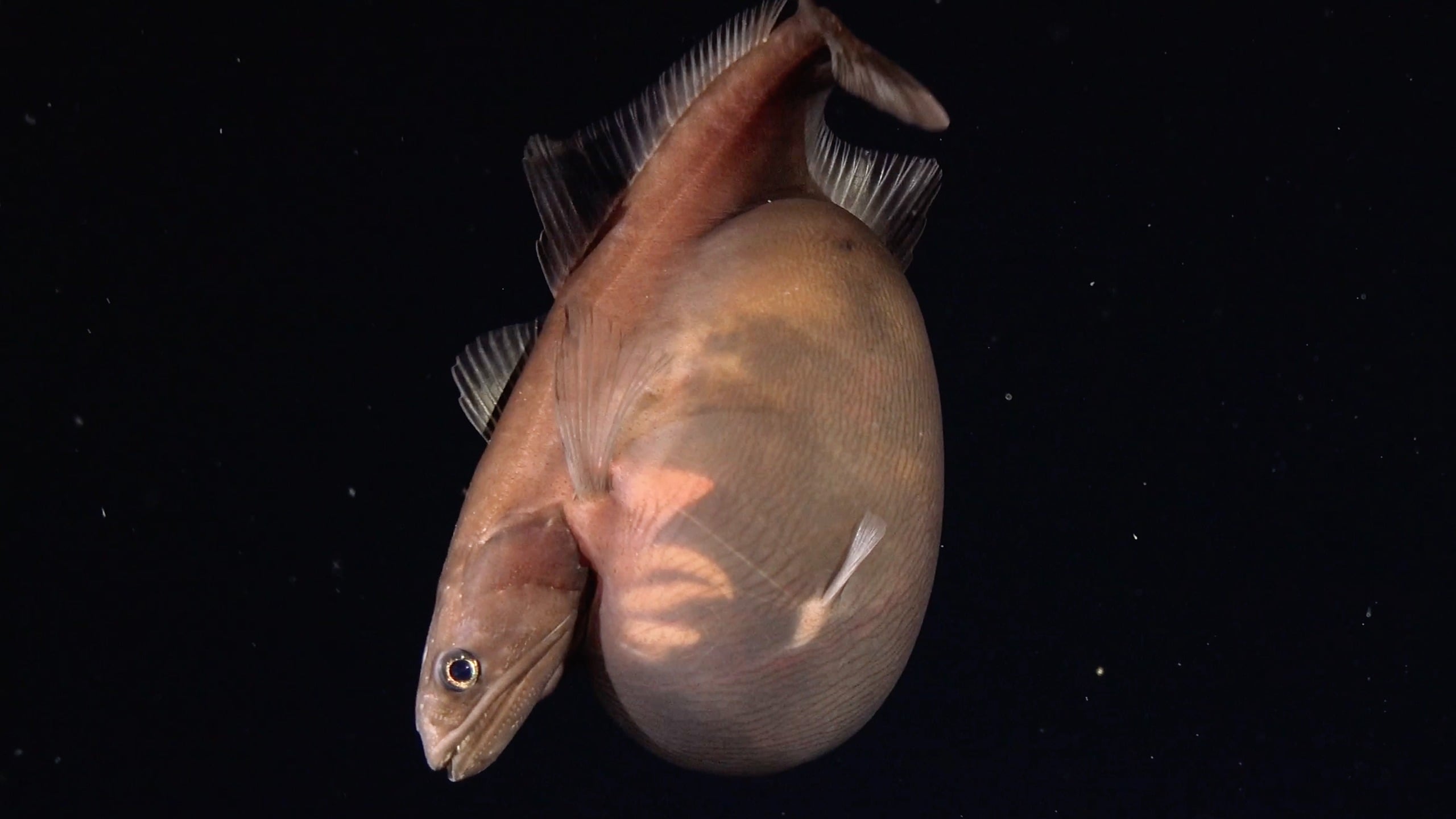
Тринидад ба Тобаго арлын ойролцоох далайн гүнд өөрийн биеийн жингээс 10 дахин их олз омог залгих чадвартай хар залгигч загасыг (Chiasmodon niger) эрдэмтэд дүрс бичлэгт буулгаж чадлаа.
Schmidt Ocean Institute-ийн судлаачид алсын удирдлагатай хөлөг ашиглан далайн 1,259 метрийн гүнд энэхүү сонирхолтой үзэгдлийг илрүүлжээ. Биеийн урт нь ердөө 10-20 сантиметр хүрдэг энэ загас хоол тэжээл хомс далайн гүний орчинд амьдрахын тулд эрүүгээ мулталж, ходоодыг бөмбөлөг мэт сунгах өвөрмөц чадвартай юм. Ингэснээр өөрөөсөө хавьгүй том олз омог ч залгих боломжтой болдог байна.
Экспедицийн ахлах эрдэмтэн Дива Амон загасны энэ ховор агшныг баримтжуулсан нь шинжлэх ухааны хувьд чухал ач холбогдолтойг онцлов. Түүний хэлснээр, эдгээр загас нь маш ховор тохиолддог бөгөөд ходоод нь хэт сунаж, дотор эрхтэн нь ил харагдахуйц болсон байдал нь тэдний хооллох онцлог шинжийг харуулж байна.
Гэвч энэ төрлийн загас заримдаа хэт том олз залгиснаас болж хоолоо бүрэн шингээж амжилгүй, ходоод дахь хоол нь задралд орж хий ялгарснаар далайн гадаргуу руу хөвөн гарч ирж үхэх нь бий. Өмнө нь 2007 онд хийсэн судалгаагаар 19 см урт хар залгигч загас өөрөөсөө 4.5 дахин том загас залгисан байдалтай олдож байжээ. Эрдэмтэд энэхүү загас олзоо хэрхэн барьж, боловсруулдаг талаарх нарийвчилсан судалгааг үргэлжлүүлж байна.
Дэлгэрэнгүйг эх сурвалжаас харах
↓Эх сурвалжийг нээх ↓
There’s always a bigger fish in the sea.
For most of us, that idiom is a warning – but for one little swimmer in the deep, it’s a blessing.
The black swallower fish (Chiasmodon niger) is a little creature that grows, on average, just 10-20 centimeters (3.9–7.9 in) long, and no more than a school ruler.
Still, that doesn’t stop it from aiming high. This unassuming fish can gulp down prey up to ten times its mass.
It’s an underdog moment for sure – like if David ate Goliath – and in a spectacularly rare event, scientists just captured it on camera.
During a recent deep-sea dive near the islands of Trinidad and Tobago, a remotely operated vehicle snapped a black swallower fish at 1,259 meters deep, lugging around a stomach so distended it looks like a sidecar.
The skin is stretched almost transparent, to the point where you can actually see its internal organs and intestines.
“[Black swallower fish] are notoriously rare to spot in the wild. I saw my first nearly a decade ago in the Gulf of Mexico,” says Diva Amon from the Schmidt Ocean Institute, the chief scientist of the expedition.
“I never imagined I’d get a second chance. But this expedition delivered BIG.”
Black swallower fish have evolved to make the most of their deep-sea environment, where food is scarce, explains Amon.
They have a dislocating jaw and a stomach that stretches like a balloon. That way, if they see a tasty morsel swim along, they can swallow it whole, even if it is bigger than themselves.
Like the best of us, however, black swallower fish can sometimes bite off more than they can ‘chew’.
Most specimens have been found dead at the ocean’s surface.
If this creature doesn’t digest its food fast enough, the meal in its distended stomach can start to decay.
That releases gases that can force it to the surface, like a balloon.
In one famous case from 2007, a dead swallower fish just 19 centimeters (7.5 in) long was found in the Cayman Islands, having swallowed a snake mackerel (Gempylus serpens) measuring 86 cm (34 in) in length.
That’s a meal 4.5 times its size.
The Woods Hole Oceanographic Institution describes the sight of this distended stomach as “a semi-transparent spare tire hanging from their bellies”.
This new sighting is extra special because the fish is swimming in its natural habitat, and its stomach is much more distended than in some other live footage.
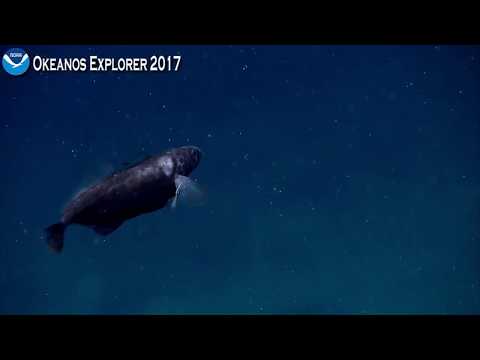
The downside is that, deep in the ocean, it’s impossible to know what the animal actually ate.
“If only we had a CT scanner at sea,” says Amon. “The mystery of what this little guy had for lunch may never be solved.”
This elusive fish and its special use of ‘swell dining’ remain poorly understood.
Some scientists have speculated that the creature eats its prey tail first, slowly ‘walking’ the meal back into its belly with its unique set of hooked, backwards-pointing teeth.
But unfortunately, that’s just speculation based on appearance.
Who knows if we will ever see the fish in hunting action.
This article was fact-checked by Rachel Garner and edited by Peter Dockrill. While we pride ourselves on our process, we are only human. If you spot a mistake, please let us know.

