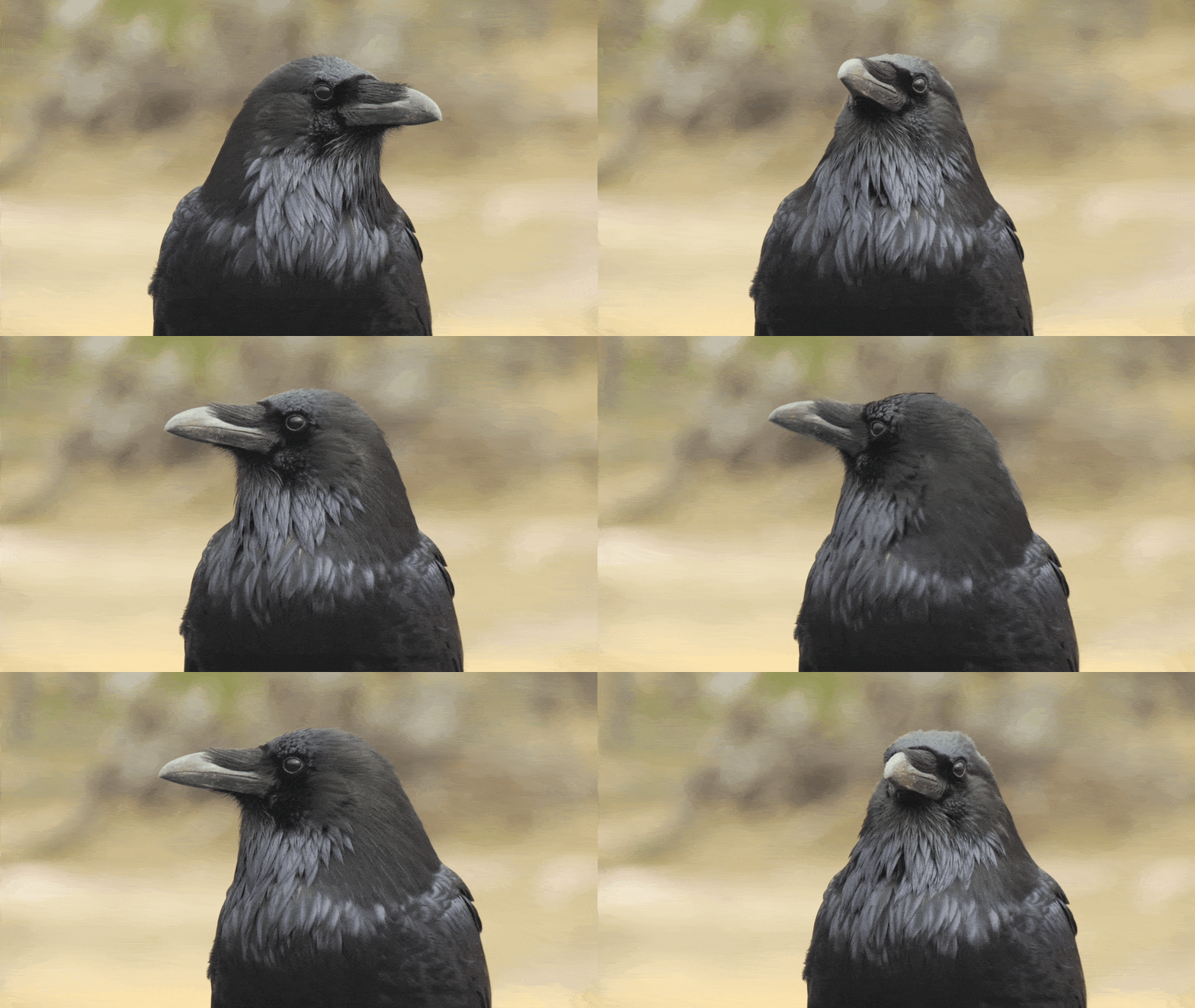
Шинэ судалгаагаар хэрээ нь хүрээлэн буй орчны өөрчлөлтөд хариу үйлдэл үзүүлэхдээ хөхтөн амьтдаас илүү хурдан, оновчтой шийдвэр гаргах чадвартай болохыг илрүүллээ.
Германы Тюбингены их сургуулийн судлаачид Corvus corone зүйлийн хоёр хэрээнд мэдрэгчтэй дэлгэц ашиглан туршилт хийжээ. Шувууд дэлгэц дээрх цэгүүдийн хөдөлгөөний чиглэлийг дунджаар 235 миллисекунд буюу секундээс бага хугацаанд таньж, зөв хариулт өгсөн нь хүн болон сармагчны ижил төрлийн даалгаварт зарцуулдаг хугацаанаас даруй хоёр дахин хурдан байна.
Тус судалгааны багийн ахлагч Андреас Найдерын тайлбарласнаар, шувууны тархины nidopallium caudolaterale хэсэг нь хүн болон приматын тархины урд талын бор гадаргын үүрэгтэй ижил төстэй үйл ажиллагаа явуулдаг аж. Хэдийгээр шувуу болон хөхтөн амьтад 310 сая гаруй жилийн өмнө хувьслын өөр замаар салсан ч тархины ижил төстэй тооцоолох механизмыг бие даан хөгжүүлсэн нь энэхүү дүгнэлтээр батлагдаж байна.
Хэрээний энэхүү хурдны нууц нь тэдний нислэгийн онцлог, орчиндоо дасан зохицох чадвар, өндөр хурдтайгаар хоол хүнсээ олж авах хэрэгцээтэй холбоотой байж болох юм. Энэхүү ололт нь өндөр түвшний сэтгэн бодох чадвар зөвхөн хөхтөн амьтдын тархины бүтэцтэй холбоотой бус, өөр өөр зүйлийн амьтдад хувьслын явцад ижил төстэй шийдлүүд үүсдэгийг харуулж байна.
Дэлгэрэнгүйг эх сурвалжаас харах
↓Эх сурвалжийг нээх ↓
Crows are intelligent animals that can use tools, hold grudges and even host funerals. Now, new research suggests these birds can make certain decisions faster than humans and monkeys — another potential sign of their smarts, the researchers argue.
In a study published Thursday (Oct. 22) in the journal Science, researchers found that two carrion crows (Corvus corone) could distinguish the direction of moving dots on a screen in an average of 235 milliseconds, or less than a quarter of a second. By contrast, historical studies of humans suggest they make decisions in similar tasks six seconds as fast.
The birds were highly accurate, and recordings of their brain activity suggested that their decision-making process resembled that seen in primates and humans.
Given birds and mammals have evolved along separate paths for more than 310 million years, “this suggests that evolution may have independently developed similar solutions to the same computational problem,” study co-author Andreas Neider, a professor of animal physiology and director of the Institute of Neurobiology at the University of Tübingen in Germany, told Live Science in an email.
Inside a crow’s split-second decision
To understand how crows make decisions using cues in their environments, the researchers trained two carrion crows to complete a visual task on a touchscreen. The birds watched a cloud of white dots moving against a black background. Some dots moved to the left or right while others moved randomly. The crows had to determine the predominant direction of the dots’ movement and peck the corresponding target on the screen to earn a mealworm reward.
By changing the proportion of dots moving together, the researchers could make the decision easier or harder for the crow. When most dots moved in the same direction, the answer was fairly obvious for the birds. But when only a small percentage moved together, the birds had weaker visual evidence to base their decisions on.
The crows reached nearly 100% accuracy when many dots were involved and the motion was clear. But even when just 3% of the dots moved in concert, both birds performed significantly better than just guessing, getting the answer right 50% of the time.
The birds maintained high accuracy in different rounds of the experiment, suggesting they were not sacrificing judgement for quickness.
The study did not directly compare crows to humans and monkeys performing the exact same task. However, previous studies suggest that humans and monkeys take roughly twice as long on comparable, self-paced visual motion tasks.
What happens inside the crow brain?
To understand how the birds reached their decisions so quickly, the researchers recorded activity from 248 neurons in the nidopallium caudolaterale (NCL) — a region of the bird brain that’s considered functionally comparable to the prefrontal cortex in humans and primates. Birds lack the layered cerebral cortex found in mammalian brains, but the NCL performs similarly advanced functions.
In primates, neurons accumulate sensory information and their activity increases until it hits a critical threshold and the brain reaches a decision. The new findings suggest that crows use a comparable process, the researchers concluded.
“The bigger implication is that a brain does not need a mammalian neocortex to perform sophisticated computations,” Neider said.
The team could use neural activity to predict the crows’ eventual choice “as early as 70 milliseconds after” the dots appeared, Neider said. That was roughly 170 milliseconds before the crows’ behavioral responses, meaning their pecks at the screen.
The speediness of the crows’ decision-making may reflect the demands of the birds’ daily lives.
“Flight places enormous demands on visual processing and sensorimotor [sensation and movement] coordination,” Neider said. “Birds must navigate three-dimensional environments, avoid obstacles, and react quickly to moving objects. Finding food and capturing prey can also require rapid, precise decisions. These pressures may have favoured fast information processing.”
But for now, scientists don’t know why crows seem to outpace primates in this particular type of decision-making. The study included only two birds and no direct comparisons to primates, so more work could be done to confirm the results and explore that question further.
For Neider, observing the faster decision-making process in crows raises a broader question about how scientists define intelligence.
“Rather than assuming that the mammalian brain is the blueprint for intelligent behaviour,” he said, “we can study different species to discover which computational principles are shared across animals and which reflect adaptations to their particular environments.”
Are you a bird nerd? Find out with our bird quiz!

