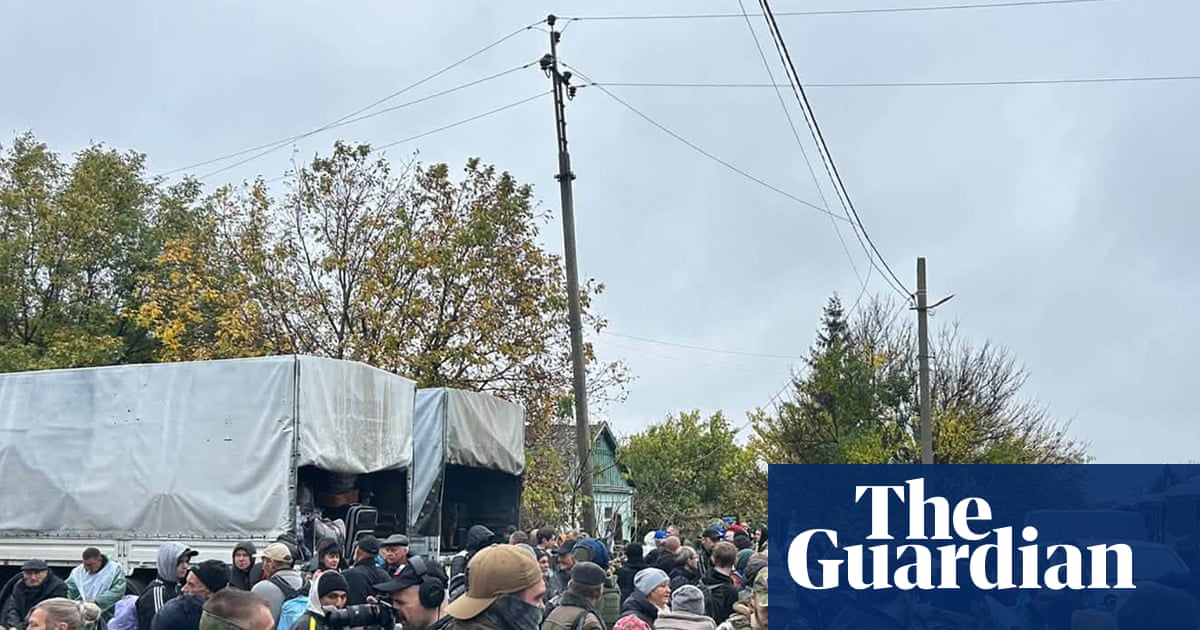
Днипро мөрний эрэг дээрх бүслэгдсэн хотоос хүнсний болон эмнэлгийн тусламж үзүүлэх хамтарсан ажиллагааны хүрээнд иргэдийг гаргаж байна.
ОХУ-ын хяналтад байдаг Украйны өмнөд нутгийн Олешки хотод хүмүүнлэгийн тусламжийн цуваа ирж, олон сар үргэлжилсэн хүнс болон эмнэлгийн хомсдолд орсон иргэдийг нүүлгэн шилжүүлж эхэллээ. Нийт 25 автобус болон түргэн тусламжийн машинаас бүрдсэн уг цуваа нь дайн эхэлснээс хойших дөрвөн жил найман сарын хугацаанд хийгдэж буй анхны томоохон хэмжээний хамтарсан ажиллагаа юм. Херсон муж дахь байлдааны бүсэд тогтоосон түр гал зогсоох хэлэлцээрийн хүрээнд зам талбайг мингүйжүүлснээр нүүлгэн шилжүүлэлт хийх боломж бүрджээ.
Украйны Ерөнхийлөгчийн намын гишүүн Давыд Арахамиагийн мэдээлснээр, нүүлгэн шилжүүлэгдсэн иргэдийг эхлээд ОХУ-ын Анапа хот руу, улмаар Беларусь улсаар дамжуулан Украйн руу хүргэхээр төлөвлөсөн байна. Украйны Ерөнхийлөгчийн тамгын газрын дарга Кирилл Буданов хүмүүнлэгийн ажиллагаа үргэлжилж байгааг баталсан боловч хэдэн хүн хотыг орхин гарсан нь тодорхойгүй хэвээр байна. Хотод үлдсэн 2,000 орчим иргэний дийлэнх нь өндөр настнууд байгаа бөгөөд тэдний зарим нь нутагтаа үлдэх сонголтыг хийжээ.
Орон нутгийн сайн дурын ажилтнуудын мэдээлснээр, ОХУ-ын цэргийн албан хаагчид хотод байрлаж, эзэнгүй байшингуудыг шалгахын зэрэгцээ иргэдийг Украйн руу бус, ОХУ руу нүүлгэн шилжүүлэхийг шахаж байна. Энэхүү хүмүүнлэгийн ажиллагааг зохион байгуулахад Украйны хүний эрхийн омбудсмен Дмитрий Лубинец болон ОХУ-ын талын төлөөлөгч Яна Лантратова нар хамтран ажилласан байна. Кремлийн зүгээс энэхүү үйл явдлыг өргөн хүрээний энхийн хэлэлцээрт хамаатуулах боломжгүй, онцгой тохиолдол хэмээн тайлбарлажээ.
Дэлгэрэнгүйг эх сурвалжаас харах
↓Эх сурвалжийг нээх ↓
People living in the besieged Russian-held city of Oleshky in southern Ukraine were evacuated on Friday as part of a joint relief operation, the first of its kind in four years and eight months of war.
The city, which lies on the Russian-occupied side of the Dnipro River, opposite Kherson, has suffered months of serious food and medical shortages, leading to warnings of starvation for the few thousand people remaining there, including about 50 children.
The humanitarian convoy, including 25 buses and ambulances, had arrived in the city to deliver food and medicine and evacuate those wishing to leave for Russia or Ukraine.
The localised ceasefire in Ukraine’s southern Kherson region allowed for the roads out of Oleshky to be de-mined, making evacuation possible.
Davyd Arakhamia, a lawmaker with the Ukrainian president Volodymyr Zelenskyy’s Servant of the People party – who was part of the delegation to Oleshky – confirmed the evacuation of some people who were travelling to the southern Russian city of Anapa.
“From there, they will fly by plane to Belarus, and then travel by bus to their homes,” he added.
While Ukrainian territory lies just 5km from Oleshky, evacuees will instead need to travel to Anapa and on to Belarus, and then drive across the border into Ukraine’s Chernihiv region.
“At this moment, the humanitarian operation is under way in Oleshky,” Kyrylo Budanov, the head of Ukraine’s presidential office, wrote in an online post. Budanov is not part of the delegation in Oleshky.
While earlier reports had suggested more than 500 people wanted to move to Ukrainian territory, it was unclear how many people travelled on the convoy.
Kyiv’s delegation reached the city late on Friday morning to prepare for the evacuation, with footage on social media showing tearful residents embracing delegation members as they gathered in heavy rain to wait for the main evacuation convoy to arrive. Several hundred people, mainly older people, have chosen to stay.
Asked about whether she was packed and ready to leave by a member of the Ukrainian delegation, a video showed a woman, who identified herself Anna, saying: “Yes, we are on bus 20, my son is on bus 17. To Ukraine.”
With about 2,000 people remaining in Oleshky, according to authorities and volunteers, people have given harrowing accounts of risking their lives travelling along mine-strewn roads to get food and water.
Some say they have survived on a cup of rice or buckwheat a day, sometimes with a tomato, cucumber or wild plants added.
“We’ve been through so much here in these five years,” one woman said in images broadcast on Ukrainian TV. Another older woman, preparing to evacuate, said: “If we had our health, maybe we’d stay there a bit longer, but that’s it. We just want to be with our children.”
Ksenia Arkhipova, a volunteer who previously lived in Oleshky and remains in contact with people there, said large numbers of Russian military personnel were in the city. “They are currently checking empty houses and, in some cases, moving into them,” she told the Associated Press.
“They are also pressuring local residents to evacuate to Russia, rather than to Ukraine,” she added.
The convoy arrived under a ceasefire in the area, which the US first lady, Melania Trump, claimed to have helped broker – a rare example of cooperation between the warring sides.
On Friday, the Kremlin, however, described it as a special case that was “difficult to extrapolate” to the wider search for a peace settlement.
Oleshky was seized by Russian troops during the first days of the full-scale invasion of Ukraine in February 2022.
It has suffered extensive damage and was badly flooded after the destruction of the huge upriver Kakhovka dam in June 2023.
“The problem is that a lot of people are staying,” one woman told Ukraine’s human rights ombudsman, Dmytro Lubinets, who was on the ground to coordinate the operation with his Russian counterpart, Yana Lantratova.
“I’ve been told that it’s their own choice,” Lubinets replied. “At the very least, we’ll do what we can to ensure that somehow humanitarian aid gets through.”
He added: “This is the first time since 2022 that a ceasefire has been established across such an extensive stretch of the frontline and has been maintained for such a significant duration.”

