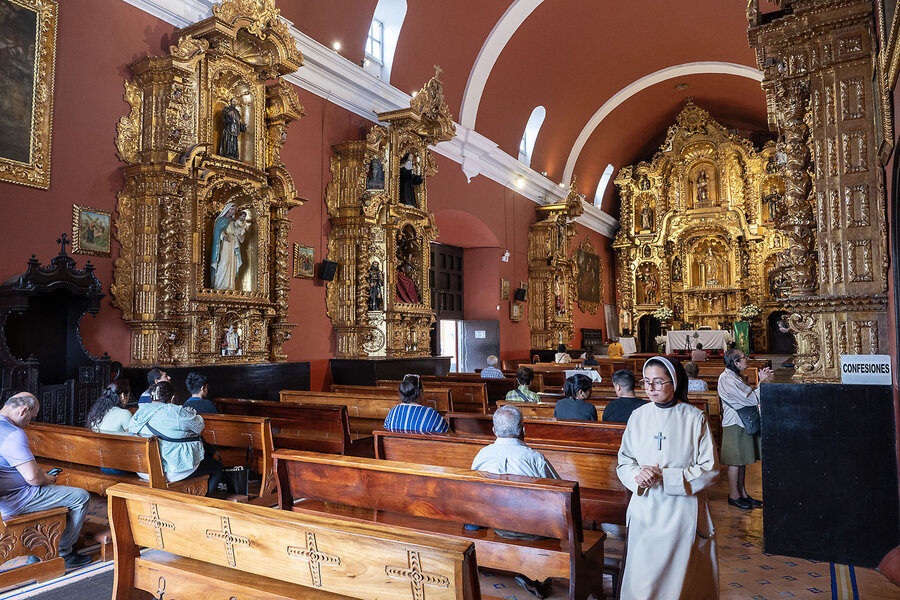
Латин Америкийн олон оронд эмэгтэйчүүд сүмийн өдөр тутмын ажлыг нуруундаа үүрч байгаа ч албан ёсны эрх, байр суурийн асуудал нээлттэй хэвээр байна.
1980-аад оны сүүлээр гэлэнмаа Терезинья Далсежиу Бразилийн хойд хэсгийн Амазоны алслагдсан сүмд томилогдож, орон нутгийн бишопын зөвшөөрлөөр бусад гэлэнмаагийн хамт олон жилийн турш иргэдэд үйлчилжээ. Тэд гэрлэлт батлах, хүүхэд баптисм хүртээх, ариун зоогийн ёслол үйлдэх зэрэг, ерөнхийдөө эрэгтэй диакон эсвэл санваартны хариуцдаг ажлыг хийдэг байв. Бишоп жилд нэг удаа л мөргөл үйлддэгтээ уучлал хүсэхэд нутгийн иргэд гэлэнмаа нартайгаа тогтмол мөргөл үйлддэг гэж хариулсан байна.
Латин Америкт өөрийгөө католик шашинтан гэж тодорхойлдог хүмүүсийн хувь буурчээ: 2024 оны судалгаагаар оролцогчдын 54 хувь нь Католик сүмд харьяалагддаг гэж хариулсан бол 1995 онд энэ үзүүлэлт 80 хувь байв. 2025 онд пап болсон XIV Лео Ватиканы удирдах албан тушаалд долоон эмэгтэйг томилж, сүмийн ирээдүйн талаар олон жил үргэлжилсэн зөвлөлдөх үйл явцад 50 гаруй эмэгтэйд санал өгөх эрх олгосон. Эмэгтэйчүүдийг санваартан болгохыг комисс дэмжээгүй ч уг асуудлыг цаашид судлах боломж нээлттэй үлджээ.
Латин Америк болон АНУ-ын католик шашинтнуудын олонх эмэгтэйчүүдийг санваартан болгохыг дэмждэг бөгөөд 2024 оны судалгаанд Бразилд 83, Перуд 65, АНУ-д 64 хувь нь санал нэгтэй байжээ. XIV Лео арваннэгдүгээр сарын 6-нд Уругвайд очиж, дараа нь Аргентин, Перуд айлчлахаар төлөвлөсөн; тэр Перуд хорь гаруй жил ажиллаж, тус улсын иргэншил авсан юм. Тэрээр 2018 онд тухайн үеийн бишоп Роберт Превост байхдаа Венесуэлээс дүрвэн ирэгсдийн асуудлаарх хамба ламын хөтөлбөрийг удирдуулахаар Ёланда Диасыг томилж, сүмийн удирдлагыг илүү хэвтээ, энгийн иргэд болон эмэгтэйчүүдийн оролцоотой болгохыг зорьсон гэж Диас ярьжээ.
Гэлэнмаа нарын хийж буй ажил орон нутгийн бишопын тусгай зөвшөөрөлд тулгуурладаг тул шинэ бишоп эсвэл санваартан томилогдоход нэг шөнийн дотор зогсох эрсдэлтэй гэж эмэгтэйчүүдийн диаконоор томилогдохыг дэмжигчид анхааруулж байна. Перуд эмэгтэйчүүдийн боловсрол, улс төрийн төлөөлөл сүүлийн 20 жилд ахисан ч үр хөндөлтийн хүртээмж хязгаарлагдаж, жендэрийн эрх тэгш байдлын хууль суларсан гэж эрхийн төлөө тэмцэгчид үзэж байна. Гэсэн ч алслагдсан болон эмзэг бүлгийн олон нийтийн хэрэгцээнээс шалтгаалан эмэгтэйчүүд сүмийн удирдах үүргийг бодитоор гүйцэтгэсээр байгааг салбарын төлөөлөгчид онцолжээ.
Дэлгэрэнгүйг эх сурвалжаас харах
↓Эх сурвалжийг нээх ↓
Lima, Peru
|
Nov. 05, 2026, 3:47 p.m. ET
|
5 min read
In the late 1980s, Sister Terezinha Dalcegio was posted to a parish in a remote part of the Amazon in northern Brazil. For several years, she and other nuns, with the permission of the local bishop, traveled long distances across rivers and beneath dense green canopies to conduct marriages, handle baptisms, and partake in Communion – all responsibilities typically handled by a deacon or priest, positions in the Roman Catholic Church reserved for men.
When the bishop came through on a pastoral visit, Sister Dalcegio recalls that the clergyman apologized to community members for how rarely they celebrated Mass – about once a year. “But people responded, ‘We actually have Mass all the time! We have Mass with the sisters!’” she says.
Across Latin America, women have long held de facto leadership roles in the Catholic Church, particularly in remote areas such as the Amazon. But, as Catholicism faces competition in Latin America and the Vatican studies the role of women leaders in the church, these communities offer a glimpse of what the church’s future could look like – one in which women are finally recognized for the leadership they already exercise.
As Pope Leo XIV prepares this month for a three-country visit to Latin America, his familiarity with regional realities raises the question of whether the church might move closer to that future during his papacy. He has pledged to run a church that reflects the voices and needs of ordinary parishioners and clergy instead of leading from the top down – much like how Sister Dalcegio worked in the Amazon.
When the bishop overseeing Sister Dalcegio’s remote parish passed away, she says he was replaced by someone less open-minded and who put a stop to some of her work.
Alfredo Sosa/Staff
A view of the Palacio Arzobispal, or Archbishop’s Palace, in the Plaza Mayor in Lima, Peru, Oct. 27, 2026.
“Women are considered important only when a priest isn’t available,” she says. “It’s often a reflection of the institutional Church. … And a fear of losing power.”
The number of people identifying as Catholic in Latin America has fallen over the past three decades. In 2024, some 54% of respondents in a Latinobarometro survey said they belonged to the Catholic Church, compared with 80% in 1995. For many, this shift reflects an institution that’s out of touch with modern times.
Pope Leo has appointed seven women to high-profile leadership positions at the Vatican since assuming the papacy in 2025. More than 50 women were granted voting rights in a multiyear consultation about the church’s future, which is a first. And though a Vatican commission voted against ordaining women, members of the commission left the question open to further study. (Nuns, like Sister Dalcegio, have the authority to carry out work as deacons through special exceptions– typically granted by a local bishop– even though they are not ordained to do such work).
A majority of Catholics in Latin America and the United States say they support allowing women to become priests, according to a 2024 Pew Research Center study. That includes 83% of respondents from Brazil, 65% from Peru, and 64% from the U.S. Younger Catholics’ support for women’s ordination is even higher, with some 70% of Peruvians between the ages of 18 and 39 expressing their approval.
But not all Catholics are eager for change. “It’s men who need to celebrate Mass. Jesus valued women, but not in front of the altar,” says Cecilia Rojas, outside the orange-sherbet-colored church of Santa María Magdalena in Lima before a recent Mass.
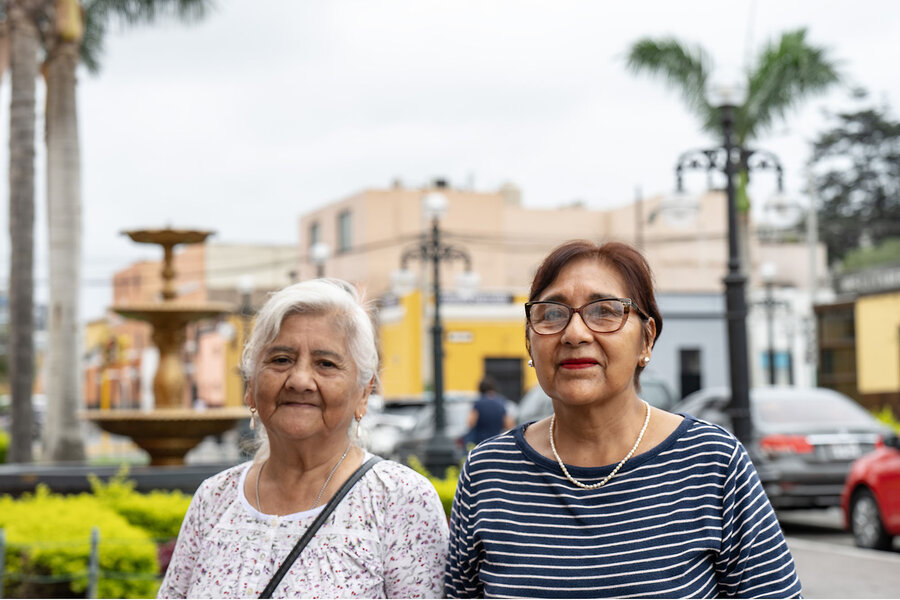
Alfredo Sosa/Staff
Parishioners Antonieta Puentes, left, and Cecilia Rojas stand outside the Parroquia Santa Maria Magdalena in the district of Pueblo Libre in Lima, Peru, Oct. 25, 2026.
Silvia Cáceres Frisancho, director of the Instituto Bartolomé de Las Casas, a Lima-based Catholic social justice organization, runs a program called Faith and Peripheries. Community leaders from vulnerable or remote areas come together to unpack how their faith applies to their daily lives. “You might think, ‘Wow, this is still a very hierarchical institution. Women don’t have a space where they are recognized as equals,’” she says, but in practice, a diverse range of perspectives exists. Her program shows a more pragmatic question getting asked.
“What kind of church is needed for these times?” she says.
Yolanda Díaz Callirgos has some ideas – and she watched them play out under Bishop Robert Prevost, who went on to become Pope Leo XIV. Back in 2018, then-Bishop Prevost picked Ms. Díaz to lead a diocese-wide program addressing migration in the northern city of Chiclayo, at a time of unprecedented migration from Venezuela.
He moved the diocese away from the church’s “historic, rigid hierarchical structure” toward “a more horizontal structure” that empowered not only laypeople, but also women, she says.
“He trusts in processes, but he’s someone who looks ahead toward the future. And in that, he includes women,” she says.
Pope Leo will arrive in Uruguay on Nov. 6, followed by visits to Argentina and Peru, where he worked for more than two decades and gained Peruvian citizenship.
Gains and setbacks
At noon on a Tuesday in late October, parishioners spill onto the sidewalk in front of Las Nazarenas church in Lima’s historic center, where the service blares on outdoor speakers. The midweek crowd is honoring El Señor de los Milagros, one of Peru’s most important religious devotions.
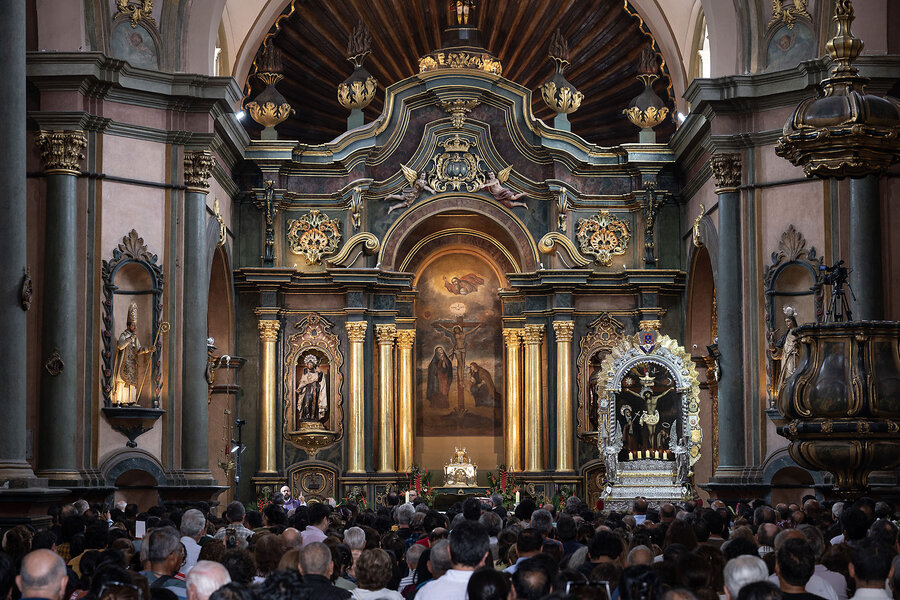
Alfredo Sosa/Staff
People attend mass during celebrations of El Señor de los Milagros (The Lord of Miracles), at the Santuario de las Nazarenas in Lima, Peru, Oct. 27, 2026.
The priest presiding over Mass delivers a sermon about the roles of men versus those of women. Men, he preaches, are the heads of households, just as the priest is head of the church.
In the past 20 years, women have made gains in education and political representation in Peru. But rights activists point to recent setbacks, including more restrictive abortion access and weakened gender equality laws.
The backsliding is worrisome, says Carmen Lora, director of the Catholic journal Página. But she says that Catholic faith in Latin America does not always perfectly follow the church’s institutional doctrine, even in conservative societies like Peru.
“The experience of faith is more closely linked to saints and devotions than it is to the church’s religious authority,” says Ms. Lora. There’s a sense that “the priest who celebrates Mass, well, he has to perform Mass, but I go to church because I’m a devotee to El Señor de los Milagros, and it is these devotions who listen to me,” she says.
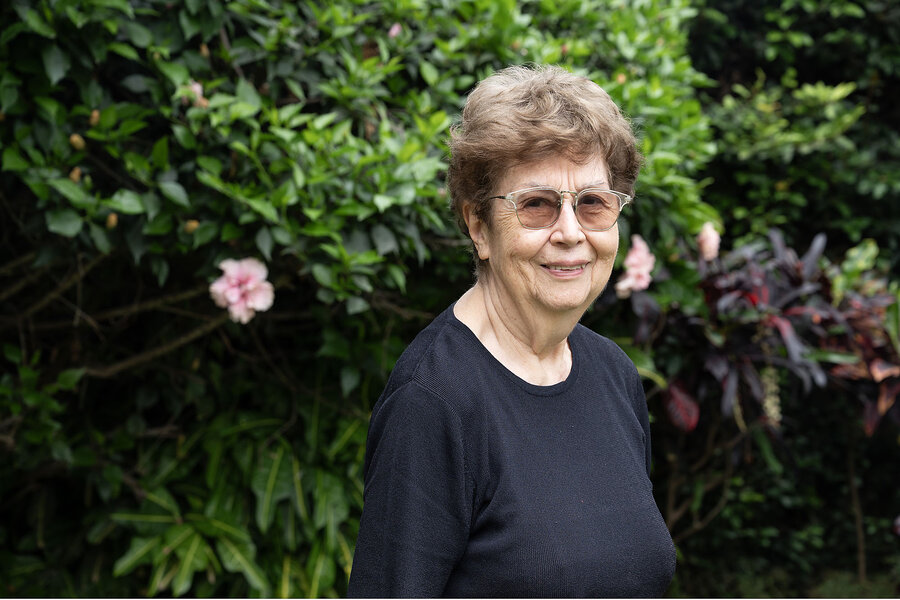
Alfredo Sosa/Staff
Carmen Lora, director of the Catholic journal Página, says that “the experience of faith [in Latin America] is more closely linked to saints and devotions than it is to the church’s religious authority.”
Women’s roles can often be seen in very traditional ways in Latin America. “And yet, there are so many places where you will find women having incredible leadership responsibilities just because of the need, and the desires people have to try to respond to the needs in their communities,” says Ellie Hidalgo, co-director of Discerning Deacons, a U.S.-based organization advocating for women to be ordained as deacons.
Ms. Hidalgo was inspired by the 2019 Amazon Synod to teach Catholics about biblical references to the clerical roles women held in early Christianity. She also wants to encourage churches to open up more space for women to preach – something allowed under canon law, but rarely prioritized.
Deepen your worldview
with Monitor Highlights.
Politics with respect
Get political stories with respectful analysis.
There‘s a world of new ideas in every
Books newsletter.
There‘s more to life, enrich yours with
Culture & Learning weekly.
Follow humanity‘s discoveries with
Science & Nature stories in your inbox.
Gain a spiritual perspective
from the stories in your inbox.
Want to understand the deeper impact of critical events? Learn the Monitor‘s insight.
Already a subscriber?Log in to hide ads.
Though she’s not expecting the Vatican to embrace women’s ordination any time soon, Ms. Hidalgo says she does see space to formalize the contributions women are already making in the Catholic Church.
“It’s not a question of the future. Women are already functioning as leaders, it’s just that they’re not ordained,” she says. “But there’s a fragility to that. Women may be building communities, but a new bishop or priest can make that disappear overnight.”

