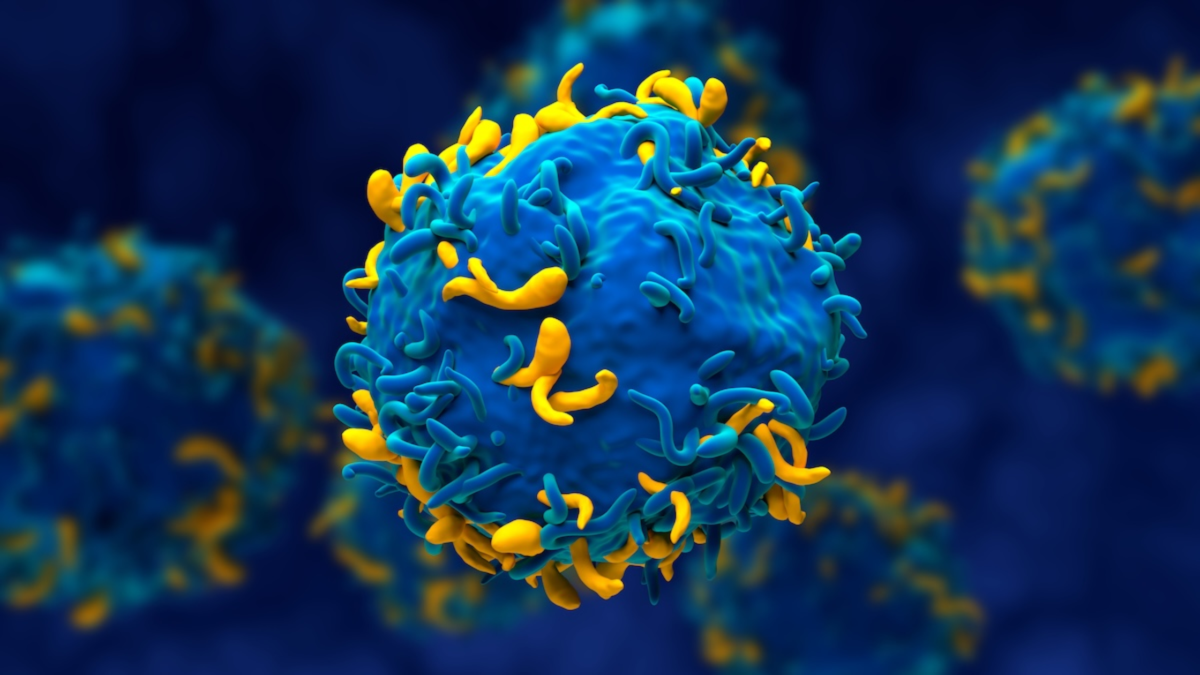
Германд 47 настай эмэгтэйд хийсэн CAR-T эсийн туршилтын эмчилгээний дараа гурван аутоиммун өвчин нь намжиж, цус сэлбүүлэх шаардлагагүй болсон байна.
Өвчтөн аутоиммун гемолитик цус багадалт, антифосфолипидын эсрэгбиеийн хам шинж, дархлааны шалтгаант тромбоцитопени гэсэн гурван өвчтэй байжээ. Эдгээрийн улмаас өдөр бүр цус сэлбүүлж, цусны бүлэнгээс сэргийлэх эм тогтмол хэрэглэдэг байсан бөгөөд өмнө нь есөн төрлийн эмчилгээ хийлгэсэн ч үр дүн нь удаан тогтоогүй байна.
Эрдэмтэд өвчтөний Т эсийг ялган авч, В эсийн гадаргуу дээрх CD19 уургийг онилон устгахаар өөрчилж, цусанд нь буцаан хийжээ. CAR-T эмчилгээ нь дархлааны эсийг тодорхой байг таньж устгахад чиглүүлдэг арга юм.
Нэг удаагийн эмчилгээний дараа долоо хоногийн дотор цус сэлбүүлэхээ больж, 25 дахь өдөр шинжилгээний үзүүлэлтүүд нь бүрэн намжмал болсныг харуулжээ. Гемоглобины хэмжээ хэвийн болж, ялтас эсийн тоо тогтворжсон бөгөөд цус бүлэгнүүлэх эсрэгбиемүүд илрэхээ больсон байна. 322 хоногийн дараа В эсүүд нь эргэн нэмэгдсэн ч бараг бүгд дархлааны ой санамжгүй байсан тул эрүүл эсүүдэд халдахгүй байжээ; мөн цусны бүлэнгээс сэргийлэх эмээ зогсоосон байна.
Эмчилгээний дараа цитокин ялгарах хам шинж, мэдрэлийн хордлого зэрэг ноцтой дархлааны урвал илрээгүй ч элэгний фермент бага зэрэг ихсэж, ялтас эсийн тоо буурсан нь өмнөх эмчилгээний үлдэгдэл нөлөө байж болзошгүй гэж судлаачид тэмдэглэжээ. Med сэтгүүлд нийтэлсэн уг тохиолдлын тайланд 11 сарын ажиглалт багтсан бөгөөд хөндлөнгийн мэргэжилтэн нэг өвчтөний үр дүнг эцсийн нотолгоо гэж үзэх боломжгүйг анхааруулсан байна. Аутоиммун гемолитик цус багадалттай, өмнөх эмчилгээнд үр дүнгүй байсан 11 хүнийг хамарсан өөр судалгаанд мөн нэг удаагийн CAR-T дуслын дараа бүрэн намжмал болсон ч хоёр хүний өвчин найман сарын орчимд дахисан байна.
Дэлгэрэнгүйг эх сурвалжаас харах
↓Эх сурвалжийг нээх ↓
A 47-year-old woman in Germany with three different autoimmune diseases entered complete remission after an experimental treatment that effectively reset her immune system.
The patient previously required daily blood transfusions to manage her conditions, two of which affected her blood cells.
She was given Chimeric Antigen Receptor (CAR-) T cell therapy, which involves extracting a sample of immune cells, ‘supercharging’ them against a specific target, and returning them to the body.
According to a case report published in the journal Med, the patient’s symptoms improved within weeks of treatment, and she no longer requires blood transfusions, even almost a year after the therapy.
“The treatment was extremely efficient in getting rid of all three autoimmune conditions at once,” said Fabian Müller, hematologist at the University Hospital of Erlangen in Germany.
“After being sick for more than a decade, the patient is now in treatment-free remissionandable to return to an almost normal life. This therapy significantly improved her quality of life.”
The patient’s primary condition was autoimmunehemolytic anemia (AIHA), a rare disease that occurs when the immune system begins to attack the red blood cells.
She was later also diagnosed with two related autoimmune diseases: antiphospholipid antibody syndrome, in which antibodies make the blood prone to forming dangerous clots; and immune thrombocytopenia, where immune cells attack platelets, the small cell fragments that prevent excessive bleeding.
This trio of conditions meant the patient needed blood transfusions every day and had to regularly take blood-thinning medication to prevent clots.
Over the years, she had undergone nine different types of treatments to try to improve her health and quality of life, but none had worked for very long.
“The speed and depth of the response wasremarkable.” – hematologist Fabian Müller
The case study details the woman’s clinical course with CAR-T cell therapy, which is increasingly showing promise in treating a variety of cancers.
Rather than using chemicals or radiation to kill off cancerous cells, this treatment teaches the body’s own immune system to hunt down a specific target more effectively.
CAR-T cells have also been used to treat this type of anemia before.
A study published in January reports that 11 people whose AIHA had resisted multiple previous treatments went into complete remission after a single infusion. Two relapsed within about eight months, but responded to a second, differently targeted therapy.
The team behind the work also previously tuned CAR-T cell therapy to fight other autoimmune diseases, including lupus, myositis, and systemic sclerosis, with patients going into remission.
In this case, the problems all seemed to stem from B cells, which produce antibodies as part of an adaptive immune response.
The patient’s B cells, however, had gone haywire and were instructing the rest of her immune system to attack healthy red blood cells, platelets, and tissues.
So, the researchers isolated her T cells and ‘supercharged’ them to attack a protein found on the surface of B cells, called CD19. The T cells were then infused back into the patient’s bloodstream, where they could get to work killing off her rogue B cells.

And sure enough, her health began to improve almost immediately. Seven days after the single infusion of CAR-T cells, she no longer needed blood transfusions.
“After discharge at day 10, the patient experienced a rapid and remarkable increase in physical strength and has been able to carry out normal everyday activity,” the researchers write in their case report.
By day 25, biomarkers indicated that she had entered complete remission.
Her hemoglobin levels returned to normal after being greatly depleted – this protein is found in red blood cells, so its increase indicated that those cells were no longer being destroyed.
Her platelet counts stabilized, and antibodies that trigger blood clots also fell and eventually became undetectable.

“After more than 10 years of illness, the patient’s blood counts normalized within just a few weeks,”said Müller.
“The speed and depth of the response wasremarkable.”
After 322 days, the patient’s B cells began to return, but, importantly, almost all of them were ‘naive,’ meaning they didn’t retain immune memory and therefore weren’t attacking healthy cells.
Around that same time, the patient was able to stop taking the drugs to prevent blood clots, without any signs of new clots forming. She had none of the serious immune reactions CAR-T therapy can cause, such as cytokine release syndrome or nerve toxicity.
Her liver enzymes were mildly elevated, and her platelet counts dipped, which could be lingering effects of her many prior treatments, the team says.
Hematologist Cristina Pascual Izquierdo, who was not involved in the work, cautioned that the report is not definitive evidence, but said the “clinical relevance is notable” as an early signal.
“The limitations of this study are those inherent to the publication of a single clinical case, along with a limited follow-up of 11 months,” Pascual Izquierdo told the Science Media Centre Spain.
“This study provides highly suggestive preliminary evidence that anti-CD19 CAR-T therapy can induce deep and simultaneous remissions in B-cell–mediated autoimmune diseases, even in extremely refractory cases.”
So while a single case can’t confirm that the therapy will work for every patient, these and other findings are hopeful.
“We believe that using CAR-T therapy earlier for patients with severe autoimmune disease could help prevent complications from years of ineffectivetreatments,” Müller said.
A review published in June in The Hematologist outlines the CAR-T results reported so far for autoimmune blood disorders, including this case.
Related: Two People With Severe Autoimmune Disease in Remission After Immune ‘Reset’
Of course, effective treatment also relies on a correct diagnosis, and research suggests that it can take longer for women with autoimmune disease.
A new survey of 6,607 people with autoimmune conditions, published in eClinicalMedicine, found the most common wait for a diagnosis was under three months – for men.
Women most commonly waited one to two years, and 43 percent reported their symptoms had at some point been attributed to a psychiatric cause.
“If we can intervene sooner,” Müller said in April, “we may be able to stop the disease process, avoid organ damage, and give patients their lives back.”
The research was published in the journal Med.
This article was fact-checked by Rebecca Dyer and edited by Rebecca Dyer. While we pride ourselves on our process, we are only human. If you spot a mistake, please let us know.

