Солонгосын Одон орон, сансрын шинжлэх ухааны хүрээлэнгийн судлаачид 72 минутын хугацаатай тойрог зам бүхий ховор төрлийн “одой нову” одны системийг нээжээ.
Солонгосын Одон орон, сансрын шинжлэх ухааны хүрээлэнгийн Сан Чул Кимийн удирдсан баг KSP-OT-202104a нэртэй хос одны системийг илрүүлсэн нь одон орон судлалын онолоор бол боломжгүй үзэгдэл юм. Энэхүү системд үхэж буй цагаан одой од хамтрагч одныхоо хийг сорж, гэрэлтэгч диск үүсгэн, үе үе тодрон гэрэлтдэг байна. Одон орон судлаачид хос одны эргэлтийн хугацааг 76 минутаас бага байх боломжгүй гэж үздэг байсан ч шинээр нээгдсэн энэхүү систем нь 72 минутад нэг бүтэн тойрог хийдэг ажээ.
Энэхүү судалгаанд Чили, Өмнөд Африк болон Австралид байрлах KMTNet дурангийн сүлжээг ашиглан тасралтгүй ажиглалт хийсэн байна. Мөн Gemini ажиглалтын төвийн 8 метрийн диаметр бүхий том дурангийн тусламжтайгаар нарийвчилсан хэмжилт хийж, системийн онцлогийг баталгаажуулжээ. Солонгосын эрдэмтдийн баг 2022 онд ч ижил төстэй системийг илрүүлж байсан бөгөөд энэ нь тус багийн хувьд хоёр дахь тохиолдол болж байна.
https://www.universetoday.com/article_images/C92E5950-E0F7-4F4F-9FC5-01E9493ECB4F_20260625_061010.PNG
https://www.universetoday.com/article_images/Screenshot_2026-06-25_at_07.11.17_20260625_061328.png
Хоёр одны хоорондын зай хэт ойр байгаа нь судлаачдын анхаарлыг татаж байна. Хамтрагч од нь маш өндөр настай байх, эсвэл гелигээр баялаг, хүнд элемент дутагдалтай зэрэг онцлогтой байж болзошгүй бөгөөд энэ нь оддын мөхлийн үйл явцын талаарх шинэ ойлголтыг өгч байна. “The Astronomical Journal” сэтгүүлд нийтлэгдсэн энэхүү нээлт нь орчлон ертөнцийн хамгийн элбэг тохиолддог оддын хөгшрөлтийн явцыг дахин судлах шаардлагатайг харуулж байна.
Дэлгэрэнгүйг эх сурвалжаас харах
Эх сурвалжийг нээх ↓
How do you watch a star die? If it lives alone, like our Sun, it’s rather more difficult. So when researchers want to understand stellar death, they turn instead to the roughly half of all stars that live in pairs, locked in orbit around a companion. In these binary systems the two stars pull and tear at one another, and that violence tells a story.
Artist’s conception of a white dwarf, right, accreting hydrogen from the Roche lobe of its larger companion star (Credit : NASA/CXC/M.Weiss)
A team at the Korea Astronomy and Space Science Institute has just found a pair behaving in a way the textbooks cannot explain. Led by Sang Chul Kim, the researchers spotted a dwarf nova, a binary in which a dead stellar core called a white dwarf strips gas from a still living companion. That stolen gas spirals inward and piles up in a glowing disk, which every so often flares brightly enough to see from Earth. This one, known as KSP-OT-202104a, completes a full orbit in just 72 minutes. That should be impossible.
Astronomers have long believed that dwarf novae cannot circle each other faster than roughly 76 minutes, a limit known as the period minimum. Below it the pair sits so close together that ordinary models of how stars age simply fall apart. Until now only nine systems had ever been caught beneath that minimum. This discovery makes ten, and remarkably two of those ten were found by the same Korean team, the other back in 2022.
A shorter orbit means the two stars sit closer together, and it’s that closeness that is the real puzzle. Something about the smaller companion is unusual for it may be far older than it looks, already near its own death. It may also be unusually rich in helium, or starved of heavier elements, or built around a denser and more stubborn core. Each possibility hints at a different and largely unmapped route a star can take towards its end.
Catching something this faint and this fast took two powerful tools. The first is KMTNet, a Korean network of three identical telescopes spread across Chile, South Africa and Australia. As the Earth turns and one site loses the night, another picks up the same target, giving an unbroken view around the clock. The second is the Gemini Observatory, whose giant 8 metre mirrors gathered the detailed follow up needed to pin the system down and the Korean team helps run both.
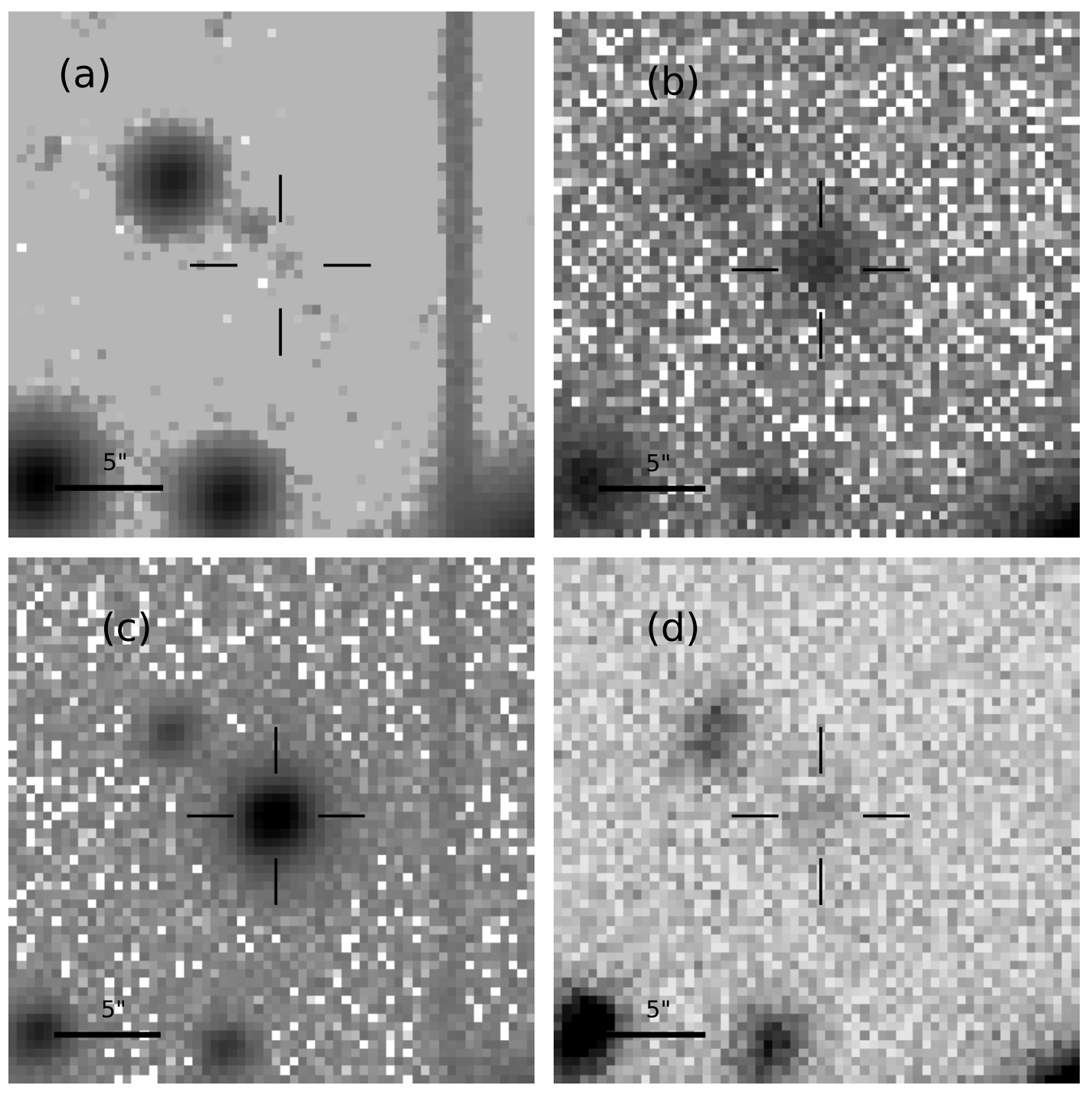 V-band images of KSP-OT-202104a. Panel (a) is a quiescent-phase image (stack of 549 × 60-s exposures, MJD 58795.27–59298.86) before the superoutburst; (b) the first detection (MJD 59313.40); (c) near peak (MJD 59314.01); and (d) the declining phase (MJD 59339.05). Labels (a)–(d) match those in the Figure 1 light curve. North is up, east is left. Crosshairs mark KSP-OT-202104a; bars show 5″ (Credit : Sang Chul Kim et al)
The result, published in The Astronomical Journal, is more than a single oddity since Every system found below the period minimum chips away at our confidence that we truly understand how the commonest stars in the universe grow old. The team now plans to hunt down more of these rule breakers, chasing the hidden path that lets a dying star spin so fast. Somewhere out there the universe is taking a star apart in a way we have yet to learn, and for once we are watching it happen.
Source : A Peculiarly Dying Star: Discovery of a Rare Dwarf Nova with a 72-Minute Orbital Period