NASA-гийн Олон улсын сансрын станцад байрлах хүйтэн атомын лабораторийн хүчин чадлыг өргөжүүлснээр бодисын тав дахь төлөвийг судлах боломж улам бүр нэмэгдлээ.
NASA-гийн “Cold Atom Lab” буюу Хүйтэн атомын лаборатори нь квантын онолыг судлах зориулалттай, хөргөгчний хэмжээтэй өвөрмөц төхөөрөмж юм. Энэхүү лаборатори нь -273 хэм хүртэлх температурыг -459 хэмээс доош буулгаж, сансрын бичил таталцлын нөхцөлд бодисын тав дахь төлөв болох “Бозе-Эйнштейний конденсаци”-ийг шинжлэн судалдаг.
Бозе-Эйнштейний конденсаци нь 1924 онд Альберт Эйнштейний таамагласнаар, атом үнэмлэхүй тэг хэмд ойртох үед нэгдмэл квантын шинж чанартай нэгэн цогц бүтэц болж нэгддэг үзэгдэл юм. Энэхүү төлөв нь үрэлтгүй шингэний урсгал болон эсэргүүцэлгүй цахилгаан дамжуулалт зэрэг физикийн чухал үзэгдэлтэй нягт холбоотой байдаг.
Сансрын бичил таталцлын нөхцөл нь квантын долгионыг дэлхий дээрх лабораториудтай харьцуулахад илүү том хэмжээтэйгээр, удаан хугацаанд ажиглах боломжийг олгодог. NASA-гийн тийрэлтэт хөдөлгүүрийн лабораторийн төслийн эрдэмтэн Итан Эллиоттын тэмдэглэснээр, энэхүү судалгаа нь квантын физикийн шинэ үеийн технологийн дэвшлийг хурдасгахад чиглэж байна.
Тус лабораторид рубиди эсвэл калийн хийг 400 хэм хүртэл халааж, вакуум камерт оруулан лазер болон соронзон орон ашиглан хөргөдөг. Энэхүү үйл явц нь квантын ертөнцийн хязгаарыг удирдах боломжийг олгодог бөгөөд төслийн менежер Камал Оудриригийн хэлснээр, хийгдсэн шинэчлэл нь энэ хязгаарыг улам бүр тэлж байна.
https://science.nasa.gov/mission/cold-atom-laboratory/
https://www.britannica.com/science/Bose-Einstein-condensate
Дэлгэрэнгүйг эх сурвалжаас харах
Эх сурвалжийг нээх ↓
It’s sometimes easy to overlook the fact that the International Space Station (ISS) is a giant lab where scientists study everything from biology to physics—but in space.This extraordinary resource makes extraordinary research possible—like creating a fifth state of matter in space.
In a recent statement, NASA announced the launch of the fourth update to the Cold Atom Lab, a “one-of-a-kind” facility to explore quantum theory and applications. The lab is about the size of a mini fridge and operates at temperatures below -459 degrees Fahrenheit (-273 degrees Celsius). With the added factor of microgravity, the lab’s conditions are ideal for investigating a quantum object called a Bose-Einstein condensate—a “fifth” state of matter beyond solids, liquids, gases, and plasma.
“In the previous century, there was a quantum revolution that led to lasers, cellphones, and MRIs for medical imaging,” Ethan Elliott, deputy project scientist for Cold Atom Lab at NASA’s Jet Propulsion Laboratory (JPL), said in the statement. “We’re performing quantum 2.0—direct manipulation of large quantum states—and we hope for similar gains in quantum tech by advancing this science in orbit.”
Nobel-winning physics
In 1924, Albert Einstein predicted that at near-absolute zero temperatures, separate atoms would consolidate into a single quantum entity described by wave functions. Einstein built upon quantum formulations by Indian physicist Satyendra Nath Bose. Hence, the idea came to be known as theBose-Einstein condensate.
However, creating and maintaining those states proved difficult, and it was only in 1995 that researchers first succeeded in realizing Bose-Einstein condensates. (These physicists were co-awarded the 2001 Nobel Prize in Physics for this achievement.) When the condensates became reality, scientists also realized that the rare systems were related to two critical low-temperature phenomena: superfluidity (liquid movement with zero friction) and superconductivity (electron movement with zero resistance).
Cold and floaty
The Cold Atom Lab’s goal is to better understand those properties, as superfluid, superconducting materials will be key to creating next-generation quantum technologies. The lab leverages how the microgravity of low Earth orbit amplifies the wave functions created by the condensates. According to NASA, these conditions allow researchers to study larger quantum waves for a longer period of time compared to Earthbound labs.
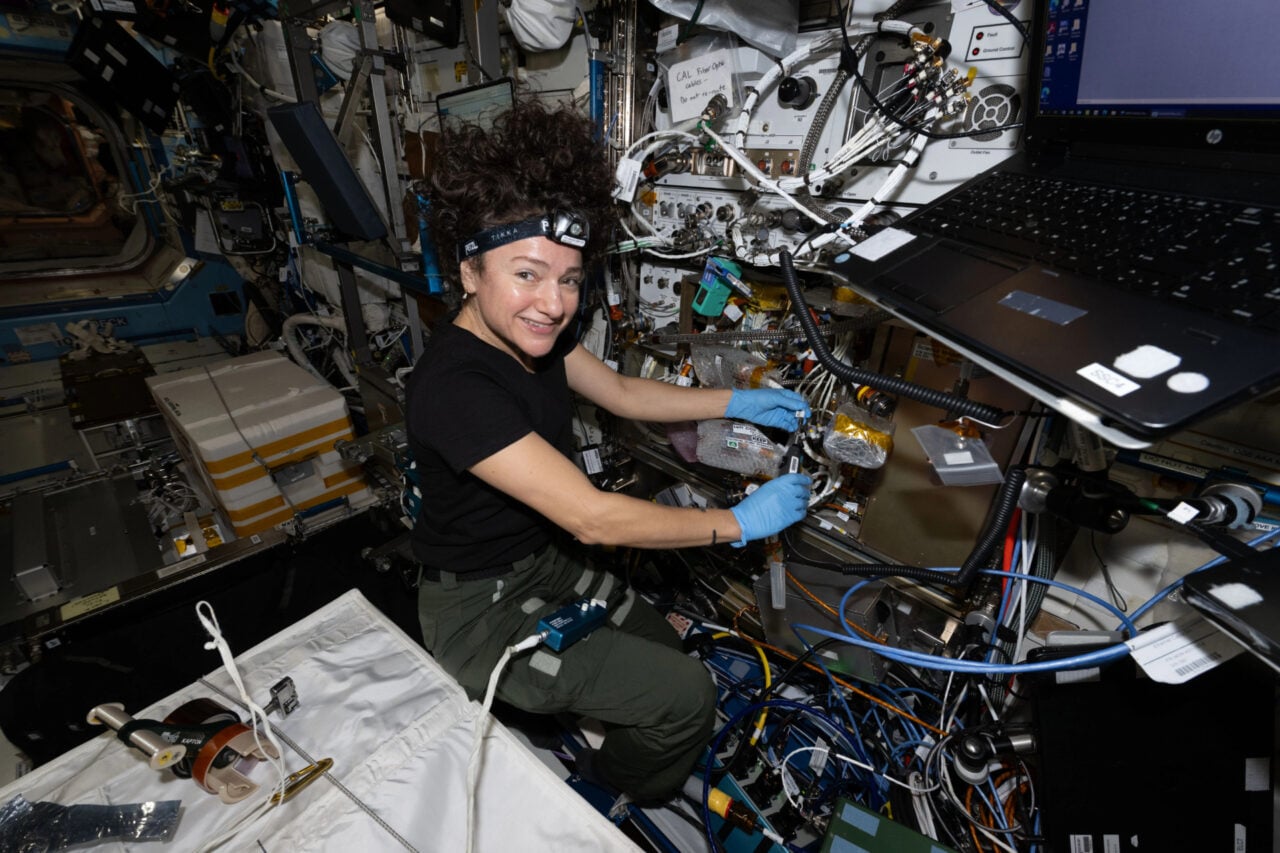
“Ultracold matter can behave in ways that are not only unexpected but that also enable extremely precise measurements of time, gravity, and motion,” said Jason Williams, a JPL scientist affiliated with the Cold Atom Lab. “The lab has lots of tools—especially with this latest upgrade—to let us probe the nature of the universe.”
Each experiment operates on an instrument collection called the science module. First, researchers heat up a strip of rubidium or potassium metal up to 740 degrees F (400 degrees C), which fills a vacuum chamber with gas. Then lasers fire at the gas, which drains energy from and cools down the gas atoms. Finally, a magnetic trap holds the gas in place, after which researchers apply finishing touches to further decrease the temperature, “bringing it close to a standstill and maximizing its time in microgravity,” NASA explained.
“It’s the closest thing we have to controlling the boundary of the quantum world,” said Kamal Oudrhiri, project manager of Cold Atom Lab. “This new upgrade pushes that boundary even further.”