АНУ-ын Пенсилвани муж улсын хойд хэсэгт орших Cherry Springs State Park нь гэрлийн бохирдолгүй, тэнгэрийн эрхэс тод харагддаг дэлхийн цөөн газрын нэг юм.
Пенсилвани мужийн Cherry Springs State Park нь 2008 онд DarkSky International байгууллагаас гэрчилгээ авсан одон орон сонирхогчдын гол цэг юм. 82 акр талбай бүхий энэхүү газар нь хотын гэрлийн бохирдлоос хол тул Сүүн зам болон бусад од эрхсийг тод харах боломжийг олгодог. Тус парк нь урьд нь онгоцны буудал байсан тэгш талбайтай тул тэнгэрийн хаяаг бүрхэх зүйлгүй, панорама зураглалаар одод ажиглах хамгийн тохиромжтой орчин бүрдүүлжээ.
Аялагчид тус паркийн кемпингэд байрлаж, ойр орчмын Susquehannock State Forest болон Pine Creek Gorge-ийн хавцал, хүрхрээ зэрэг байгалийн үзэсгэлэнт газруудаар явган аялал хийх боломжтой. Одон орон судлаачид болон гэрэл зурагчдад зориулсан тусгай ажиглалтын талбайг ашиглахын тулд газар дээр нь зөвшөөрөл авах шаардлагатай бөгөөд энд цагаан гэрэл ашиглахыг хориглодог. Энгийн жуулчдад зориулсан нийтийн ажиглалтын талбай нь 24 цагийн турш үнэ төлбөргүй нээлттэй байдаг.
Одод ажиглахад цаг агаарын нөхцөл хамгийн чухал бөгөөд ихэвчлэн долдугаар сараас есдүгээр сар хүртэл тэнгэр цэлмэг байдаг. Шинэ сартай үе нь одод хамгийн тод харагдах хамгийн таатай үе юм. Паркийн мэргэжилтнүүд зуны улиралд олон нийтэд зориулсан одон орны боловсролын хөтөлбөр, дурангаар од харах арга хэмжээг баасан болон бямба гарагт тогтмол зохион байгуулдаг.
Дэлгэрэнгүйг эх сурвалжаас харах
↓Эх сурвалжийг нээх ↓
Perfecting my down-dog in a dark field wasn’t how I expected to spend my first night in Pennsylvania’s stargazing oasis, Cherry Springs State Park. Yet there I was, alternating between yoga positions to pass the hours until the clouds cleared.
I’d always wanted to visit. Cherry Springs is a magnet for astrotourists because it’s one of the few truly dark getaways in the northeast U.S. Nearly two decades ago, the 82-acre getaway became one of the first destinations certified by light pollution authority, DarkSky International. What makes it even more special: it puts the glimmering Milky Way, which the majority of us can’t see at home due to artificial light, within easier reach.
Cherry Springs State Park lies in north-central Pennsylvania, within a five-hour drive of about 47 million people, including me—a Cleveland-based astronomy enthusiast. I made the 240-mile drive back in August 2025. My goal was simple. I needed to photograph the Milky Way for a stargazing book I was writing. My favorite cloud-prediction tool, the Windy.com app, forecasted clear skies after 11 P.M.
The clouds were relentless before midnight, so I did impromptu yoga to make the most of my time. At 12 A.M., things turned interesting. The first star sparkled through the clouds, and within 30 minutes, I spotted more. The clouds thinned, and I admired and photographed a dome of pinpricks with the dazzling Milky Way the rest of the night.
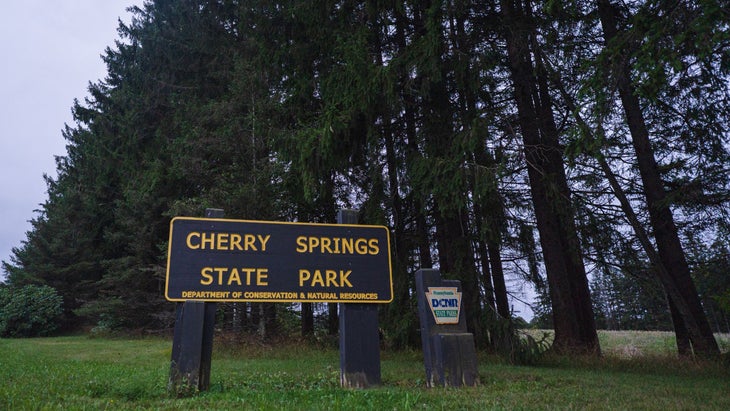
Why Visit Cherry Springs State Park
Cherry Springs State Park, named for its abundance of black cherry trees, was a pioneer in today’s ever-growing astrotourism movement. It became a DarkSky-certified park in 2008, although visitors admired its heavenly vistas well before that.
“My former supervisor discovered this astronomer on the field late at night—an astronomer,” Tim Morey, Cherry Springs State Park natural resources specialist, says of the park’s first foray into astrotourism. The staff came to know the man well, and he “really helped open the park’s eyes to astronomy.”
After that, Morey and his team learned beginner astronomy and how to protect their fleeting natural resource: darkness. “Many people in the eastern U.S. can’t see the Milky Way where they live, or even from a nearby park or forest,” he says. In this remote escape, it’s dark enough to see not only the stars and Milky Way but deep-space objects like star clusters and galaxies, or on the luckiest nights, the northern lights.
Most travelers use Cherry Springs as their home base, with nights camping at the state park (reservations recommended) and days spent exploring the mountainous Pennsylvania Wilds that surround it. Thousands of trail miles weave through the region’s woodlands, including nearby Susquehannock State Forest. The area’s waterways attract anglers and kayakers, and nature lovers flock to the 45-mile Pine Creek Gorge, a mosaic of deep canyon walls and waterfalls within an hour of the park.
Come dusk, no view beats the dark and expansive vista at Cherry Springs. “We are on top of a hill,” says Susan Schenck, environmental education specialist. This topography in an otherwise mountainous area ensures the night sky is unobstructed.
The stargazing field I sky-watched from is especially primed for observations. Nearly a century ago, it was cleared to be an airstrip. “There aren’t as many trees blocking the view,” she says. “So it’s a wide-open space on top of a mountain, which lends itself to these panoramic views of the night sky.”
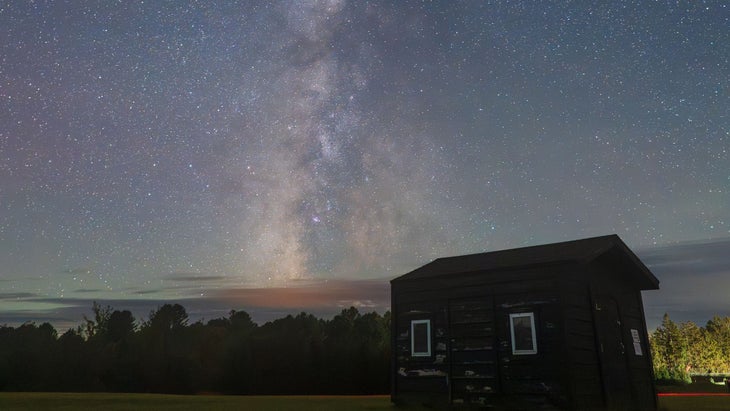
2 Astronomy Experiences at Cherry Springs
Stargazing is a bit of a choose-your-own-adventure here. First, there’s a general and free sky-watching experience, like the one I enjoyed. This includes admiring the cosmos from a spacious, tree-lined field—either from the park’s amphitheater or farther away from the parking lot in your own chair. (For your neck’s sake, try the NEMO Stargaze Reclining Chair.)
The field abuts the state park’s campground, and stargazers and campers can come and go from the viewing field as they please. A tall mound in the parking area blocks the entry and exit headlights. I recommend this option for all but the most serious stargazers.
With a permit (acquired onsite), professional astronomers and astrophotographers can access the adjacent and highly protected overnight astronomy observation field. Sky-watching is much stricter on this side. While red lights are encouraged everywhere in the park, white light is absolutely forbidden in the observation field. To avoid disrupting telescope observations or imaging, patrons must arrive before dark and can’t leave until the morning. All interior vehicle lights must also be shuttered or covered with red filters.
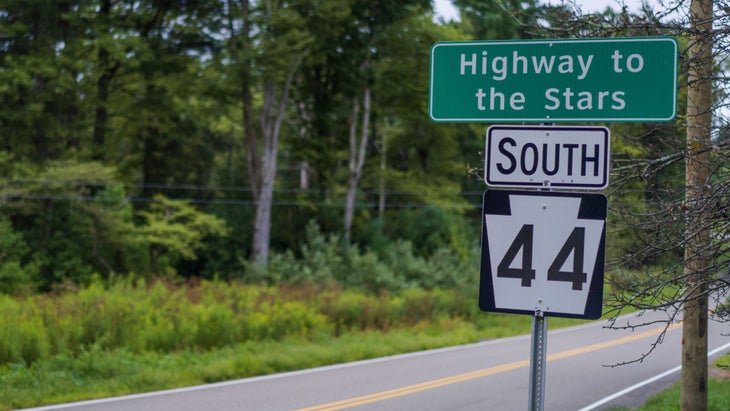
When to Stargaze at Cherry Springs State Park
As I learned, cloud cover can make or break your Cherry Springs experience. Certain times of year promise better odds. “The later in the summer you go, the clearer it tends to be,” says Schenck, noting July through September are most ideal.
In my experience, the forecasts are most accurate a day or two before your trip. In mid-August, my Windy.com app predicted cloudy skies until a break at 11 P.M. It was only off by about an hour.
Another nightscape consideration is the moon’s phase. You’ll see more stars and the best Milky Way views on the nights of or just before and after a new moon.
You can visit any night; the main public park is free and open 24 hours throughout the year. In the summer, staff hosts family-friendly programming on Friday and Saturday nights, with themes like nocturnal ecology or space science.
“At around 9 P.M., we do a laser-guided night sky tour to point out stars, planets, and constellations,” says Schenck. “Once it’s properly dark around 10 P.M, we invite the public to come look through our park telescopes.” Several local astronomy clubs host summer and fall festivals and star parties in the park, too.
Cherry Springs State Park’s programming is designed to help people of all ages connect and fall in love with the night sky. “It’s about education, and kids’ blinky sneakers are welcome,” says Morey. “We want children to come and enjoy this because they’re the future of this resource. They’ll decide whether or not it’s here for the next generation.”
The post Welcome to the Remote Pennsylvania State Park Where You Can Actually See the Milky Way appeared first on Outside Online.