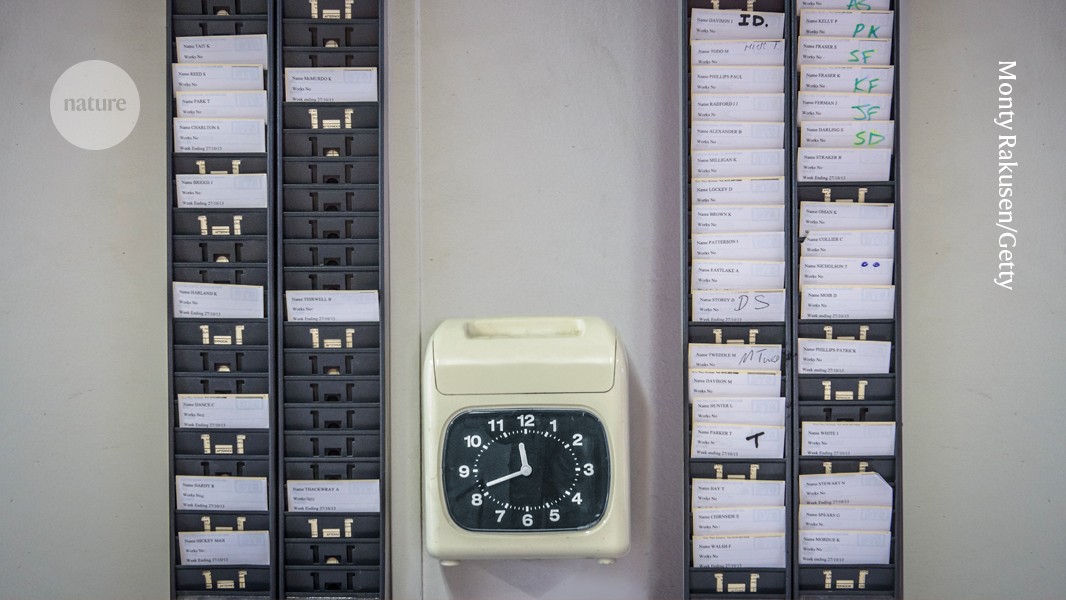
Судалгаанд оролцогчдын дийлэнх нь докторын зэрэг горилж буй оюутнууд долоо хоногт 40-өөс дээш цаг ажиллах шаардлагатай болдог гэж үзжээ.
Nature сэтгүүлээс зохион байгуулсан санал асуулгад оролцсон 6,046 оюутан болон эрдэмтдийн 78 хувь нь докторын судалгаандаа долоо хоногт 40-өөс дээш цаг зарцуулдаг гэж хариулжээ. Тэдний зарим нь бүр долоо хоногт 80-аас доошгүй цагаар ажилладаг байна. Зөвхөн 20 хувь нь л докторын зэрэг хамгаалах ажлаа “9-өөс 5 цаг” хүртэлх ажлын цагийн хуваарийн дагуу амжуулж чаддаг гэж мэдэгджээ.
Судлаачид энэхүү ачааллыг судалгааны чиглэл, хувь хүний бүтээлч байдал болон удирдагч багшийн хүлээлттэй холбон тайлбарлаж байна. Тухайлбал, онолын судалгааг тодорхой цагийн хуваариар хийх боломжтой мэт боловч туршилтын судалгаа нь цаг хугацааны хувьд уян хатан бус байдаг аж. Түүнчлэн, судалгааны ажлын дарамт нь ажлын цаг дууссаны дараа ч оюутнуудыг сэтгэл зүйн хувьд тайван байлгадаггүй гэдгийг мэргэжилтнүүд онцолжээ.
Зарим эрдэмтдийн зүгээс докторын зэрэг горилох ажлыг мэргэжлийн үндсэн ажилтайгаа уялдуулах нь үр дүнтэй болохыг санал болгосон байна. Тухайлбал, Крис Вудворт-Линас мэргэжлийн ажлаа судалгааныхаа гол цөм болгосноор ажлын ачааллыг тэнцвэржүүлсэн туршлагатай. Гэсэн хэдий ч судалгааны ажлын амжилт нь удирдагч багшийн зүгээс тухайн оюутны ажлыг хэрхэн үнэлж, дэмжиж байгаагаас ихээхэн хамаардаг гэж салбарын мэргэжилтнүүд дүгнэжээ.
Дэлгэрэнгүйг эх сурвалжаас харах
↓Эх сурвалжийг нээх ↓
Credit: Monty Rakusen/Getty
In April, Nature published advice from doctoral candidates and PhD holders who had managed the unthinkable: pursuing their PhD nine-to-five, or thereabouts.
In response to a follow up poll in the Nature Briefing newsletter, 20% of 6,046 past and present doctoral students said that they spent up to 40 hours per week on their PhDs. But the vast majority — 78% — spent more than that, with some saying their PhDs required at least 80 hours a week (see ‘Clocking in’).
Readers were asked to reflect on the concept of a nine-to-five PhD. Here’s what they had to say.
Creativity doesn’t happen nine-to-five
“The viability of a nine-to-five PhD depends on the research topic. If it’s experimental, no way. If it’s theoretical, then maybe. But my creativity doesn’t turn on at 9 a.m. and turn off at 5 p.m. Even now, long after graduation, I think about work even in bed.” — James Cole, US government expert on optical and photonic approaches to quantum computing. Graduated in particle physics at the University of Maryland, College Park, in 1987

The PhD workload is omnipresent
“From a well-being perspective, the pressure associated with finishing a PhD, having already secured a job, means that it is nearly impossible to not feel crushing guilt when not working. So, the answer for me is that doing a PhD today means omnipresent work.” — Andre Comandon, data manager at the Office of Racial Equity for the State of Vermont. Graduated in urban and regional planning from the University of California, Los Angeles, in 2020.
Does your supervisor think that you’re putting in the effort?
“The main question is, does your supervisor think a PhD can be done in 40 hours per week? Because if not, then you can be as efficient and quick as you want and get everything done, and it will still not be seen as enough.” — Jens Niemann, postdoc at the Leibniz Research Centre for Working Environment and Human Factors (IfADo) in Dortmund, Germany. Graduated in immunology from IfADo this year.
“How much time is spent on a PhD is usually up to the student. However, everyone working with them is very aware of this choice, and the degree of support the student gets for their research depends on the importance attached to the work by the student, as perceived by those supporting the research.” — Edward Hartouni, semi-retired consultant. Graduated in experimental physics from Columbia University, New York City, in 1984.
A plug for the mid-career PhD
“I was very fortunate in that my professional paid work and my PhD work were one and the same. In the years since, I have suggested to colleagues who were considering a PhD that, if they can swing it, they should make their paid work the core of their thesis. The key for me was doing my PhD in mid-career.” – Chris Woodworth-Lynas, self-employed scientific consultant. Graduated in marine geoscience from Bangor University, UK, in 1992.

