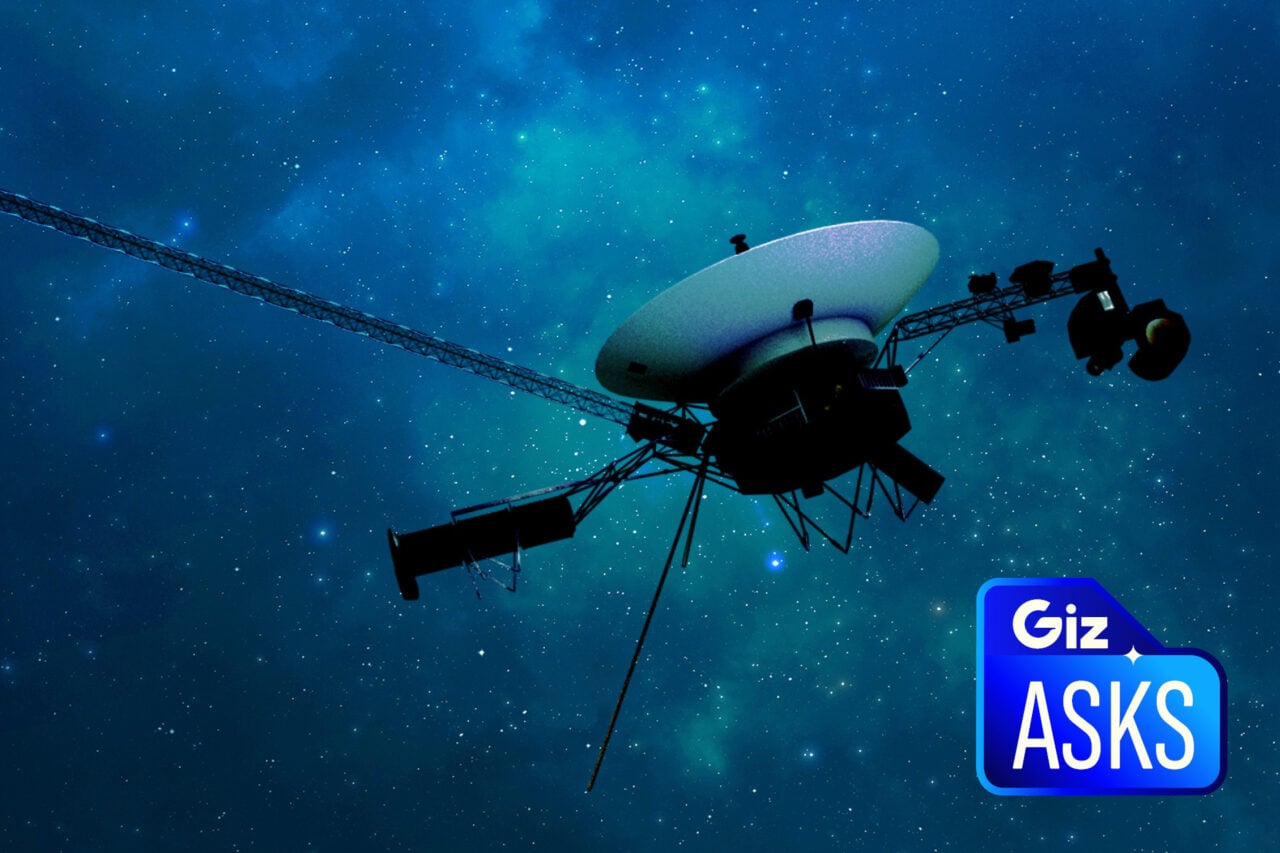
Эрдэмтэд хүн төрөлхтний анхны оддын хоорондын сансрын нислэгийн зорилтот цэгийг тодорхойлохын ач холбогдлыг хэлэлцэж байна.
Наса-гийн “Voyager 1”, “Voyager 2” хөлгүүд санамсаргүй байдлаар нарны аймгаас гарч оддын хоорондын орон зайд хүрсэн анхны төхөөрөмжүүд болсон юм. Гэвч одоо эрдэмтэд оддын хоорондын аялалыг бодит ажил хэрэг болгохын тулд аль зүгт, ямар зорилгоор хөлөг илгээх талаар судалгаа хийж байна. Физикч Мичио Какугийн тэмдэглэснээр, сансрын асар уудам зайн улмаас энэ төрлийн аялал нь шинжлэх ухааны уран зөгнөлт мэт санагдах “инээдмийн хүчин зүйл”-тэй тулгардаг ч судлаачдын хувьд сонирхолтой сэдэв хэвээр байна.
Калифорнийн их сургуулийн бөөмийн физикч Даниел Уайтсоны үзэж буйгаар, анхны ийм номлолыг Альфа Центаврын систем шиг олон гарагтай, нам гүм одтой газарт илгээх нь зүйтэй. Энэ нь гараг эрхсийн бүтэц, физик, соронзон орон болон таталцлыг судлах байгалийн лаборатори болох юм. Мөн аяллын явцад сансрын туяаг хэмжих, техносигнатур буюу харийн технологийн ул мөрийг хайх боломж бүрдэнэ.
Флоридагийн их сургуулийн астробиологич Эми Уильямс болон Корнеллийн их сургуулийн Лиза Калтенэггер нар амьдрал оршин байх магадлалтай “алтан бүс”-д байрлах Проксима Центавр б, Росс 128, Траппист-1 систем зэрэг чулуурхаг гарагуудыг онцолж байна. Хэдийгээр эдгээр систем рүү хүрэхэд одоогийн технологиор олон арван мянган жил шаардагдах ч, гэрлийн хурдны 10-20 хувьтай дүйцэхүйц хурдтай микро хөлгүүд бүтээх нь ирээдүйн зорилт юм. Эрдэмтдийн зүгээс агаар мандалтай, дэлхийтэй төстэй гарагуудыг судлах нь амьдралын ул мөрийг олох гол түлхүүр гэж үзэж байна.
Манчестерийн их сургуулийн астрофизикч Майкл Гаррет нэг том хөлөг илгээхийн оронд жижиг хөлгүүдийн флотыг олон зуун оддын зүгт зэрэг илгээх нь илүү үр дүнтэй гэж үздэг. Энэхүү түгээмэл арга нь эрсдэлийг бууруулж, сансрын орон нутгийн хөршүүдээ илүү өргөн хүрээнд зураглах боломж олгоно. Харвардын их сургуулийн астрофизикч Ави Лоэб сансрын уудам руу гарахаасаа өмнө манай нарны аймагт нэвтэрч буй оддын хоорондын биетүүдийг судлах нь нэн тэргүүний ажил гэдгийг онцолж байна.
https://science.nasa.gov/mission/voyager/where-are-voyager-1-and-voyager-2-now/
https://mkaku.org/home/articles/the-physics-of-interstellar-travel/
https://gizmodo.com/tag/project-hail-mary
https://gizmodo.com/interstellar-rerelease-anniversary-4k-imax-chris-nolan-2000509278
https://wwnorton.com/books/9781324064657
https://people.clas.ufl.edu/amywilliams1/
https://research.manchester.ac.uk/en/persons/michael.garrett
https://astro.cornell.edu/lisa-kaltenegger
https://us.macmillan.com/books/9781250283641/alienearths/
https://news.cornell.edu/stories/2026/03/where-find-other-earths-new-list-narrows-down-targets
https://www.amnh.org/explore/news-blogs/star-systems-earth-study
https://astro.cornell.edu/news/how-spot-life-clouds-other-worlds
https://news.cornell.edu/stories/2024/04/search-alien-life-purple-may-be-new-green
https://lweb.cfa.harvard.edu/~loeb/
Дэлгэрэнгүйг эх сурвалжаас харах
Эх сурвалжийг нээх ↓
With all we’re finding out about things far beyond our solar system, it’s sometimes hard to remember that only two probes have actually traveled into interstellar space: NASA’s Voyager 1 and Voyager 2. Then again, the Voyager twins weren’t created with that specific intention; both were initially meant to study the outer solar system but miraculously lasted long enough to travel into interstellar space.
As physicist Michio Kaku has written, some scientists refer to a “giggle factor” when discussing interstellar travel, simply because the physics of traveling such enormous distances seems too far-fetched. Yet, the dream of reaching horizons past the heliosphere is something that garners excitement for scientists, space enthusiasts, and sci-fi fans who love movieslike Project Hail Mary or Interstellar.
But what if we could someday venture to the stars? For this week’s Giz Asks, we asked the experts: If humanity could point an interstellar mission at any target in the Milky Way—a star, an exoplanet, a black hole, or even a potential alien technosignature—where would you send it first and why?
The following responses may have been lightly edited for length and clarity.
Daniel Whiteson
Particle physicist, University of California, Irvine; author of DoAliens Speak Physics? And Other Questions about Science and the Nature of Reality.
If we’re talking about humanity’s very first true interstellar mission, my choice would probably be a nearby stellar system with a rich variety of targets, like multiple planets around a quiet star. That gives us the opportunity to test many ideas about how planets form, evolve, and interact within the same natural laboratory. Even if none of the planets turn out to be inhabited, we’d learn an enormous amount about planetary physics: atmospheres, magnetic fields, and geology. The Alpha Centauri system is a good choice.
But the journey is potentially as valuable as the destination. An interstellar probe is also an opportunity to test gravity over enormous distances, study the structure of the interstellar medium, measure cosmic rays outside the protective bubble of the Sun, and search for subtle deviations from our current understanding of physics.
Some of the most exciting discoveries in science have come from experiments that weren’t originally built to find them. We should include instruments capable of searching for technosignatures, unusual chemistry, or phenomena we haven’t even anticipated. Every time we’ve explored a new environment, from the deep ocean to the outer Solar System, nature has surprised us. The first interstellar mission will almost certainly discover new questions. That’s what makes it so exciting.
Amy Williams
Astrobiologist, University of Florida; member of the science team behind NASA’s Curiosity rover.
The decision of where to send the first directed exo-solar probe will likely require a balance between the destination of interest and the extraordinary time it will take for a probe to arrive. For perspective, exploration of the outer planets in our solar system are called ‘generational missions’, because someone who works on mission formulation may have retired by the time the mission is built, launches, and arrives at its destination. An example of this is the New Horizons mission, which took almost 10 years just for transit from Earth to Pluto. Using modern technology, it would take approximately 75,000 years to travel to the closest detected exoplanet, Proxima Centauri b, which is practically our neighbor at 4.2 light years away. Hypothetical new technologies aim to dramatically increase that rate of transit, perhaps approaching 10 to even 20% of the speed of light. Travel to Proxima Centauri b would then take several decades for an ultralight microprobe. Either way, these missions would push the boundaries of how a modern space mission operates, and require careful consideration of the destination.
As an astrobiologist, I am quite interested in whether there is life beyond Earth. Therefore, I would argue to send an interstellar probe to a potentially habitable rocky world, one that is perhaps close to Earth’s mass and at just the right distance from its parent star to enable the presence of liquid water on or near the surface (called the Goldilocks zone). The Goldilocks zone is not the only constraint on habitability, but it’s one that is easier to determine from remote observations. It is also easier to detect worlds larger than Earth, like the size of Jupiter or Neptune, but my interest in an Earth-mass world is to select a planet with some comparability to Earth. These have been harder to detect, but current exoplanet detection technologies have improved, and we now know of such worlds. The previously mentioned Proxima Centauri b initially sounds promising as it is 1.27x Earth’s mass and orbits in the Goldilocks zone. However, it orbits a red dwarf star which emits radiation that is likely to have stripped away the planetary atmosphere, making potential life on the surface rather unlikely.
I would prefer to explore a rocky world that is more likely to retain its atmosphere, such as Gliese 887d (a super-Earth planet 6x the mass of Earth), which is 10.7 light years away. If we can significantly reduce the time for transit, then some worlds in the Trappist-1 system (40 l.y. away) are very compelling. Trappist-1e, f, and g are in the habitable zone of their ultra-cool red dwarf star, which is less active than that of Proxima Centauri b. This may mean that one or more of these planets might retain an atmosphere despite the nature of their parent star and being tidally locked. Finally, if distance was no challenge, then I would love to see us explore Kepler-22b (640 l.y. away). At 2.4x Earth’s radius, this world might be rocky like Earth, a mini-Neptune composed of gas, or (excitingly to me) an ocean world.
Even if life is not discovered on the first exoplanet that we might explore in situ [on site], we will learn an unprecedented amount about the evolution and diversity of worlds beyond our own. We would truly be on a mission to explore strange new worlds!
Michael Garrett
Astrophysicist and director of the Jodrell Bank Centre for Astrophysics at the University of Manchester, U.K.
I think rather than sending a single spacecraft to a single destination, I would send a fleet of tiny interstellar probes to dozens, perhaps hundreds, of nearby stars. If future propulsion concepts can accelerate gram-scale spacecraft to a significant fraction of the speed of light, then the marginal cost of launching an additional probe may be relatively small. In that case, it makes sense to spread our bets rather than concentrate them.
The reason is simple: we already know that planets are common throughout the galaxy. While current surveys have identified thousands of exoplanets, we are only seeing the tip of the iceberg, and many nearby stars almost certainly host planetary systems that remain undiscovered. A distributed approach would maximise our chances of encountering unexpected worlds and phenomena. Not every probe needs to travel to a famous target such as Proxima Centauri b or another known potentially habitable planet. Some should certainly be directed towards the most interesting known systems, but many others could simply be sent to the nearest stars in all directions.
There is also a practical reason for this strategy. Interstellar exploration will require patience: even the fastest conceivable probes will take decades to reach their destinations. By sending many spacecraft simultaneously, we increase the scientific return and reduce the risk that a single failure will compromise the entire enterprise. The first generation of interstellar probes should be viewed as explorers and pathfinders, mapping our local stellar neighbourhood and testing the technologies needed for future missions.
Perhaps most importantly, history teaches us that exploration is often rewarded by discovering things we were not specifically looking for. The greatest scientific value may come not from visiting a single carefully chosen target, but from obtaining our first close-up glimpse of many different planetary systems. The first interstellar mission should therefore not be one mission at all, but a fleet of explorers fanning out through the local galaxy.
Lisa Kaltenegger
Astrophysicist and director of the Carl Sagan Institute, Cornell University; author of Alien Earths: The New Science of Planet Hunting in the Cosmos.
We just published the list of the best potentially habitable worlds to fly to if I had a Hail Mary. There are 46 known rocky worlds in the Habitable Zone so far—our best bets to find life as we know it. I’ll pick my three top systems here:
STOP 1: I’d pick Proxima Centauri b, our closest neighboring star, which hosts the closest possible Earth-like world at about 4 light-years’ distance. I’d look at our closest neighbor first.
STOP 2: The Ross 128 system is about 11 light-years away in the constellation Virgo, circled by an Earth-sized exoplanet (about 1.8 times Earth’s size). Any inhabitants of this world could have seen Earth transit our own Sun for more than 2,000 years, starting about 3,000 years ago; they lost their vantage point about 900 years ago, so what might they think of us?
STOP 3: If we have enough fuel, I’d nominate the Trappist-1 system with seven Earth-size planets at different distances from its star—from scorching hot to freezing. The Trappist-1 system, at about 45 light-years from Earth, hosts three potentially habitable planets the size—they would appear the size of our Moon in their sky, breathtaking—and of course the chances to find life are intriguing in that system, circling its red Sun. Three fascinating rocky worlds, one right at the inner edge, the middle, and the outer edge of its star’s habitable zone—with four additional rocky planets outside the Habitable Zone, which would show yet more intriguing worlds—we could imagine life as we don’t know it yet striving there. Like many other readers (and viewers), I loved Rocky in Hail Mary—a creative take on life as we don’t know it. While scientists have discovered the exoplanets around Trappist-1, they won’t be able to spot us until their motion takes them into the ETZ in 1,600 years. Potential observers in the Trappist-1 system will be able to see Earth for about 2000 years.
A mission would let us hunt for atmospheric fingerprints like oxygen, methane, and water and look for colors of life on these new worlds. If we just find ONE habitable world, it means there must be so many of them, because we have only just begun to detect signs of life at the edge of technological possibility.
All three systems are also within the region that Earth’s radio waves have already swept over (everything within 100 light-years is within Earth’s radio zone because we started sending out radio signals about 100 years ago, and they travel at the speed of light outwards). So anyone looking could not just see us but also hear us. I love how the search for life in the cosmos changes our view of the sky—look up tonight and think about these systems that could be searching for signs of life in the cosmos too; to me, that makes the cosmos just a bit more intriguing.
Avi Loeb
Astrophysicist, Harvard University; chair for the White House advisory council on unidentified anomalous phenomena (UAPs).
Before we choose a destination for the interstellar mission, my first priority is to study interstellar objects arriving near Earth since they have already travelled for billions of years and can educate us about the reality near other stars. We should check whether any of them exhibits biological or technological signatures.
The next interstellar object—say, 4I/Rubin, if it will be discovered by the Rubin Observatory in Chile—should be studied more closely than 3I/ATLAS was. For example, if it sheds methane gas near the Sun, we should check whether that might be a biological signature of microbial life. Also, if 4I/Rubin does not behave as expected for a comet or an asteroid, as 1I/`Oumuamua did, we should plan a rendezvous space mission that will intercept its path and take a high-resolution image of it.
On longer timescales, we can design our own interstellar spacecraft based on what we learn. Humanity will be remembered in the history books of the Milky Way galaxy only if we become an interstellar species. The destination can be selected depending on what we learn from interstellar objects. If we realize that another civilization sent probes to our backyard, we might decide to visit their backyard in reciprocity.

