Урт хугацаанд бохир агаараар амьсгалах нь мэдрэлийн эсийн үхжилттэй холбоотой өвчлөл, ялангуяа Паркинсоны өвчин үүсэх эрсдэлийг нэмэгдүүлдэг болохыг Кембрижийн их сургуулийн судлаачдын хийсэн мета-анализ харууллаа.
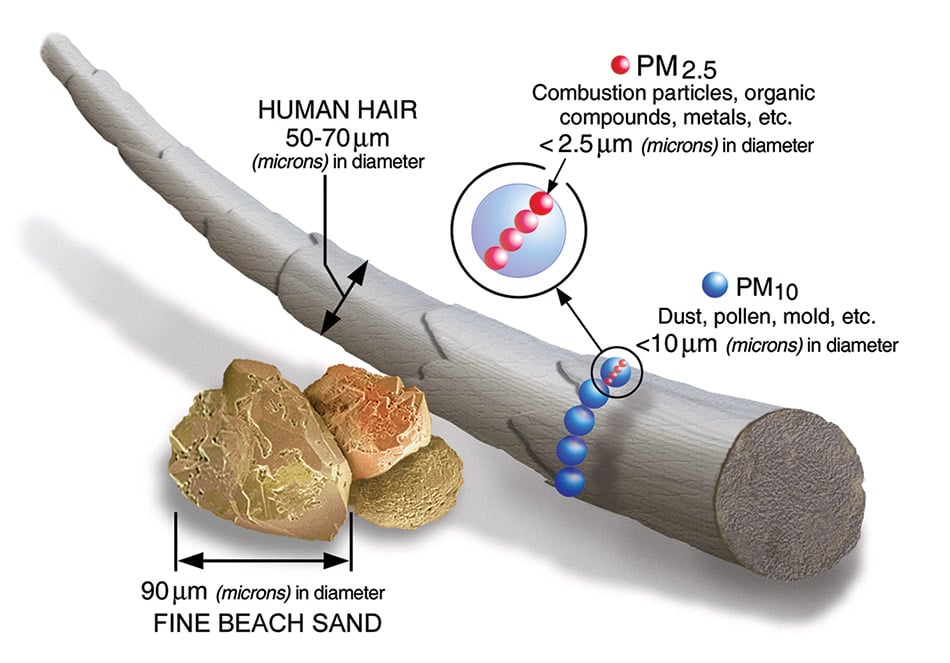
“Environment International” сэтгүүлд нийтлэгдсэн уг судалгаанд Хойд Америк, Европ, Азийн орнуудыг хамарсан 42 өмнөх судалгааг нэгтгэн дүгнэжээ. Шинжилгээгээр PM2.5 буюу нарийн ширхэгт тоосонцрын агууламж 5 микрограмм/м³-ээр нэмэгдэхэд Паркинсоны өвчин үүсэх эрсдэл 10 хувиар, харин PM10 тоосонцрын агууламж 15 микрограмм/м³-ээр нэмэгдэхэд эрсдэл 18 хувиар тус тус өсөж байгааг тогтоосон байна. Агаарын бохирдлын тоосонцор уушгиар дамжин цусанд орж, улмаар үрэвсэл, исэлдэлтийн стресс үүсгэн тархинд нөлөөлдөг болохыг эрдэмтэд тайлбарлав.
Судалгааны багийн ахлагч, Кембрижийн их сургуулийн клиникийн судлаач Анналан Наварартнам агаарын чанарыг сайжруулах нь зүрх судас, амьсгалын замын эрүүл мэндээс гадна Паркинсоны өвчнөөс сэргийлэхэд чухал ач холбогдолтой болохыг онцолсон байна. Гэсэн хэдий ч энэхүү судалгаагаар олон хатуу эд эсийн өвчин (MS) болон хажуугийн хатингаршилт хатуурал (ALS) зэрэг өвчний хувьд агаарын бохирдолтой шууд хамааралтай болох нь хангалттай нотлогдоогүй аж.
Мэдрэлийн дегенератив өвчнүүд удаан хугацааны туршид хөгждөг тул хүний амьдралын турш агаарын бохирдолд өртсөн хэмжээг тооцоолоход бэрхшээлтэй байдаг байна. Иймд энэ чиглэлээр илүү өргөн хүрээтэй, нарийвчилсан судалгаа хийх шаардлагатай байгааг эрдэмтэд тэмдэглэжээ.
Дэлгэрэнгүйг эх сурвалжаас харах
↓Эх сурвалжийг нээх ↓
We know that air pollution is bad for us, and if we think about it, it’s probably obvious that it’s particularly bad for our lungs.
But many people don’t realize how much it affects many other bodily systems.
Pollutants in the air don’t just get into our lung tissue and stay there.
The tiniest pollutants from car and truck tailpipe emissions, industrial sources, and wildfires can penetrate through the lungs and start circulating in our blood, affecting other organs. These fine particles can trigger inflammation and oxidative stress throughout the body
They can even get into the brain.
Studies in animals and people have shown evidence that those smallest particulates – known as PM2.5 – contribute to a laundry list of brain-related maladies, from dementia to MS, depression and anxiety, Alzheimer’s, brain tumors, and stroke.
Add another one to the list: A new meta-analysis led by researchers at the University of Cambridge in the UK, which reviewed decades of research, suggests that breathing polluted air for years could increase the risk of developing Parkinson’s disease.
The study, published in Environment International, analyzed 42 prior studies involving populations in North America, Europe, and Asia.
It’s the largest review yet to examine whether long-term exposure to outdoor air pollution is linked to several major neurodegenerative diseases.
The clearest signal emerged for Parkinson’s disease, which was the focus of 26 of the analyzed studies.
Researchers found that for every 5-microgram-per-cubic-meter increase in long-term exposure to PM2.5 (fine particulate air pollution), the risk of developing Parkinson’s increased by about 10 percent.
Exposure to larger pollution particles, called PM10, was associated with an 18 percent higher risk of Parkinson’s disease for every 15-microgram-per-cubic-meter increase.
PM10 are the particles you can often see with the naked eye, like pollen, agricultural dust, soot and ash from fires, the smoky part of diesel exhaust, or mold spores.
To ground those numbers in reality, the researcherspoint out that the average PM2.5 concentration measured along roadsides in Central London in 2023 was 10 micrograms per cubic meter.
That doesn’t mean everyone living in polluted air (which is common in urban areas but increasingly so in rural areas too) is destined to develop Parkinson’s, just that the risk increases.
Individual risk remains relatively low, and many other factors – including genetics, age, and diet – also influence who develops the disease. But because millions of people are exposed to air pollution every day, even a modest increase in risk could translate into a substantial number of additional cases across a population.
Importantly, the other risk factors for the disease, like age and genetics aren’t things that can be changed, air pollution is largely within human control.
“As the global burden of neurodegenerative diseases continues to grow, understanding modifiable environmental risk factors is increasingly important,” Annalan Navaratnam, a clinical researcher at the University of Cambridge, said on LinkedIn.
“Our findings add to the evidence that improving air quality could have benefits extending beyond cardiovascular and respiratory health, potentially contributing to strategies to reduce the burden of Parkinson’s disease.”
Cleaner transportation, reduced industrial emissions and stricter air quality standards won’t eliminate Parkinson’s disease, but they may help lower the number of people who develop it.
The review wasn’t entirely bad news, however.
The researchers found no convincing evidence that long-term exposure to PM2.5 or nitrogen dioxide (another common tailpipe and industrial emission) increased the risk of multiple sclerosis, nor did they find a clear link between PM2.5 and motor neuron diseases such as amyotrophic lateral sclerosis (ALS).

But the researchers also pointed out that there simply weren’t many studies to analyze – just three each for multiple sclerosis and motor neuron disease – making it difficult to draw firm conclusions.
Also, the findings and lack of findings for some diseases “may be down to how the studies were designed,” says Navaratnam.
“We urgently need more research, in larger populations, to examine what is a significant public health issue.”
One of the biggest challenges is that neurodegenerative diseases develop slowly, often over decades. That makes them notoriously difficult to study. People move, pollution levels change over time, and accurately estimating an individual’s lifetime exposure isn’t straightforward.
Still, usable information can be gleaned by looking at large population groups or multiple studies, as this research does.
Related: What’s Wildfire Smoke Actually Doing to Your Body? Studies Show It Might Be Worse Than You Think
The researchers argue that air pollution deserves attention as one of the few potentially modifiable risk factors for these diseases.
“These findings add to a growing and strong body of evidence of the many adverse health impacts of air pollution worldwide ranging from a wide variety of diseases across every human organ system to premature mortality,” epidemiologist Alexandra Tien-Smith from the University of Cambridge says.
This research serves as another reminder that clean air is doing more than keeping skies clear instead of smog-grey. It may also be protecting one of our body’s most important organs.
The study has been published in Environment International.
This article was fact-checked by Starre Julia Vartan and edited by Starre Julia Vartan. While we pride ourselves on our process, we are only human. If you spot a mistake, please let us know.