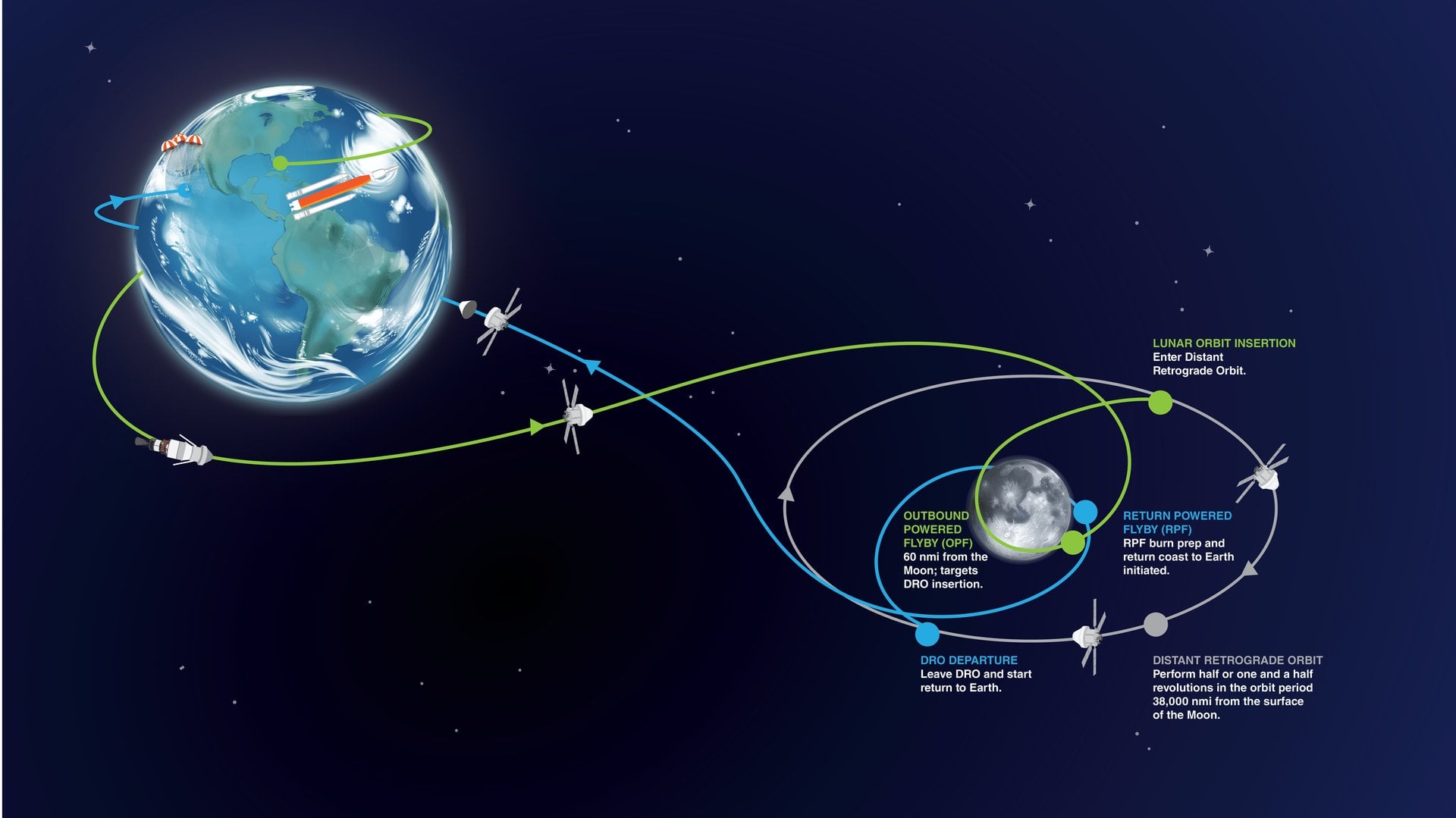
Сарны тойрог замд нэмэгдэж буй хөлөг болон объектууд нь мөргөлдөх аюулыг дагуулж байгаа тул судлаачид сансрын хог хаягдлын тархалтыг нарийвчлан шинжилж байна.
Дэлхий болон Сарны хоорондох зайд (cislunar space) хэрэгжүүлэхээр төлөвлөж буй NASA-гийн Artemis хөтөлбөр, Хятад болон Оросын хамтарсан Олон улсын сарны судалгааны станц (ILRS), ESA-гийн Argonaut зэрэг олон улсын томоохон төслүүд нэмэгдэж байна. Энэхүү хөлгүүдийн хөдөлгөөн нь ирээдүйд Сарны тойрог замд сансрын хог хаягдал үүсэх, улмаар мөргөлдөх эрсдэлийг нэмэгдүүлж буй юм. Үүнтэй холбогдуулан Хятадын Шинжлэх ухааны академийн (CAS) судлаачид Сарны алсын тойрог замд (DRO) гарч болох мөргөлдөөний дараах хог хаягдлын тархалтыг загварчлан судалжээ.
Судалгааны баг “Тойрог замын хязгаарлагдмал гурван биетийн асуудал” (CR3BP) загварыг ашиглан сансрын объектуудын лавлагаа тойрог замыг байгуулж, NASA-гийн “Стандарт задралын загвар”-ыг ашиглан хог хаягдлын хэлтэрхийнүүдийн тархалтыг тооцоолсон байна. Үүний дараа “Би-тойрог замын хязгаарлагдмал дөрвөн биетийн асуудал” (BCR4BP) загварыг ашиглан 30 хоногийн турш хог хаягдлын тархалтын явцыг симуляци хийжээ. Үр дүнд нь хог хаягдлын хэлтэрхийнүүдийн 3.5 хувиас бага нь Сарны хамгаалалтын бүсэд нэвтэрч байгааг тогтоосон байна.
Сарны тойрог замд үүсэх хамгаалалтын бүсэд хог хаягдал нэвтрэх дундаж түвшин 3 хувь орчим байдаг бөгөөд ихэнхдээ мөргөлдөөн болсноос хойш нэг өдрийн дотор дээд цэгтээ хүрдэг аж. Судлаачид зарим тохиолдолд хог хаягдал нь тухайн бүсэд хэдэн долоо хоногийн турш үлдэж болохыг тогтоосон бөгөөд эдгээр мөргөлдөөн нь ихэвчлэн өндөр хурдтай дайран өнгөрөх шинжтэй байдаг байна. Энэхүү судалгаа нь ирээдүйн сансрын номлолуудыг аюулгүй болгох, сансрын хог хаягдлыг бууруулах удирдамжийг боловсруулахад чухал ач холбогдолтой юм.
https://arxiv.org/pdf/2607.15709
Дэлгэрэнгүйг эх сурвалжаас харах
Эх сурвалжийг нээх ↓
Cislunar space has become the focal point of considerable interest and strategic planning, thanks to the many proposed missions to send crews to the Moon in the next decade. This includes NASA’s Artemis Program, China and Russia’s International Lunar Research Station (ILRS), the European Space Agency’s Argonaut program, and others. The long-term goal of these programs includes creating infrastructure between Earth and the Moon that will facilitate continued exploration and even development.
As a result, it is imperative to investigate the orbits of these debris objects to determine whether any pose a collision risk. In a recent paper, a team of researchers from the Chinese Academy of Sciences (CAS) studied the dispersion of debris clouds of objects in Distant Retrograde Orbits (DROs) pending a collision. Their findings offer insight into debris evolution within the Earth-Moon system that could lead to safety guidelines and mitigation strategies for future missions bound for the Moon.
In recent years, international missions to the Moon have surged, reflecting the growing presence of more national and commercial entities in space. This includes China’s Longjiang-2 orbiter and the more recent missions of the Chang’e program. There’s also the Indian Space Research Organisation’s (ISRO) Chandrayaan-2 and -3 orbiters, South Korea’s Danuri orbiter, Israel’s Beresheet lander, and Japan’s Hakuto-R Mission 1.
Artist’s impression of Artemis astronauts performing extra-vehicular activity (EVA) on the lunar surface. Credit: NASA
In addition to the success of the uncrewed Artemis I test flight and the crewed Artemis II circumlunar flight, NASA’s CAPSTONE mission (launched in June 2022) became the first spacecraft successfully inserted into a near-rectilinear halo orbit around the Moon. By 2030, NASA and China both plan to send astronauts/taikonauts to the lunar surface, followed by successive missions and the creation of permanent facilities.
For China, this will include the ILRS, which will consist of surface elements and (potentially) an orbital element. While NASA planned on deploying the Lunar Gateway to a halo orbit since 2012, they have since pivoted to the creation of surface infrastructure and a permanent Moon base. The amount of traffic this will require, using landers and lunar ascent vehicles (LAVs) to ferry payloads and crew to and from the surface, will be substantial.
The presence of debris in cislunar space and in orbit around the Moon will pose a significant collision risk for missions traveling to and from the Moon. In addition to impacting operational missions, collisions between debris objects will lead to breakup events, creating a cascade effect where more debris increases the likelihood of collisions. This is akin to fears regarding space junk and the Kessler Effect in Low-Earth Orbit (LEO), which poses a threat to satellite constellations, spacecraft, and space stations.
Addressing the risk of collisions, the team evaluated the dispersion of debris clouds following potential breakup events. This consisted of applying a Circular Restricted Three-Body Problem (CR3BP) model to construct the reference orbits. Meanwhile, the NASA Standard Breakup Model was applied to simulate debris fragmentation at multiple locations along three DROs. The final step, which simulated debris propagation over the course of 30 days, was performed using the Bicircular Restricted Four-Body Problem (BCR4BP) model.
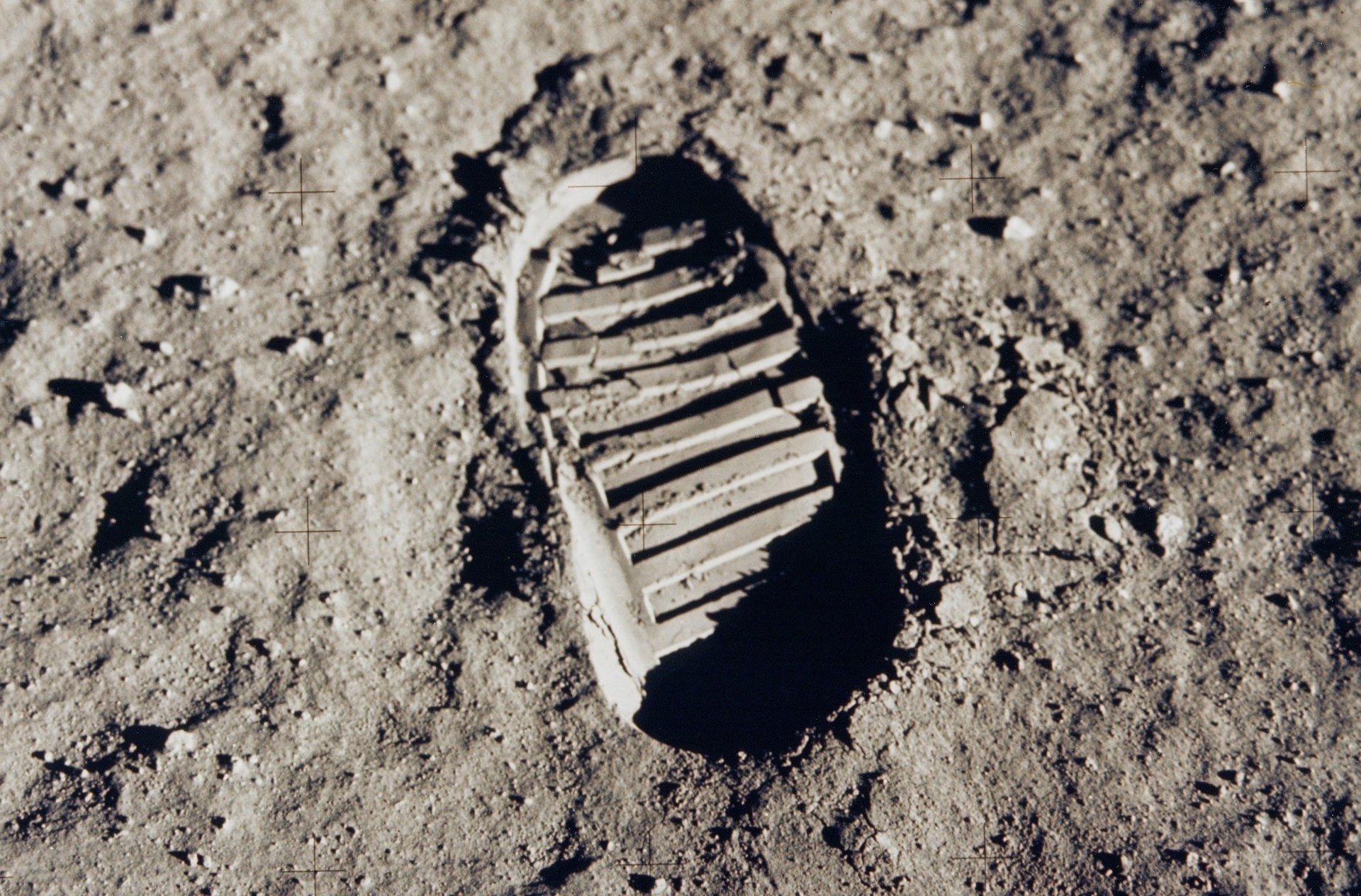 Buzz Aldrin’s footprint on the Moon’s surface during the Apollo 11 mission. Credit: NASA
The team then explored the potential impact debris propagation could have on the lunar surface and objects in orbit. Their simulations indicated that the cumulative percentage of fragments would remain low (below 3.5%) during a 30-day propagation period. They also found that breakups occurring near the far side of the Moon yielded a higher initial impact risk in some of their orbital simulations. For collision risks in orbit, the team defined a “protected region” around the Moon, a donut-shaped region 200 km (~125 mi) in diameter that follows the entire path of a spaceflight’s trajectory.
These results revealed debris entering the protection region at an average rate of about 3%, typically peaking less than one day after a breakup event. However, they also showed that some debris would take up residence in the region and could take weeks to clear. Over a thirty-day period, the total number of debris objects in the region varied considerably based on the simulated orbit, from 10 or less to over 100. Overall, the potential collisions were typically characterized by high-velocity fly-by events rather than persistent co-orbital threats.
As they note in their conclusions, lunar missions are required to undergo comprehensive risk assessments to comply with planetary protection and environmental guidelines. In the near future, this will likely include agreements to prevent the littering of cislunar space with spent rocket stages, defunct satellites, and other mission elements that inevitably become debris. These will likely supplement existing and future protocols for mitigating debris in LEO by extending them all the way to the Moon.
If humanity intends to extend its presence to the Moon, proper stewardship and environmental protections will need to follow.
Further Reading: arXiv

