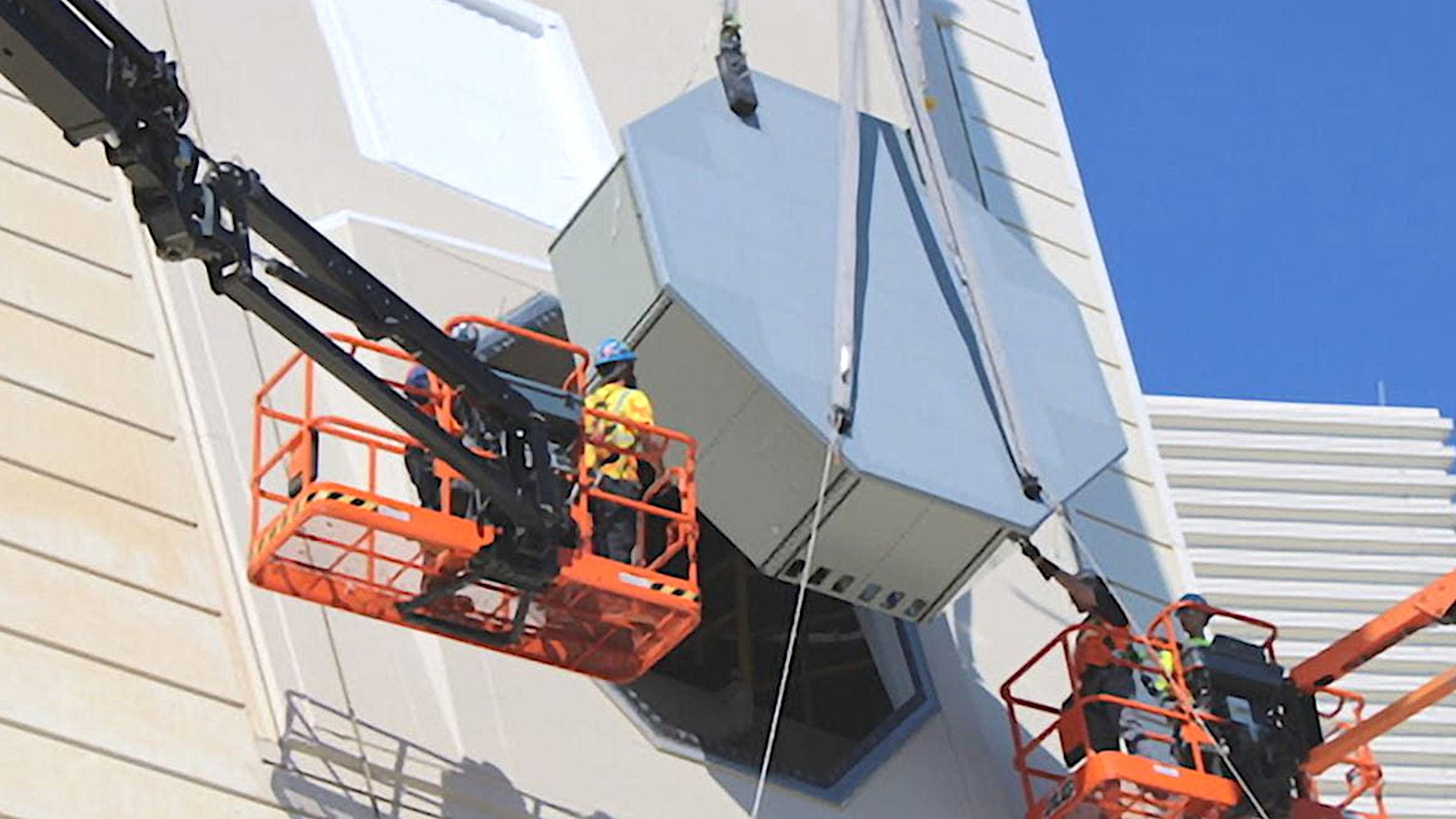
АНУ-ын Тэнгисийн цэргийн хүчин Arleigh Burke ангиллын усан онгоцонд AN/SPY-6(V)4 системийг нэгтгэх чухал алхмын хүрээнд Виржини муж дахь Уллопс арал дээрх газарт суурилсан туршилтын талбайд шинэ радараа байрлууллаа.
Энэхүү дэвшилтэт радар нь Flight IIA дэд ангиллын усан онгоцнуудын байлдааны чадавхыг сайжруулах “Destroyer Modernization 2.0” хөтөлбөрийн гол бүрэлдэхүүн хэсэг юм. Уг цогц шинэчлэлт нь AN/SLQ-32(V)7 цахим дайны систем, Aegis байлдааны системийн сайжруулалт болон системийг хөргөх нэмэлт төхөөрөмжүүдийг багтааж байна. Тус програмын хүрээнд USS Pinckney усан онгоц шинэ радараар тоноглогдох анхны хөлөг онгоц болохоор төлөвлөгдсөн бөгөөд туршилтын ажлуудыг үе шаттайгаар явуулахаар ажиллаж байна.
Raytheon компаниас мэдээлснээр Уллопс арал дээрх байгууламжид явуулах газрын туршилт нь радарын эрчим хүч болон байлдааны системийн холболтыг усан онгоцонд суурилуулахаас өмнө бүрэн шалгах боломжийг олгох юм. Ингэснээр усан онгоц үйлдвэр дээр засварт орох хугацааг багасгаж, гүйцэтгэх үүрэгт зарцуулах цагийг нэмэгдүүлэх ач холбогдолтой аж. Туршилтын эхний шат энэ жил эхэлж, 2028 оны дунд үе хүртэл үргэлжлэхээр төлөвлөгджээ.
AN/SPY-6(V)4 систем нь шинэ Flight III ангиллын усан онгоцонд суурилуулж буй AN/SPY-6(V)1 радарын жижигрүүлсэн хувилбар бөгөөд 1980-аад оны үеийн хуучирсан AN/SPY-1D пассив радарыг орлох юм. Энэхүү модуль бүтэцтэй радар нь агаарын орон зайг тагнуулах, хянах, баллистик пуухэнг ялган таних өргөн боломжийг бүрдүүлж, тэнгисийн цэргийн хүчний байлдааны чадварыг эрс сайжруулах стратегийн чухал алхам болж байна.
Дэлгэрэнгүйг эх сурвалжаас харах
↓Эх сурвалжийг нээх ↓
A new AN/SPY-6(V)4 radar is now installed at the U.S. Navy’s land-based test site at Wallops Island in Virginia. This is a key step toward the first integration of the SPY-6(V)4 onto an actual warship, the Arleigh Burke class destroyer USS Pinckney.
The AN/SPY-6(V)4 is a central element of the Navy’s Destroyer Modernization 2.0 effort (also sometimes written DDG MOD 2.0) for Flight IIA subvariants of the Arleigh Burke. In addition to the radar, the full upgrade package includes a new AN/SLQ-32(V)7 Surface Electronic Warfare Improvement Program (SEWIP) Block III suite, Aegis Combat System improvements, and additional thermal management ‘chillers’ to help keep all of these systems cool. USS Pinckney was also the first to get the SEWIP Block III installation under this plan, which dramatically changed the outward appearance of the ship.
“The Wallops site, a land‑based test facility situated over an open-water environment, will support extensive testing of the radar and its power and combat system interfaces ahead of installation on USS Pinckney (DDG 91), the first ship to be backfit with SPY‑6(V)4,” according to a press release from prime contractor Raytheon today. “Initial testing will begin later this year and continue through mid‑2028.”
Land-based testing is a routine step in the development of naval radars. Work to integrate the radar onto the USS Pinckney is also set to start this year and wrap up in 2028, according to Raytheon.
“By leveraging the Wallops test site, we’ll be able to integrate SPY‑6(V)4 with its dedicated power system before it reaches the ship, reducing the amount of testing needed on DDG 91,” Barbara Borgonovi, president of Naval Power at Raytheon, said in a statement. “That means less time in the shipyard, more time dedicated to the mission, and a smoother path for future backfit ships.”
The AN/SPY-6(V)4 is also known as the Air and Missile Defense Radar Backfit (AMDR Backfit) radar. It is a scaled-down version of the AN/SPY-6(V)1 AMDR radar that is being integrated onto new Flight III Arleigh Burke class destroyers. The AMDR has four fixed-face arrays, each made up of 37 Radar Modular Assemblies (RMAs). The AMDR Backfit also has a quartet of fixed arrays, but with 24 RMAs apiece.

Raytheon – AN SPY 6V Radar Build Timelapse Video
Each RMA is a two-foot-by-two-foot-by-two-foot cube that contains an independent active electronically scanned antenna. The modules are a key building block of all four radars that currently make up the AN/SPY-6 family. The AN/SPY-6(V)2 and AN/SPY-6(V)3 versions – also known as the Enterprise Air Surveillance Radar (EASR) Rotator and EASR Fixed Face, respectively – have arrays with significantly fewer RMAs than either the AMDR or ADMR Backfit types. AN/SPY-6-series radars are set to become a fixture across the Navy’s surface fleets, with versions also being added to new Ford class aircraft carriers and set to be backfitted onto some Nimitz class types. Various amphibious warfare warships are also getting radars from this family. You can read more about all of this here.
The RMAs that make up any AN/SPY-6-series radar can be utilized individually or linked together with others to focus their energies on a specific task. This offers immense operational flexibility, as well as the ability to produce higher-fidelity tracks over extended ranges. The loss of a single RMA also does not render the entire radar inoperable, and the modules can be replaced individually for repairs and upgrades. This, in turn, translates to increased reliability and upgradability, and less downtime for the radar, in general.

Missile Defense Radars at Sea
With 96 RMAs versus 148, the AMDR Backfit radar is not as capable as its larger AMDR cousin. However, it is still a major capability upgrade for Flight IIA Arleigh Burkes, which are currently equipped with the AN/SPY-1D. The SPY-1D is an aging passive electronically scanned array radar, the development of which traces back to the 1980s. The original AN/SPY-1 entered Navy service in the 1970s.
When paired with the new Baseline 10 configuration of the Aegis Combat System, “the AN/SPY-6(V)4 will provide volume search, tracking, BMD [ballistic missile defense] discrimination, and missile communications in a wide diversity of environments and conditions,” according to a past Navy contracting notice. As noted, this Aegis upgrade is another central aspect of the Destroyer Modernization 2.0 plan.
The Destroyer Modernization 2.0 effort has so far been proceeding in phases, with the SEWIP Block III, Aegis Baseline 10, and chiller upgrades being integrated first, and the AN/SPY-6(V)4 radar coming afterward. In June, the Navy had announced the completion of the SEWIP Block III upgrades on another pair of Flight IIA Arleigh Burkes, the USS Chung-Hoon (DDG-93) and USS James E. Williams (DDG-95).
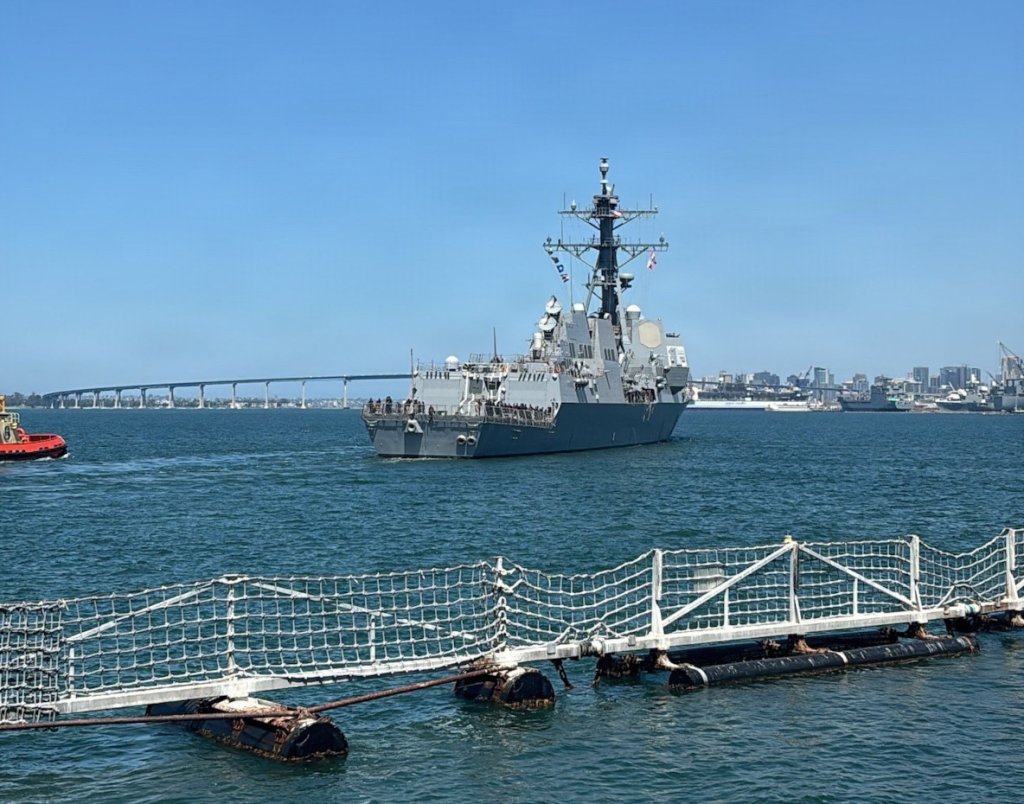
As mentioned, the SEWIP III installation requires substantial changes to the ship’s physical structure, inside and out. Arleigh Burke destroyers with the new electronic warfare suite have all-new geometric structures extending off the port and starboard bridge wings that contain key elements of the new electronic warfare suite. When work on Pinckney was completed, some observers dubbed it the ‘muffin top’ destroyer and the ‘USS Thickney.’
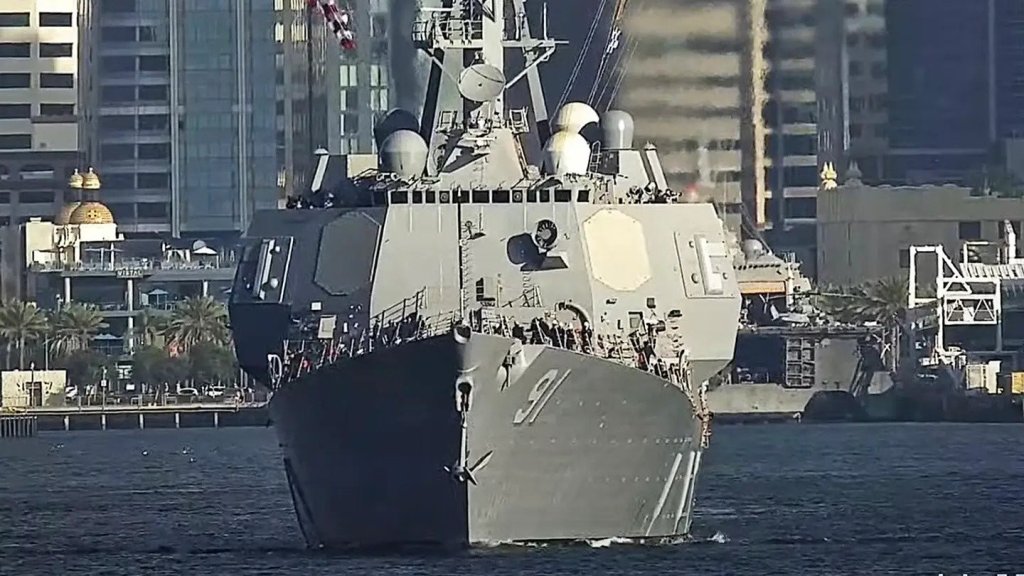
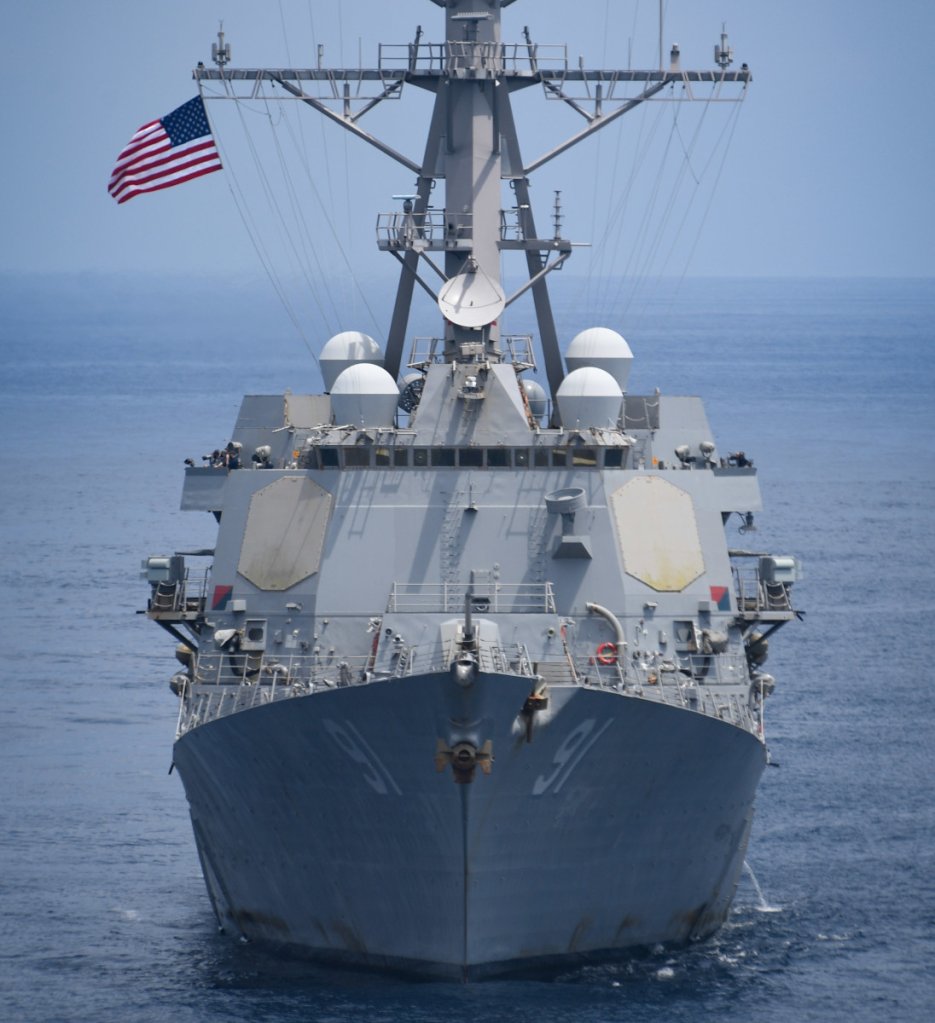
At least as of last year, two more Flight IIAs, USS Halsey (DDG-97) and USS Sterett (DDG-104), were in line to receive the AN/SLQ-32(V)7 and the rest of the Destroyer Modernization 2.0 package. The Navy also previously said that Sterett would be the first ship to get all of the new capabilities in one single in-port availability.
“This destroyer modernization effort is the cornerstone of increasing service life and delivering decisive combat power to the US Navy via our Flight IIA destroyers,” Capt. Tim Moore, the Destroyer Modernization 2.0 (DDG MOD 2.0) program manager, said in a statement in June. “We focused on opportunities to shift milestones supporting acquisition, planning and execution left to provide these game-changing capabilities to the operators sooner. The DDG MOD 2.0 program remains a top priority as the Navy continues to build and sustain a lethal, resilient, and rapidly adaptable force.”
Destroyer Modernization 2.0 upgrade work to date has not been without challenges. The Navy previously talked about the importance of valuable lessons learned from the hurdles it had to overcome when upgrading USS Pinckney. The service has also said previously that it has several guardrails in place that were informed by experience with the deeply troubled Ticonderoga class cruiser modernization program.
How many Flight IIA Arleigh Burke class destroyers, in total, will eventually receive the full Destroyer Modernization 2.0 upgrade package is unclear. The Navy has said in the past that 20 destroyers could be brought up to this new standard. In 2025, the service said that the USS Kidd (DDG-100) would be among several ships to receive the SEWIP Block III suite, but not the AN/SPY-6(V)4 radar, according to USNI News. The Navy’s Arleigh Burke class destroyer force, as a whole, is in the process of receiving other upgrades, including new defensive capabilities, too.
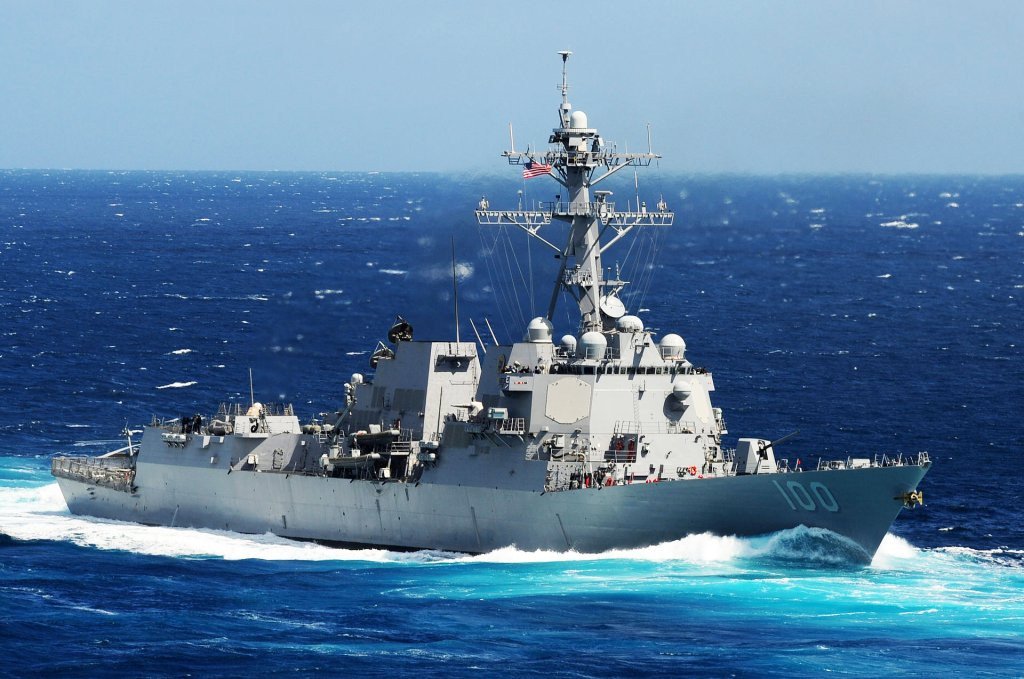
The Navy currently has 75 Arleigh Burke class destroyers in service, altogether, of which 34 are Flight IIA versions. There are another 12 Flight IIA Restart and Flight IIA Technology Insertion subtypes, which feature additional improvements. Production of new ships in this class is now transitioning fully to the Flight III subvariant.
Regardless, the arrival of the first AN/SPY-6(V)4 at Wallops Island is a significant milestone that puts the Navy on track to move ahead with the second phase of its Destroyer Modernization 2.0 plans.
Contact the author: joe@twz.com

