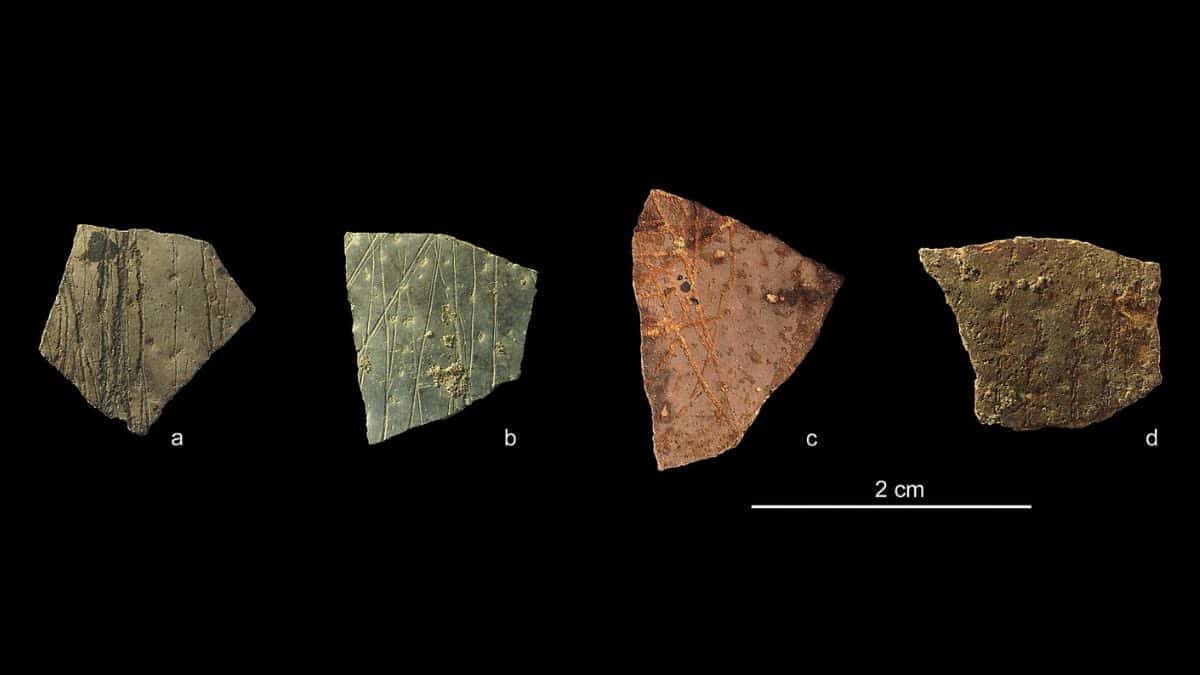
Эртний хүмүүс тэмдэглэгээ хийхдээ санамсаргүй байдлаар бус, харин нарийн зохион байгуулалттай геометрийн дүрмийг баримталдаг байсныг судалгаагаар тогтоов.
Өмнөд Африкийн Дипклооф, Клипдрифт хадны хоргодох байр болон Намибийн Аполло 11 агуйгаас олдсон тэмээн хяруулын өндөгний хальсны 112 хэлтэрхийд археологичид шинжилгээ хийжээ. Ховисонс Поортын үед хамаарах эдгээр олдворууд нь эртний хүмүүс ус хадгалах сав болгон ашиглаж байсан өндөгний хальсан дээр геометрийн хэв шинжүүдийг сийлж байсныг гэрчилж байна. Судлаачид эдгээр сийлбэрүүд нь зүгээр нэг гоёл чимэглэл бус, тодорхой давтамжтай шугам, өнцөг, дүрсүүдээс бүрдэж байгааг математик болон геометрийн аргаар тогтоосон байна.
PLOS One сэтгүүлд нийтлэгдсэн уг судалгаагаар олдворуудын 80 гаруй хувь нь орон зайн хувьд тогтвортой зохион байгуулалттай болохыг илрүүлжээ. Сийлбэрүүдэд паралель шугам, 90 градуст ойр өнцгүүд, торлог бүтэц, ромбо хэлбэрийн хээ зэрэг дүрслэлүүд давтагдан гардаг. Болоньягийн их сургуулийн профессор Сильвиа Феррарагийн үзэж буйгаар эдгээр нь эртний хүмүүсийн сэтгэлгээнд геометрийн бүтэцлэг байдал байсныг харуулсан “визуал дүрэм” буюу бичиг үсгийн эхлэл үеийн шинж тэмдэг байж болох юм.
Энэхүү олдворууд нь эртний хүмүүс хийсвэр санааг дүрслэн харуулах, орон зайг зохион байгуулах чадвартай байсныг нотолж байна. Хэдийгээр эдгээр тэмдэглэгээний ягштал утга болон өдөр тутмын амьдралд хэрхэн ашиглагдаж байсан нь тодорхойгүй байгаа ч хүн төрөлхтөн бичиг үсэг үүсэхээс олон мянган жилийн өмнө нарийн дүрэм журамд суурилсан системтэй сэтгэлгээтэй байсныг энэхүү судалгаа харуулж байна.
Дэлгэрэнгүйг эх сурвалжаас харах
↓Эх сурвалжийг нээх ↓
More than 60,000 years ago, humans were already creating carefully organized geometric designs on ostrich eggshells in southern Africa. New research shows that these ancient engravings were not random marks but followed repeated patterns involving lines, angles, and shapes. Archaeologists have studied hundreds of fragments of engraved ostrich eggshell found at several sites in southern Africa. Created by groups of Homo sapiens during the Howiesons Poort period, these objects offer a rare look at how early humans used visual patterns to organize ideas.
The study, published in PLOS One under the title “Earliest geometries: A cognitive investigation of Howiesons Poort engraved ostrich eggshells,” examined how these markings were made. Researchers found that the designs followed clear geometric rules rather than being simple decorative scratches.
The team analyzed 112 fragments from Diepkloof Rock Shelter and Klipdrift Shelter in South Africa, along with Apollo 11 Cave in Namibia. Using geometric and statistical methods, they measured the direction, angles, and layout of the engraved lines.
Ancient Eggshells Show Repeated Designs
The fragments likely came from ostrich eggshell containers used to carry or store water. By looking closely at the engraved surfaces, researchers found patterns that appeared again and again. More than 80% of the designs showed consistent spatial organization.
Many included parallel lines and angles close to 90 degrees, while more complex examples featured grids, hatched bands, and diamond-shaped patterns. The study also found signs that the engravers used techniques such as rotation, repetition, and the combination of different layers of patterns on the same surface.
“These signs reveal a surprisingly structured, geometric way of thinking,” said Silvia Ferrara, professor at the University of Bologna and coordinator of the research. She explained that the engravings were created through“parallelisms, grids, rotations and systematic repetitions: a visual grammar in embryo.”
Early Signs of Human Creativity
The importance of these engravings goes beyond their appearance. Creating these patterns required planning and the ability to organize shapes according to shared rules. The study team do not know the exact meaning of the individual signs, but they believe the process behind making them reveals important information about early human cognition. The designs show that ancient humans could create visual systems based on abstract ideas.

Valentina Decembrini, first author of the study and a PhD student at the University of Bologna, said the findings show that Homo sapiens 60,000 years ago already had the ability to organize visual space through abstract principles. She noted that:
“Transforming simple forms into complex systems by following defined rules is a deeply human trait that has characterized our history over millennia, from the creation of decorations to the development of symbolic systems and, ultimately, writing.”
Humanity’s Oldest Symbols Uncovered
The research was carried out as part of the FIS Advanced project SAPIENCE (Symbols, Preliteracy and Code Evolution), led by Silvia Ferrara in collaboration with Enza Spinapolice from Sapienza University of Rome. The researchers used archaeological evidence combined with mathematical analysis to better understand how these early designs were created.
The engraved eggshell fragments do not reveal what these symbols meant to the people who made them or how they were used in their daily lives. However, they do show that humans were already creating organized visual patterns, carefully repeating and combining designs, thousands of years before writing appeared.

Enjoyed this article? Subscribe to our free newsletter for engaging stories, exclusive content, and the latest news.


