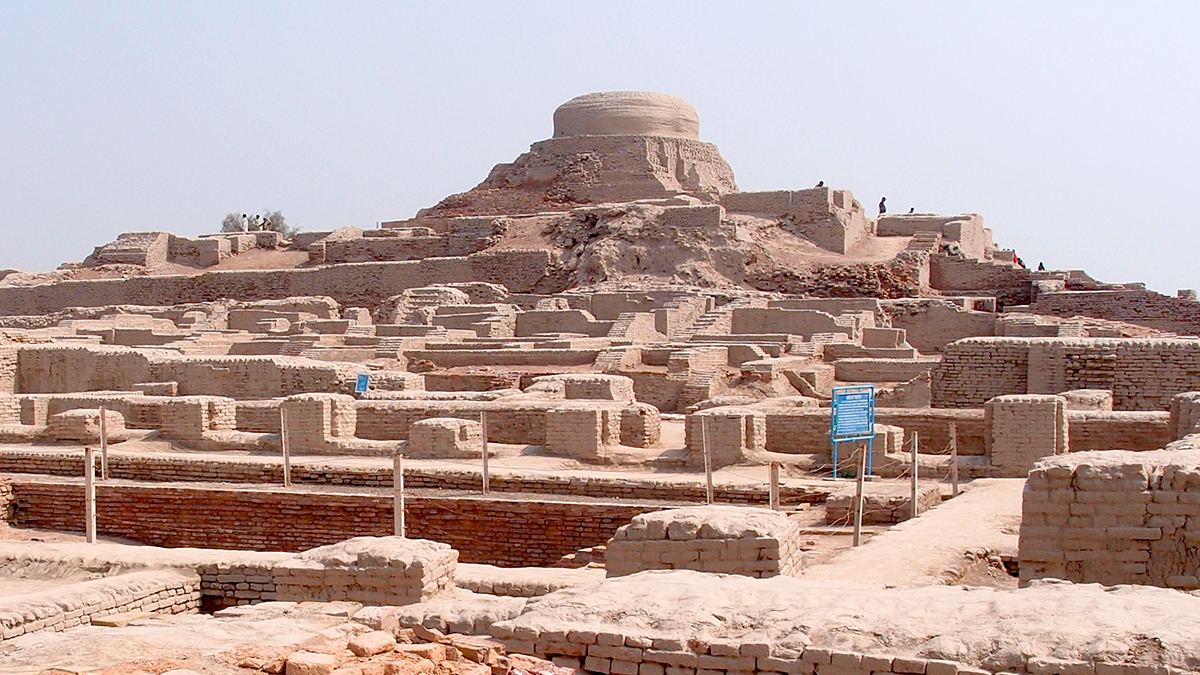
МЭӨ 2600-1900 оны хооронд цэцэглэн хөгжиж байсан Энэтхэгийн соёл иргэншлийн хамгийн том хот Мохенжо-Даро нь нийгмийн баялаг хуваарилалтын хувьд түүхэн ердийн хэв маягийг эвдсэн онцлогтой болохыг археологичид тогтоожээ.
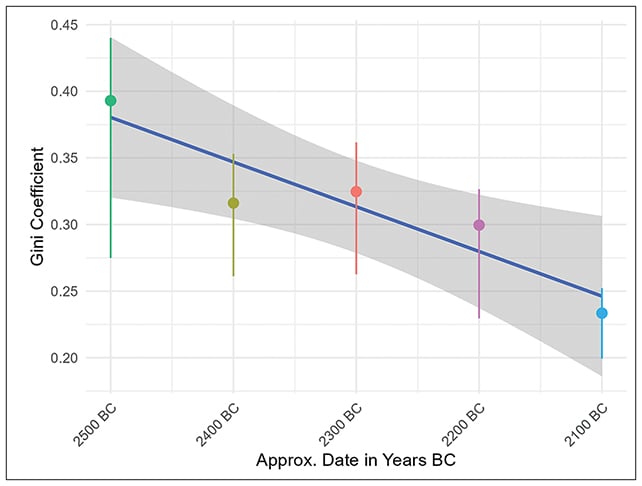
Йоркийн их сургууль болон Кембрижийн их сургуулийн судлаачид Пакистаны Синд мужийн нутагт орших тус хотын 309 орон сууцны хэмжээг шинжилж, нийгмийн тэгш бус байдлын түвшинг судалсан байна. Археологич Адам Гриний удирдсан баг байшингийн хэмжээг баялгийн хэмжүүр болгон ашиглаж, “Жини коэффициент”-ээр тооцоолоход Мохенжо-Даро хотын баячууд болон ядуусын хоорондох ялгаа нь Грек, Майягийн эртний хотуудтай харьцуулахад хамаагүй бага байжээ.
Судалгааны үр дүнгээс үзэхэд, хот хөгжихийн хэрээр айл өрхүүдийн амьдрах орчны ялгаа улам бүр багасч, тэгш байдал нэмэгдсэн байна. Энэ нь эртний Египетийн хаад, Грекийн орд харшийн бүтээн байгуулалттай харьцуулахад Мохенжо-Даро хотынхон алт эрдэнэсээр дүүрэн булш эсвэл сүм хийд барихын оронд нийтийн хэрэгцээнд зориулсан боловсронгуй ус зайлуулах систем, эмх цэгцтэй гудамжны сүлжээг эрхэмлэж байсныг харуулж байна.
Өмнөх судалгаануудаар ч мөн тус хотод зээл, өрийн менежментийг зохицуулах зорилгоор чулуун тамга ашиглаж, жин хэмжүүрийг бүх нийтээр ижил түвшинд мөрддөг байсан нь тогтоогдсон юм. Энэхүү археологийн олдвор нь эдийн засгийн хөгжил цэцэглэлт заавал нийгмийн тэгш бус байдлыг дагуулдаг гэсэн ойлголтыг няцааж, эрх мэдэл болон нөөцийг тэгш хуваарилснаар нийгэм илүү бүтээмжтэй байх боломжтойг баталж байна.
Дэлгэрэнгүйг эх сурвалжаас харах
↓Эх сурвалжийг нээх ↓
There was something notable about Mohenjo-daro, the largest city of the Indus civilization that settled across parts of Pakistan and India between 2600-1900 BCE: it flipped the normal rules of history in one specific way.
While the growth and rise of a civilization – from small villages into sprawling cities – usually widens the inequality gap between the rich and the poor, in Mohenjo-daro the opposite happened.
In a new study published in Antiquity, researchers from the University of York and the University of Cambridge in the UK have outlined findings based on 309 residences excavated at the ancient site of Mohenjo-daro, in the Sindh province of Pakistan.
Using house size as a proxy for wealth, the researchers found the spread from the most to the least well-off was much smaller than in comparable ancient Greek or Mayan cities. As the homes could be dated too, the team could see that inequality shrank over time as Mohenjo-daro continued to prosper.
“Legacy data from the ancient city shows that as the city matured, the gap between the largest and smallest homes narrowed,” says archaeologist Adam Green, from the University of York.
“In fact by its later years, the wealth gap in this massive urban centre had dropped to levels typical of the first farming villages.”
The calculation used by the researchers is called a Gini coefficient, a tool often used by archaeologists to figure out how rich a household was based on the size of its home – with larger properties costing more to build, maintain, and run.
On this scale, 0 means perfect equality and 1 means total inequality. Overall, Mohenjo-daro scored 0.44, compared to 0.86 for the Bronze Age Greek city of Knossos, and 0.75 for the Maya site of Palenque.
“While ancient Egyptians were building pyramids for god-kings, and the Greeks were constructing massive palaces at Knossos, the people of the Indus were building something entirely different,” says Green.
“Instead of gold-filled tombs and huge temples, Mohenjo-daro focused on sophisticated brick-lined drains and organized street layouts. Instead of allowing the perks of society to accumulate with a tiny elite, the city’s amenities were widely distributed amongst the everyday households.”
This idea of Mohenjo-daro as a beacon of egalitarianism isn’t completely new, as the absence of grand palaces, tombs, and statues has often been remarked upon.
However, the new analysis of property sizes gives experts some solid data on just how equally resources were shared out – and how this changed over time.

“In the period when inequality appears to be lowest, productivity appears to rise,” says Green. “It challenges the idea that prosperity requires us to concentrate decision-making powers in the hands of the few.”
Previous research has revealed other signs of a civilization working for the benefit of the group rather than individuals – including stone seals (an early method for managing credit and debt) being decentralized, and standardized weights and measures being used across classes and communities to ensure fairness.
Related: Is Your Country Lazy or What? “Activity Inequality” May Be The Best Measure
Other studies have also suggested that the citizens of Mohenjo-daro met together in ‘deliberative spaces’ where city governance happened, and where time, effort, and resources were put towards projects that benefitted everyone.
All of this challenges the idea that increasing prosperity must mean increasing inequality. In a contemporary world where the gap between the rich and poor is getting bigger, there are lessons to be learned from the Indus people.
“It is quite an interesting lesson for modern societies, as the Indus civilization demonstrates clearly that an urban society can be highly productive and inventive at scale, whilst also ensuring that resources and power are shared equitably,” says Green.
“In fact, doing so may even have been essential to sustaining prosperity over the centuries.”
The research has been published in Antiquity.
This article was fact-checked by Fiona MacDonald and edited by Fiona MacDonald. While we pride ourselves on our process, we are only human. If you spot a mistake, please let us know.


