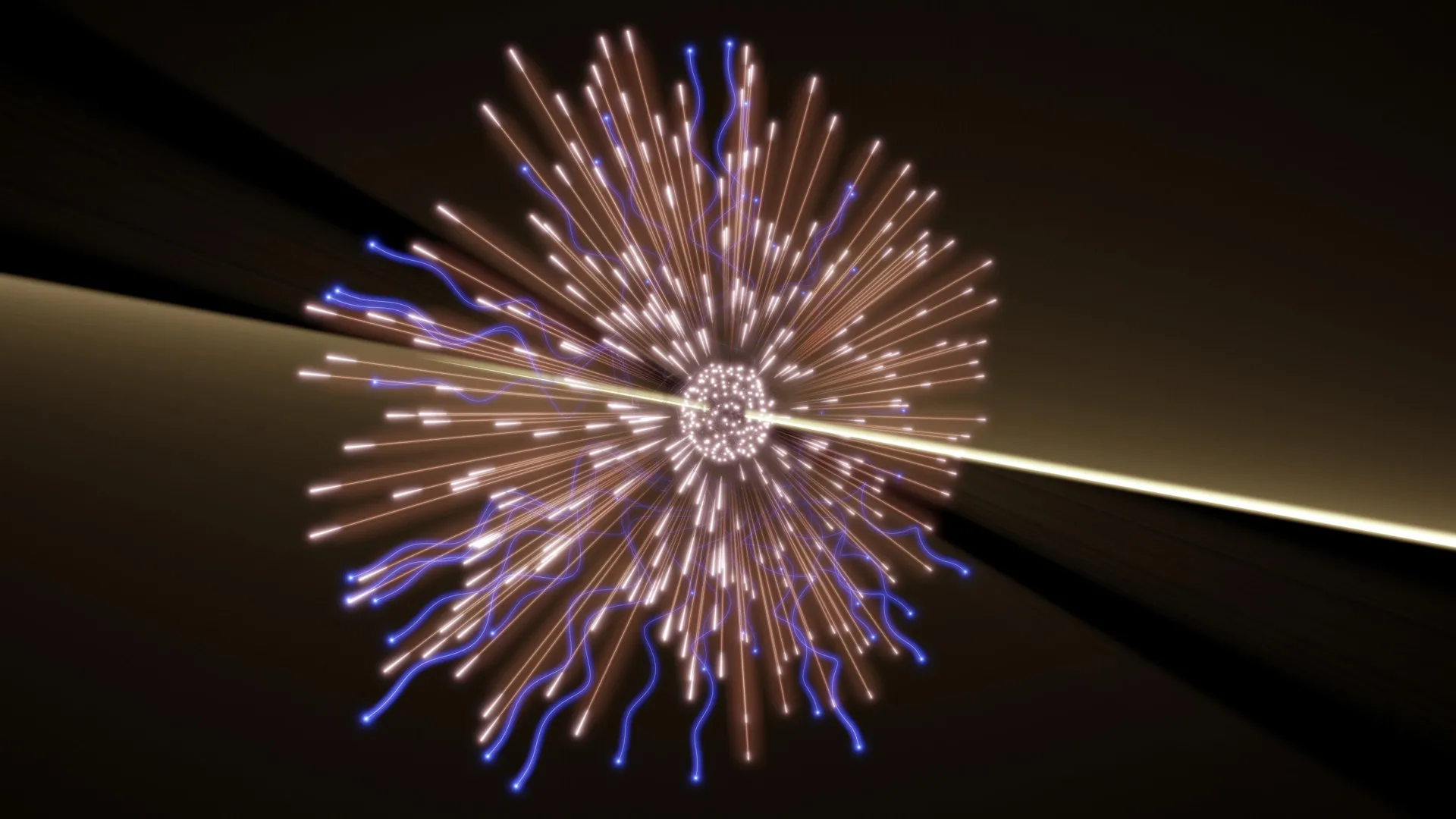
Эрдэмтэд цөмийн реактор бүрэн унтарсан үед ч дотоод цөмөөс ялгардаг сул антинейтриногийн туяаг хэмжиж, цөмийн түлшний үлдэгдлийн төлөв байдлыг тодорхойлох боломжтойг баталлаа.
Францын хойд хэсэгт байрлах Chooz цөмийн цахилгаан станцад хийсэн судалгаагаар эрдэмтэд реактор унтарсан үеийн антинейтриногийн сул урсгалыг анх удаа илрүүлжээ. Max-Planck-Institut für Kernphysik (MPIK)-ийн судлаач Энтони Ониллон, Тьерри Лассер нарын удирдсан Double Chooz хамтарсан баг 17.2 хоногийн турш реактор бүрэн зогссон үеийн ажиглалтыг хийсэн байна. Энэ хугацаанд газар доор байрлах тусгай мэдрэгч ашиглан реакторын цөм болон ашигласан түлш хадгалах сан дахь цацраг идэвхт бодисын задралаас үүссэн 100 орчим антинейтриногийн дохиог бүртгэж авчээ.
Антинейтрино нь ертөнц дэх хамгийн хөнгөн бөгөөд илрүүлэхэд хамгийн бэрх бөөмс бөгөөд тэдгээр нь бодистой маш ховор харилцан үйлчилдэг онцлогтой. Судлаачид 30 гаруй шоо метр шингэн сцинтиллятор бүхий мэдрэгчийн тусламжтайгаар антинейтриногийн харилцан үйлчлэлийн үед үүсэх хос гэрлийн дохиог ялган таньсан байна. Энэхүү хэмжилт нь реактор унтарсан үеийн антинейтриногийн ялгарлын талаарх онолын таамаглалыг анх удаа туршилтаар баталгаажуулсан ач холбогдолтой юм.
Олж авсан үр дүн нь цөмийн түлшний үлдэгдэл болон удаан задардаг цацраг идэвхт бүтээгдэхүүний талаарх нарийвчилсан загварчлалтай нягт нийцэж байгаа аж. Уг нээлт нь цаашид цөмийн реакторын аюулгүй байдлыг хангах, реакторын төлөв байдлыг хөндлөнгийн хяналтаар баталгаажуулах, мөн ашигласан түлшний нөөцийг хянах шинэ боломжийг нээж өгч байна.
Double Chooz төсөл нь өмнө нь нейтриногийн хэлбэлзэл болон нейтриногийн холимог өнцөг (θ13)-ийг хэмжихэд чухал үүрэг гүйцэтгэж байсан юм. Одоогийн байдлаар JUNO-TAO зэрэг бусад судалгааны багууд ч мөн адил реактор унтарсан үеийн сул дохиог ашиглан ашигласан цөмийн түлшний талаарх судалгааг эхлүүлээд байна. Энэхүү анхны туршилт нь реакторын дараах үеийн антинейтриногийн урсгалыг судлах жишиг үзүүлэлтийг тогтоож өгсөн юм.
Дэлгэрэнгүйг эх сурвалжаас харах
↓Эх сурвалжийг нээх ↓
Even after a nuclear reactor is switched off, activity continues deep inside its core. Long-lived radioactive fission products keep decaying for months or even years, releasing a weak stream of particles called antineutrinos. (Anti)neutrinos are the lightest and most elusive known particles in the Universe, and they can pass through both the reactor and its surrounding shielding with little interference.
Scientists with the Double Chooz collaboration have now measured this lingering antineutrino emission for the first time. The research, recently published in Physical Review Letters, was led by Anthony Onillon and Thierry Lassere of the Max-Planck-Institut für Kernphysik (MPIK) in Heidelberg, Germany. The findings show that antineutrino detectors can gather information about nuclear reactors even while they are shut down, potentially creating new opportunities for reactor monitoring, nuclear safety, and safeguards.
Detecting Antineutrinos From a Shutdown Reactor
The measurement took place at the Chooz nuclear power plant in northern France. The Double Chooz detector sits underground about 400 meters from the facility’s two reactor cores. Inside the detector are more than 30 cubic meters of liquid scintillator, a material that produces tiny flashes of light when an antineutrino interacts within it.
“Antineutrinos interact only extremely rarely with matter. However, when one interacts within the Double-Chooz detector, a characteristic double-light signal is produced that can be distinguished from background events,” explains Thierry Lasserre from the independent research group OMINA, also located at MPIK. This distinctive signal enables scientists to identify antineutrinos coming from the reactors.
Researchers examined 17.2 days of observations collected while both reactor units were fully shut down. Over that period, the detector recorded around 100 antineutrino candidate events linked to residual radioactivity in the reactor cores and nearby spent-fuel cooling pools.
Measurements Match Nuclear Fuel Predictions
The detected signal closely matched detailed simulations that accounted for the remaining nuclear fuel inventory and the decay of long-lived fission products. The result provides the first direct experimental confirmation of predictions describing antineutrino emissions from shut down reactors and spent fuel.
“Until now, reactor antineutrino experiments have mainly focused on operating reactors, where the antineutrino flux is much larger. Detecting the tiny residual signal after shutdown required exceptionally low backgrounds and careful analysis techniques developed by the Double Chooz collaboration over many years,” adds Dr. Onillon.
Other experiments are already beginning to explore this new area. Initial results from JUNO-TAO, presented at Neutrino 2026, show that researchers are also using reactor-off data to study the faint antineutrino signal produced by spent nuclear fuel. TAO is working to isolate that weak emission, while the Double Chooz findings now provide the first published benchmark for studying the residual signal from shut-down reactors and spent-fuel pools.
A New Tool for Nuclear Reactor Monitoring
The findings suggest that antineutrino detectors could eventually provide useful information not only while reactors are operating, but also during maintenance and after shutdown. Measurements of this kind could become valuable for independently confirming reactor status and tracking spent-fuel inventories.
Double Chooz was originally built to investigate neutrino oscillations and played a key role in measuring the neutrino mixing angle θ13, a fundamental parameter describing how neutrinos change from one type to another as they travel. That measurement helped pave the way for future research into matter-antimatter asymmetries in the neutrino sector.
Now, Double Chooz has added another first to its scientific record by detecting the faint neutrino glow that continues after a nuclear reactor goes dark.


