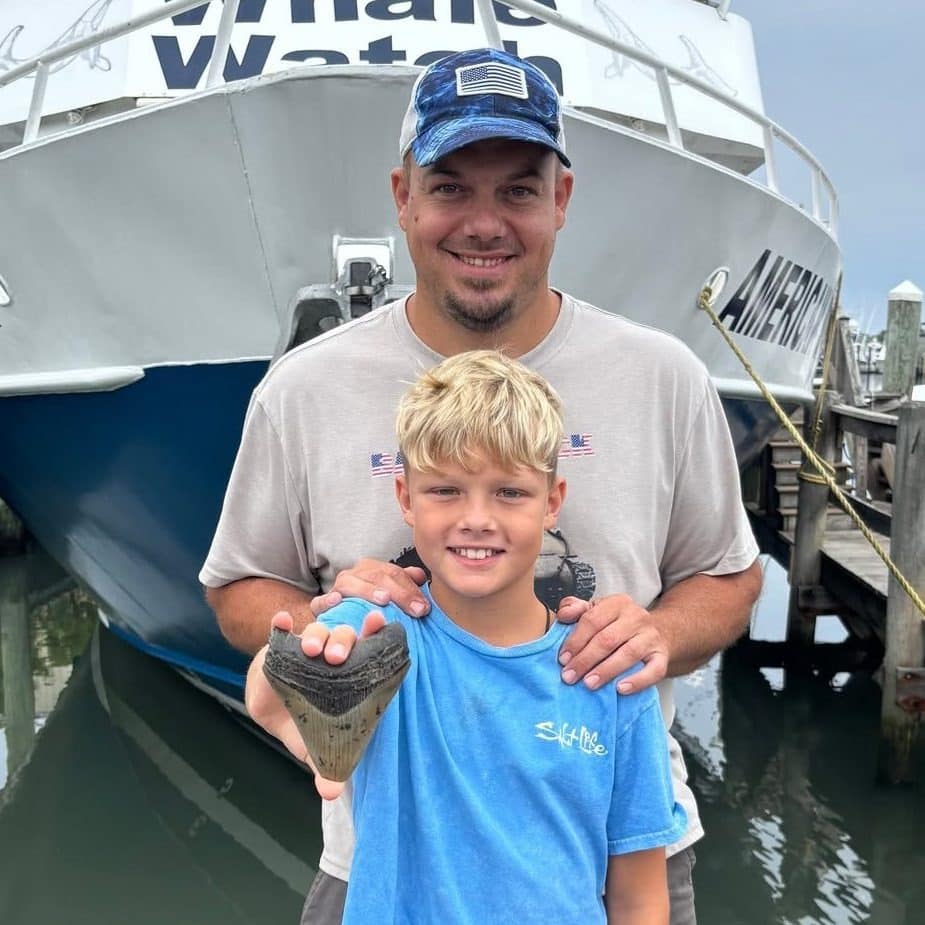
Пенсильвани мужийн гэр бүл далайн эрэг дээр амарч байхдаа эртний махчин амьтны олдворыг санамсаргүйгээр илрүүлсэн байна.
Майк Бауэрс болон түүний хүү Бо нар Нью-Жерси мужийн Си Айл Сити эрэг дээр алхаж байхдаа 4 инчийн урттай мегалодон загасны шүдийг олжээ. Энэхүү олдвор нь эртний далайд зонхилж байсан, одоо үед мөхсөн аварга махчин амьтны биет нотолгоо болж байна. Палеонтологичдын судалгаагаар мегалодон нь 60 орчим фут урт, 50 хүртэлх тонн жинтэй байсан нь өнөөгийн цагаан аварга загаснаас даруй гурав дахин том хэмжээтэй юм.
Олдворын үзүүр хэсэгт мэдэгдэхүйц сэв гарсан нь уг махчин амьтан хооллох үедээ ямар нэгэн яс мөргөсөн байж болзошгүйг харуулж байна. Мэргэжилтнүүдийн үзэж буйгаар энэхүү гэмтэл нь эртний амьтны хооллолтын үйл явцын нэгэн агшинг гэрчлэх чухал баримт юм.
Майк Бауэрс нь шумбагчийн хувьд ийм олдвор олохыг мөрөөддөг байсан бөгөөд далайн түрлэг багассан үед таарсан нь энэхүү нээлтийг хийхэд нөлөөлсөн гэв. Тэрээр олдворынхоо жинхэнэ эсэхийг баталгаажуулахаар төлөвлөж байна.
Дэлгэрэнгүйг эх сурвалжаас харах
↓Эх сурвалжийг нээх ↓
A family from Elizabeth, Pennsylvania went looking for nothing more than a relaxing beach vacation and came home with a fossil millions of years in the making. Mike Bowers found a 4-inch megalodon tooth while walking the sand at Sea Isle City Beach, New Jersey, a discovery he’s now calling the find of a lifetime.
Most beachgoers return from vacation with the usual keepsakes, such as a T-shirt, a hat, or maybe a seashell that ends up forgotten in a drawer. Bowers came home with something considerably rarer: physical proof of one of the ocean’s most fearsome predators, a creature that vanished from the planet long before humans ever set foot on a beach.
While shark teeth turn up on shorelines with some regularity, according to experts cited in the report, a megalodon tooth of this size is an unusual and notable find. It offers a tangible link to an animal almost too large to picture.
An Ancient Predator Bigger Than Anything Swimming Today
Paleontologists describe the megalodon as an ancient shark that once dominated prehistoric seas. According to the Smithsonian Ocean, these animals stretched about 60 feet in length and weighed as much as 50 tons, dwarfing the great white sharks that patrol today’s oceans, which top out around 20 feet long.
This size differential is considerable. A fully grown megalodon is estimated to have measured roughly three times the length of the largest great white sharks alive today. The 4-inch tooth, recovered by Bowers, is an indication of the substantial proportions of the animal from which it originated.
“As I pulled a shell out of the one rock, there was a hole in the rock. I looked down, and I was just astonished, but I couldn’t fit my hand in there. So, of course, I’m screaming like a crazy man for my son Bo to come running over because of his small hand.” He recalled as quoted by Fox 5 Atlanta. “I never in a million years would have guessed that we would have found something like this. My son was speechless.”

As The Telegraph notes, the species was hardly a picky eater, feeding on almost anything within reach. It’s that very indiscriminate appetite that appears to have left a permanent mark on the fossil Bowers found.
A Chip in the Tooth Tells Its Own Story
One of the most distinctive features of Bowers’ remarkable find isn’t its impressive size, but a noticeable chip near the end of the ancient tooth, which may reveal something about how the prehistoric predator once used it.
“This big chip on the end, they say it was probably from it biting into something, hitting the bone and it chipped it,” Bowers said, describing what experts told him about the damage.
That small imperfection turns the tooth from a striking artifact into a kind of frozen moment, a record of a single bite taken millions of years ago, likely against the bone of whatever the shark was feeding on, though the exact circumstances of that ancient meal will never be known.

For the father, the discovery carries personal significance beyond its rarity. As a scuba diver, he says finding a megalodon tooth has long been on his bucket list. He now plans to have the fossil authenticated.
“We had to be in the right place at the right time with perfect timing,” he said. “Because if it wasn’t low tide, I would have never found it.”
Enjoyed this article? Subscribe to our free newsletter for engaging stories, exclusive content, and the latest news.


