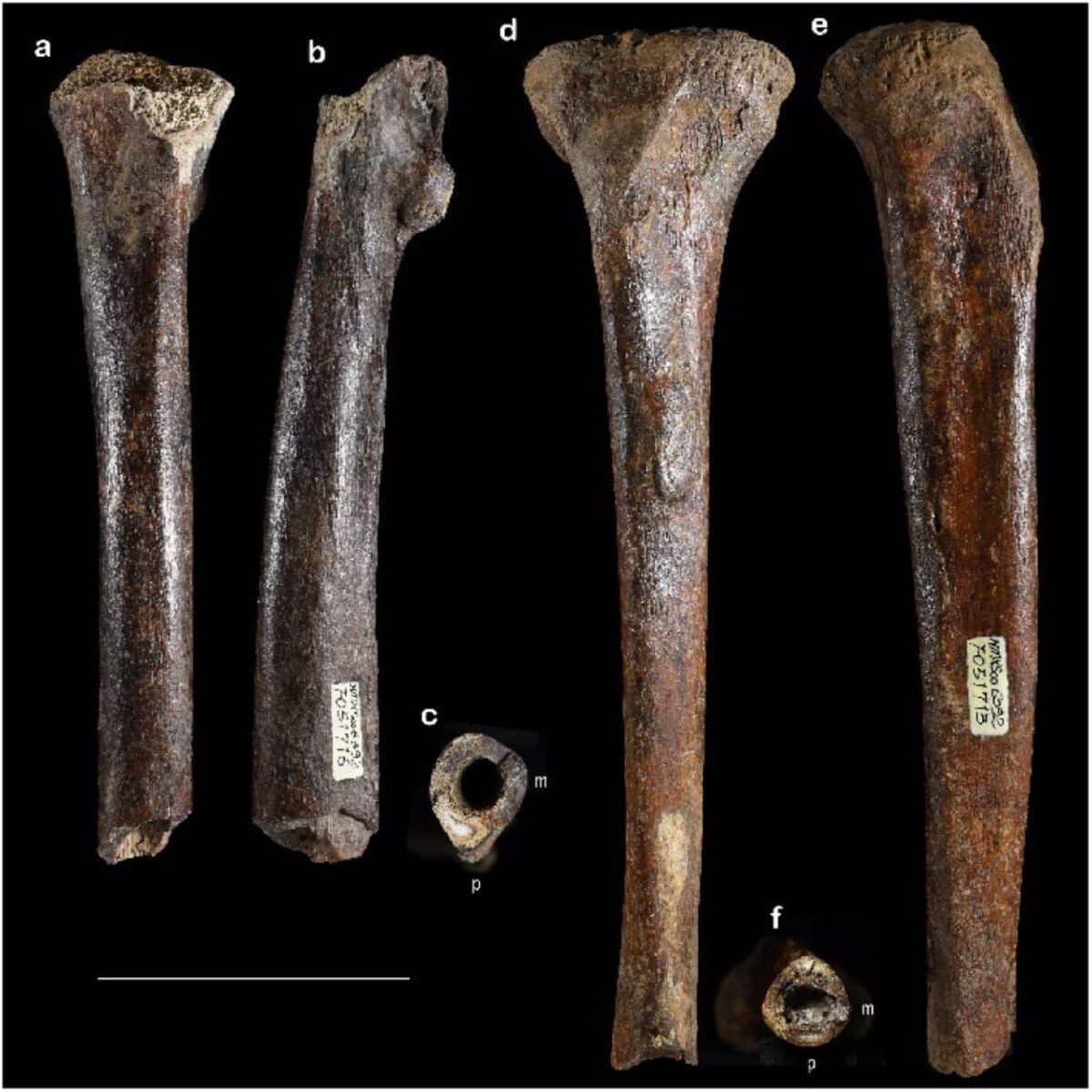
Эрдэмтэд Тайваний ойролцоох далайн ёроолоос олдсон хоёр ясны үлдэгдлийг шинжилснээр Денисовын хүмүүс өндөр нуруутай, том биетэй байсныг тогтоожээ.
Тайвань болон эх газрын Хятадын хоорондох Пенху сувгийн ёроолоос олдсон “Penghu 2” болон “Penghu 3” гэж нэрлэгдсэн гуя болон шилбэний ясанд хийсэн судалгаагаар Денисовын хүмүүсийн бие бялдрын бүтцийг анх удаа тодорхойлсон байна. Токиогийн их сургууль болон Токиогийн Байгаль, шинжлэх ухааны үндэсний музейн судлаачид ясанд хадгалагдан үлдсэн уургийн бүтэц дээр үндэслэн эдгээр олдворыг Денисовын хүмүүсийнх болохыг тогтоожээ. Бусад олдворын он цагтай харьцуулсан судалгаагаар эдгээр яс нь 43,000-аас 45,000 жилийн настай гэж тооцоолсон байна.
Судалгааны үр дүнд “Penghu 2” ясны эзэн нь ойролцоогоор 180 см өндөр, 83 кг жинтэй, харин “Penghu 3” ясны эзэн нь 190 см өндөр, 91 кг жинтэй байсан байж болзошгүй гэж дүгнэжээ. Энэхүү хэмжээ нь Денисовын хүмүүсийг Плейстоцений галавын хамгийн том биетэй хүмүүсийн тоонд багтааж байгаа бөгөөд тухайн бүс нутгийн өмнөх үеийн Homo erectus болон орчин үеийн хүмүүсээс илүү том биетэй байсныг харуулж байна.
Эрдэмтэд эдгээр эртний хүмүүс дулаан уур амьсгалтай бүс нутагт амьдарч байсан ч яагаад том биетэй байсныг ангуучлах үйл ажиллагаа болон уургаар баялаг хооллолттой холбон тайлбарлаж байна. “Penghu 3” олдвороос илэрсэн химийн шинжилгээний үр дүн нь тэднийг мах зонхилсон хооллолттой байсныг баталж байгаа аж. Судлаачид том бие нь ан агнуурын үед физикийн давуу тал олгодог байсан байх магадлалтай гэж таамаглаж байна.
“Penghu 2” яснаас олдсон “pilaster” буюу арын хэсгийн ясны товгор нь орчин үеийн хүмүүст элбэг тохиолддог бөгөөд хөдөлгөөн, идэвхтэй амьдралын хэв маягтай холбоотой байдаг. Энэхүү шинж тэмдэг нь Денисовын хүмүүс болон орчин үеийн хүмүүс ижил төстэй физикийн ачаалалтай байсан эсвэл хоёр бүлгийн хооронд харилцаа холбоо байсныг илтгэж байж болох юм. Гэсэн хэдий ч энэ таамаглалыг батлахын тулд Денисовын хүмүүсийн геномын илүү дэлгэрэнгүй мэдээлэл шаардлагатай байгааг судлаачид онцолжээ.
Дэлгэрэнгүйг эх сурвалжаас харах
↓Эх сурвалжийг нээх ↓
Two ancient leg bones found off the coast of Taiwan suggest that some Denisovans were surprisingly large, with heights approaching two meters and body weights similar to the biggest humans of the Pleistocene. The fossils, known as Penghu 2 and Penghu 3, were recovered from the seabed in the Penghu Channel, between Taiwan and mainland China. Researchers identified them as Denisovan remains by analyzing ancient proteins preserved inside the bones.
Denisovans were a close relative of Neanderthals and an extinct branch of the Homo family tree. While their DNA has revealed a lot about their history, their bodies have remained difficult to study because very few Denisovan bones have been found.
Until now, scientists mostly knew Denisovans through discoveries such as a skull fragment, jawbones, teeth and a finger bone from sites including Denisova Cave in Siberia, Xiahe in Tibet and Harbin in China. According to researchers from the University of Tokyo and the National Museum of Nature and Science in Tokyo, their overall body shape and size were still largely unknown.
The Taiwan Fossils Point To A Giant Denisovan Build
The new study focused on two leg bones: a femur and a tibia. These large bones allowed researchers to estimate the size of the individuals who once carried them. By studying proteins preserved in the fossils, scientists found a collagen variant linked specifically to Denisovans. The remains are estimated to be between 45,000 and 43,000 years old, based on dating of other fossils discovered in the same area.
The results surprised the team. The individual represented by the Penghu 2 femur may have stood around 180 centimeters tall and weighed about 83 kilograms. The owner of the Penghu 3 tibia may have reached around 190 centimeters and weighed close to 91 kilograms.
Those measurements place these Denisovans among the largest known humans of the Pleistocene. The research, posted on bioRxiv on August 8, 2026, stated that their size was comparable to some of the biggest individuals identified in ancient populations from Africa and Europe, and much larger than earlier Homo erectus groups and Stone Age modern humans from the same region.
Why Were Denisovans So Large Near Taiwan?
The discovery raises a question: why were these Denisovans so big in a region where scientists might have expected smaller bodies? The fossils come from an area near Taiwan, at around 23 degrees north latitude. This does not fit neatly with Bergmann’s rule, which suggests that populations living in colder environments and farther from the equator tend to develop larger bodies, while warmer regions often favor smaller builds. The researchers suggest that lifestyle could explain the difference. Their large size may have been connected to hunting and a diet rich in animal protein.
Evidence from the Tibetan Plateau shows that Denisovans hunted and consumed many types of animals, including Caprinae such as sheep and goats, large herbivores and carnivores. As the study said, chemical evidence from the Penghu 3 individual indicates a strong reliance on meat.
“However, Denisovan’s body architecture such as body size and proportion, skeletal robusticity, as well as their general postcranial morphology remain unknown, except for hypothetical inference based on their DNA, due to the paucity of their postcranial remains,” explained the authors.

The authors propose that a larger body may have helped Denisovans during hunting activities, giving them physical advantages while using strategies and tools that differed from those of local Homo sapiens populations.
A Denisovan Bone Feature Looks Surprisingly Familiar
The Penghu 2 femur also revealed an unexpected detail: a strong ridge of bone called a pilaster on the back of the femur. This feature is often associated with modern humans and is linked to patterns of movement and activity.
“Although genetic basis of femoral pilaster remains unknown and this hypothesis must be tested ultimately by genomic data from Denisovan fossils, it does not contradict with the genomic evidence of Denisovan introgression into modern humans in southern Asia, and chronological overlap between Penghu 3 and the earliest modern humans in this region,” they explained.
Researchers suggest two possibilities. The trait may have appeared independently because Denisovans and modern humans faced similar physical demands, or it could be related to contact between the two groups. This idea fits with previous genetic evidence showing that Denisovans contributed DNA to some modern human populations in Asia. More Denisovan genomic data would be needed to test the connection.
As reported by the study team, these two leg bones show that at least some Denisovans were not only genetically distinct but also physically imposing, changing the way scientists view this vanished human lineage.

Enjoyed this article? Subscribe to our free newsletter for engaging stories, exclusive content, and the latest news.

