Лигийн орлого түүхэн дээд түвшинд хүрсэн ч шинэ эзэмшигчид болон орон нутгийн багуудын хоорондох харилцаа суларч байна
NBA одоогоор 11 жилийн хугацаатай, 77 тэлэрбум долларын медиа эрхийн гэрээний эхний жилийг үдэж байгаа нь лигийн санхүүгийн хувьд түүхэн дэх хамгийн бат бөх байр суурийг бий болгоод байна. Шинэ түншүүд болох NBC/Peacock болон Amazon Prime-ын нэгдэл нь лигийн ТВ-ийн үзүүлэлтийг өсгөж, Нью-Йорк Никс болон Сан-Антонио Спөрсийн хооронд болсон NBA Finals-ын тоглолтууд Майкл Жорданы эрин үеэс хойш үзэгдээгүй өндөр тоон үзүүлэлтийг бүртгүүлэв.
Лигийн хамтын хэлэлцээр 2029-2030 он хүртэл үргэлжлэх бөгөөд “хоёр дахь хормогч” дүрэм нь багуудын төсвийн зарцуулалтад хязгаар тогтоож, өрсөлдөөний тэнцвэрт байдлыг хангаж байна. Мөн 2027 оноос хэрэгжиж эхлэх шинэчилсэн Draft lottery систем нь багуудыг олон жилийн турш “танкинг” буюу зориуд хожигдох ажиллагаанд оролцохоос сэргийлэх зорилготой юм. Түүнчлэн лиг 2026 оны эцэс гэхэд Сиэтл эсвэл Лас-Вегаст 8-10 тэрбум долларын өртөгтэй шинэ баг нэмэх боломжтой байна.
Гэвч лигийн санхүүгийн ийм их хэмжээний мөнгөний эргэлт нь багуудын эзэмшигчид болон тэдний төлөөлж буй хотуудын хоорондох харилцаанд сэв суулгаж эхэллээ. Сүүлийн 10 жилд Бостон Сэлтикс, Лос Анжелес Лэйкерс зэрэг олон баг эзэмшигчээ сольсон нь багуудын зах зээлийн үнэлгээг огцом өсгөсөн ч, шинэ эзэмшигчид нь тухайн хотынхоо түүх, хөгжөөн дэмжигчидтэйгээ гүн гүнзгий холбоо тогтоож чадахгүй байна. Тухайлбал, Портленд Трэйл Блэйзерсийн шинэ эзэмшигч Том Дандон багийн бүрэлдэхүүнд олон тооны халаа сэлгээ хийж, хөгжөөн дэмжигчидтэйгээ олон жил холбоотой байсан ажилтнуудыг явуулсан нь үүний нэг жишээ болж байна.
Дэлгэрэнгүй эх сурвалжийг харах
Эх сурвалжийг нээх ↓
By any business metric, the NBA has never been on better footing.
It’s a year into its massive 11-year, $77 billion media rights deal, with new partners NBC/Peacock and Amazon Prime joining longtime stalwarts ESPN/ABC in a package that has, for the first time in history, made the NFL envious. Despite initial misgivings about where to find the games at the start of the season, NBA television ratings grew dramatically as the year went on. The NBA Finals between the New York Knicks (in the league’s top media market) and the San Antonio Spurs (led by Victor Wembanyama, its top young superstar) produced viewing numbers not seen since the end of the Michael Jordan era.
The league’s current collective bargaining agreement runs through at least 2029 — and, more likely than not, will get to 2030. The CBA’s second apron, with its punishing penalties for teams that exceed it, has produced exactly what the NBA desperately wanted: a curb on team spending at the top end, with less ability to hoard good players helping foster increased competitive balance.
The NBA also addressed one of its biggest drags on fan engagement by overhauling its existing draft lottery with a new format starting in 2027, featuring new mechanisms designed to discourage teams from engaging in year-over-year tanks by making it impossible to get top-three picks in multiple years.
Has the NBA fixed tanking?
Sam Amick
And, if it so chooses, the league could add one or two expansion teams in either or both Seattle and Las Vegasby the end of 2026, with the price of admission expected to be somewhere between $8 and $10 billion per team — expansion fees the league’s owners don’t have to share with the players.
Yet, a month or so before training camps open, things feel unsettled. It’s because there’s never been so much money in the game.
(This is not about Steve Ballmer, the richest owner in the NBA, or about the Clippers, Aspiration and/or Daktronics, and Kawhi Leonard, and however that investigation is resolved.)
The flood of new owners into the league the last 10 years has certainly helped franchise valuations, led by the sale of the NBA’s two most iconic franchises, the Boston Celtics (in 2025) and the Los Angeles Lakers. But L.A. has now changed controlling hands twice in 14 months, with the second transaction conducted under unsettling circumstances. The reasoning behind the sudden spate of franchise sales isn’t obvious. There’s no through line between the recent sales of the Celtics and Lakers with those of the Dallas Mavericks, Minnesota Timberwolves, Portland Trail Blazers, Phoenix Suns, Charlotte Hornets and a half-dozen others, other than maxing out on valuations.
As the late John Wooden often told his UCLA players: “Don’t confuse activity with achievement.”
The NBA has had 13 control sales since 2019. That’s 13 times a team has been sold and changed control owners. That blows away the NFL (3) and MLB (5).
Lakers appreciated 25% in a year. Timberwolves tripled in value in 5 years. NBA record price nearly sextupled in 7 years. pic.twitter.com/NIJQyq7EfC
— Mike Vorkunov (@MikeVorkunov) August 24, 2026
Individuals such as Tom Dundon have stepped into the NBA space. So have families, like the Adelsons and Dumonts, who bought controlling interest in the Mavericks from Mark Cuban in 2023. And so has massive private equity funding, as Bill Chisholm used as part of his purchase of the Celtics. The league has encouraged more private equity investment, changing its rules last year to allow firms to invest in as many as eight NBA teams, up from the previous limit of five. The NBA changed its rules in 2022 regarding sovereign wealth funds from other countries as potential investors, which allowed the Qatar Investment Authority to purchase 5 percent of the parent company of the Washington Wizards in 2023.
Those investors, by NBA rule, are supposed to be forbidden from having any involvement in a team’s decision-making operation. (Query: How, exactly, does the NBA enforce that rule?)
Nor does the massive influx of new money change the increasingly gaping disconnect between new ownership and the cities their teams represent.
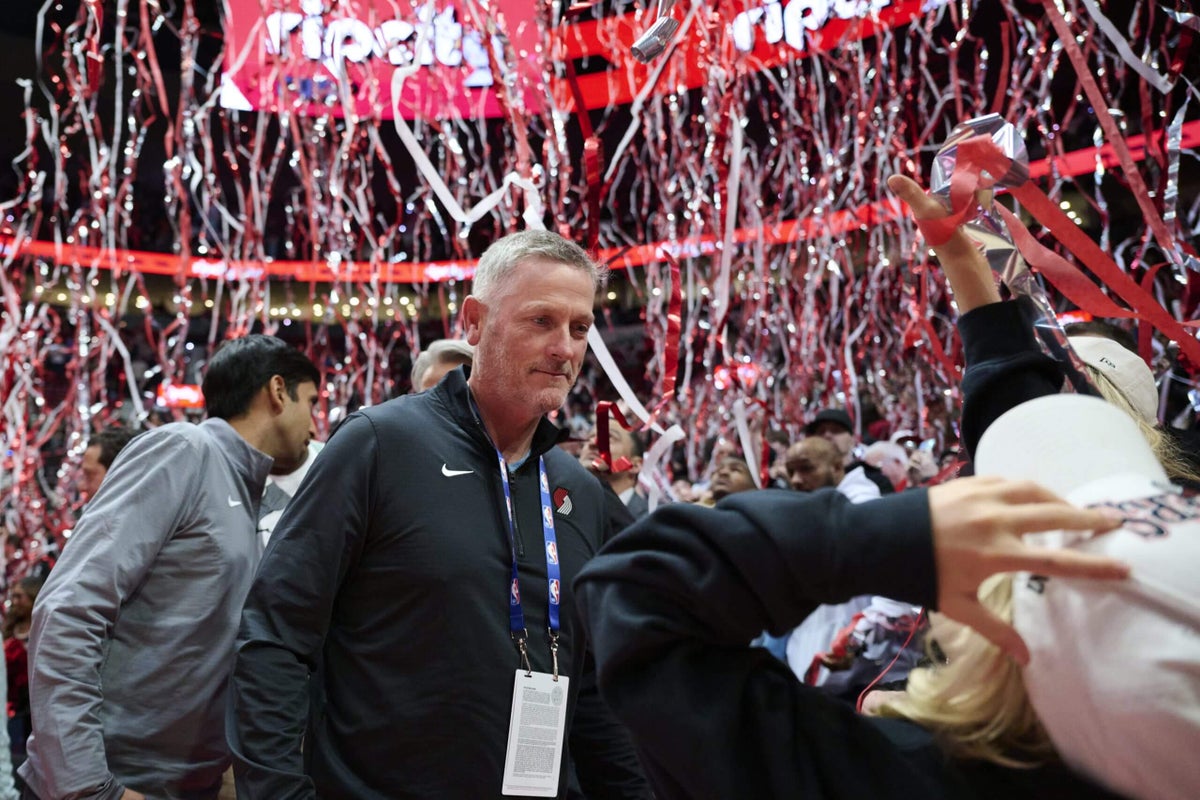
Dundon lives in Dallas. He already owns the NHL’s Carolina Hurricanes, which won this year’s Stanley Cup — with Dundon spending to the top of that sport’s salary cap in all but one of the last five seasons. But his foray into the NBA has been rockier. Like most owners, Dundon wants the city and state in which his team does business to help him with his team’s arena — in this case, partially funding significant renovations to Portland’s Moda Center. He has not been all that accommodating in making the ask, while also initiating two waves of massive layoffs within the organization, the second of which led to the departure of distinguished TV play-by-play man Kevin Calabro..
Dundon’s ownership group spent $4.25 billion to buy the Blazers. He’s within his rights to run the franchise his way. But the Blazers have 56 years of history with their fanbase, one of the best in the NBA. Every transaction can’t be merely transactional. Both the forward-facing and internal employees — former employees, sorry — were the franchise’s touch points with individuals and businesses in the community. They were the ones who convinced people and companies to come out of pocket, year after year, to buy tickets, suites and merchandise. They were the ones who convinced people that supporting the Blazers meant supporting the city, a connective tissue between a business and its clients that felt more personal than buying groceries or filling up your gas tank.
Sports teams hit people differently. Investing time and money into them is emotional and intimate. It matters that the people who run those teams know the history of the towns they’re in, not just the win-loss records of a team or its potential as an asset to be flipped in a decade.
Everything we know about the Lakers being sold again
Dan Woike
My guy Marcus Thompsonsynopsized this with the Lakers. The Buss family has owned outright or had some stake in the franchise since 1979, when the family’s patriarch, the late Dr. Jerry Buss, bought the team from Jack Kent Cooke for $67.5 million. Buss was a chemist who soon branched out into real estate to amass his fortune. His daughter, Jeanie, was his hand-picked successor. And while the feud between Jeanie and her siblings over controlling the family’s remaining financial stake in the team is great tabloid fodder, it obscures a bigger truth: The Lakers are the Busses. Or, at least they were.
Showtime sprouted on Jerry Buss’ watch. So did the Laker Girls, courtside seats for Hollywood celebrities and the sense that a Laker game was an event at which you needed to be seen.
Jerry Buss, and then Jeanie, were L.A. people who understood their market and their community, and they catered to it. It doesn’t mean they were always right, but it does mean they always cared. I’m not saying Bob Iger and Josh Kushner don’t have feelings for the franchise. But there’s something lost in the transition, a multibillion-dollar game of telephone.
Similarly, whatever you think of Cuban’s stewardship of the Mavericks during his tenure, we can all agree he would not have green-lit the trade of Luka Dončić to the Lakers as Patrick Dumont did. It took a Cooper Flagg lottery mulligan to begin to stanch the civic bleed that occurred among Mavericks fans after Dončiċ’s departure. I will never not believe that the team’s new owners simply decided they weren’t going to pay Dončić the $350 million extension for which he was eligible and, thus, were quite amenable when told by then-general manager Nico Harrison that he wanted to move on from the young star.
Also similarly, while Chisholm and his group may have strong feelings for the Celtics as a public trust, they weren’t there when Boston drafted Jaylen Brown in 2016, a year before the Cs took Jayson Tatum. As such, they were not as invested emotionally in Brown’s on-court development over the last decade, his powerful connection to the Black community in Boston or his finals MVP turn in 2024. Moving Brown to the Philadelphia 76ers — while not having to commit another $140 million on an extension — became a palatable off-ramp.
Sports teams have always been playthings for the ultrarich. There’s just so many of them lining up for their closeups now.
I certainly am not advocating for the return of mom-and-pop ownership of what are, today, multibillion-dollar companies. Not realistic and not feasible. For the Timberwolves to compete at the highest levels of today’s NBA, they needed to move on from Glen Taylor, who’d owned the team for three decades. But even Minnesota’s transfer from Taylor to a group headed by billionaire Marc Lore and former MLB star Alex Rodriguez last year, unkempt as it was, is already past its shelf life. Our Jon Krawczynski had the deets last week on Lore selling his stake to one of the team’s limited partners, Marc Stad, at a $4.5 billion valuation.
Sentiment almost gets crushed by economic eminent domain. Masters of the Universe and all. But every year, just before the start of the season, Glen and Becky Taylor had the Timberwolves’ players, coaches and staff over to their home for dinner. Becky often cooked.
It was tradition.

