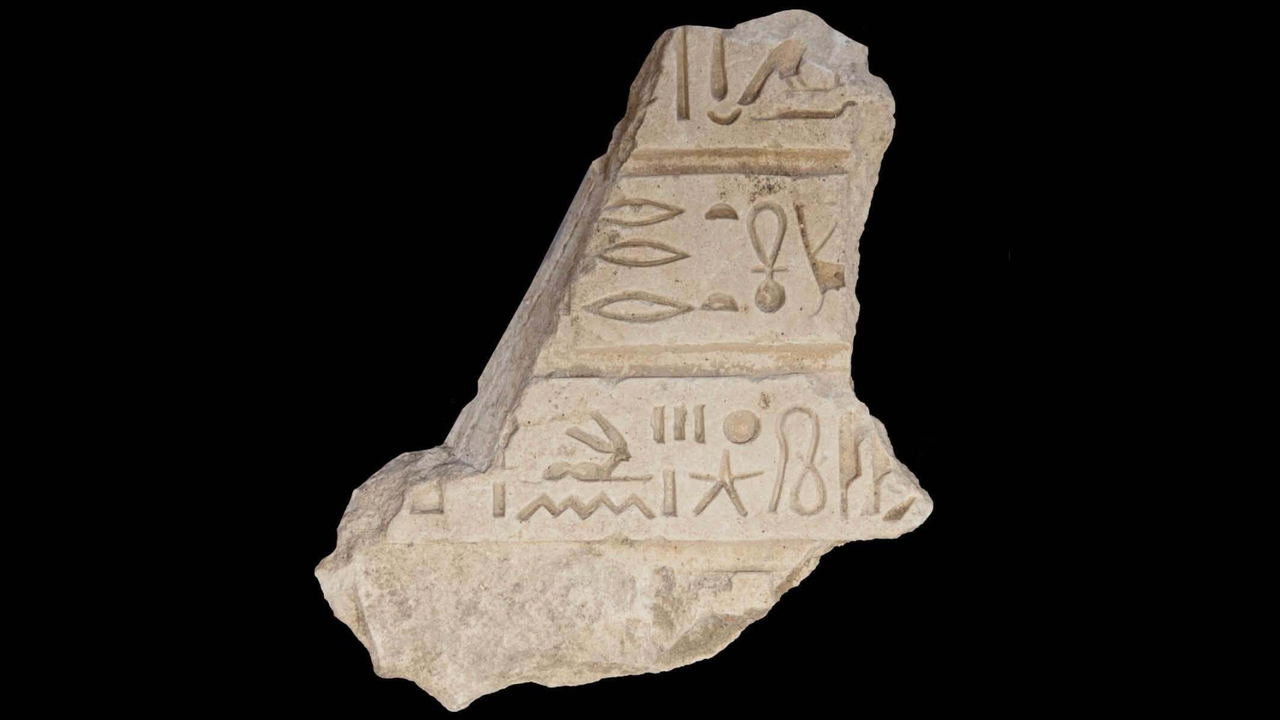
Археологичид Египетийн Синайн хойгийн ойролцоогоос 3200 жилийн настай бичээс бүхий сүмийн үлдэгдлийг олсон нь эртний түүхэн сурвалжид дурдагддаг Месн хотын байршил байж магадгүй хэмээн үзэж байна.
Египетийн Аялал жуулчлал, эртний олдворын яамны мэдээлснээр, Телл Абу Сейфи хэмээх газраас олдсон уг бичээс нь МЭӨ 1279-1213 оны хооронд төр барьж байсан Рамзес II хааны үед хамаарах бөгөөд тэнгэр, дайны бурхан Хорусыг “Месн хотын эзэн” хэмээн өргөмжилжээ. Судлаачид тус газарт Хорус бурханд зориулсан сүмийн туурийг илрүүлсэн боловч сүм бараг бүрэн сүйдсэн тул нэмэлт судалгаа шаардлагатай байгаа аж. Археологийн багийн ахлагч Хешам Хуссейний тайлбарласнаар, тус газарт өмнө нь олдсон Птолемейн үеийн хүрэл тамга болон авс дээрх бичээсүүд нь Хорус бурхан болон Месн хотын хоорондох холбоог улам бататгаж байна.
Телл Абу Сейфи нь эртний Египетийн Нилийн бэлчирээс Левантын бүс нутгийг холбосон, “Хорусын зам” гэгддэг цэргийн стратегийн ач холбогдолтой замын дагуу байрладаг. Түүхч Питер Брандын үзэж буйгаар, Месн хот нь Египетийн армийн Ханаан, Ливан, Сири рүү чиглэсэн цэргийн аян дайны үеийн чухал түшиц газар байсан бололтой. Рамзес II хаан Синайн хойгоор дамжин цэргээ удирдаж байсан нь тус бүс нутгийн цэргийн болон шашны ач холбогдлыг илтгэдэг байна.
Зарим судлаачид тус олдвор нь Месн хот мөн эсэхэд болгоомжтой хандаж байна. Археологич Грегори Мамфордын зүгээр, бүс нутгийн бусад газраас ч Месн хоттой холбоотой бичээсүүд олддог тул энэ нь өргөн уудам нутгийг хамарсан бүс байх магадлалтай гэж үзжээ. Иймд эрдэмтэд керамик эдлэл болон бусад археологийн баримтыг нарийвчлан судлах шаардлагатай гэж дүгнэж байна.
Дэлгэрэнгүйг эх сурвалжаас харах
↓Эх сурвалжийг нээх ↓
A 3,200-year-old Egyptian inscription found near an ancient military road may indicate the location of a long-lost city, archaeologists have announced.
Found at the site of Tell Abu Seifi (also spelled Seify), the inscription mentions Ramesses II, who reigned from about 1279 to 1213 B.C. It says that Horus, a falcon-headed ancient Egyptian god associated with the sky and war, is the “Lord of the City of Mesn,” representatives of the Egyptian Ministry of Tourism and Antiquities said in a translated statement.
The team also found the remains of a temple dedicated to Horus at the archaeological site, they said in the statement. Unfortunately, “the temple was almost completely destroyed,” making it difficult to get much information from it, Hesham Hussein, the director general of Delta and Sinai Archaeology at Egypt’s Ministry of Tourism and Antiquities and a leader of the research team, told Live Science in an email.
Tell Abu Seifi is located by the Suez Canal, near the north Sinai Desert and the eastern Nile Delta. The presence of both the inscription that mentions Mesn and a temple of Horus at the site means there is a strong possibility that Tell Abu Seifi is, in fact, Mesn (also spelled Mesen), according to the statement. However, Hussein cautioned that more research is needed for archaeologists to be certain.
The ministry’s statement called Mesn a “lost city,” and it is difficult to determine precisely when the city was founded or how large it was. “Because its archaeological identification has remained uncertain, we cannot currently provide a reliable estimate of its total extent or population,” Hussein said.
If Tell Abu Seifi is Mesn, it seems to have existed for a long time. A bronze seal that was previously found at Tell Abu Seifi and dates to the Ptolemaic period (circa 304 to 30 B.C.) also has an inscription that says, “Horus, Lord of Mesen,” Hussein noted, and coffins dating to the Ptolemaic period previously found at the site have similar inscriptions.
Horus also seems to have been extremely important to the people of Mesn. “The title “Horus, Lord of Mesen” directly connects the deity with the place, and the archaeological evidence from Tell Abu Seify supports the importance of this cult,” Hussein said.
Way of Horus
Tell Abu Seifi is located near what the ancient Egyptians called the “Way of Horus” (or “Ways of Horus”), a road that connected the eastern Nile Delta with the southern Levant and was dotted with fortresses.
Peter Brand, a professor of history at the University of Memphis in Tennessee who was not involved in the excavation, said the evidence indicates that Tell Abu Seifi, which is near the modern-day city of Qantara, is Mesn. “Several fortifications were built along the ‘Ways of Horus’ and Mesen, near modern Qantara, was likely one of the ‘jumping off’ points for Egyptian armies departing for Canaan, Lebanon, and Syria,” he told Live Science in an email.
A road leading out of Africa and into the Middle East was key, as the Egyptians went on several military campaigns to expand their empire around that time.
“The Egyptian empire dominated this part of the Middle East,” Brand said. “Ramesses II’s father had built a series of the forts along the Ways and Ramesses himself marched his armies across Sinai during his military campaign.” This included his famous Battle of Kadesh, in what is now Syria, against the Hittite Empire, a kingdom based in Anatolia (modern-day Turkey).
The site’s temple also hints at its importance.
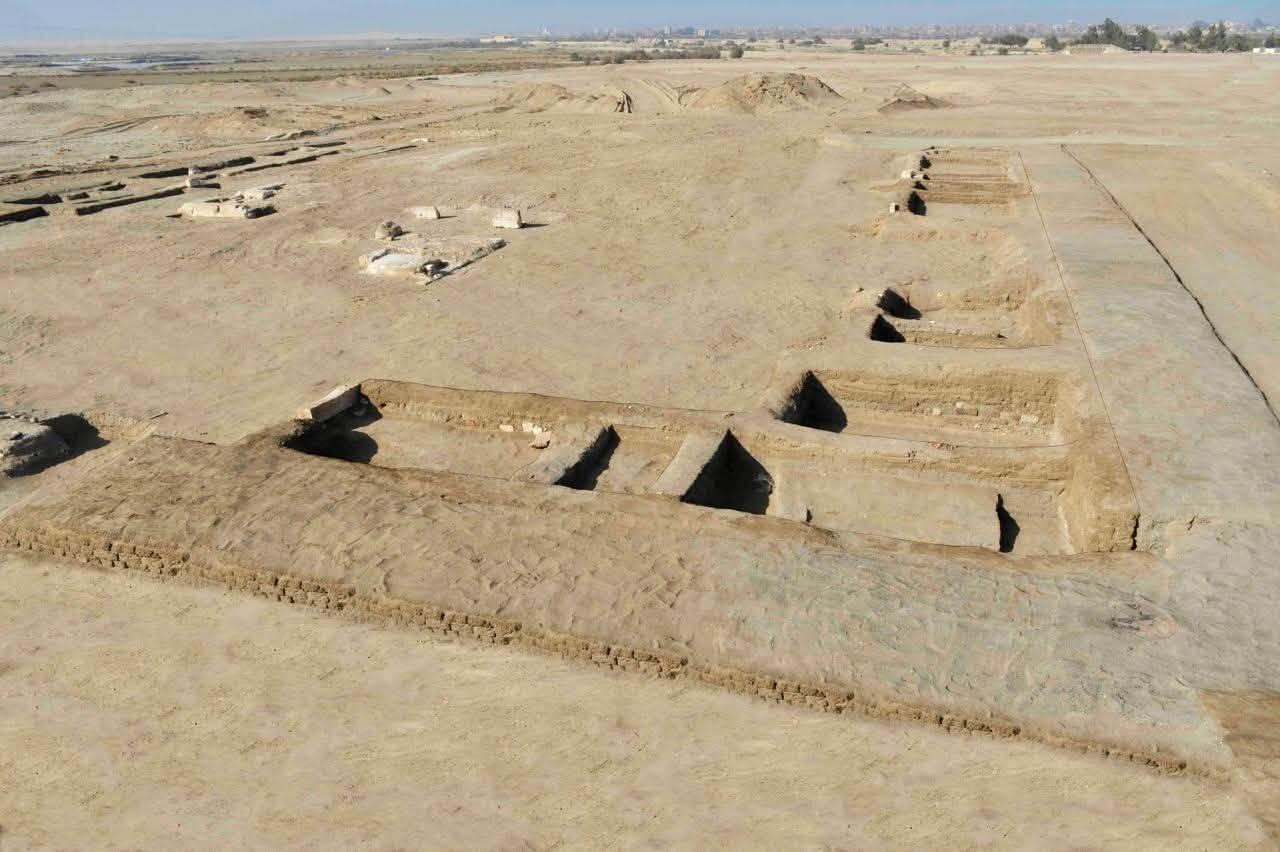
The “temple of the god Horus of Mesen was the most important religious center in the area,” Brand said. He noted that the newfound inscription mentions “how Ramesses II restored a statue of Horus of Mesen.” Remarkably, the pedestal of a statue just like this was previously found at the site.
These two clues indicate that Tell Abu Seifi is Mesn, Brand said.
Waiting for more evidence
Other scholars were not ready to identify Tell Abu Seifi as Mesn. James Hoffmeier, an archaeologist and professor at Trinity International University who has conducted extensive work in the region, said that while the case is strong, he wants to see more evidence, such as ceramics from the site, to be sure.
One problem is that similar inscriptions mentioning Mesn have been found at other sites in the region, raising the question of whether those sites could be Mesn, Gregory Mumford, an anthropology professor at the University of Alabama at Birmingham who was not involved in the excavations, told Live Science in an email. These sites include a fortress at Kom el-Qolzoum on the Suez and a fort at Tjaru in the northwest Sinai Desert. Mumford proposed that Mesn could be a broad area that encompasses multiple sites in the region.
Other scholars also said more information on the discoveries was needed.
Oren Siegel, an Egyptology professor at the University of Toronto who was not involved in the excavation, said this is a “really exciting find” but he wants to wait for more information before commenting in detail. Shirly Ben Dor Evian, an Egyptology professor at the University of Haifa in Israel who wasn’t involved in the excavation, also said more information, particularly on the hieroglyphic inscriptions, was needed.
Research into the site is ongoing. Hussein noted that, interestingly, historical records show there was a second settlement named Mesn located in southern Egypt.
Are you a fan of mummies and hieroglyphs? Find out with our ancient Egypt quiz!


Энэ олдворыг хараад, эртний Египетийн хотын тухай шинэ нууц илрэх үү гэж бодогддог шүү. Түүхчид Месн хотын байршлыг илүү тодруулахын тулд нэмэлт судалгаа хийх хэрэгтэй гэдэгтэй санал нийлж байна. Таны бодлоор энэ олдвор ирээдүйн түүхийн ойлголтыг хэрхэн өөрчилж чадах бол?