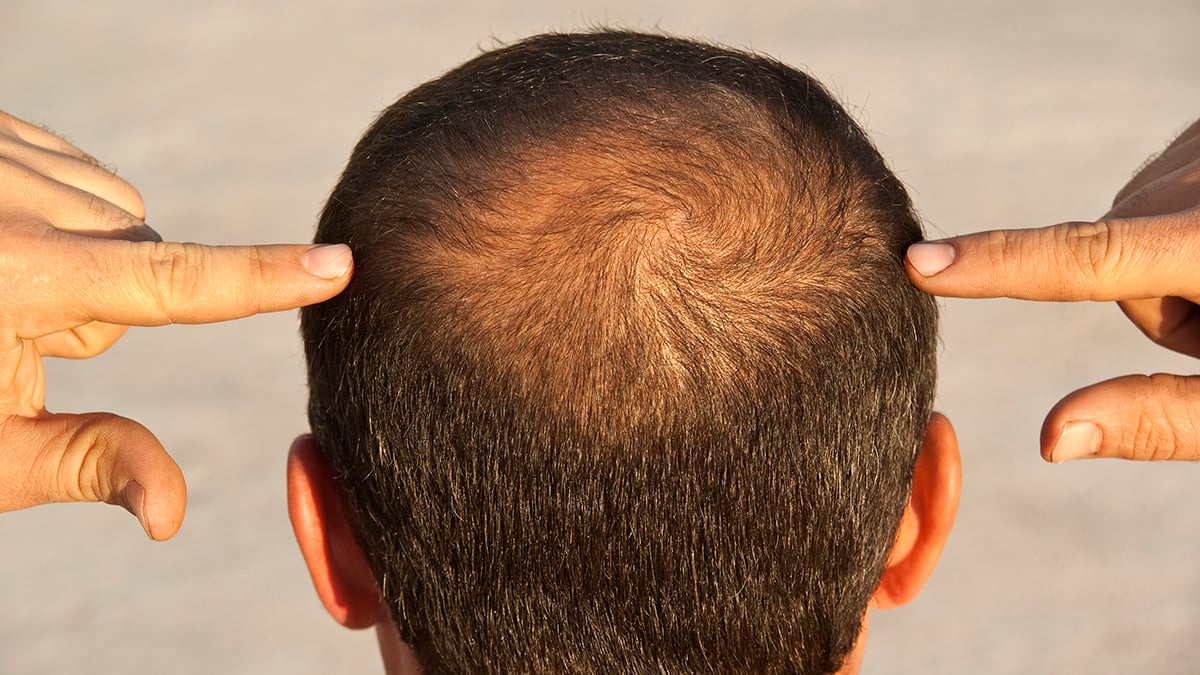
Journal of Investigative Dermatology сэтгүүлд нийтлэгдсэн шинэ судалгаагаар GLP-1 төрлийн эмүүд нь удамшлын шалтгаант халзралттай эрэгтэйчүүдэд үс унах эрсдэлийг нэмэгдүүлж болзошгүйг тогтоожээ.
Wegovy, Ozempic зэрэг GLP-1 бүлгийн эмүүд нь чихрийн шижин болон жин хасахад өндөр үр дүнтэй болох нь батлагдсан ч эрүүл мэндэд үзүүлэх сөрөг нөлөөллийн талаарх асуултууд байсаар байна. NYU Grossman School of Medicine-ийн эрдэмтдийн удирдсан баг “Менделийн рандомизаци” хэмээх генетик шинжилгээний аргыг ашиглан уг эмийн үйлчилгээ болон үс уналтын хоорондох хамаарлыг судалжээ.
Судалгаанд 205,327 хүний эрүүл мэндийн мэдээллийн санг ашиглан GLP-1 рецепторын (GLP1R) идэвхжлийг нэмэгдүүлдэг 22 төрлийн генетик хувилбарыг судалсан байна. Үр дүнд нь, удамшлын шалтгаант халзралттай (androgenetic alopecia) эрэгтэйчүүдийн дунд GLP1R генийн идэвхжил өндөр байх магадлал 7 хувиар илүү байгааг тогтоожээ. Энэ нь GLP-1 эмүүд нь үсний уутанцарт шууд нөлөөлөх эсвэл бодисын солилцооны замаар дамжин үс уналтад нөлөөлж болохыг харуулж байна.
Судалгааны багийн ахлах судлаач, генетикч Линн Петуховагийн тайлбарласнаар, энэхүү үр дүн нь GLP-1 эмчилгээ болон эрэгтэйчүүдийн үс уналтын хоорондох генетик холбоог шинжлэх ухааны үндэслэлтэйгээр анх удаа баталж буй хэрэг юм. Гэсэн хэдий ч судалгааны үр дүн нь шууд фармакологийн нөлөө гэхээсээ илүүтэй GLP1R замын оролцоог дэмжсэн нотолгоо гэж судлаачид тэмдэглэжээ.
Цаашид энэхүү нээлт нь эмч нарт GLP-1 эмчилгээг эхлэхээс өмнө үс унах эрсдэлийг тооцоолох, шаардлагатай тохиолдолд үс уналтаас сэргийлэх нэмэлт эмчилгээг хавсран хэрэглэх боломжийг бүрдүүлж магадгүй юм. Хэдийгээр эрэгтэйчүүдийн дунд судалгаа хийсэн ч ижил хамаарал эмэгтэйчүүдэд ч байж болзошгүйг судлаачид дурдсан байна. Энэхүү нөлөөллийн хэмжээ нь статистикийн хувьд баттай боловч эмнэлзүйн ач холбогдол нь одоогоор тодорхойгүй хэвээр байна.
Дэлгэрэнгүйг эх сурвалжаас харах
↓Эх сурвалжийг нээх ↓
GLP-1 drugs like Wegovy and Ozempic are never out of the headlines for long.
They’ve proven to be very effective for managing weight loss and type 2 diabetes, but questions persist around potentially negative health impacts from these treatments too.
A new study published in the Journal of Investigative Dermatology looks at that second aspect – the possible downsides of these transformative drugs.
Past studies have suggested there might be a relationship between GLP-1 drugs and hair loss – in part because it’s been mentioned as a side effect by a significant number of patients – but there’s not much solid data on any connection.
To take a closer look, a team led by scientists at New York University (NYU) Grossman School of Medicine used a genetic analysis technique to stand in for actual drug taking.
They found that for men, using GLP-1 drugs could be associated with a 7 percent added risk of losing their hair, if they were already genetically at risk of androgenetic alopecia (pattern hair loss).
“Our study provides the first genetic link between GLP-1 use and an increased risk of male-pattern hair loss from androgenetic alopecia, an association long suspected but until now not shown scientifically,” says senior investigator Lynn Petukhova, a geneticist at NYU.
The study didn’t follow anyone taking GLP-1 medications, which mimic the effects of the glucagon-like peptide-1 hormone. Instead, the researchers used a technique called Mendelian Randomization, where certain genetic variants are used as proxies.
In this case, 22 genetic variants were identified that increase GLP-1 receptor (or GLP1R) expression in the blood. People with these variants have increased activity in the same GLP-1 pathways targeted by drugs such as Ozempic or Wegovy.

Those genetic variants were cross-referenced in a health database of 205,327 individuals to see if they were more common in men who also had androgenetic alopecia.
The researchers also adjusted for other potential influencing factors, including blood pressure, testosterone, and body fat distribution.
Sure enough, they found that men who have androgenetic alopecia were 7 percent more likely to have GLP1R genes that increase GLP-1 receptor proteins.
This suggests that higher levels of these receptor proteins could be linked to hair loss. And since GLP-1 drugs boost these proteins, it stands to reason that they in turn could contribute to pattern hair loss.
However, it’s not a perfect one-to-one match. Having the GLP1R genetic variants isn’t exactly the same as taking regular GLP-1 drugs, though it is similar enough to suggest there’s a real association here.
“These findings should therefore be interpreted as evidence supporting involvement of the GLP1R pathway rather than direct pharmacologic effects,” write the researchers in their published paper.
The same relationship could apply to women too, the researchers say, though they focused on men here as there’s much less data available for patterned hair loss in women.

As with other side effects of GLP-1 drugs, including nausea and constipation, knowing about the potential consequences of the medications will help doctors and patients decide whether or not to prescribe them.
“Our findings suggest that, if future experiments prove successful, some men, and possibly women too, could be screened and benchmarked for their risk of hair loss before being prescribed GLP-1 medications,” says Petukhova.
“We could also envision these findings leading to some GLP-1 users being prescribed combination treatments to prevent hair loss, such as minoxidil or some other drug.”
The findings here match up with a study published earlier this year that found a link between GLP-1 drugs and hair thinning, compared to conventional diabetes treatments.
GLP-1 medications may be acting on hair follicles directly, the researchers suggest, or having an indirect effect through other parts of the body’s metabolism. Right now it’s not clear why the association exists, but it should become clearer in time.
Related: Weight Loss on GLP-1 Drugs Linked to Lower Risk of Disease, Study Finds
“Overall, these findings support a potential causal relationship between increased GLP-1R expression and male pattern hair loss risk,” write the researchers. “The observed effect size is modest and, while statistically robust, its clinical relevance remains uncertain.”
The research has been published in the Journal of Investigative Dermatology.
This article was fact-checked by Michael Irving and edited by Michael Irving. While we pride ourselves on our process, we are only human. If you spot a mistake, please let us know.


Гарчигийн талаар сонирхолтой санагдаж байна, жин хасах эмүүд үс уналтын эрсдэлтэй холбоотой байж болох нь ойлгомжтой. Та энэ судалгааг хэр бодитой гэж үзэж байна вэ, ялангуяа эмч нар үс уналтаас сэргийлэх арга хэмжээ авах шаардлагатай юу?