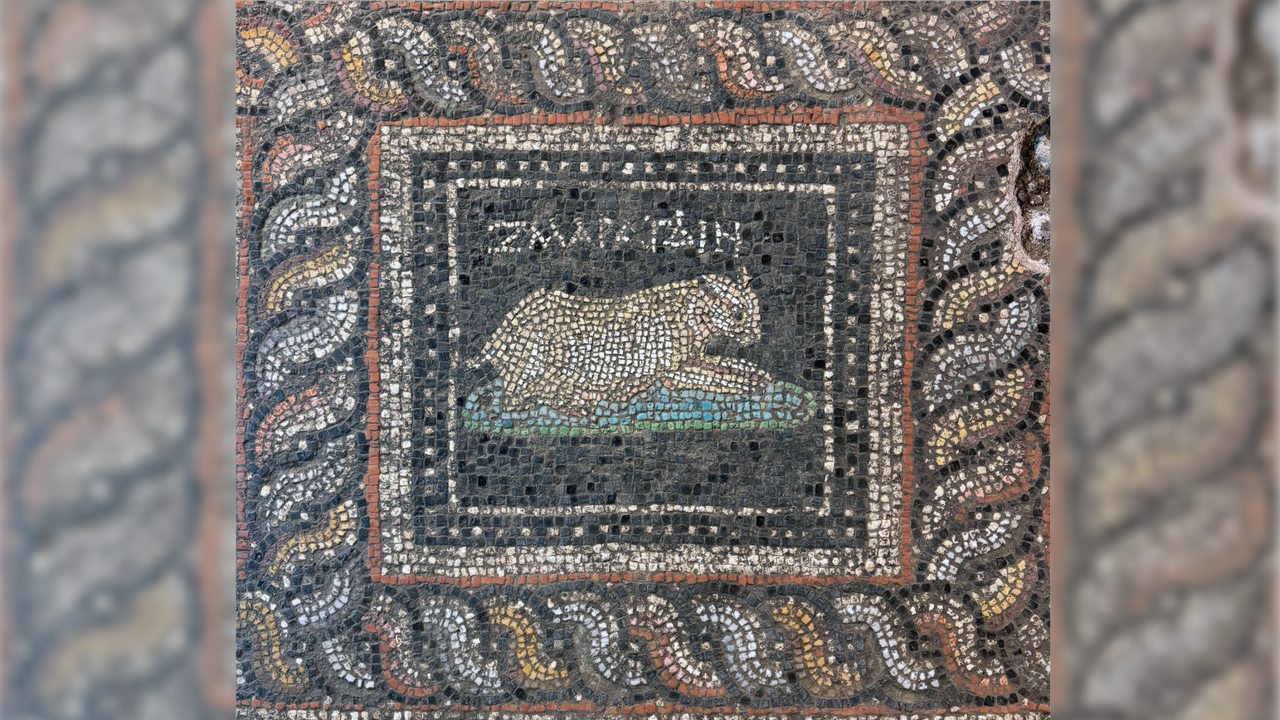
Туркийн эртний Адрамиттеон хотын нутгаас олдсон Ромын үеийн харшийн шалнаас муур, нохойг нэрээр нь ялган дүрсэлсэн ховор мозайк илэрчээ.
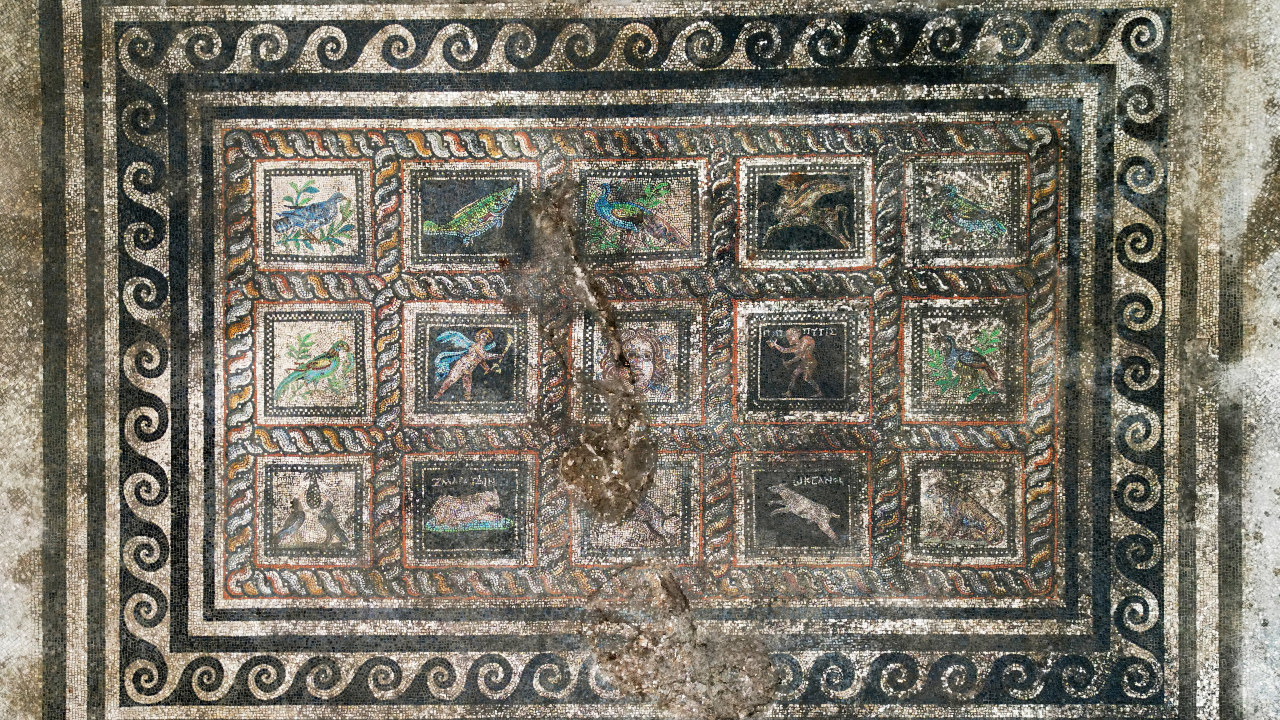
Мимар Синан дүрслэх урлагийн их сургуулийн судлаач Хүсейин Өзгенээр ахлуулсан баг МЭ II-III зуунд холбогдох тус харшийг малтан шинжилжээ. Уг барилгын гол танхимд 15 хэсгээс бүрдэх өнгө өнгийн мозайк байх бөгөөд үүнд шувуу, загас, муур, нохой болон домогт амьтдыг дүрсэлсэн байна.
Мозайкийн зүүн талд цэнхэр ногоон дэрэн дээр хэвтэж буй муурыг “Эмералд” (Маргад эрдэнэ), баруун талд нь гүйж буй нохойг “Океанос” (Далай) хэмээн Грек үсгээр нэрлэсэн байв. Судлаачдын үзэж буйгаар, эдгээр амьтан нь тухайн үеийн айл өрхийн тэжээвэр амьтад байсан бөгөөд нэршил нь эзнийх нь ажил мэргэжил эсвэл амьдарч буй орчинтой холбоотой байж болох юм.
Энэхүү олдвор нь эртний Ромын иргэдийн амьдралын хэв маяг болон гэрийн тэжээвэр амьтдад хандах хандлагыг харуулах чухал баримт болж байна. Адрамиттеон нь эртний Азийн боомт хот байсан тул “Океанос” хэмээх нэр нь далайн эргийн байршилтай холбоотой байх магадлалтай ажээ. Судалгааны баг уг бүс нутагт малтлагын ажлаа үргэлжлүүлэн явуулж байна.
Дэлгэрэнгүйг эх сурвалжаас харах
↓Эх сурвалжийг нээх ↓
Nearly two millennia ago, a wealthy Roman commissioned an intricate, multicolored floor mosaic that depicted two beloved household animals: a cat named Emerald and a dog named Ocean. The mosaic was a key feature of a villa, which archaeologists recently unearthed from beneath the ancient city of Adramytteion on Turkey’s Aegean coast.
Within the Roman villa, which has been dated to the late second to third centuries A.D., archaeologists discovered three halls surrounding a central atrium. In one room, which likely functioned as the villa’s main reception hall, archaeologists found a colorful mosaic with 15 separate panels depicting living and mythological creatures.
In a study forthcoming in the Journal of Mosaic Research, archaeologist Hüseyin Özgen, head of the Adramytteion research team at Mimar Sinan Fine Arts University, wrote that the 15 panels are centered around what appears to be a depiction of Medusa, while the named cat and dog may preserve the memory of household creatures.
Özgen began excavating at Adramytteion in 2012, but he and his team discovered the Roman villa only recently and excavated it in 2025 and early 2026. In the Roman period, Adramytteion was a provincial capital within Asia Minor and a prime trading spot due to its location at the head of a gulf on the Aegean Sea. The impressive villa included three mosaic-paved halls, a number of secondary rooms, and a network of pipes and drains that may have connected to a latrine.
Visitors approaching from the courtyard of the villa would have been greeted by the largest, most elaborate mosaic in the residence, according to Özgen. Located in the middle of the room, the mosaic measures about 16.4 by 11.8 feet (5 by 3.6 meters) and contains 15 panels arranged in three rows. Most of the panels depict birds, fish and felines, but two mythologically inspired panels include a gorgon (possibly Medusa) and a winged horse (possibly Pegasus). Ancient artists used white, black, red, orange, yellow, pink, burgundy, blue, turquoise and green tiles to create the intricate design.
Only two of the animals depicted in the mosaic are named. As someone entered the room, the first mosaic panel they would have seen to their left was a pale cat seated on a blue-green cushion, Özgen wrote in the study. Above the cat are the Greek letters ΖΜΑΡΑΓΔΙΝ (Zmaragdin), meaning emerald. The relaxed cat sitting on a cushion suggests that Emerald may have been a pet rather than a stray.
- Lavish private bath used by Roman emperor and ‘high-status residents’ discovered at imperial palace in Serbia
- Poop-encrusted chamber pots from the Roman Empire reveal oldest known human cases of Crypto parasite
- 1,600-year-old skeleton found in a giant jar in Bulgaria may belong to Roman who hid there to escape enemy attack
One possible explanation for Emerald’s name may be a link to the desert of Roman Egypt, where emeralds were mined in antiquity; the villa owner may have been a merchant with North African connections.
On the right side as someone entered the room was a mosaic panel depicting a running or leaping dog. This animal is labeled with the Greek letters ΩΚΕΑΝΟΣ (Okeanos), meaning ocean. Adramytteion was a harbor city, so Ocean’s name may have been bestowed due to his surroundings, according to Özgen.
Emerald and Ocean were likely familiar to the villa’s residents, even if they weren’t specifically pets, Özgen wrote, and their depictions in the mosaic may have functioned as familiar signs of ownership and household identity.
Research at Adramytteion by Özgen and the project team is ongoing.
From Augustus to Nero, see how much you know about ancient Rome’s famous leaders with our Roman emperor quiz!

