Судлаачид хулгана ухаан алдсан ижил төрөлтнүүддээ анхны тусламж үзүүлж буй мэт зан үйл ажигласан нь тархины нийгмийн зан төлөвийн сүлжээтэй холбоотой байж болзошгүй байна.
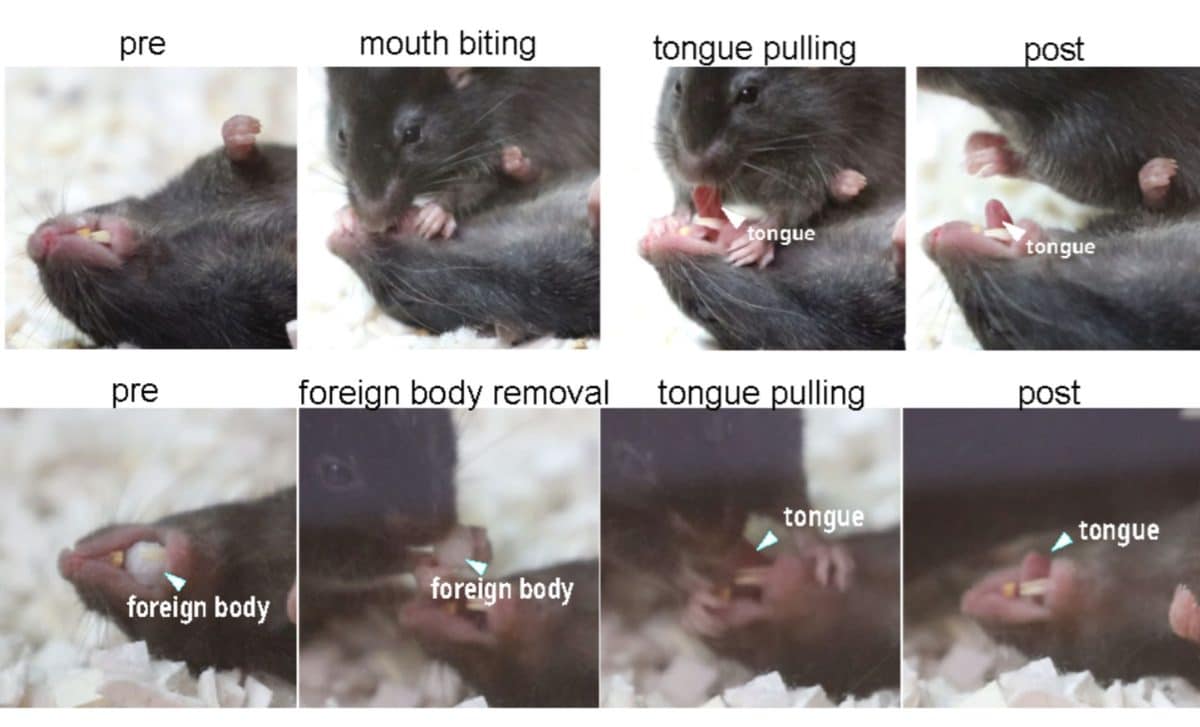
Өмнөд Калифорнийн их сургуулийн нейро эрдэмтэн Ли Жан болон түүний багийнхан хулганууд ухаан алдсан нөхдөө сэргээх оролдлого хийж буй мэт зан үйлийг ажиглаж, улмаар энэхүү үзэгдлийг Science сэтгүүлд нийтлүүлжээ. Туршилтын явцад хулганууд ухаан алдсан нөхдөө үнэрлэж, нүүр орчимд нь хазаж, улмаар хэлийг нь татах зэрэг үйлдлийг дарааллаар нь гүйцэтгэдэг болохыг тогтоосон байна. Энэхүү хэл татах үйлдэл нь ухаан алдсан хулганы амьсгалын замыг чөлөөлж, сэргэх хугацааг хурдасгахад бодитой нөлөө үзүүлдэг болохыг судалгаагаар нотолжээ.
Судалгааны багийн гишүүн Хуйжон Уит Таогийн тайлбарласнаар, хулганууд өмнө нь ийм нөхцөл байдалтай тулгарч байгаагүй хэдий ч уг зан үйлийг төрөлхийн мэт гүйцэтгэж байсан нь анхаарал татаж байна. Түүнчлэн хулганууд танихгүй хулганаас илүүтэйгээр өөрийн бүлгийн гишүүдэд туслах хандлагатай байсан бөгөөд ухаан алдсан хулганыг сэргэсний дараа уг үйлдлээ зогсоож байв. Эрдэмтэд энэхүү үйлдэл нь окситоцины хэлхээтэй шууд холбоотой болохыг тархины түвшинд тогтоосон нь нийгмийн зан төлөвийн сүлжээ идэвхжиж байгааг харуулж байна.
Гэсэн хэдий ч энэхүү зан үйлийг “тусламж” гэж үзэх эсэх дээр эрдэмтдийн дунд маргаантай байр суурь байна. Зарим судлаачид үүнийг сониуч зан эсвэл зүгээр л тохиолдлын үр дүн байж болзошгүй гэж үзэж байгаа бол нөгөө хэсэг нь олон лабораторид ижил төстэй ажиглалт хийгдсэнийг онцлон тэмдэглэжээ. Судлаачид хулгануудын энэхүү үйлдлийг санаатайгаар “туслах” гэсэн утга санаа агуулж байна уу, эсвэл зөвхөн тусламж хэрэгтэй амьтанд үзүүлэх хариу үйлдэл үү гэдгийг тогтооход хүндрэлтэй байгааг хүлээн зөвшөөрч байна.
Дэлгэрэнгүйг эх сурвалжаас харах
↓Эх сурвалжийг нээх ↓
Several years into his anesthesia work with mice, neuroscientist Li Zhang kept seeing something he couldn’t quite explain. When his team at the University of Southern California returned an anesthetized mouse to its cage, its cage mate would sometimes start sniffing and biting around the unconscious animal’s face. It looked, at least to Zhang, a little like the mouse was trying to revive its knocked-out partner. Something resembling first aid.
That odd observation has now turned into a formal study. Zhang and his colleagues published their findings in the journal Science, documenting a sequence of behaviors that mice reliably perform on unconscious cage mates, behaviors that appear to physically open the airway and speed recovery from anesthesia.
In the experiments, researchers presented a mouse with two companions: an unconscious cage mate under anesthesia and an active, moving mouse. The subject spent far more time with the unconscious animal.
Then the pattern escalated. First came sniffing and grooming, followed by biting around the companion’s mouth. In more than half of all cases, the mouse pulled out the unconscious animal’s tongue.
The Tongue Pull That Actually Works
Tongue-pulling mattered. The researchers found that it expanded the airways of unconscious mice, and when the team placed small objects in the animals’ mouths, the maneuver dislodged them in roughly 80 percent of cases.
“This was the most surprising part of the study,” said Huizhong Whit Tao, a neuroscientist at USC and co-author. “Obviously the effects are beneficial.”
According to Whit Tao, the behavior also appears to be innate. These mice had never encountered an unconscious mouse before. They had no opportunity to learn the sequence. “It seems that the mouse can perform, deliberately, this whole set of behaviors,” she said. “This is the first time that we’ve reported these kinds of emergency-like responses from animals.”
Nor did mice respond this way indiscriminately. They were more likely to act for familiar cage mates than strangers, and once the unconscious mouse woke up, the caring behaviors stopped. Anesthetized mice attended to by a companion tended to regain consciousness sooner than animals left alone, while the same behaviors were directed toward dead mice for a time but rarely toward active or sleeping ones.
Hardwired to Help, or Just Curious?
At the neural level, the researchers found that oxytocin circuits were crucial for activating the revival-like behaviors. The same circuitry underlies helping behavior in a variety of species.
James Burkett, a neuroscientist at the University of Toledo who was not involved in the study, described that neurological finding as the work’s strongest contribution. “That was a really well done part of the study showing that this is engaging social behavior networks in the brain,” he said.
The familiarity pattern stood out to Burkett, too. “That familiarity bias tells you that the animal’s not responding in a reflexive manner to the stimuli that they’re seeing,” he said. “They’re actually taking into account aspects of the situation and the identity of the animal when they’re forming their response.” But he drew a firm line at inferring intention: “We can’t infer just from our observations that these mice have an intention to help. We only know that they’re responding to an animal in need and they perform a behavior that does benefit them.”
There is a simpler competing explanation: curiosity. An unresponsive mouse might simply be more interesting to investigate.
The researchers tested that possibility by repeating the experiment over five days. If novelty were driving the behavior, it should fade. It didn’t. “However, we saw the opposite,” Whit Tao said. “There is no reduction in behavior, there’s a little bit of an increase.”
Not Everyone’s Convinced
Peggy Mason, a neuroscientist at the University of Chicago who was not involved in the study, made a pointed distinction between helping and accidentally benefiting someone. “If I drop $20, by mistake, on the street and someone else picks it up, that person has been helped, but I have not helped them,” she said. “They found a great behavior, I don’t dispute that. I dispute the interpretation of it.”
Mason suggested habituation might take longer than five days, meaning the experiment may not fully rule out curiosity.
Cristina Márquez, a researcher at the Center for Neuroscience and Cell Biology in Portugal, said she had never seen these behaviors in her own lab because recovering animals were always returned to their partners fully awake. Still, the convergence across laboratories struck her as meaningful.
“The fact that three independent laboratories have observed similar behaviors indicates that this is a robust finding,” she told New Scientist, while cautioning against reading too much intent into what is observed in non-human species.
Three independent findings, including two other recent studies reporting similar behaviors in mice, point toward circuitry that is neither rare nor incidental. Given that oxytocin networks are widespread across the animal kingdom, Zhang and Whit Tao suspect revival-like behaviors may be too.
Whether that holds beyond the lab cage remains untested.
Enjoyed this article? Subscribe to our free newsletter for engaging stories, exclusive content, and the latest news.

