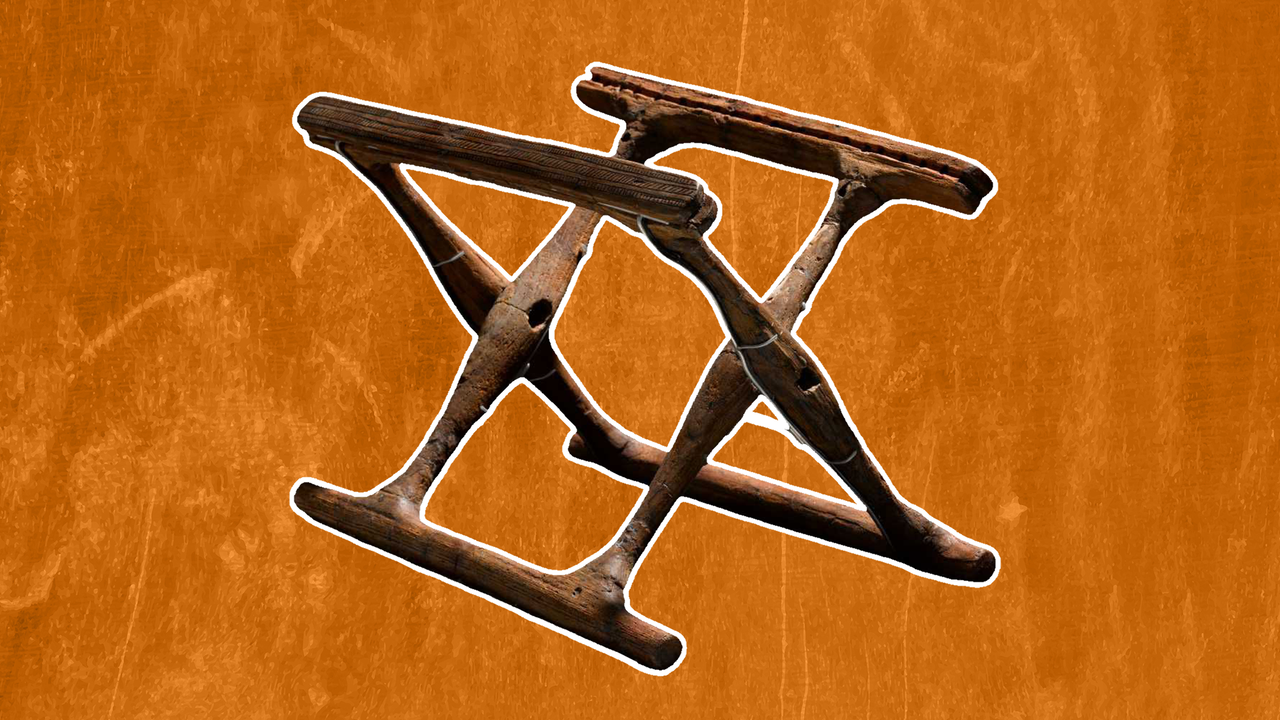
Данийн үндэсний музейн археологичид өмнөд Ютландаас хүрэл зэвсгийн үед холбогдох, Европын хэмжээнд ховор тохиолддог эвхдэг сандлыг малтан илрүүлсэн байна.
1891 онд Гулдхөй хэмээх булшнаас олдсон энэхүү сандал нь МЭӨ 1400 орчим жилийн тэртээх үед хамаардаг бөгөөд тухайн үеийн язгууртны өндөр статусыг илтгэдэг байна. Тус олдвор нь үнс модоор хийсэн их бие, халиуны арьсан суудалтай бөгөөд хүрэл зэвсгийн үеэс бүрэн бүтэн хадгалагдан үлдсэн Европын цорын ганц сандал юм. Уг булшнаас сандлаас гадна хүрэл сүх, хутга, модон аяга, хайрцаг зэрэг эд зүйлс олдсон нь тухайн булшинд оршуулагдсан хүн нь өндөр зиндааны удирдагч байсныг гэрчилж байна.
Археологич Кирстен Прансгор болон түүний багийн 1999 онд хийсэн судалгаагаар, энэхүү сандлыг 33 см өндөртэй хоёр модон хүрээг 45 хэмийн өнцгөөр угсарч хийсэн болохыг тогтоожээ. Сандал нь анх хүрэл хадаасаар бэхлэгдсэн байсан боловч оршуулах ёслолын өмнө задалсан байж болзошгүй гэж судлаачид таамаглаж байна. Энэ төрлийн эвхдэг сандал нь тухайн үеийн зан үйл, ёслолын ажиллагаанд гол үүрэг гүйцэтгэдэг байжээ.
Энэхүү олдвор нь хүрэл зэвсгийн үеийн Скандинавын орнууд Газар дундын тэнгисийн соёл иргэншилтэй худалдаа болон бэлэг солилцооны замаар харилцаж, соёлын холбоотой байсныг баталж байна. Сандлын загвар нь эртний Египет, Грекийн соёлтой төстэй байгаа нь тухайн үеийн хүмүүс холын зайн худалдаагаар дамжуулан үзэл санаа, урлагийн чиг хандлагыг хуваалцдаг байсныг харуулж буй чухал баримт юм.
Дэлгэрэнгүйг эх сурвалжаас харах
↓Эх сурвалжийг нээх ↓
Name: Guldhøj folding chair
What it is: A wooden chair with an otter-skin seat
Where it is from: Guldhøj, southern Denmark
When it was made: Circa 1400 B.C.
When archaeologists with the National Museum of Denmark excavated a burial mound called Guldhøj (Gold Hill) in southern Jutland in 1891, they were surprised to find a well-preserved wooden folding chair similar to those known from ancient Egypt and Greece. But the Guldhøj folding chair was made in Denmark around 3,400 years ago and is the only completely preserved chair from the Bronze Age in Europe, according to the National Museum of Denmark.
The chair was discovered in the grave of a chieftain, who was buried in a hollowed-out oak tree trunk and wrapped in a cowhide. The man had been dressed in a wool cloak secured with a bronze brooch, two wool hats, woolen mittens and leather shoes. Among the offerings his loved ones left in the grave were a bronze ax and a bronze dagger, along with two ornate wooden bowls and a wooden box. But the folding chair was an unusual addition to the grave and was likely a marker of the man’s extremely high status.
The frame of the Guldhøj folding chair was crafted from ash wood, while the seat was made from otter skin, only a fragment of which was preserved over the millennia. Patterns incised into the top of the wooden frame were inlaid with a black, tar-like substance to create a band of geometric decoration.
In a 1999 study led by archaeologist Kirsten Prangsgaard, researchers who examined the chair determined that it was made from two frames of wood, each about 13 inches (33 centimeters) tall. When the frames were put together at a 45-degree angle, the low chair or stool would have been around 9.5 inches (24 cm) off the ground. Originally, the chair frame was likely held together with bronze nails, which may have been removed before the seat was placed in the grave, according to the researchers.
Folding chairs may seem simple, but they were important pieces of furniture that signified the seated person was of high rank, and they were likely used in rituals or ceremonies, according to the National Museum of Denmark.
Archaeologists have found ancient folding chairs in this style in Bronze Age Egypt and Greece, where weather conditions are better for preserving organic material such as wood. The Guldhøj folding chair is not unique in Nordic countries; pieces of chairs have been found in other chieftain graves in Denmark and northern Germany, and a rare metal folding chair was even found in an early medieval woman’s grave in Germany. However, it is the only completely preserved wooden folding chair from Bronze Age Europe, Prangsgaard and colleagues noted in the study. “The folding chairs thus seem to belong to the warrior graves of the Early Bronze Age,” they wrote.
The similarity of the Guldhøj chair, which was made in Denmark, to chairs found in far-flung civilizations means that Bronze Age people were exchanging ideas through trade and gift giving, the researchers wrote. The chairs show a clear artistic connection between Bronze Age Nordic and Mediterranean groups. Another connection is the four-spoked wheel on the famous Sun Chariot from Trundholm, which mimics designs seen in the Aegean region.
Both the unusual folding chair and the wooden bowls buried with the Bronze Age chieftain in the Guldhøj mound “can only be described as rare objects of high prestige,” according to the National Museum of Denmark.
For more stunning archaeological discoveries, check out our Astonishing Artifacts archives.
Can you put together last week’s Astonishing Artifact?

