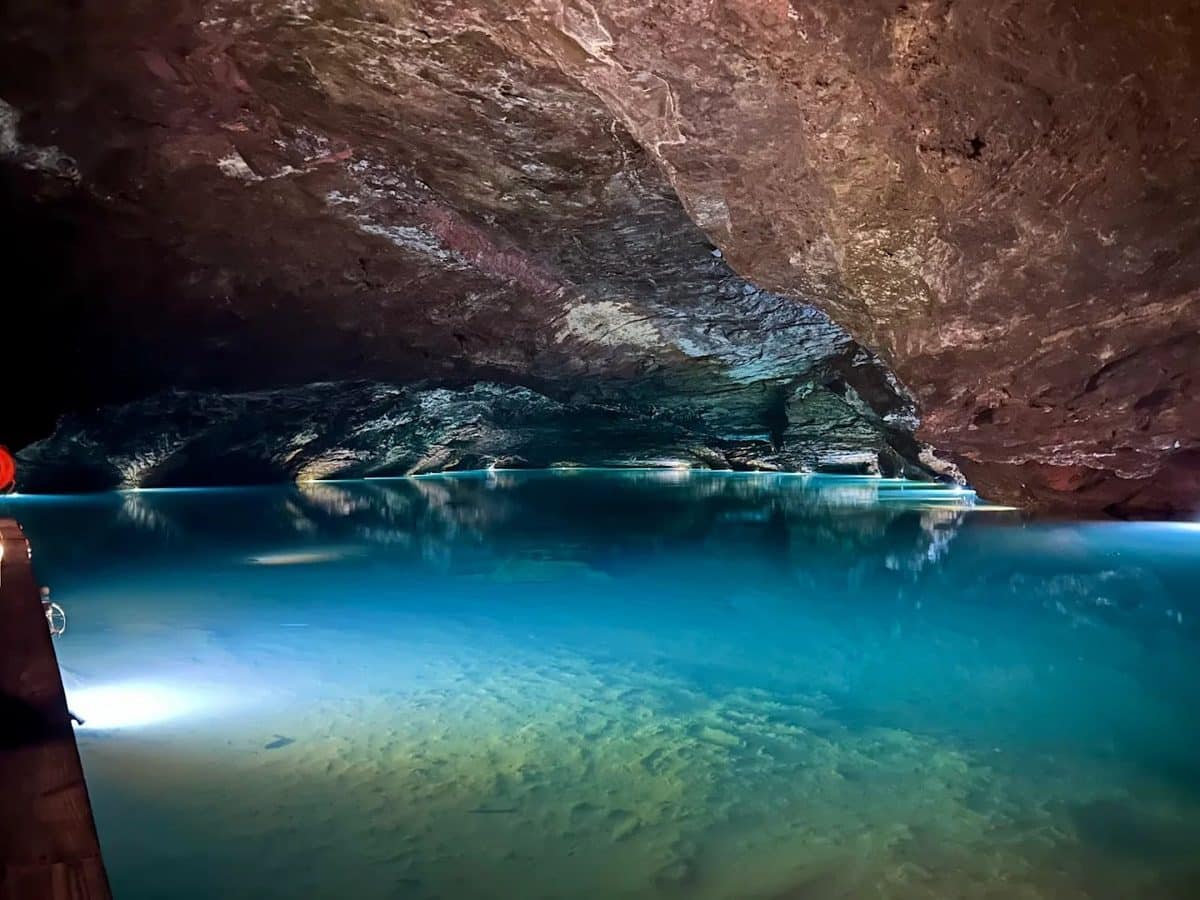
Теннесси муж улсын нутаг дэвсгэрт орших Крейгхэд агуйгаас олдсон энэхүү нуур нь карст бүсийн усны системийн нарийн төвөгтэй бүтцийг харуулж байна.
Бен Сэндс гэх 13 настай хүү анх Крейгхэд агуйн нарийн хонгилоор мөлхөн орж, газар доорх асар том нуурыг нээжээ. Уг хонгил нь тухайн үед дугуйн дугуйны хэмжээтэй байсан ч хожим жуулчдын нэвтрэх боломжтой болгох үүднээс өргөсгөсөн байна. Өнөөдөр “Алдагдсан тэнгис” хэмээн нэрлэгддэг энэ нуур нь гадаргуугаас 140 орчим фут гүнд оршдог бөгөөд 4.5 акр талбайг эзлэн, хамгийн багадаа 70 фут гүн устай болох нь тогтоогджээ.
Тус агуйг эрт дээр үеэс хүмүүс ашигласаар ирсэн түүхтэй бөгөөд 1820-иод онд Чероки үндэстнүүд орогнох байр болгон ашиглаж байсан бол Иргэний дайны үед нутгийн эрдсээс дарь гарган авч байжээ. Агуйтай холбоотой газар доорх усны системүүд нь карст бүсийн хагарал, сувгуудаар дамжин ус хурдан урсах боломжтой байдаг. АНУ-ын Геологийн албаны судалгаагаар, ийм төрлийн карст усны сангууд гадаргын бохирдолд өртөмтгий байж болохыг тогтоосон ч энэхүү нуурын усны чанарын талаарх тусгай судалгаа хараахан хийгдээгүй байна.
Өдгөө тус нуур нь жилд 150,000 орчим жуулчин хүлээн авдаг алдартай аялал жуулчлалын бүс болжээ. Нуурын усанд солонгон загас амьдардаг бөгөөд гэрэлгүй орчинд удаан хугацаагаар байсны улмаас тэдгээр загасны хараа болон өнгө нь өөрчлөгдсөн байна. Гэсэн хэдий ч энэ нь загасны хувьслын өөрчлөлт явагдаж байгааг нотлох баримт биш юм.
Дэлгэрэнгүйг эх сурвалжаас харах
↓Эх сурвалжийг нээх ↓
Ben Sands was just thirteen years old when he discovered a huge underground lake.
He had crawled on his hands and knees for about forty feet through a passage so narrow it was described as being roughly the size of a bicycle tire. After crawling through it, Sands dropped into the water and waded out until it reached about knee-deep. Beyond that narrow passage lay a large lake hidden beneath eastern Tennessee.
The lake has come to be known as the Lost Sea and is located inside Craighead Caverns, in the foothills of the Smoky Mountains about fifty miles south of Knoxville. It sits roughly 140 feet below the surface. In a 2019 CBS News report, it was described as the largest underground lake in America.
The known surface of the lake covers approximately 4.5 acres, and the water is at least seventy feet deep.
The route Sands took to reach it is particularly striking. Tour guide Savannah Dalton told CBS, “The lake was discovered by Ben Sands,” before describing him as a 13-year-old who crawled through the tiny tunnel for forty feet and then waded into knee-deep water. She added, “It was a lot smaller when he came through. But we’ve blasted it out since.”
The Cave Was Used Long Before Sands Arrived
The cave itself had already been used by people long before Sands discovered the lake.
Prior to the Lost Sea becoming a popular tourist destination, people had been entering Craighead Caverns for generations. According to CBS, Cherokee people used the caves as shelter in the 1820s. During the Civil War, Confederate soldiers used minerals from the cave to make gunpowder.
Underground water systems associated with caves can be more complicated than the pools and streams visible to visitors. In karst aquifers, water can move through fractures, openings and underground conduits, and rapid recharge and conduit flow can allow water from the land surface to travel through the system quickly.
A 2023 U.S. Geological Survey study examining the Edwards Aquifer in Texas found that karst aquifers can be highly vulnerable to contamination from the land surface because of features including rapid recharge and conduit flow. Within the Edwards Aquifer itself, researchers found that shallow and unconfined parts were more vulnerable to land-surface contamination than deeper and confined parts.
The study did not examine the Lost Sea. Its results therefore cannot be used to describe the Tennessee lake’s specific water quality, groundwater connections or vulnerability to contamination. What the research does show is that water can move rapidly through some karst aquifers and that groundwater behavior can involve pathways that are not obvious from what can be seen inside a cave.
A Hidden Lake Became a Tourist Attraction
Today, visitors travel through Craighead Caverns to reach the lake. Once there, they board boats that cross its clear water.
According to the 2019 CBS News report, the Lost Sea Adventure receives around 150,000 tourists each year.
Visitors are not alone on the water. When CBS reported from the lake, Dalton said almost 300 rainbow trout were living there. She explained that fish kept underground long enough undergo some visible changes, saying, “So they’re down here long enough that they do lose a small portion of both their eyesight and their color.”
Those comments support the physical changes Dalton described. They do not, however, provide evidence that an evolutionary transformation is currently taking place within the trout population.
The Passage Looks Different Today
Several features inside Craighead Caverns have apparently been developing for extremely long periods.
Dalton told CBS that some of the cave’s characteristics had probably been forming for hundreds, if not thousands, of years.
For modern visitors, however, one feature of Craighead Caverns no longer looks the way it did when Sands made his discovery. The bicycle-tire-sized passage he crawled through for forty feet was considerably smaller at the time.
As Dalton told CBS, “It was a lot smaller when he came through. But we’ve blasted it out since.”
Enjoyed this article? Subscribe to our free newsletter for engaging stories, exclusive content, and the latest news.

