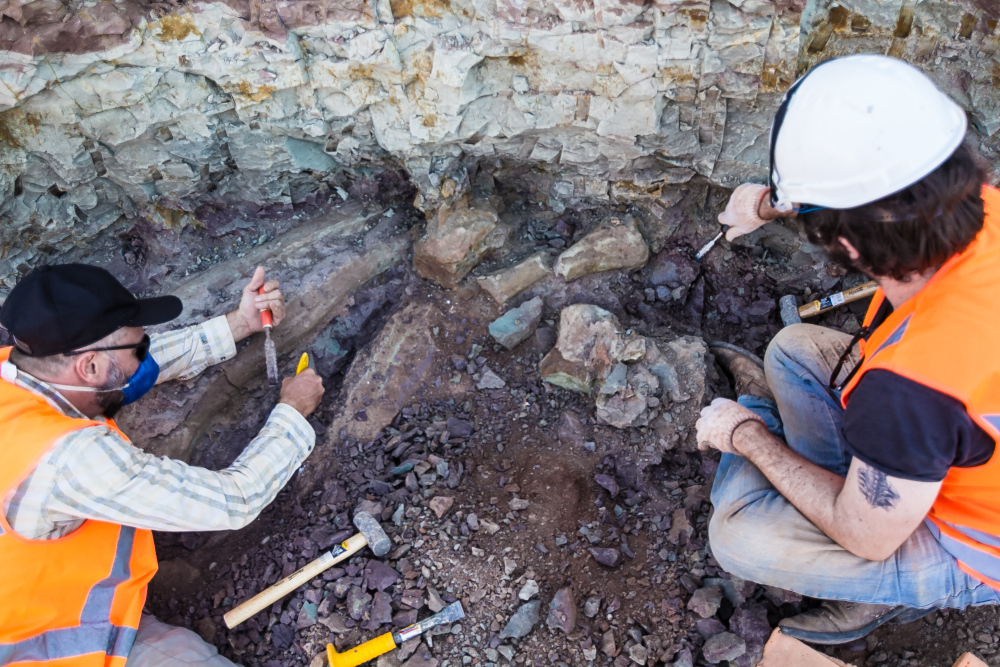
Мараньяо мужийн бүтээн байгуулалтын талбайгаас олдсон 120 сая жилийн настай үлэг гүрвэлийн чулуужсан яс нь Европ болон Өмнөд Америкийн хоорондох эртний нүүдлийн замыг тодруулж байна.
Бразилын Давинополис хотын авто замын терминалын бүтээн байгуулалтын үеэр археологийн хяналт шалгалтын явцад найман метрийн гүнээс 1.5 метр урттай дунд чөмөгний яс зэрэг үлэг гүрвэлийн үлдэгдэл илэрчээ. Судлаачид уг олдворыг ойролцоогоор 20 метр урттай, “Dasosaurus tocantinensis” хэмээн нэрлэсэн, урт хүзүүт “Somphospondyli” бүлгийн үлэг гүрвэлийн төрөл зүйл болохыг тогтоосон байна. Энэ нь тус мужаас олдсон хамгийн том үлэг гүрвэлд тооцогдож байгаа бөгөөд одоогоор олдсон ясны хэсгүүд нь харьцангуй бүрэн бүтэн байна гэж судлаач Макс Лангер тэмдэглэжээ.
Journal of Systematic Palaeontology сэтгүүлд нийтлэгдсэн судалгаагаар, уг үлэг гүрвэл нь одоогийн Испани улсын нутгаас олдсон “Garumbatitan morellensis”-ийн хамгийн ойрын төрөл болох нь тогтоогджээ. Биогеографын шинжилгээгээр эдгээр хоёр зүйлийн өвөг дээдэс Европ тивээс гаралтай бөгөөд Хойд Африк дамжин Өмнөд Америкт тархсан гэж үзэж байна. Энэ нь эртний дэлхийн тивүүд одоогийнхоос өөр байрлалтай байх үед амьтад шилжин нүүх боломжтой хуурай газрын холбоос байсныг гэрчилж байгаа юм.
Ясны бүтцийн микроскоп шинжилгээгээр уг үлэг гүрвэлийн өсөлтийн явцад ясны эд эс хэрхэн өөрчлөгддөг байсныг тодорхойлсон нь хожмын аварга үлэг гүрвэлүүдийн өсөлтийн хэв шинж эрт үед үүссэн байж болзошгүйг харуулж байна. Одоогоор судалгааны багийнхан тухайн талбайгаас уг амьтны бусад яснууд олдох боломжтой гэж таамаглаж байгаа бөгөөд малтлагын ажил үргэлжилж байна.
Дэлгэрэнгүйг эх сурвалжаас харах
↓Эх сурвалжийг нээх ↓
A 1.5-meter thigh bone was among the fossils buried roughly eight meters beneath a construction site in Davinópolis, in Brazil’s northeastern state of Maranhão. Archaeologists monitoring work on a road-rail terminal first suspected the remains belonged to large prehistoric mammals. But the depth suggested something far older.
“Given its depth of about eight meters, I realized that it was much older,” study researcher Elver Mayer said.
The bones came from a previously unknown long-necked dinosaur.
Named Dasosaurus tocantinensis, the sauropod lived about 120 million years ago and stretched an estimated 20 meters in length. It is the largest dinosaur yet known from Maranhão. Its size, though, was not the biggest surprise.
As the fossil was exposed, its scale became harder to miss. “We began to see the evidence of that huge bone, which is the femur,” paleontologist Leonardo Kerber, who contributed to the research, told Reuters.
In a study published in the Journal of Systematic Palaeontology, Dasosaurus emerged as the closest known relative of Garumbatitan morellensis, a sauropod from what is now Spain. The relationship points to a lineage with European roots that later reached South America through northern Africa, at a time when those regions were still connected. The researchers’ biogeographic analysis concluded that the branch containing the two dinosaurs “had a European origin.”
The fossil records more than the anatomy of a single giant herbivore. It adds another piece to the history of how sauropod lineages moved across a Cretaceous world whose continents had yet to take their modern shape.
A Brazilian Dinosaur With a European Relative
From the Davinópolis specimen, researchers have several parts of the skeleton, including tail vertebrae, ribs, foot bones and limb bones. Its femur measures about 1.5 meters long, and the skeleton is relatively complete compared with many fragmentary sauropod finds.
More bones from the same individual may still lie beneath the construction site.
Because the specimen includes such a broad spread of skeletal material, Max Langer of the University of São Paulo described it as “a relatively complete specimen.” He added that researchers believe more fossils from the same animal remain to be excavated.
Size alone did not make it a new species. Anatomical features place Dasosaurus within Somphospondyli, a major branch of sauropod dinosaurs, while a distinct combination of traits sets it apart from other known members of the group.
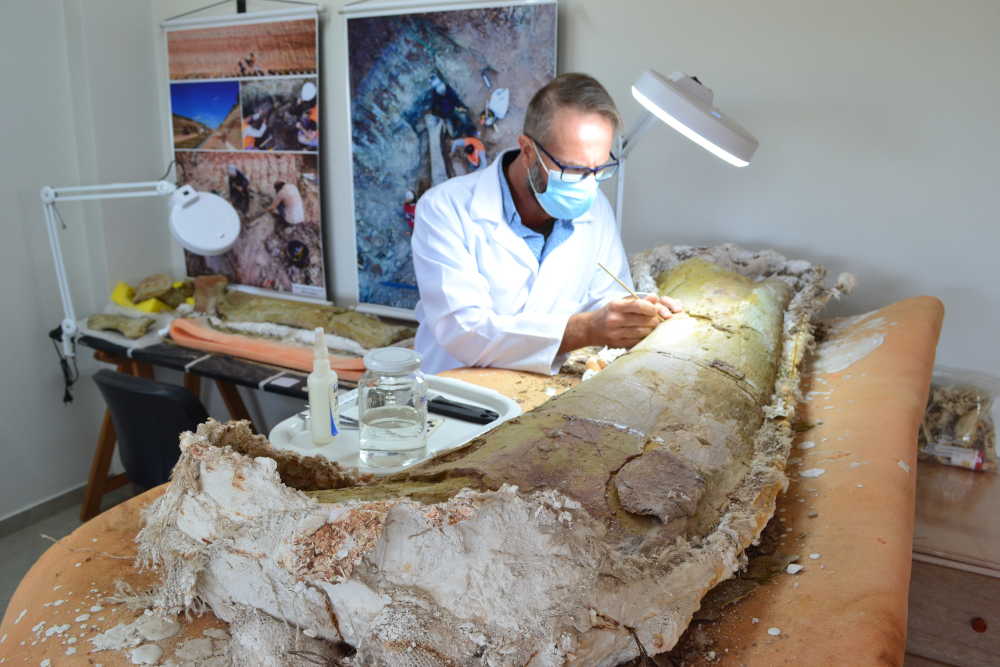
Among them is an unusual arrangement of three elongated ridges on the middle and rear tail vertebrae. The femur carries a pronounced bulge along its side as well. Combined with other skeletal characteristics, those details placed Dasosaurus and Spain’s Garumbatitan as sister taxa. In the evolutionary analysis, each emerged as the other’s closest known relative.
Dasosaurus was not itself a titanosaur, though it belonged to a broader lineage closely tied to the group that later included titanosaurs. What makes the relationship striking is the geography: one of the closest relatives is known from northeastern Brazil, the other from Europe.
Their shared evolutionary history, then, played out across landmasses that the Atlantic would eventually pull apart.
The Family Tree Points to an Ancient Route
Combining evolutionary relationships with the known locations of the fossils, a biogeographic analysis favored a European origin for the branch containing Dasosaurus and Garumbatitan. The lineage leading to the Brazilian species appears to have reached South America through northern Africa sometime between the Valanginian and Aptian stages of the Early Cretaceous. In the study’s wording, that lineage dispersed “to South America via northern Africa.”
That interval covers roughly 140 million to 120 million years ago.
During this period, the continents were still arranged in ways that allowed connections between regions now divided by ocean. Those connections created possible routes for dinosaur populations to spread between Europe, Africa and South America.
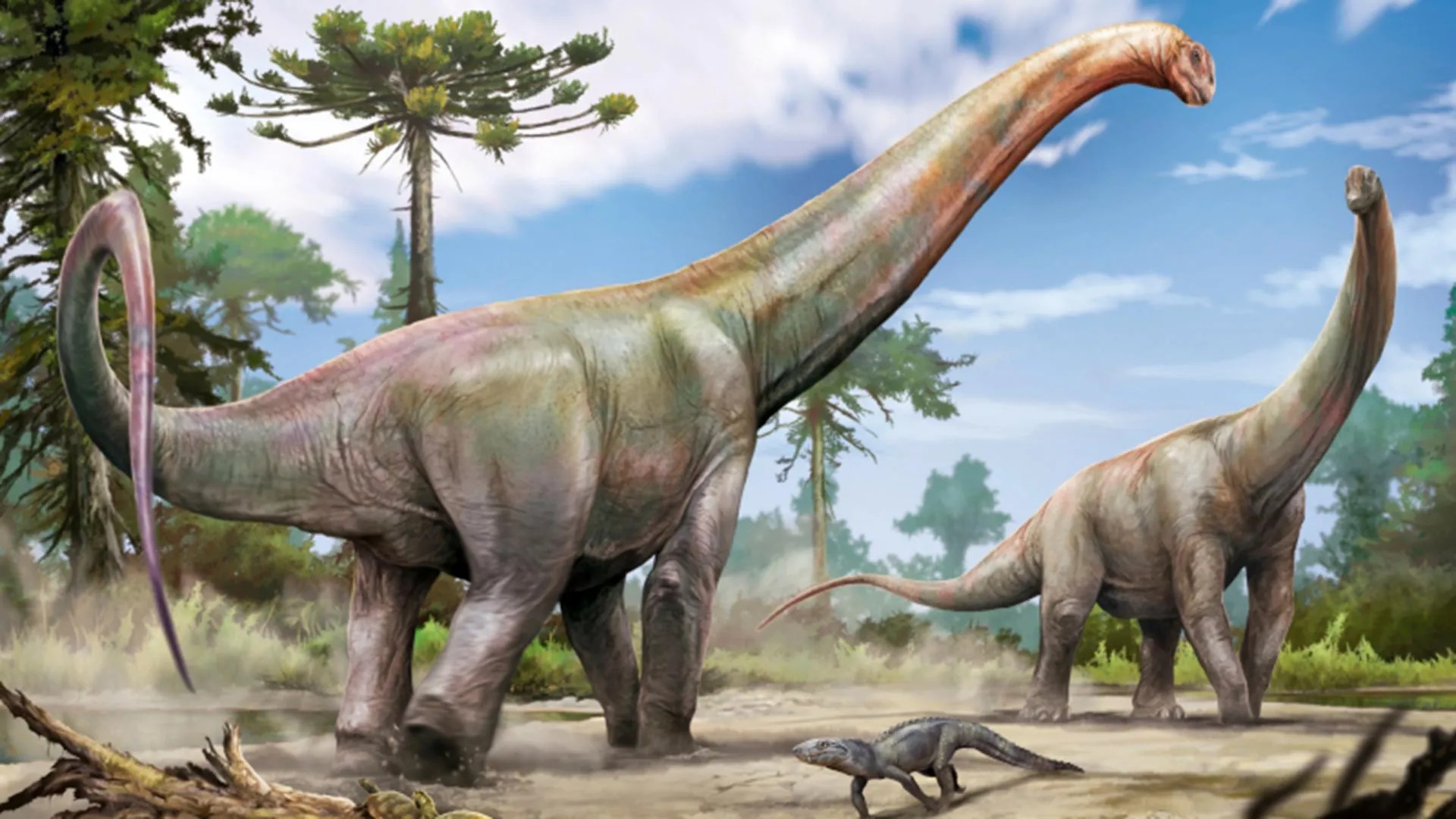
The route is a reconstruction, not a record of a particular group of dinosaurs traveling step by step across those regions. Researchers inferred it from the position of Dasosaurus on the evolutionary tree, the locations of its closest relatives and models of their geographic history. The fossil therefore backs a broader dispersal pattern rather than documenting one migration event.
Even so, such close relatives turning up in Spain and Brazil provides evidence that this sauropod lineage crossed major geographic regions before the Atlantic fully separated them.
Its Bones Preserve Another Part of the Story
At microscopic scale, the skeleton carries another record: how the animal grew. Thin sections of the bone revealed an unusual mix of features, including an external fundamental system, remnants of primary laminar bone tissue and extensive secondary remodeling. The study specifically reports a “high degree of secondary remodelling.”
Some of those characteristics had previously been recognized separately in earlier-diverging neosauropods and in later titanosaurs. Tito Aureliano and Aline Ghilardi, who led the bone-microstructure analysis, interpret the combination as evidence that some growth and remodeling patterns associated with later giant sauropods may have appeared earlier in their evolutionary history.
The name Dasosaurus tocantinensis anchors the dinosaur to the region where its remains were found. “Daso” refers to forest, reflecting Maranhão’s wooded landscape and historical descriptions associated with the state’s name. “Tocantinensis” refers to the Tocantins River. Both explanations appear in the FAPESP account of the discovery.
Its eastern bank lies near the fossil site.
Construction, meanwhile, is the reason the dinosaur came to light at all. Environmental licensing required archaeological monitoring at the road-rail terminal, allowing the fossils to be spotted during excavation, and in heavily vegetated parts of tropical Brazil, where natural rock exposures can be scarce, road cuts, quarries and other excavations can uncover fossil-bearing layers that would otherwise stay buried.
Enjoyed this article? Subscribe to our free newsletter for engaging stories, exclusive content, and the latest news.

