Археологичид 100,000 гаруй жилийн турш Денисовын хүн амьдарч байсан агуйг илрүүлсэн нь тэдний амьдралын хэв маягийг ойлгоход чухал ач холбогдолтой нээлт боллоо.
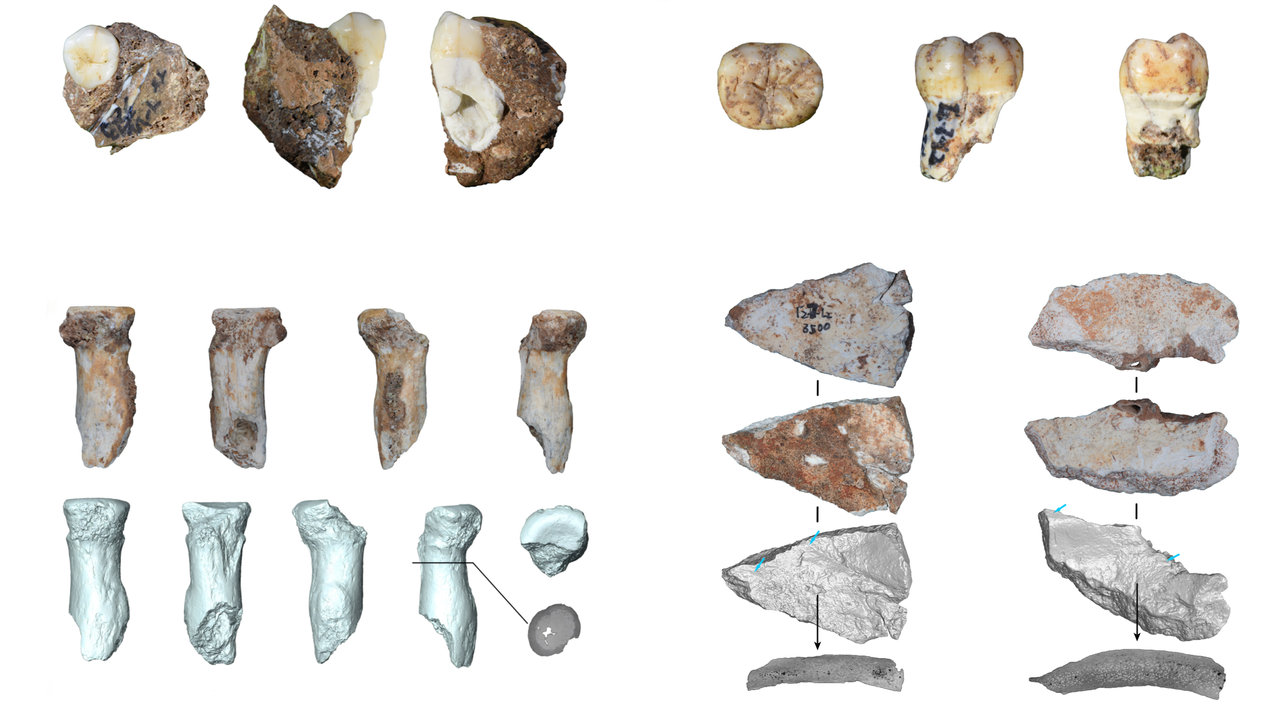
Хятадын Юньнань мужийн Банфү агуйгаас олдсон 1,400 орчим чулуун зэвсэг, 64,000 гаруй хөхтөн амьтны яс, таван ширхэг хүний чулуужсан үлдэгдэл нь Денисовын хүн ойн бүсэд амьдарч, том оврын ан амьтнаар хооллодог байсныг баталж байна. Судлаачид “Nature” сэтгүүлд нийтлүүлсэн хоёр судалгаандаа, эдгээр олдворууд нь 190,000-аас 70,000 жилийн өмнөх үед хамаарч байгааг тогтоожээ. Эдгээр эртний хүмүүс нь Неандерталь болон орчин үеийн хүнтэй удам төрлийн холбоотой бөгөөд Ази тивд амьдарч байгаад 30,000 жилийн тэртээ мөхсөн бүлэг юм.
Эрдэмтэд малтлагаар олдсон ясны хэлтэрхийнүүдэд уураг шинжлэх “ZooMS” аргыг ашигласнаар хүний үлдэгдлийг ялган таньжээ. Тухайлбал, олдсон гарын шууны яс (radius) нь Денисовын хүний хувьд цорын ганц бүрэн бүтэн олдсон яс бөгөөд Неандерталь болон орчин үеийн хүний анатомийн шинж чанарыг хослуулсан байв. Энэхүү онцлог нь тэднийг бие махбодын хувьд өвөрмөц дасан зохицолтой байсныг харуулж байна.
Банфү агуйгаас олдсон чулуун зэвсгүүд нь орон нутгийн материалаар хурдан бөгөөд үр ашигтай хийгдсэн нь ажиглагдсан бол ясаар хийсэн багаж хэрэгсэл олдож байгаа нь тухайн үеийн хүн төрөлхтний дунд ясан багаж түгээмэл байсныг илтгэж байна. Судалгааны багийн гишүүн, Хятадын Шинжлэх ухааны академийн Үлэг гүрвэл судлал, палеоантропологийн хүрээлэнгийн судлаач Хуйюнь Рао болон бусад эрдэмтэд, цаашид ийм төрлийн уургийн шинжилгээ нь Денисовын хүний дасан зохицох зан үйлийг улам гүнзгий ойлгоход тусална хэмээн онцолжээ.
Дэлгэрэнгүйг эх сурвалжаас харах
↓Эх сурвалжийг нээх ↓
Archaeologists excavating in southwestern China have discovered a cave that was used by Denisovans for more than 100,000 years. Five human fossils, scores of stone tools, and hundreds of animal bones recovered from the cave reveal for the first time that the enigmatic Denisovans thrived in a forested environment where they hunted and ate large game animals.
Denisovans were a lineage of humans who lived in Asia and went extinct around 30,000 years ago. Ancient DNA has shown that Denisovans, Neanderthals and modern humans (Homo sapiens) are distantly related and that all three groups interbred in the past. But while archaeologists have found numerous Neanderthal and modern-human skeletons, Denisovans are known from only a handful of fragmentary fossils scattered from Siberia to Laos. This lack of evidence has severely limited experts’ understanding of Denisovans’ bodies and their culture.
In two studies published Wednesday (Sept. 9) in the journal Nature, researchers detailed their excavation of Bianfu Cave in southwestern China. Animal bones and ancient tools revealed that the cave was used from 190,000 to 70,000 years ago, and five human fossils dating to between 134,000 and 167,000 years ago confirmed that the people who used the cave were Denisovans.
Bianfu Cave is in the Yunnan province of southwestern China. In 2019, archaeologists excavated several stratigraphic layers of the cave and discovered nearly 1,400 stone artifacts, more than 64,000 mammal bones, and four teeth from an unknown human lineage. The Yunnan area is where Denisovans and modern humans are known to have met and mated, so researchers were unsure which group had used tools to butcher animals inside Bianfu Cave.
In one study, a research team used a technique called zooarchaeology by mass spectrometry (ZooMS) to quickly and efficiently screen the bone fragments from Bianfu Cave. ZooMS is a form of protein analysis that involves extracting collagen from the bones of an unknown species and comparing the protein pattern to the unique “fingerprint” of reference animals.
When the researchers applied the ZooMS technique to the Bianfu Cave bones, they discovered that three of the fragments had a collagen pattern found in members of the Homo genus. Then, using proteomic analysis, the researchers found that two teeth and three bones from Bianfu Cave had a particular amino acid variation linking the fossil remains with Denisovans.
Denisovans are still poorly understood, in part because no complete skeleton has ever been found. Most of the Denisovan fossils that experts have studied are pieces of the skull and teeth. A tiny finger bone and a rib fragment were all that had been found of Denisovans’ bodies before the Bianfu Cave excavation. But one of the three bones identified as Denisovan through ZooMS was a fragment of a radius, one of the paired bones in the forearm. It is the only Denisovan radius found to date.
The newly discovered radius has a large head (where it connects to the humerus at the elbow) that is more similar to those seen in Neanderthals than in modern humans, but its overall shape is more similar to modern-human radii, the researchers wrote in one of the new studies. The fact that the Denisovan radius was shaped more similarly to the radius in humans “likely provided functional advantages for lightweight, precise manipulation,” study co-author Qiaomei Fu, director of the Ancient DNA Laboratory at the Institute of Vertebrate Paleontology and Paleoanthropology, part of the Chinese Academy of Sciences, in Beijing, told Live Science in an email.
The unique features of the Denisovan radius also suggests that the Denisovans living near Bianfu Cave had different biomechanical demands on their bodies and different behavioral adaptations, the researchers noted.
Denisovan stone and bone tools
In a related study, researchers looked at the entire cultural sequence from Bianfu Cave to work out what Denisovans were doing there.
Of the nearly 1,400 stone artifacts recovered from the cave, there were about 200 flake tools, many of which were made from a sedimentary rock called sandy mudstone. These tools left marks on a number of animal bones discovered in the cave, suggesting that Denisovans regularly hunted, butchered and extracted marrow from cow- and deer-like animals, the researchers wrote in the study.
But the stone tools found at Bianfu Cave are different from the more sophisticated ones that Neanderthals made around the same time. The Denisovan stone tools appear to have been crafted quickly and efficiently from locally available materials, according to the study. The researchers, however, discovered that Denisovans at Bianfu Cave were also making bone tools, which Neanderthals did as well. This suggests that bone tool use may have been more widespread among Pleistocene human groups than experts previously thought, the researchers wrote, and it highlights the need to better understand the human evolutionary record of eastern Asia.
Although the studies have contributed new information to archaeologists’ understanding of the enigmatic Denisovans, more work needs to be done, according to the researchers.
“We hope that similar proteomic analyses will aid in the identification of further Denisovan long bones in the future,” Huiyun Rao, an associate professor at the Institute of Vertebrate Paleontology and Paleoanthropology, Chinese Academy of Sciences, and colleagues wrote, “to further understand the adaptive behavior of Denisovans in response to climate change or competitive pressure from contemporary hominins.”
What do you know about early humans? Test your knowledge with our human origins quiz!

