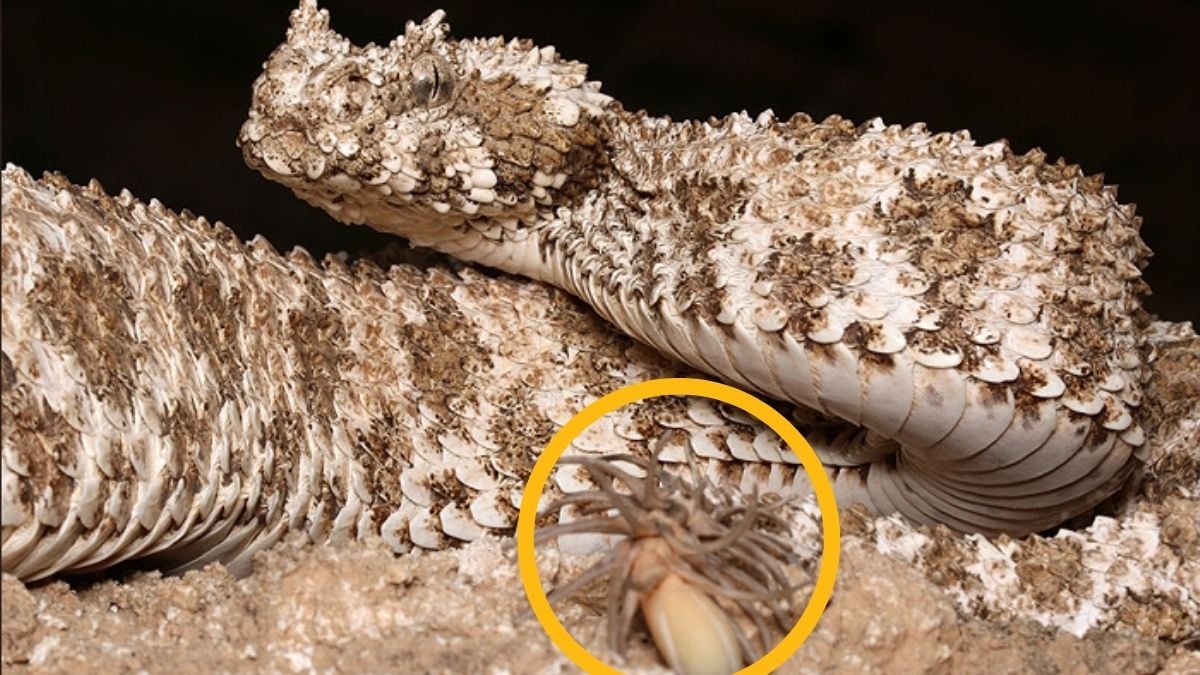
Ираны нутагт амьдардаг, сүүл нь аалзтай тун төстэй харагддаг ховор төрлийн могойн сүүлний бүтэц нь ямар нэгэн ясан бүтэцгүй, зөвхөн арьсны хувьсал болохыг эрдэмтэд тогтоов.
Pseudocerastes urarachnoides хэмээх энэхүү хортой могой нь сүүлнийхээ үзүүрт аалз мэт харагдах өвөрмөц эрхтэнтэй бөгөөд үүнийгээ ашиглан шувуу зэрэг олзоо урхидан барьдаг байна. Польшийн Шинжлэх ухааны академи болон Филдийн музейн судлаачид микро-компьютерт томографи (µCT) шинжилгээгээр уг могойн сүүлний дотоод бүтцийг анх удаа нарийвчлан судалжээ. Шинжилгээгээр сүүлний аалз мэт хэлбэр нь ямар нэгэн ясан тулгуургүй, харин зөвхөн кератинлаг арьсны бүтэц, хувьслын үр дүнд үүссэн болох нь тодорхой болов.
Эрдэмтэн Сара Руанэ болон түүний багийнхан 1968 онд олдсон могойн анхны загвар буюу голотипийг судалсан бөгөөд энэхүү өвөрмөц эрхтэн нь могойг хөдөлгөөнгүй байх үед жинхэнэ аалз мэт харагдуулдаг болохыг онцолсон байна. Энэхүү олзлох арга нь байгаль дахь “caudal luring” буюу сүүлээ өгөөш болгон ашиглах зан үйлийн хамгийн тод жишээ юм.
Энэхүү нээлт нь чулуужсан олдворуудыг судлахад чухал ач холбогдолтой юм. Учир нь могойн сүүлний аалз мэт хэлбэр нь зөөлөн эдээс бүрддэг тул палеонтологийн олдворт үлдэх боломжгүй бөгөөд эртний амьтдын амьдрах орчин, хооллох зан үйлийг танин мэдэхэд бэрхшээл учруулдаг болохыг судлаачид тэмдэглэжээ.
Дэлгэрэнгүйг эх сурвалжаас харах
↓Эх сурвалжийг нээх ↓
A number of creatures on Earth possess a sting in their tails – but there’s only one animal known to science with a spider for a tail.
The aptly named spider-tailed horned viper (Pseudocerastes urarachnoides) from Iran is one of the most bizarre snakes in the world, having evolved a strange appendage on its tail that looks remarkably like an arachnid, even down to its creepy spider ‘legs’.
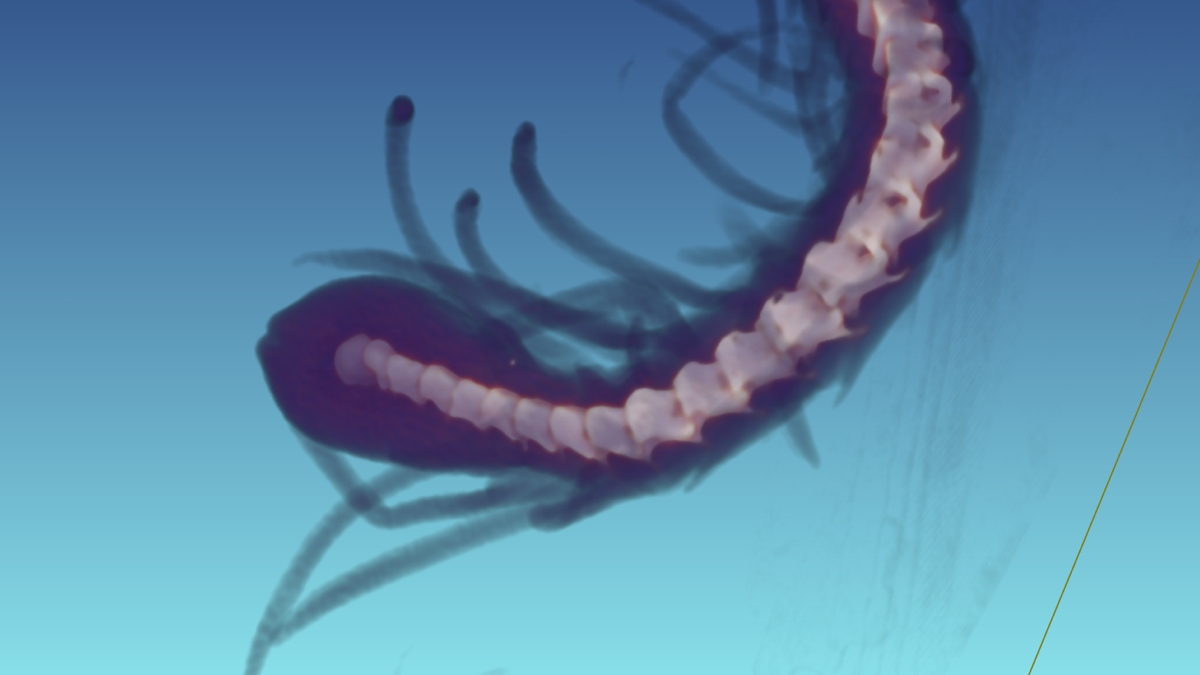
In a new study published in The Anatomical Record, researchers used high-resolution micro-CT scans to peer inside the viper for the first time, expanding what we know about this strange snake and its even stranger tail.
What they found is an example of “extreme” evolution not of the viper’s skeleton, but of its scaly skin.
When scientists first encountered a specimen of the viper decades ago, they initially thought the odd growth might be a deformity of some kind.
But subsequent discoveries revealed the spider-like growth isn’t a bug. It’s a feature. And one that the viper uses to deadly effect.
Spine-chilling footage of P. urarachnoides in action shows how the snake cunningly lures prey with its faux spider:
Like a skilled puppeteer, the viper lies in wait.
Its body is entirely still, blending in with its rocky surrounds, the picture of perfect camouflage.
All the snake has to do is occasionally jiggle its tail, and it looks to the rest of the world like a spider skittering across the rocks.
As the footage shows, trying to catch that spider is the last thing some birds ever do.
This kind of mimicry behavior is called caudal luring, and it’s been observed in dozens of snakes.
It’s just that when most snakes wiggle their tails to get the attention of their prey, they don’t have the advantage of a realistic-looking spider prop to help sell the illusion.
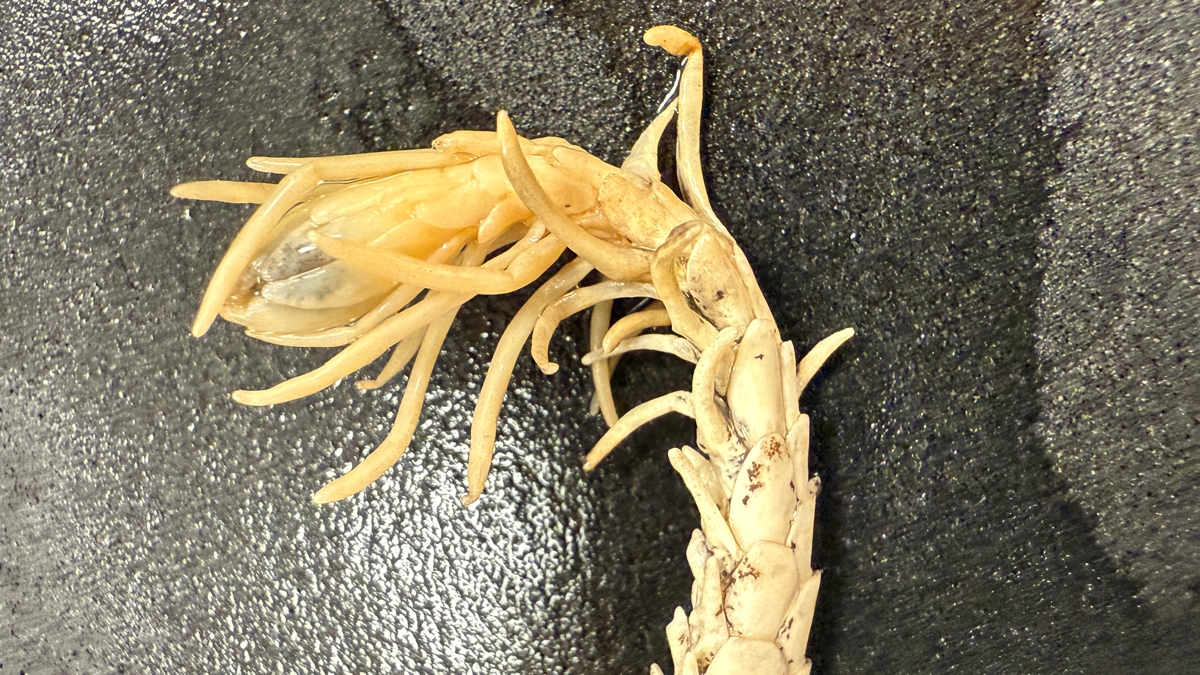
In the new study, researchers examined the first specimen of the spider-tailed horned viper to come to the attention of scientists, which was collected in 1968 by the Field Museum in Chicago, and later came to be considered the representative holotype for the species.
“For me, the spider appendage is just so incredibly realistic-looking, it is hard to believe that it isn’t actually a spider when you see it moving,” herpetologist Sara Ruane from the Field Museum told ScienceAlert.
“Even when I handle the holotype specimen and move the tail, it looks incredibly like a real spider.”
P. urarachnoides was only recognized as its own distinct species in a study published in 2006, after researchers found another of its kind and realized the strange tail was actually a trait, not a one-off unique to the 1968 specimen.
“As there was only the single specimen, it was not possible to say whether the peculiar growth of the tip of the tail had a genetic origin or was, perhaps, some sort of tumor or caused by some parasite,” researchers recounted in the 2006 study.
“Thus, the specimen languished, but was not forgotten, for nearly four decades.”
Twenty years later, the spider-tailed horned viper has been the subject of various published studies, but its skeletal anatomy has never been comprehensively studied.
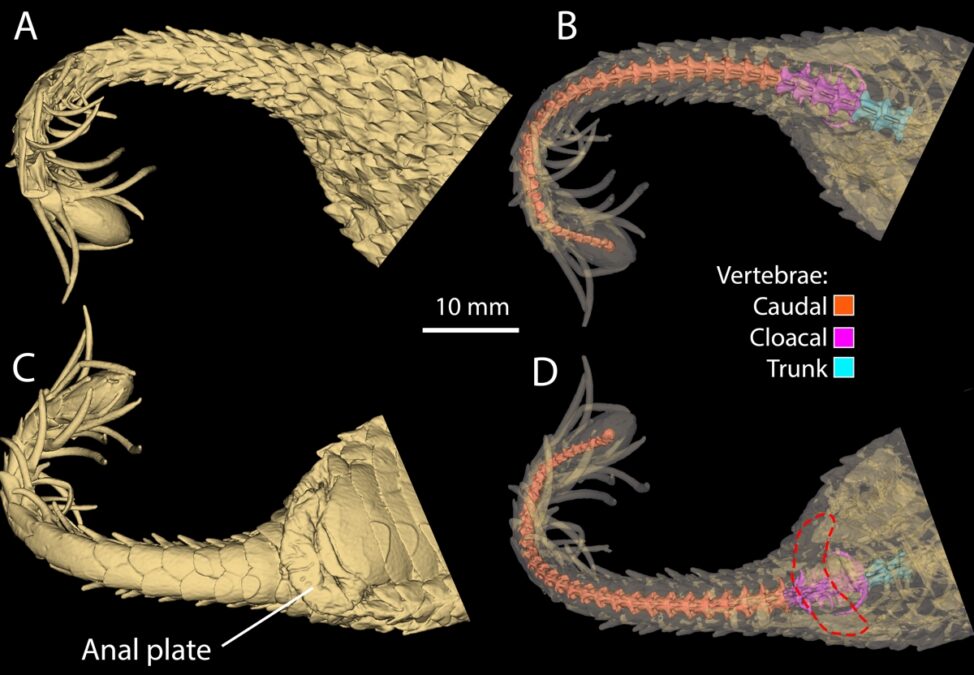
In the new analysis, led by first author Georgios Georgalis from the Polish Academy of Sciences, scientists ran micro-computed tomography (μCT) scanning on the holotype specimen at the Field Museum’s XCT Lab.
“I am primarily a paleontologist, so I try to use modern snake species to make sense of fossil remains,” explains Georgalis.
“We were particularly interested in seeing what the vertebrae at the tip of the tail look like, because the exterior of this snake’s tail is so unusual.”
While the scans give us our best look yet at this now-famous specimen, the biggest surprise is what they didn’t reveal, with the bones showing no skeletal evidence underlying its spider-like legs.
“We expected there might be some obvious bony element in the tail or something at the end that alluded to the external features, but nope!” Ruane told ScienceAlert.
“You only get the spider tail from the soft tissue with no underlying bony structure, it is all keratin, just like our fingernails.”

That suggests the spider tail arose through evolutionary processes that dramatically modified the snake’s scales rather than its underlying skeleton.
“The radiating ‘spider-leg’ pattern of the tail tip is made up entirely from modified scalation,” the researchers write in their paper.
“The tail scales become progressively elongated, creating long and flexible filaments. On the top of the tail, there is one enlarged oval structure, which represents modified scalation via enlargement and fusion of multiple scales… Such elongated and modified scales are an example of extreme skin evolution.”
According to Ruane, it’s a great example to illustrate how little we perhaps know about how extinct animals may have looked.
Related: This Might Look Like a Spider, But You’re in For a Shock
“Given that there is no bone in this tail and that soft tissue is not usually preserved, you would never know looking at a fossil of this snake that it had this prey-catching adaptation,” Ruane said.
“While there are other examples of animals that lure to catch prey, the life-like appearance of the spider combined with the incredible crypsis of the snake when it is still on a rocky surface is unmatched.”
The findings are reported in The Anatomical Record.
This article was fact-checked by Rachel Garner and edited by Clare Watson. While we pride ourselves on our process, we are only human. If you spot a mistake, please let us know.

