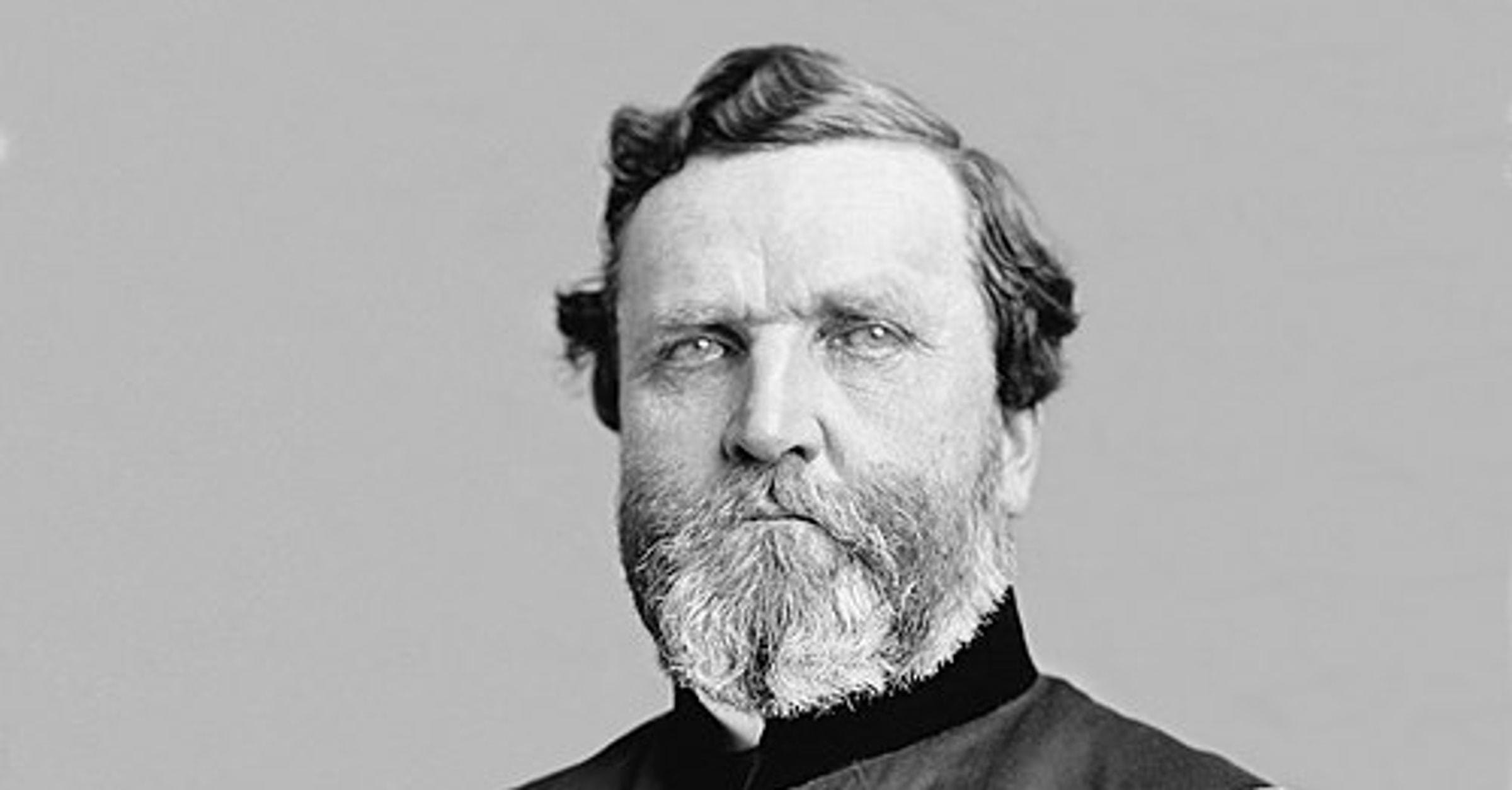
Америкийн иргэний дайны үед Холбооны армийн нэр хүндтэй командлагч байсан Жорж Х. Томас нь дайны явцыг эргүүлсэн шийдвэрлэх тулаануудад гол үүрэг гүйцэтгэсэн цэргийн жанжин юм.
Жорж Х. Томас (1816–1870) нь Америкийн иргэний дайны үеэр Холбооны армид генерал цолтойгоор алба хааж, Кентаки мужид болсон Милл Спрингсийн тулаанд (1862 оны нэгдүгээр сарын 19) ялалт байгуулснаар олон нийтийн анхааралд өртсөн юм. Энэ нь дайны Баруун фронт дахь Холбооны анхны томоохон ялалт байсан бөгөөд үүний дараа тэрээр дайны туршид олон чухал тулаанд шийдвэрлэх үүрэг гүйцэтгэсэн. Гэвч түүний нэр алдар нь Улиссис С. Грант эсвэл Уильям Текумсе Шерман нарынх шиг өргөн хүрээнд тархаагүй юм. Үүний нэг шалтгаан нь түүнийг Булл Раны анхны тулааны дараа Баруун фронт руу шилжүүлсэнтэй холбоотой бөгөөд тухайн үед Зүүн фронтын үйл явдлууд илүү их анхаарал татдаг байв.
Томас нь өөрийн амжилт, гавьяаг олон нийтэд сурталчлахыг огт хүсдэггүй, цэргийн тушаал дэвшихээс удаа дараа татгалздаг, дайны дараа дурсамж ном бичдэггүй нэгэн байжээ. Тэрээр өөрийн хувийн захидал, баримт бичгүүдийг нас барсных нь дараа эхнэртээ устгуулахаар гэрээсэлсэн байв. Тэрээр Виржиниа мужийн уугуул хүн байсан ч Холбооны талд үнэнч үлдэхийг сонгосон нь гэр бүлийнхэнтэйгээ харилцаагаа таслахад хүргэж, тэд түүний бүх захидлыг устгасан байна.
Томас нь тулалдааны талбар дээр тайван дөлгөөн, нарийн төлөвлөгөөтэйгөөрөө алдаршсан. Энэхүү болгоомжтой, нягт нямбай төлөвлөлт нь түүнийг “удаан” генерал гэх нэр хоч авахад хүргэсэн бөгөөд энэ зан чанар нь Грантыг ихээхэн уурлуулдаг байв. Гэсэн хэдий ч 1863 онд Чикамогагийн тулаанд Холбооны армийг бүрэн сүйрлээс аварч, “Чикамогагийн хад” хэмээх алдар хүртснээр Грантын хүндэтгэлийг арга буюу хүлээсэн юм. Өнөөдөр түүхчид түүнийг Грант, Шерман нартай эн зэрэгцэхүйц дайны үеийн хамгийн шилдэг генералуудын нэг гэж үнэлдэг.
Жорж Х. Томас 1816 оны долдугаар сарын 31-нд Виржиниа мужийн Саутхэмптон тойрогт мэндэлжээ. Түүний гэр бүл чинээлэг тариаланчид байсан боловч 1829 онд эцэг нь нас барсны дараа санхүүгийн хүндрэлд орсон байна. 1831 онд болсон Нэт Тёрнерийн бослогын үеэр гэр бүл нь гэрээ орхин зугтах шаардлагатай болсон нь залуу Томаст гүн сэтгэгдэл төрүүлж, боолчлолын талаарх үзэл бодлыг нь өөрчилсөн гэж үздэг. Тэрээр хуулийн чиглэлээр суралцаж байгаад 1836 онд Вест-Пойнтын цэргийн академид элсэн оржээ.
Академиа төгсөөд тэрээр Флоридад болсон Семинолын хоёрдугаар дайн болон Мексик-Америкийн дайнд оролцсон байна. Тэрээр Закари Тейлорын удирдлага дор алба хааж, тулааны талбар дээрх нарийн төлөвлөлт, тайван байдлаараа командлагчдынхаа магтаалыг хүртжээ. 1851 онд Вест-Пойнтод багшаар ажиллаж байхдаа Роберт Э. Ли, Брэкстон Брэгг нартай найз нөхдийн холбоо тогтоосон байна. 1860 онд Калифорнид алба хааж байхдаа Команчуудтай хийсэн мөргөлдөөний үеэр сумны шарх авч байсан нь түүний цэргийн карьер дахь цорын ганц байлдааны шарх байв. Гэвч мөн оны сүүлээр галт тэрэгнээс буухдаа нуруугаа гэмтээсэн нь түүнийг насан туршдаа архаг өвчтэй болгож, хөдөлгөөнийг нь удаашруулсан байна.
Иргэний дайн эхлэхэд Томас Холбооны талд үнэнч үлдэхийг сонгосон нь түүнийг гэр бүл, нутгийнхнаасаа урвагч хэмээн цоллуулахад хүргэжээ. Дайны үеэр тэрээр Кентакид цэргүүдийг сургаж, Милл Спрингсийн тулаанд ялалт байгуулан, улмаар “Камберландын арми”-ыг бүрэлдүүлсэн байна. Стонс Риверийн тулаанд тэрээр “Энэ арми ухрахгүй” хэмээн мэдэгдэж байсан нь түүний бат бөх байр суурийг илтгэдэг.
Чикамогагийн тулаанд Холбооны армийн ихэнх хэсэг ухарсан үед тэрээр өөрийн байрлалаа хатуу хамгаалж, армиа бүрэн сүйрлээс аварсан юм. Дараа нь Нашвиллийн тулаанд Жон Белл Хүүдийн удирдсан Теннессийн армийг бүрэн бут ниргэж, “Нашвиллийн алх” гэх нэр алдар хүртсэн байна. Дайны дараа тэрээр Камберландын тойргийг захирч, чөлөөлөгдсөн боолуудыг Ку-клукс-кланы дарамтаас хамгаалах бодлогыг хэрэгжүүлжээ.
1870 оны гуравдугаар сарын 28-нд Калифорнид байхдаа Нашвиллийн тулаантай холбоотой шүүмжлэлд хариу бичиж суух үедээ цус харваж нас баржээ. Түүнийг нас барсны дараа гэр бүлийнхэн нь оршуулгад нь оролцохоос татгалзсан байна. Брюс Кэттон зэрэг түүхчид Томасыг хямралын агшинд хамгийн найдвартай байж чадах, цэргийн жанжин гэж үнэлсэн нь бий. Тэрээр өөрийн намтар, хувийн амьдралаа олон нийтэд дэлгэхийг хүсдэггүй байсан бөгөөд зөвхөн өөрийн үүрэг хариуцлагаа чимээгүйхэн, нэр төртэйгөөр гүйцэтгэхийг эрхэмлэдэг байсан юм.
Дэлгэрэнгүйг эх сурвалжаас харах
↓Эх сурвалжийг нээх ↓
George H. Thomas (1816 to 1870) was a Union general in the American Civil War who first came to national attention after his victory at the Battle of Mill Springs (19 January 1862) in Kentucky, the first Union victory in the Western Theater of the war. After Mill Springs, Thomas’ winning streak continued throughout the conflict as he played a pivotal role in many of the most decisive battles of the Western Theater.
Even so, his name is not as widely known as those of Ulysses S. Grant or William Tecumseh Sherman, in part because, after fighting in the First Battle of Bull Run (First Manassas), he was transferred west, and the Western Theater of the Civil War never received the same level of attention as the Eastern Theater, even when the war was in progress.
He has also been overlooked, however, because, unlike other Civil War generals, he never publicly promoted himself, often refused military promotions, never wrote a post-war memoir, and had his wife burn all his personal papers and correspondence after his death. Further, he was a Virginian who chose to remain loyal to the Union, causing his family to disown him and burn all his correspondence.
Thomas was known for his calm deliberation and precision in combat.
Thomas was well-known for his modesty, the care he showed for his men, his calm demeanor during battles, and his deliberate, careful planning of engagements – this last earning him the reputation of being a “slow” general – an aspect of his character that especially infuriated Grant.
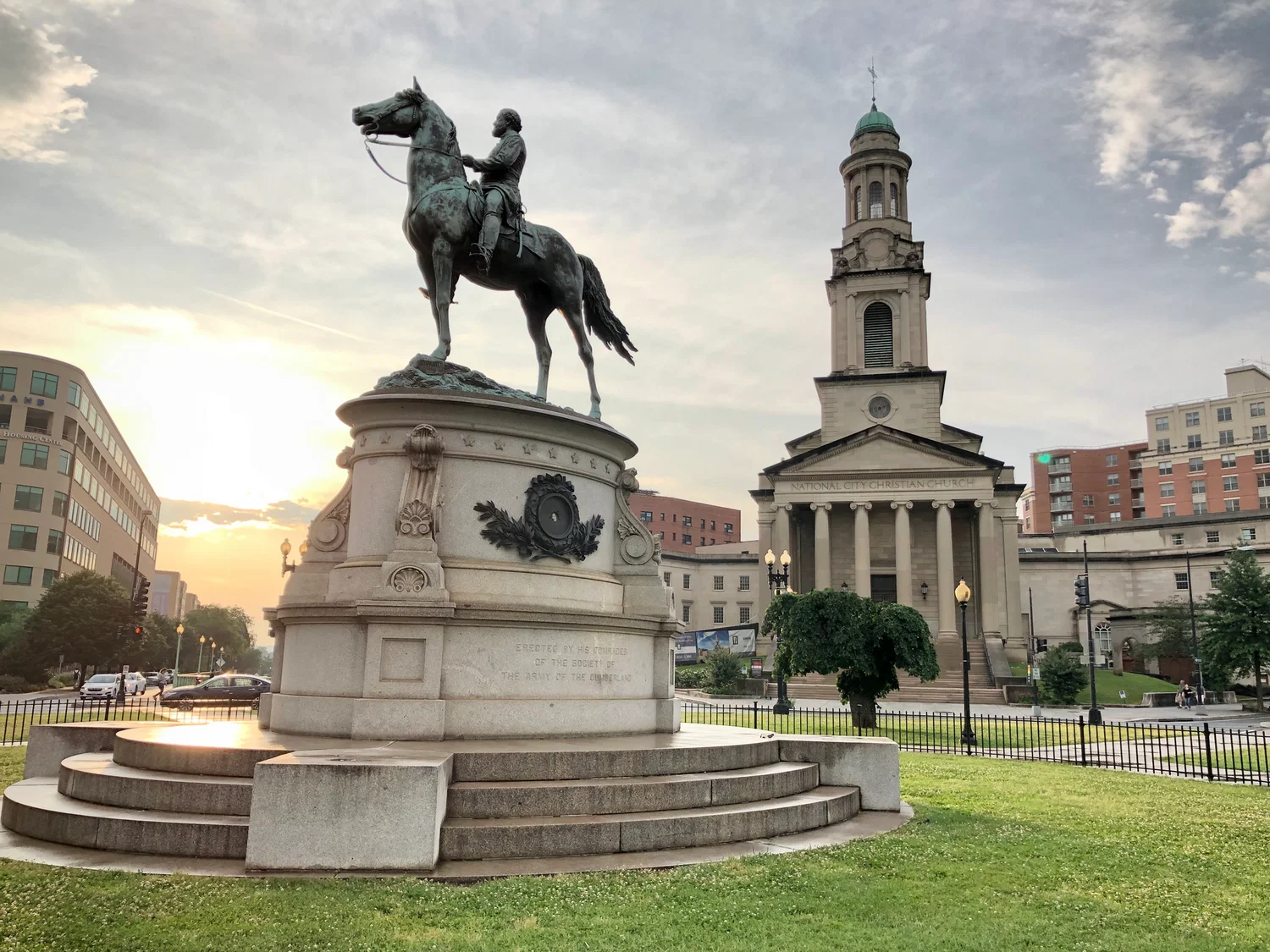
Still, he earned even Grant’s grudging respect as the “Rock of Chickamauga” after he saved the Union army from a total rout at the Battle of Chickamauga in 1863 and, since his death, has been recognized through place names and monuments in his honor – notably Thomas Circle in Washington, D.C. – and is regularly praised by Civil War scholars as one of the best generals in the war, North or South, ranked favorably alongside Grant and Sherman.
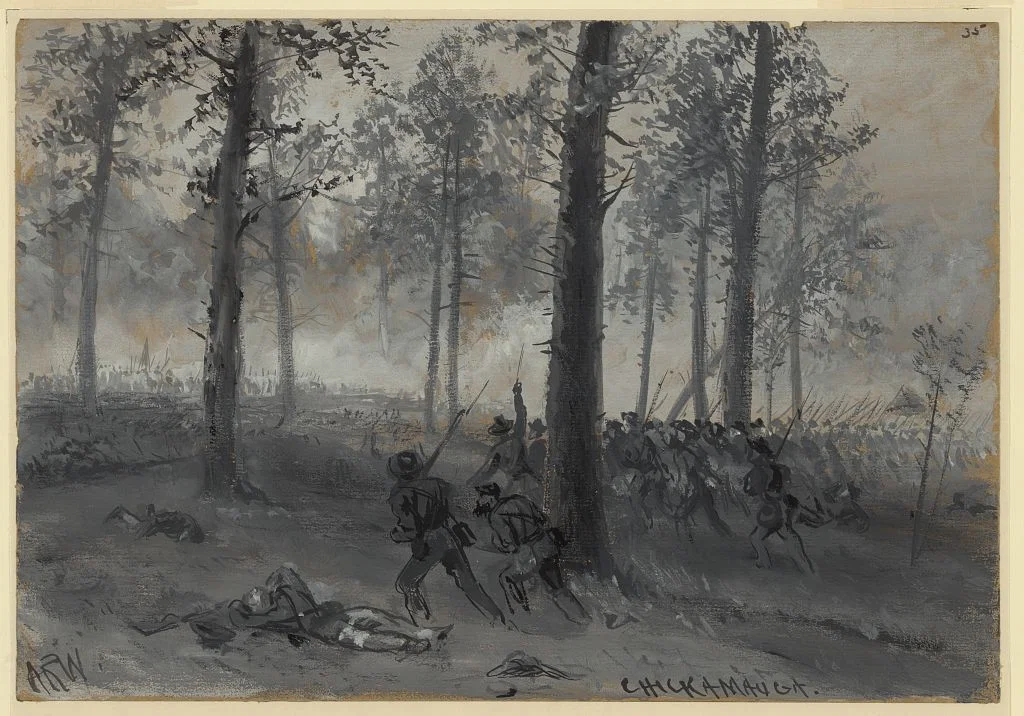
Confederate Troops Advancing at Chickamauga
Early Life & West Point
When Thomas’ papers and correspondence were burned, many details of his life went up in smoke and so historians have far less to work with than they do with other Civil War generals whose lives are much better documented. Even so, there is sufficient evidence to reconstruct his life, as demonstrated by his biographies and through the historical novel, This Army Does Not Retreat: The Memoirs of General George H. Thomas by Jack M. Zackin.
George Henry Thomas was born at Newsom’s Depot, Southampton County, Virginia on 31 July 1816, the son of John Thomas and Elizabeth Rochelle Thomas; he had three sisters and two brothers. The family were upper-class and owned a large plantation which, in 1829, was worked by 15 slaves.
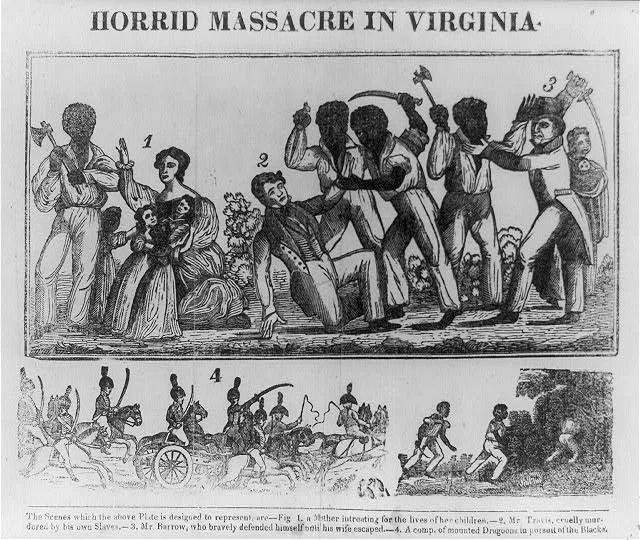
On 20 April 1829, when Thomas was twelve years old, his father died in a farming accident and the family suffered serious financial setbacks. Between 21-23 August 1831, Nat Turner’s Rebellion (also known as the Southampton Insurrection) broke out and the Thomas family had to flee their home, making their way through the woods to the county seat at Jerusalem.
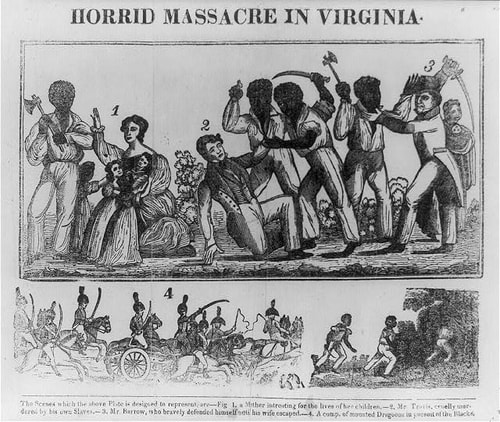
Nat Turner’s Rebellion
This event is thought to have seriously impacted the young Thomas as it dispelled the myth of the “contented slave” and reshaped his views on slavery. Thomas had been raised with the common Southern understanding that Africans who had been kidnapped and sold into slavery benefited from this arrangement. Turner’s rebellion clearly showed that claim was untenable.
Thomas received the common education of upper-class Virginian boys of his time and then studied law while working for his uncle’s practice. The work did not interest him and, in 1836, his family contacted Congressman John Y. Mason who secured Thomas an appointment to West Point Military Academy.
Thomas was roommates with William Tecumseh Sherman and Stewart Van Vliet, took his studies seriously, and graduated 12th in his class of 42 cadets in 1840. He was given the rank of second lieutenant in Company D, 3rd US Artillery, and deployed to Fort Lauderdale, Florida, to serve in the Second Seminole War.
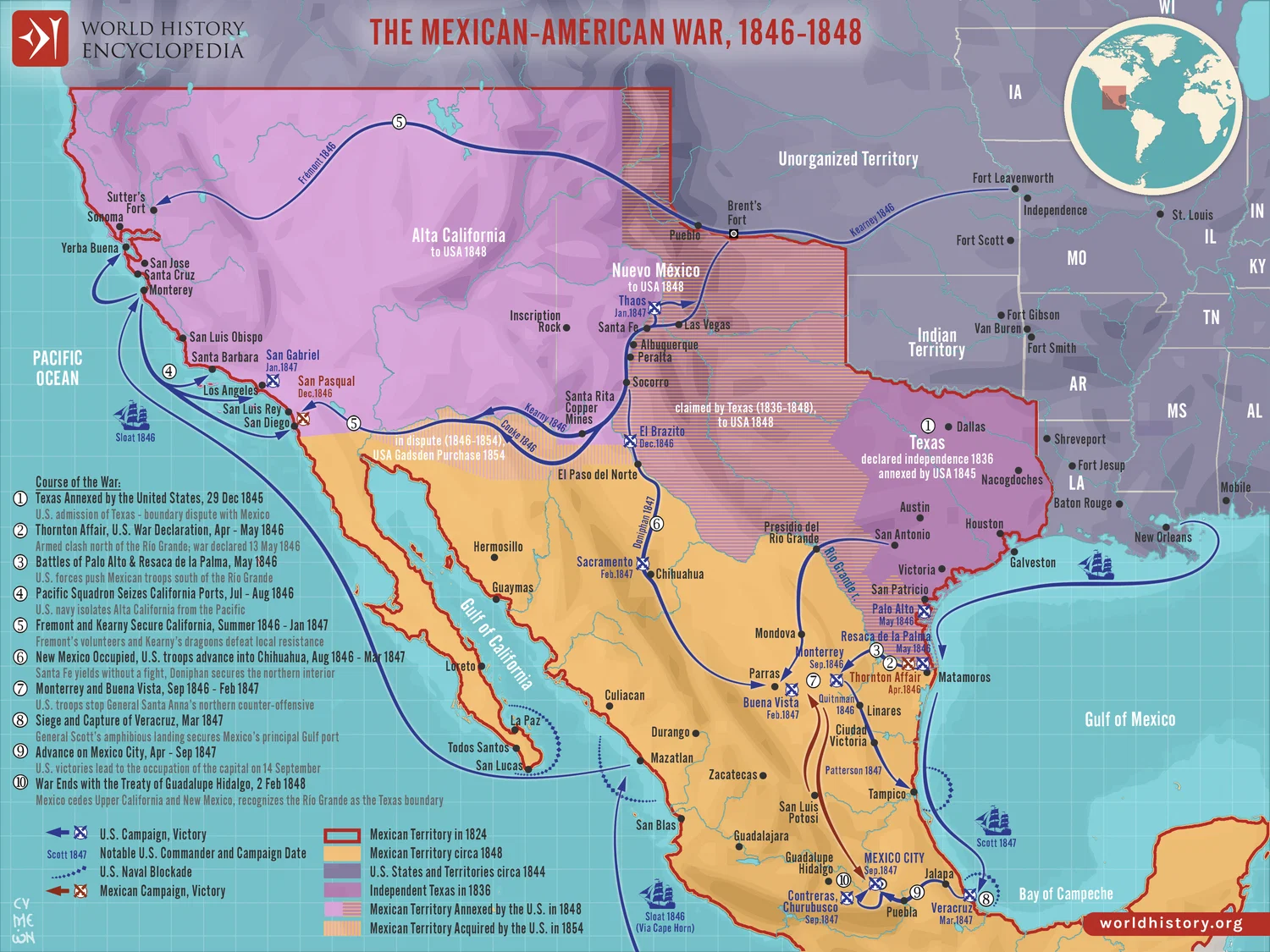
The region was not conducive to the use of artillery and so Thomas served as an infantryman. In 1845, he was deployed to Texas as tensions were rising that would lead to the Mexican-American War.
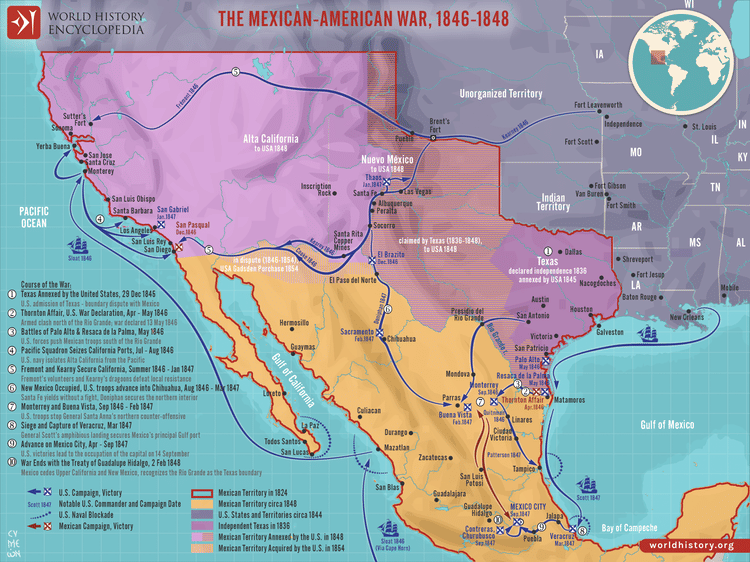
Map of the US-Mexican War of 1846-1848
Mexican-American War & Life Before Civil War
Thomas, now a first lieutenant, commanded an artillery unit under General Zachary Taylor, serving in battles that included Resaca de la Palma, Monterrey, and Buena Vista. Thomas received glowing praise from his commanding officers for his calm deliberation and precision in combat. During the war, he became close friends with Braxton Bragg, later one of the opposing generals in the Civil War.
General Thomas: “This army does not retreat.”
In 1851, Thomas returned to West Point as a cavalry and artillery instructor, and owed his appointment, in part, to Bragg’s recommendation. Among his students was another future Confederate general, J.E.B. Stuart, and Thomas became friends with the academy’s superintendent, Robert E. Lee.
On 17 November 1852, Thomas married Frances Lucretia Kellogg of Troy, New York. The wedding ceremony was held in Troy, and the gathering hosted by the bride’s family. The new couple remained at West Point, living in the married officers’ quarters with Robert E. Lee and his family, until 1854 when he was promoted to captain and transferred to California.
In California, he commanded a cavalry regiment and, during a skirmish with Comanche raiders in 1860, was wounded by an arrow that went through his chin and pinned it to his chest. Thomas removed the arrow, had the surgeon dress the wound, and continued leading his men. This was the only combat wound Thomas would receive throughout his career in the military.
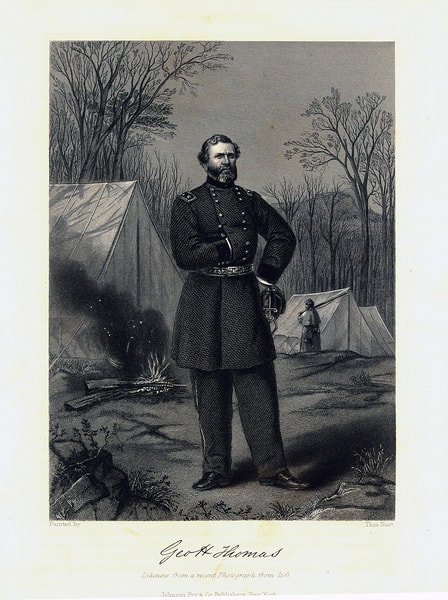
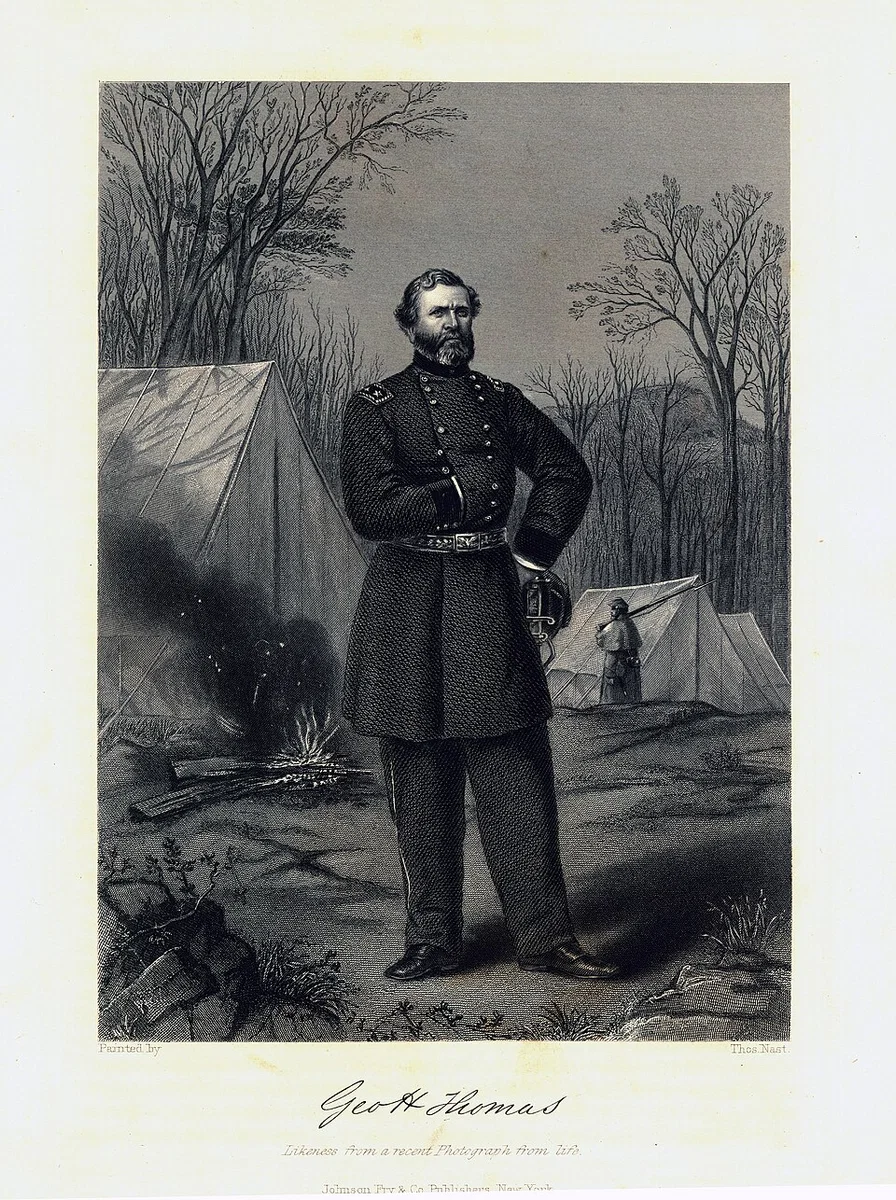
Woodcut of George H. Thomas by Thomas Nast
Thomas incurred a far more severe injury in November 1860. He had taken a leave of absence and was traveling by train to visit his family in Virginia. At the station in Lynchburg, Thomas stepped off the train to stretch his legs, slipped, and fell down an embankment, wrenching his spine. This event left him with chronic back pain that plagued him the rest of his life, causing him to move slowly, and “would later become a metaphor by which hostile rivals would critique his battle plans” (Bobrick, 56).
After the US Presidential Election of 1860, when Abraham Lincoln was elected, South Carolina seceded from the Union in December – and other Southern States soon followed. Between South Carolina’s secession and the aftermath of the Battle of Fort Sumter (12-13 April 1861), Southern-born officers resigned their commissions, choosing to side with their states against the federal government.
As a Virginian, Thomas was expected, by both sides, to follow suit. Although he found the decision difficult, he chose to remain loyal to the Union. His family denounced him as a traitor and disowned him. His sisters are said to have turned his picture to the wall and considered him dead. Former admirers, including J.E.B. Stuart, wanted him dead, hoping he would be taken prisoner after a battle and could be hanged for treason against his home state.
He was not especially warmly received by the Union army’s general staff either. As a Southerner, his loyalty to their cause was suspect and he would have to prove himself – which he did, from his first battle command to his last.
American Civil War
After Albert Sidney Johnston and Robert E. Lee resigned their commissions as colonel and lieutenant colonel, respectively, Thomas was promoted to replace them. He served under Major General Robert Patterson in the Shenandoah Valley at the First Battle of Bull Run (First Manassas) on 21 July 1861, was promoted to brigadier general of volunteers that August, and was sent west to serve under Major General Robert Anderson, hero of Fort Sumter, in Kentucky.
Thomas was assigned the task of training the men at Camp Dick Robinson and arrived to find the site in disarray and the new recruits disorderly. He immediately issued orders to correct the situation, instituting the high-quality discipline and training that would turn these recruits into the professional fighting force that would eventually make up the Army of the Cumberland.
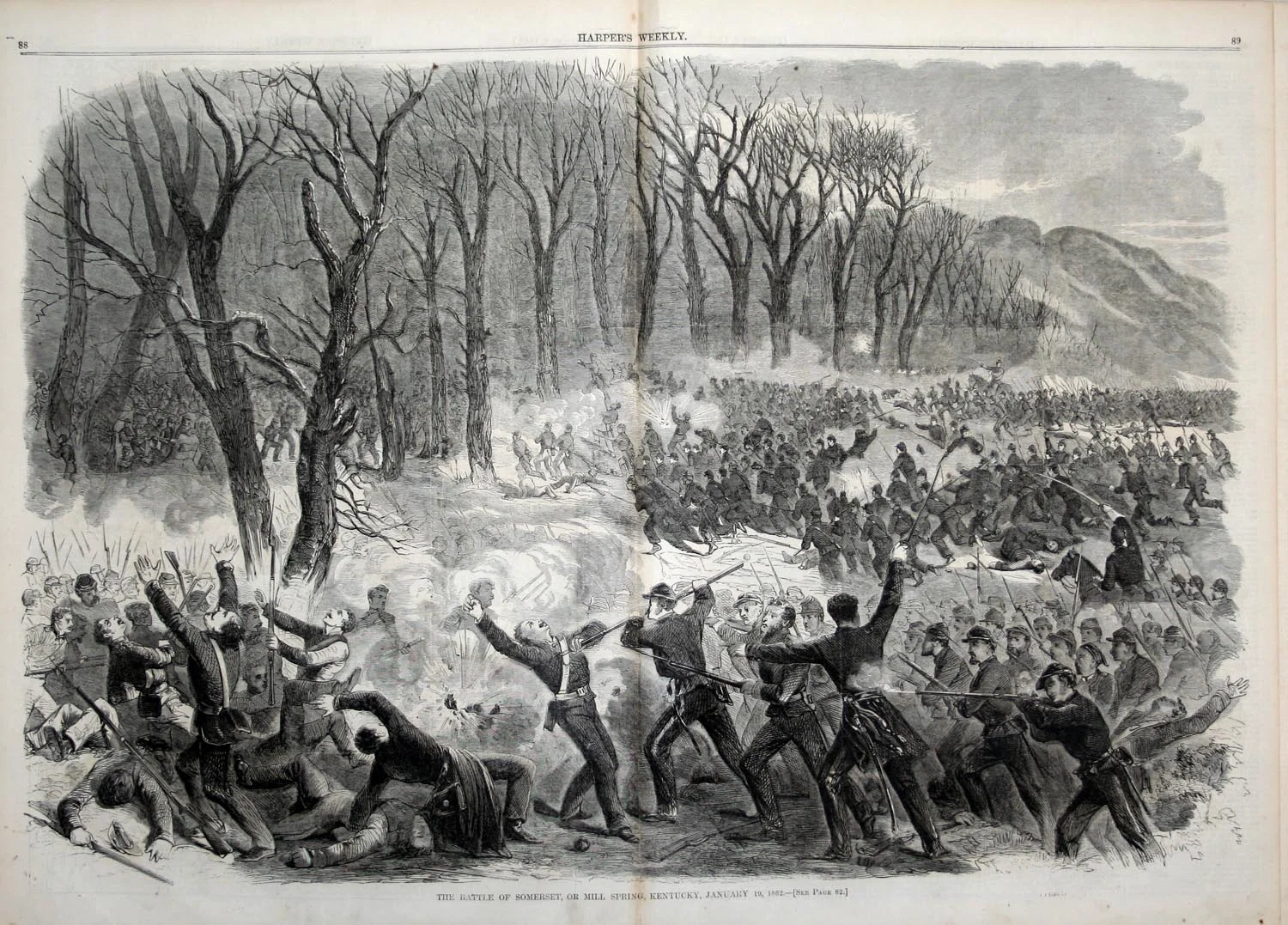
Battle of Mill Springs
In January 1862, Confederate Major General George B. Crittenden was guarding the vital access point between neutral Kentucky and pro-Union East Tennessee, the Cumberland Gap, and Thomas received orders to break his lines and drive him from that position.
Confederate Brigadier General Felix Zollicoffer, under Crittenden, had earlier advanced from the Gap to Somerset, Kentucky, to attack Thomas. Crittenden had ordered Zollicoffer to encamp south of the Cumberland River at Mill Springs, but Zollicoffer chose to encamp north of the river, believing it was more defensible.
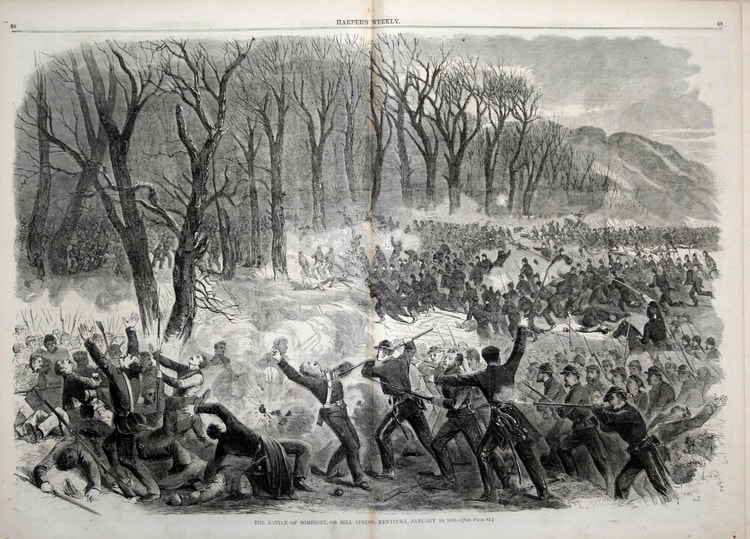
Battle of Mill Springs, January 1862
Zollicoffer also believed, incorrectly, that Thomas was commanding a small force that could be easily defeated, unaware that Thomas had arrived with two brigades and had also received reinforcements from Brigadier General Albin F. Schoepf. Crittenden was under this same impression and ordered Zollicoffer to advance to Logan’s Crossroads and attack Thomas.
Thomas, with his clear deliberation and careful planning, defeated the Confederates, driving them from the field in a rout. Because Zollicoffer had encamped north of the Cumberland River, the fleeing army – which now needed to cross the river quickly to the south side – abandoned supplies, horses, and ordnance. Zollicoffer was killed in the battle (the first Confederate general to die in the war) and Thomas’ victory sparked celebrations in the North and made him famous. Scholar Stuart W. Sanders writes:
For the Federals, the battle strengthened the reputation of [a man] whose loyalty had been questioned. The Virginia-born Union commander George H. Thomas attained great fame. Extensive newspaper coverage of the fight – which proved to be the Union’s first significant victory – propelled Thomas… (124)
Siege of Corinth to Chattanooga
Thomas was reassigned to the command of Major General Don Carlos Buell and, after Grant’s performance at the Battle of Shiloh (7 April 1862) was heavily criticized, Major General Henry W. Halleck replaced Grant with Thomas, who again proved his worth at the Siege of Corinth (29 April – 30 May 1862) against Confederate General P.G.T. Beauregard.
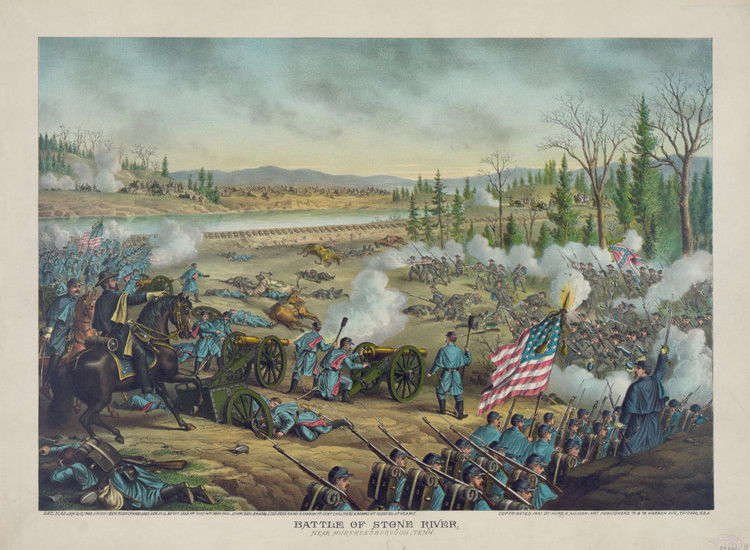
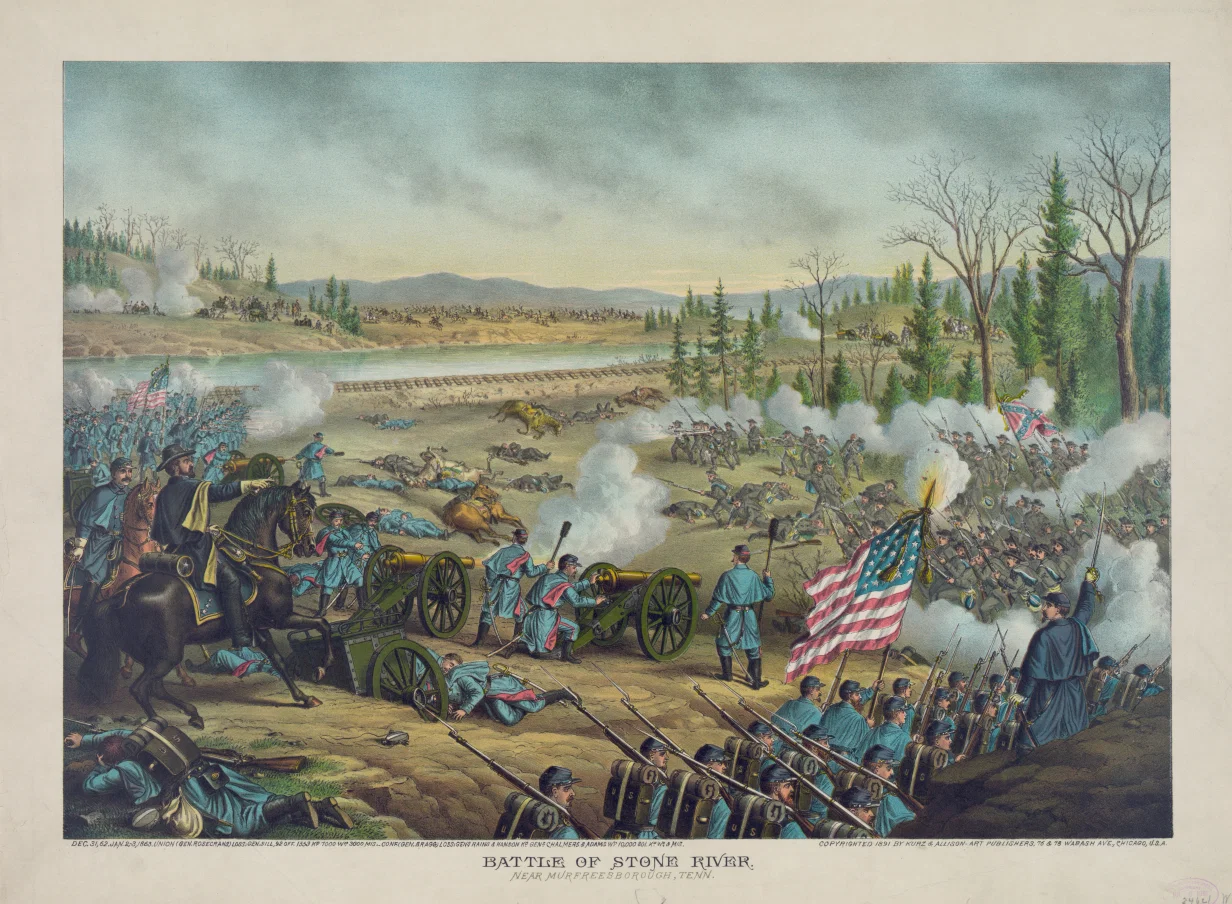
Battle of Stones River
Thomas served under Buell at the Battle of Perryville (8 October 1862), which halted the invasion of Kentucky by Braxton Bragg, but was then passed over for promotion when Buell was replaced by Major General William Rosecrans. Although this command should have gone to Thomas, he accepted the decision and served under Rosecrans, an able strategist but inferior to Thomas as a field commander.
At the Battle of Stones River (31 December 1862-2 January 1863), also known as the Second Battle of Murfreesboro), after the first day of fighting, which had seen heavy Union losses, Rosecrans called a council of war at which many of his officers strongly urged retreat.
Rosecrans did not agree and was supported by Thomas who said his now famous line, “This army does not retreat.” Thomas and Brigadier General Philip Sheridan then held the center for the rest of the battle, cleared their fronts, and Braxton Bragg was again defeated. Scholar Benson Bobrick comments:
Afterward, men said of Thomas: “Fighting under him was like having a stone wall in front of you or a battery to cover you.” The very fact of his presence, quietly and coolly giving orders under the hottest fire, steadied his men against the storm. (153)
Bragg met Rosecrans’ forces again at the Battle of Chickamauga (18-20 September 1863), the engagement Thomas became most famous for prior to Nashville. On the morning of 20 September, Rosecrans received faulty intelligence that there was a gap in his line and so he shifted one of his units to fill it. In doing so, he created a gap which was instantly exploited by Confederate Lieutenant General James Longstreet.
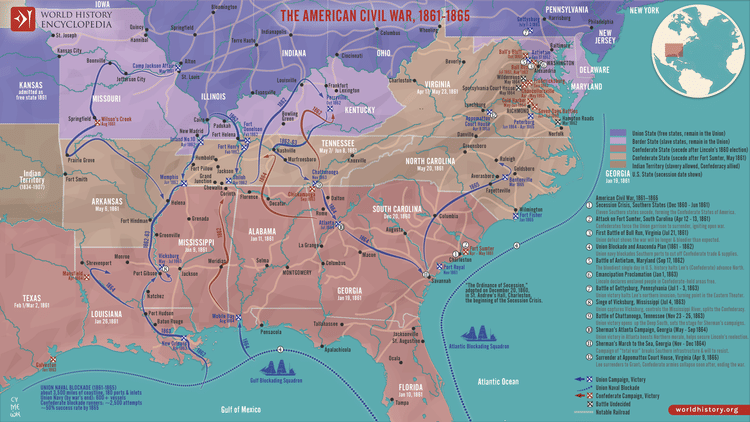
Map of the American Civil War, 1861-1865
Longstreet’s attack broke the Union lines and drove at least a third of the army from the field, including Rosecrans. Thomas took command of the remnant of the army still on the field and held his position at the center on Horseshoe Ridge (also known as Snodgrass Hill).
Reinforced by others, Thomas continued to hold until night fell, when he orchestrated an orderly retreat from the field. Chickamauga was a Confederate victory, but Thomas had saved Rosecrans’ army from a complete rout, earning him the nickname, the “Rock of Chickamauga.”
During the Chattanooga Campaign (21 September-25 November 1863), Grant replaced Rosecrans with Thomas (on 19 October) and, at the Battle of Missionary Ridge (25 November 1863, also known as the Battle of Chattanooga), Thomas’ men famously charged uphill – without orders – seemingly because they knew that is what he would expect from them – driving the confederate forces from what had been considered an impregnable position.
Franklin-Nashville Campaign & War’s End
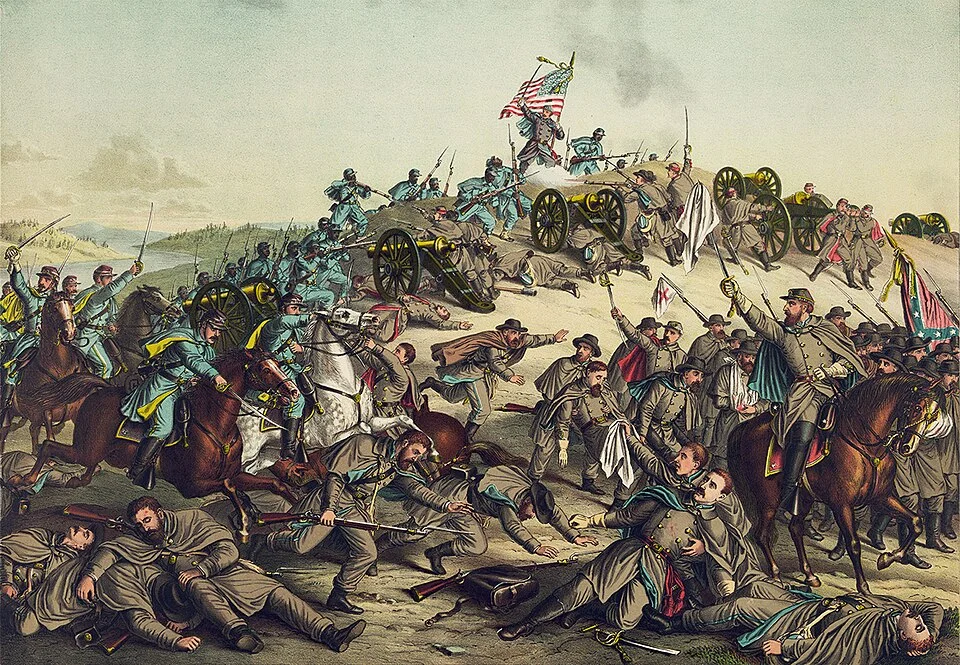
Thomas again distinguished himself during the Franklin-Nashville Campaign (18 September – 27 December 1864), the last major engagement of the Western Theater of the Civil War. Thomas protected the Union rear of Sherman’s March to the Sea (15 November – 21 December 1864) and destroyed the Confederate Army of Tennessee under Lieutenant General John Bell Hood at the Battle of Nashville (15-16 December 1864), earning him another nickname, “The Sledge of Nashville.”
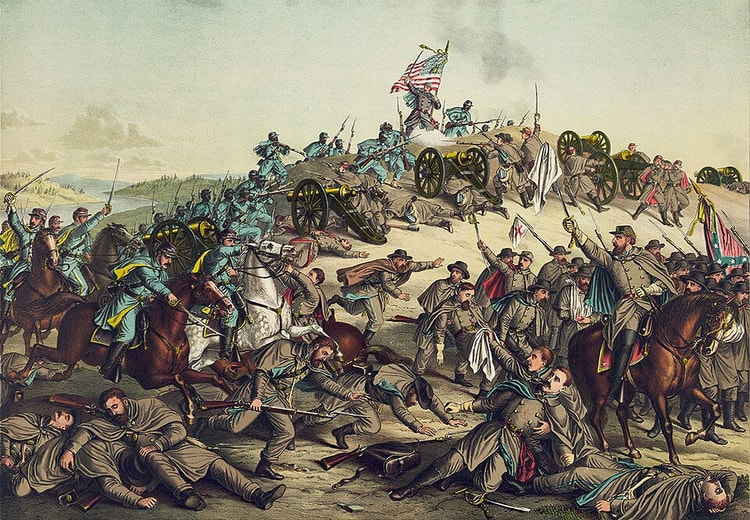
Battle of Nashville
The Battle of Nashville exemplifies Thomas’ careful preparation and execution of an engagement. Ulysses S. Grant impatiently and repeatedly ordered Thomas to attack Hood – but Thomas refused to advance until his cavalry was fully equipped and the weather had cleared.
Grant had reached the point of replacing Thomas, and then of going to take command of the action himself, when Thomas launched his successful advance. After Thomas’ victory, Hood resigned his commission and his Army of Tennessee no longer existed as a coherent fighting force.
Between Sherman’s March to the Sea and Thomas’ actions in the Franklin-Nashville Campaign, the South was broken. Grant then launched the Appomattox Campaign (29 March – 9 April 1865), leading to Lee’s surrender at Appomattox Court House on 9 April 1865 and the end of the American Civil War.
Conclusion
After the war, Thomas commanded the Department of the Cumberland, responsible for various Southern territories. He enacted policies to protect former slaves (known as freedmen) and deployed his troops to protect Blacks from abuses and persecution by the Ku Klux Klan.
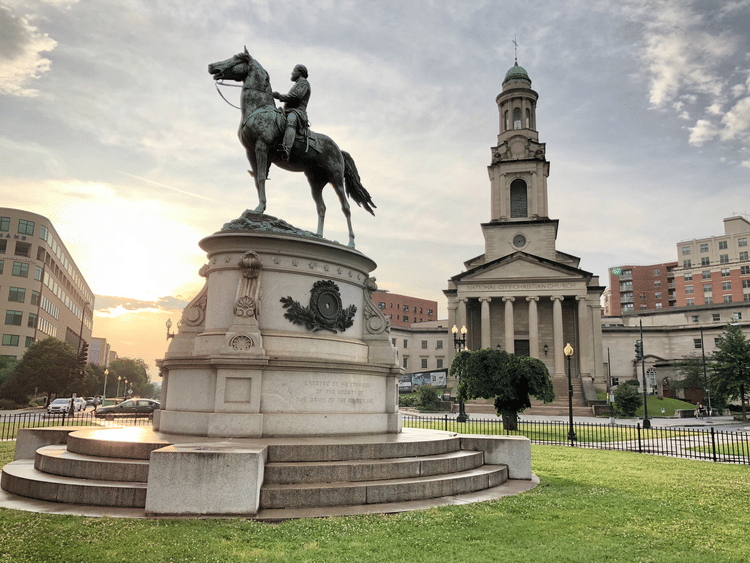
Bronze Equestrian Statue of General George H. Thomas
In 1869, he requested reassignment to California. On 28 March 1870, while writing a response to an article by his rival John Schofield criticizing his handling of the Battle of Nashville, Thomas suffered a massive stroke and died. His wife blamed Schofield’s article and Grant’s poor use of her husband for his death (Bobrick, 332). Thomas’ family refused to attend his funeral service.
George H. Thomas was in full command of only two battles – Mill Springs and Nashville – but his presence at all the other engagements proved decisive. Bobrick cites the famous Civil War historian Bruce Catton’s estimation:
Bruce Catton said of Thomas, “What a general could do, Thomas did; no more dependable soldier for a moment of crisis existed on the North American continent, or ever did exist.” (336)
Civil War scholars and historians, including Bobrick, generally agree that Thomas has been undervalued and overlooked, and the reasons for this have been given above. A more telling reason, however, is that this seems to have been what Thomas himself would have wanted.
He asked his wife to burn his letters so that, after his death, no one would have access to the story of his life. He refused to write a memoir, refused to engage with critics – save for his heated response to the Schofield article on the day of his death – and, when passed over for promotions, refused to contest the decision.
In all of this, he rejected the kind of drama many other Civil War generals encouraged, during and after the war. Thomas chose to serve the interests of the Union over his home state, understood that as a responsibility he owed his country, a job that needed to be done, and he quietly and unpretentiously went about doing that job very well.

