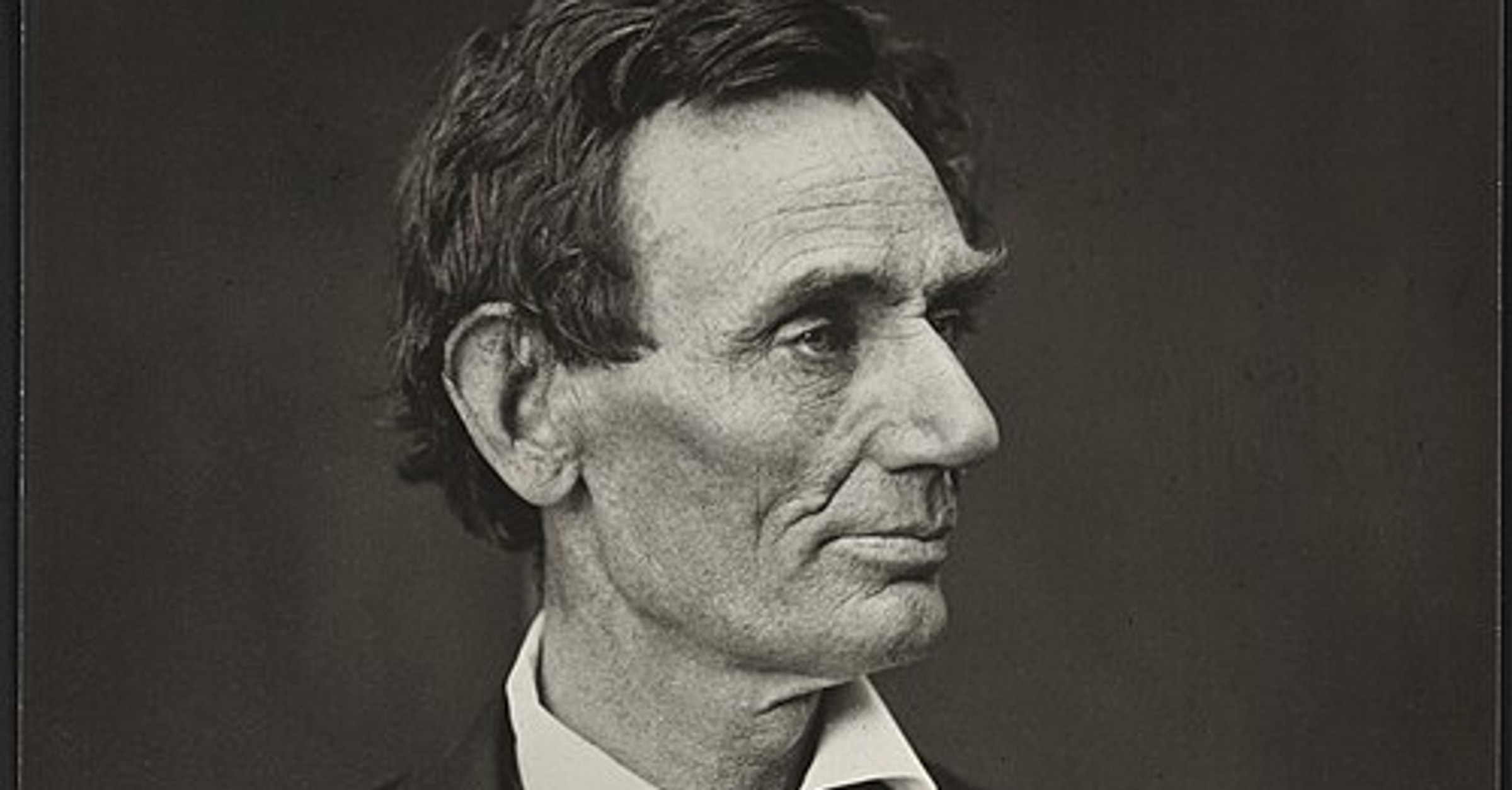
Америкийн Нэгдсэн Улсын 16 дахь ерөнхийлөгч Абрахам Линкольн нь иргэний дайны хүнд хэцүү жилүүдэд улс орноо удирдан чиглүүлж, боолчлолыг халах түүхэн үйлсэд манлайлан оролцсон улс төрч юм.
Амьдралын эхэн үе
Абрахам Линкольн 1809 оны хоёрдугаар сарын 12-нд Кентакки мужийн Хоженвилл хотоос урагш 5 км-т байрлах нэг өрөө модон байшинд мэндэлжээ. Түүний эцэг Томас Линкольн нь боловсролгүй тариачин байсан бөгөөд бага насандаа эцгээ Шони омгийнхны дайралтад өртөн амиа алдахыг харсан нь түүний амьдралд томоохон ул мөр үлдээжээ. Линкольн өөрийн хүүхэд насыг “ядуусын эгэл жирийн амьдрал” хэмээн тодорхойлсон байдаг. 1816 оны арванхоёрдугаар сард гэр бүл нь Индиана муж руу нүүсэн боловч 1818 оны аравдугаар сарын 6-нд эх Нэнси Хэнкс Линкольн нь “сүүний өвчин” хэмээх халдвараар өөд болсон нь бяцхан Абрахамын хувьд хүнд гарз байлаа. Хожим эцэг нь Сара Буш Жонсонтой гэрлэсэн бөгөөд хойд эх нь Линкольн дахь уран зохиол, ном унших сонирхлыг нь дэмжиж, түүнийг “ер бусын авьяастай хүү” хэмээн үнэлдэг байв.
Иллинойс дахь амьдрал ба улс төрийн гараа
Гэр бүл нь 1830 онд Иллинойс муж руу нүүх үед Линкольн бие даасан амьдралаа эхлүүлжээ. Тэрээр хавтгай завьчин, дэлгүүрийн ажилтан, шуудангийн эрхлэгч, газрын хэмжигч зэрэг олон төрлийн ажил хийж байв. 1832 онд Блэк Хоукийн дайнд Иллинойсын цэргийн бүрэлдэхүүнд багтаж байсан ч тулаанд оролцоогүй гэдэг. Тэрээр 1834 онд муж улсын хууль тогтоох байгууллагад сонгогдон дөрвөн удаа улиран ажиллажээ. 1836 онд хуульчийн эрхээ авсны дараа Спрингфилд хотод нүүж ирж, 1842 оны арваннэгдүгээр сарын 4-нд Мэри Тоддтой гэрлэсэн байна.
Улс төрийн өсөлт ба боолчлолын асуудал
Линкольн 1846 онд АНУ-ын Төлөөлөгчдийн танхимд сонгогдож, Вигийн намын гишүүнээр ажиллахдаа Мексик-Америкийн дайныг эрс эсэргүүцсэн байр суурь илэрхийлж байв. 1850-иад онд боолчлолын асуудал улс орныг хоёр хуваах үед тэрээр боолчлолыг ёс суртахууны хувьд буруу хэмээн үзэж, түүнийг хязгаарлахын төлөө тэмцэх болжээ. 1858 оны Сенатын сонгуулийн үеэр Стивен А. Дугластай хийсэн мэтгэлцээнүүд нь түүнийг үндэсний хэмжээний улс төрч болгосон юм. Тэрээр “Өөрөөсөө хуваагдсан гэр орон тогтож чадахгүй” хэмээн алдартай үгээ хэлж, боолчлол ба эрх чөлөө хоёр зэрэг орших боломжгүйг сануулж байв.
Ерөнхийлөгчийн алба ба иргэний дайн
1860 онд Бүгд найрамдах намаас нэр дэвшин ерөнхийлөгчөөр сонгогдсоны дараа Өмнөд мужууд холбооноос гарч, эх орноо нэгтгэхийн төлөөх Иргэний дайн эхэлсэн юм. Линкольн дайны үеэр “Хабеас корпус” (шүүхийн зөвшөөрөлгүй баривчлахгүй байх эрх)-ыг түр зогсоож, гүйцэтгэх засаглалын эрх мэдлээ бүрэн дайчилсан. 1862 онд Антиетамын тулалдааны дараа “Боолчлолыг халах тухай тунхаг”-ийг гаргасан нь дайныг боолчлолын эсрэг ёс суртахууны тэмцэл болгон хувиргасан юм. Геттисбургийн илтгэлдээ тэрээр АНУ бол эрх чөлөөнд суурилсан, бүх хүн тэгш эрхтэй гэсэн зарчмыг дахин баталсан байна.
Дайны төгсгөл ба харамсалтай төгсгөл
1864 оны сонгуулиар дахин сонгогдсон Линкольн 1865 оны нэгдүгээр сарын 31-нд Үндсэн хуульд боолчлолыг халах 13 дахь нэмэлт өөрчлөлтийг оруулах эхлэлийг тавьжээ. 1865 оны дөрөвдүгээр сарын 9-нд Роберт Э. Ли генерал бууж өгснөөр дайн дуусгавар болсон ч ердөө тав хоногийн дараа буюу дөрөвдүгээр сарын 14-нд Линкольн Форд театрт жүжиг үзэж байхдаа Жон Уилкс Бүүтийн гарт амиа алджээ. Түүнийг 56 насандаа таалал төгсөхөд Америкийн ард түмэн “Агуу чөлөөлөгч”-өө алдсанд гашуудсан билээ.
Дэлгэрэнгүйг эх сурвалжаас харах
↓Эх сурвалжийг нээх ↓
Abraham Lincoln (1809-1865) was an American lawyer and politician who served as the sixteenth president of the United States. He led the country through the tumultuous period of the American Civil War (1861-1865) and worked to end slavery, issuing the Emancipation Proclamation and supporting the Thirteenth Amendment. His assassination on 14 April 1865 only cemented his status as a martyr for liberty and today, he is often remembered as one of the greatest American presidents.
Early Life
Lincoln was born on 12 February 1809 in a one-room log cabin 3 miles (5 km) south of Hodgenville, Kentucky. His father, Thomas, was an uneducated farmer who, as Abraham would later recall, never did “more in the way of writing than to bunglingly sign his own name” (Goodwin, 47). Thomas Lincoln had come to the Kentucky frontier as a young boy, where, at the age of eight, he had watched as his own father was killed by a Shawnee raiding party – Abraham would later cite this early childhood trauma as the reason why his father grew up as a “wandering laboring boy…literally without education” (Meacham, 8). In 1806, Thomas married Nancy Hanks, and the couple would go on to have three children: Susan, Abraham, and Thomas, Jr., who died in infancy.
Lincoln himself shrugged off his childhood as unremarkable. “It is a great piece of folly to attempt to make anything out of…my early life,” he would later tell his campaign biographer. “It can all be condensed into a single sentence, and that sentence you will find in Gray’s Elegy: ‘The short and simple annals of the poor’” (Meacham, 9). Indeed, Lincoln’s early years were spent in constant motion. In December 1816, faced with a lawsuit over the farm in Kentucky, his father packed up the family and moved to Indiana, where he had to work as a farmer, carpenter, and cabinetmaker just to make ends meet. Lincoln would remember the unhappiness of these years, referring to life on the Indiana frontier as “pretty pinching at times” (Britannica). On 6 October 1818, Nancy Hanks Lincoln died of milk sickness; only nine, Lincoln watched with tears as his beloved mother was buried in the forest. His father waited a year before getting remarried to Sarah Bush Johnson, a widow with three children of her own.
Lincoln grew quite close to his stepmother, who he would refer to as his “angel mother”. For her part, Sarah quickly recognized Abraham’s exceptional intellect and ambition, calling him a “Boy of uncommon natural Talents” (Goodwin, 49). At her encouragement, he began reading voraciously in all his spare moments, and was wont to carry a book everywhere he went. He read and reread worn copies of the Bible, Aesop’s Fables, and the plays of William Shakespeare; his stepmother would remember that, when he came across a passage that struck him, he would “write it down on boards if he had no paper” and “when the board would get too black he would shave it off with a drawing knife and go on again” (Goodwin, 52). His father, on the other hand, disapproved of young Abe’s bookishness; Thomas sometimes burned his son’s books and may have even beaten him.
Lincoln as a Boy, Reading by Firelight
Lincoln helped his father around the farm, and his labor was sometimes rented out to neighbors. He therefore grew up performing physically demanding tasks such as plowing, cutting down trees, digging up stumps, and splitting rails. In January 1828, tragedy struck the family when Lincoln’s older sister Susan died in childbirth. Two years later, as another outbreak of the milk sickness threatened Indiana, the family packed up once again and moved to Illinois. Now at the age of 21, Lincoln had grown into a tall, lanky man who “spoke with a backwoods twang and walked in the long-striding, flat-footed, cautious manner of a plowman” (Britannica). It was around this time that Lincoln began to assert his independence and estrange himself from his father – in fact, he would refuse to attend Thomas’s funeral in 1851. A man with ambitions as large as Lincoln’s could not stay contained for too long. He was about to become his own man.
Life in Illinois
After moving to Illinois, Lincoln tried his hand at several different jobs. He first worked as a railsplitter, before finding work as a flatboatman carrying goods down the Mississippi River to New Orleans. In 1831, he settled in the small town of New Salem where he hopped between work as a shopkeeper, postmaster, and land surveyor. In 1832, he volunteered in the Illinois state militia during Black Hawk’s War, though he never saw any combat; indeed, Lincoln would later joke that, although he never fought any natives, he had “a good many bloody struggles with the mosquitos” (Britannica).
Although he struggled to find a permanent career, Lincoln easily became integrated into the New Salem community, his folksy country charm and masterful story-telling skills winning him many friends. He often partook in wrestling matches, gaining renown for his strength. Due to his popularity, he won election to the state legislature in 1834, and would serve four terms. Around the same time, Lincoln befriended a young woman named Ann Rutledge, who may have been his first love. When she died of typhoid fever in August 1835, Lincoln became despondent, and took to wandering around in the woods alone, gun in hand. He was able to pull himself out of his depression for periods long enough to study law, and was admitted to the bar in September 1836.
Earliest Known Photograph of Lincoln, circa 1847 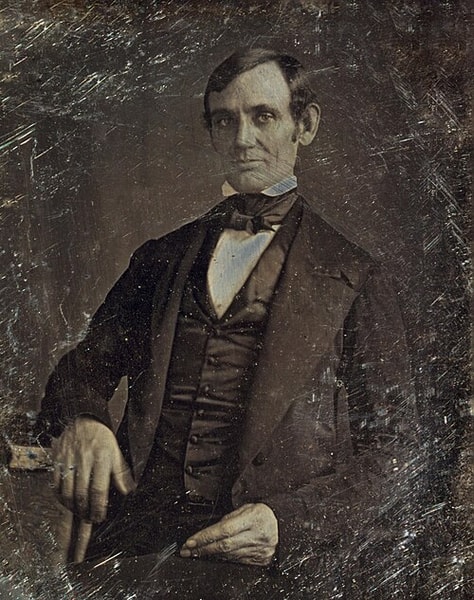
The next year, he moved to the state capital of Springfield to open a law practice. Upon arrival, he lodged with shopkeeper Joshua Speed. The two men shared a close, intimate friendship and even shared a bed for four years – though this did not raise any eyebrows at the time (indeed, intimate male friendships were fairly common) some scholars have cited this friendship as evidence for Lincoln’s potential bisexuality. In 1840, Lincoln became engaged to Mary Todd, daughter of a wealthy Kentucky lawyer. They had met at a party, where Lincoln had nervously approached her and confessed, “I want to dance with you in the worst way” (Goodwin, 7). Yet, Lincoln, fearing that marriage would get in the way of his budding law career, got cold feet and broke off the engagement in early 1841; however, he and Mary soon reconciled, and were married on 4 November 1842.
Prairie Lawyer
In 1844, Lincoln opened a law practice, partnering with the more experienced William Herndon. Though their practice did well, Lincoln found his ambitions could not be contained within the confines of Springfield, and he turned to national politics. In 1846, he won election to the US House of Representatives as a member of the Whig Party. His platform, he told voters, was like an old woman’s dance: “Short & Sweet” (Goodwin, 90). It focused on the three core principles of national banks, protective tariffs, and internal improvements, all staples of the Whig Party.
When he got to Congress, however, Lincoln took on a higher cause and vocally opposed the ongoing Mexican-American War (1846-48). He accused President James K. Polk of intentionally misleading the American people to start an unjust war of conquest. Polk had insisted that Mexico had started the war by invading US territory and spilling the blood of US soldiers; in response, Lincoln challenged the Polk administration to point out the exact ‘spot’ where this had occurred. These so-called ‘spot resolutions’, coming at a time when enthusiasm for the war was still high, led to charges that Lincoln was unpatriotic, his critics mockingly referring to him as ‘Spotty Lincoln’.
Mary Todd Lincoln, 1861 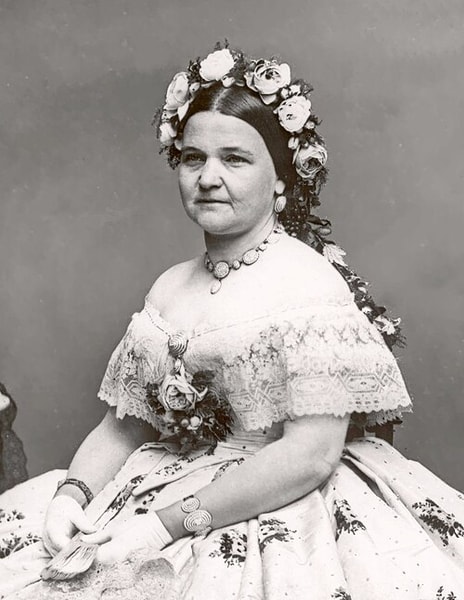
Having pledged to only serve one 2-year term, Lincoln left Congress in 1849 and returned to his law practice in Springfield. Over the course of the next few years, he found success as a prairie lawyer and spent much of his time riding the Illinois court circuit, practicing law in small towns all over the state. Just as his career was growing, so too was his little family. Mary Todd would ultimately give him four sons: Robert Todd (born 1843), Edward Baker (born 1846), William, or ‘Willie’ (born 1850) and Thomas, or ‘Tad’ (born 1853). Of these boys, two would sadly predecease him, and only one – Robert – would live to adulthood. Lincoln was a loving and indulgent husband and father, who hated being apart from his family.
Self-government, Lincoln argued, was impossible so long as some men remained in bondage.
Political Rise
While Lincoln was building a moderately successful career in Illinois, the nation was falling apart. Slavery had long divided the states along sectional lines, but the recent acquisition of 525,000 square miles of new land from Mexico had only exacerbated the issue. The Southern slaveocracies demanded that their ‘peculiar institution’ be allowed to expand into these western lands; the creation of new ‘slave states’, they believed, was the only way they could preserve slavery, and protect their own power. Most ‘free soil’ Northern states, on the other hand, were determined to block the spread of slavery. With each side viewing the other as an existential threat to its way of life, the debate grew increasingly ugly and hostile as the 1850s progressed.
Lincoln, who had always thirsted after public recognition, longed to return to politics, and adopted the antislavery issue as his way back in. In October 1854, he delivered his Peoria Speech, in which he publicly condemned the institution of slavery for the first time; it was the first of 175 antislavery speeches he would deliver over the course of the next six years. Although Lincoln did not yet favor total emancipation – like many antislavery politicians, he merely wanted to contain slavery to the places where it already existed – he truly seemed to view it as a moral evil, incompatible with the values espoused in the Declaration of Independence. Self-government, he argued, was impossible so long as some men remained in bondage.
Abraham Lincoln, November 1863 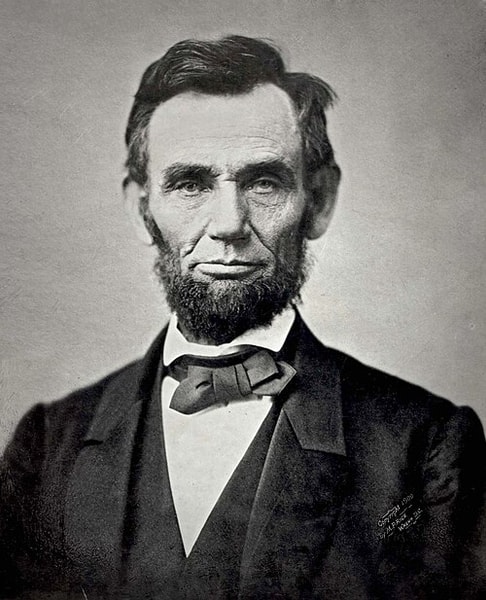
In 1856, Lincoln was instrumental in organizing the new antislavery Republican Party in Illinois and was soon recognized as a party leader in the state. Two years later, he was selected by the party to run against the Democratic Senator Stephen A. Douglas, architect of the hated Kansas-Nebraska Act. Lincoln accepted the nomination, delivering his famous ‘House Divided’ speech:
A house divided against itself cannot stand. I believe this government cannot endure, permanently have slave and half free. I do not expect the Union to be dissolved – I do not expect the house to fall – but I do expect it will cease to be divided. It will become all one thing, or all the other.
(nps.gov)
In the campaign, Lincoln challenged Douglas to seven debates, staged throughout Illinois. At a time when speeches and debates were viewed with the same excitement as sporting events today, the Lincoln-Douglas debates were highly publicized throughout the nation; though he would end up losing the election, the campaign still thrust Lincoln into the national spotlight. His profile rose further in February 1860, when he gave his Cooper Union speech in Manhattan, defending the Republican Party from charges of ‘fanaticism’ by arguing that the Founding Fathers had always intended for slavery to be eradicated eventually. Through these speeches, Lincoln won the public recognition he had always desired. But he was still unsatisfied – when asked if he had ambitions for higher office, Lincoln replied, “the taste is in my mouth a little” (Meacham, 184).
First Reading of the Emancipation Proclamation 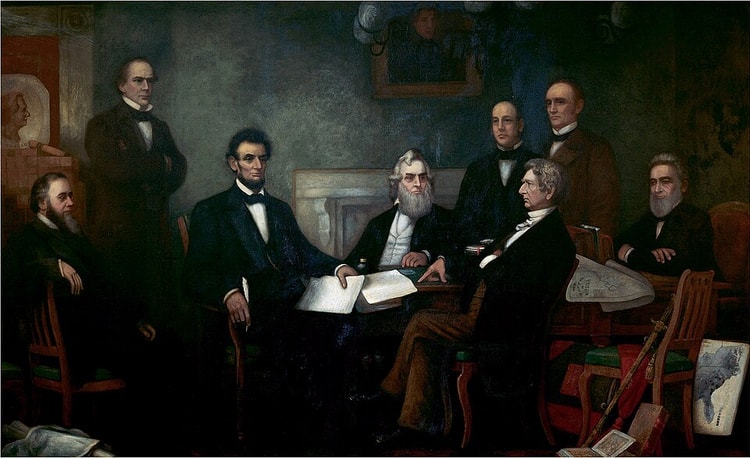
President
In May 1860, the Republican National Convention was held in Chicago, Illinois. Although Lincoln was a rising star, he still had less name recognition than other Republican leaders like William H. Seward and Salmon P. Chase, who were considered favorites. Yet Lincoln’s relative inexperience also meant he had less political baggage, and was therefore more palatable to moderates. Lincoln’s friends campaigned heavily for him at the convention, presenting him as the ‘Rail Candidate’. Their hard work paid off, as Lincoln secured the nomination on the third ballot. In the heated, four-way general election that followed, he won, despite the fact that he received no votes in ten Southern states.
Lincoln’s victory in the US Presidential Election of 1860 alarmed the Southern slaveocracies, who feared that Lincoln and the ‘Black Republicans’ would weaponize the power of the federal government to end slavery once and for all. To preempt this, South Carolina voted to secede from the Union on 20 December 1860; six other states from the Deep South followed its example, cutting ties with the Union in the fateful Secession Crisis of 1860-61. Though Lincoln denounced secession as illegal, there was nothing he could do until he was sworn in as president. Indeed, when it came time for his inauguration on 4 March 1861, he had to sneak into Washington due to the sheer number of threats against his life.
Lincoln knew he needed a strong cabinet to aid him in the coming struggle, and selected his former rivals for the presidential nomination – Seward was chosen as secretary of state, Chase as secretary of the treasury. He would certainly need all the help he could get; in April 1861, South Carolina secessionists fired on the federal garrison of Fort Sumter. Lincoln responded by calling for 75,000 volunteers to crush the rebellion which, in turn, caused four more states from the Upper South to secede and join the Confederate States. Lincoln immediately ordered a blockade of Confederate ports, and sent an army into Virginia, which was routed at the First Battle of Bull Run (21 July). The Civil War had begun, and was now rapidly escalating.
Lincoln and McClellan after the Battle of Antietam 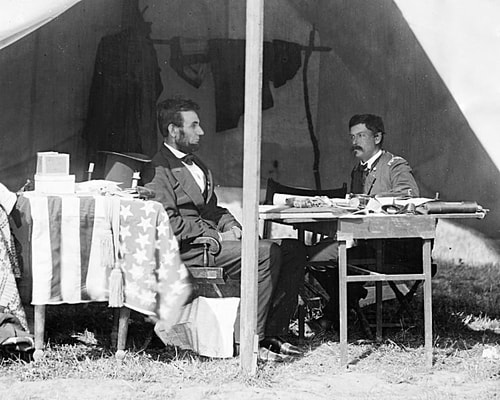
Lincoln was determined to preserve the Union at all costs. As he would later state in his Gettysburg Address, he believed that the United States had been “conceived in Liberty, and dedicated to the proposition that all men are created equal”. As such, it was not just the fate of a nation that was in jeopardy, but the future of humanity. With the stakes so high, Lincoln judged it necessary to wield his executive powers to their fullest extent. He suspended habeas corpus, arresting thousands of suspected Confederate sympathizers. He centered his foreign policy around the war, doing his utmost to get the European powers to remain neutral. He also leaned into his role as commander-in-chief, working with his cabinet and generals to devise a war plan that centered on a defense of the capital of Washington, while acting with aggression elsewhere.
In late 1861, Lincoln appointed George B. McClellan as general-in-chief of Union armies. McClellan was a dashing young general who was popular amongst the army, but he was also over-cautious and constantly butted heads with Lincoln about strategy. In 1862, McClellan snatched defeat from the jaws of victory at the Seven Days Battles, while another Union army was decisively defeated at the Second Battle of Bull Run. These defeats opened the door for a Southern invasion of the North; although the Confederate invasion of Maryland was turned back at the Battle of Antietam, it was all too close for comfort, and Lincoln fired McClellan. Despite these setbacks, the victory at Antietam gave Lincoln an opportunity to issue the Emancipation Proclamation, which freed all the slaves in the rebellious states – though this did nothing to free the slaves in the loyal border states, it successfully brought the issue of slavery to the forefront of the war, redefining it as a moral conflict.
In 1863, the tide of the war turned more squarely in favor of the North. The capture of Vicksburg, Mississippi, effectively cut the Confederacy in twain, while the Union victory at the Battle of Gettysburg destroyed all hope of a successful Confederate invasion of the North. Lincoln – who was still reeling from the death of his son Willie the year before – continued to commit all his energy toward winning the war, and appointed Ulysses S. Grant to the position of general-in-chief in late 1863. Grant, who shared Lincoln’s belief that the war could only be won through aggression, launched a bloody drive toward the Confederate capital of Richmond the next spring. Known as the Overland Campaign, it succeeded in pinning the Confederate Army of Northern Virginia down near Petersburg, while another Union army under General William Tecumseh Sherman captured Atlanta, Georgia. The war was ending – but, perhaps, not fast enough.
Assassination of President Lincoln 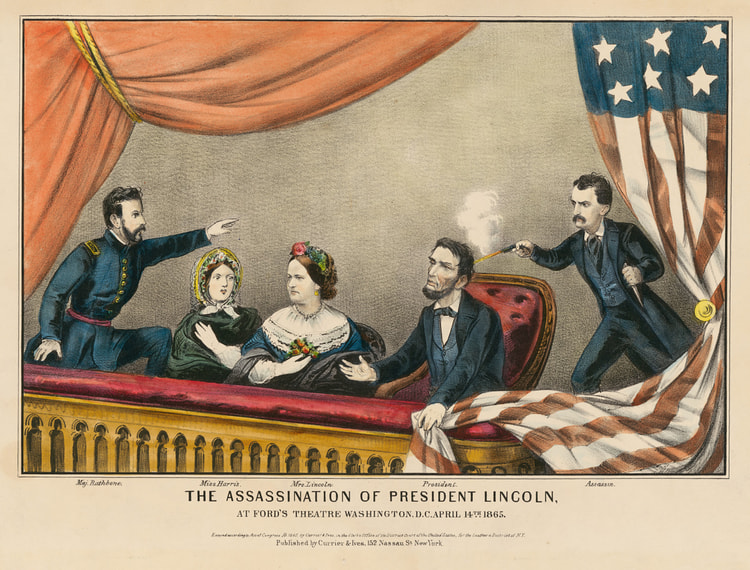
Reelection & Death
As the US Presidential Election of 1864 loomed, Lincoln had to worry about the rise of war weariness in the North. Despite the military successes of Grant and Sherman, the rising death toll was shocking to many Northerners, who began clamoring for a negotiated peace; this unnerved Lincoln, who was unwilling to settle for anything less than total victory. Hoping to make a show of unity, Lincoln and his allies temporarily adopted a new name, the National Union Party, and brought in Southern Democrat Andrew Johnson as their vice presidential candidate. In November, Lincoln handily defeated McClellan, his Democratic opponent, in the general election. Lincoln’s second term was essentially a mandate by the voters to continue the war, and it sealed the fate of the Confederacy.
In the last months of the war, Lincoln began implementing more antislavery policies. Egged on by the abolitionist wing of his party – known as Radical Republicans – Lincoln allowed Black soldiers into the federal army, and signed the Freedmen’s Bureau Bill, which established a temporary federal agency designed to help former slaves make the transition to freedom. After his reelection, he put increased pressure on Congress to abolish slavery nationwide; on 31 January 1865, the House passed the draft for what would become the Thirteenth Amendment. In his second inaugural address on 4 March 1865, he suggested that the war had been divine punishment for the institution of slavery.
On 9 April 1865, General Robert E. Lee surrendered to Grant at Appomattox, effectively ending the Civil War. Though Washington cheered and celebrated, Lincoln knew there was still work to be done – on 11 April, he delivered his final speech, in which he spoke of the difficulties that were sure to arise as the nation entered the process of Reconstruction. Three days later, on 14 April, Lincoln was attending a play at Ford’s Theatre in Washington, D.C. There, he was shot in the back of the head by John Wilkes Booth, an actor and Confederate sympathizer who sought revenge for the vanquished South. As Booth made his escape, the unconscious Lincoln was carried into a boardinghouse across the street, where he died at 7:22 the next morning, 15 April, at the age of 56. The assassination of Abraham Lincoln cut short the life of the man often hailed as the ‘Great Emancipator’, who worked to end slavery even as he held the Union together.

