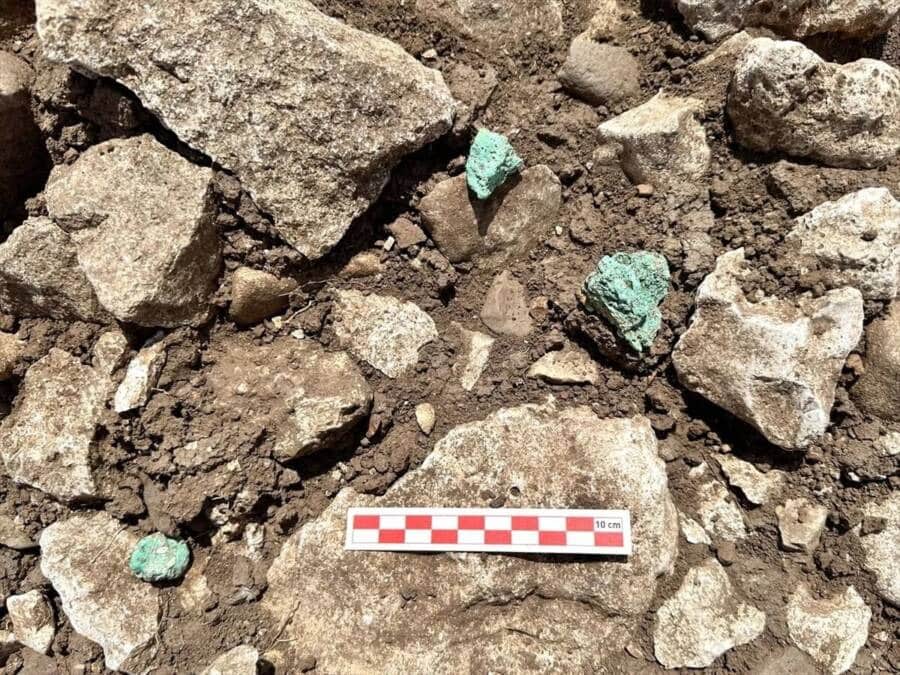
Археологичид Туркийн зүүн өмнөд хэсэгт орших Чаёню Тэпэси суурингаас зэс, малахит боловсруулдаг эртний үйлдвэрлэлийн бүсийг илрүүлжээ.
Чанаккале Онсекиз Март их сургуулийн дэд профессор Саваш Сариалтунаар удирдуулсан судалгааны баг малтлагын явцад чулуугаар өнгөлсөн ажлын талбай болон түүнийг тойрсон зургаан тулгуур баганын нүхийг олсон байна. Ойролцоогоор 50 хавтгай дөрвөлжин фут талбай бүхий энэхүү байгууламж нь МЭӨ 6800 оноос өмнөх үед хамаарах бөгөөд тухайн үед металл боловсруулах тусгай бүс бүхий үйлдвэрлэл хөгжиж байсныг гэрчилж байна.
Малтлагаар 18 ширхэг малахит эрдэс, боловсруулалтын янз бүрийн шатанд байгаа зэс түүхий эд болон бэлэн болсон зэс ирмэг, эдлэлүүд олдсон нь металл боловсруулах бүрэн гүйцэд системийн нотолгоо болж байна. Тухайн үеийн гар урчууд зэсийг хүйтэн болон халуун давтах аргаар багаж хэрэгсэл, чимэглэл хийдэг байсан нь тогтоогдсон.
Энэхүү нээлт нь Чаёню суурин дахь зэс олборлолт, боловсруулалтын уламжлал 2000 орчим жил үргэлжилснийг баталж байгаа юм. Судлаачид мөн уг үйлдвэрлэлийн бүсийн баруун хэсгээс Прото-Хассуна соёлд хамаарах өндөр чанартай ваар сав илрүүлсэн бөгөөд одоогоор тэдгээрийн он цагийг нарийвчлан тогтоох судалгааны ажил үргэлжилж байна.
Дэлгэрэнгүйг эх сурвалжаас харах
↓Эх сурвалжийг нээх ↓
Archaeologists excavating Çayönü Tepesi, a Neolithic settlement in southeastern Turkey, have uncovered a prehistoric mining workshop dating back to at least 6800 B.C.E. Besides a paved work area, the dig produced dozens of copper and malachite pieces, from raw material to finished artifacts. Çayönü is hardly an unknown name. It is already considered an archaeologically significant site in Turkey.
The settlement sits in the foothills of the Taurus Mountains and is important for the Neolithic period, especially for understanding how societies began shifting from hunting and gathering to agriculture and other forms of production.
A Workshop Marked by Six Postholes
The workshop, roughly 50 square feet in size, was found during excavations earlier this year. The team was led by Associate Professor Savaş Sarıaltun of Çanakkale Onsekiz Mart University. According to an announcement by Turkey’s Ministry of Culture and Tourism on social media, the space consisted of six postholes surrounding a stone-paved working surface.
Those postholes matter more than they might seem. They are what set the site apart as a center of production, rather than a spot where material was simply discarded some 9,000 years ago. Their arrangement also points to a possible structure or canopy that once covered the workspace.
How Ancient Craftsmen Made Their Beads
In the middle of the workshop, archaeologists recovered 18 pieces of malachite, a green copper carbonate hydroxide mineral. Some of it was raw, some partially processed.
Nor was that all. Researchers also found dozens of other malachite and copper pieces around the site, at various stages of production, ranging from raw nuggets to finished copper beads and other artifacts.
The presence of raw material, partially processed material and complete metal objects outlines the entire manufacturing system: where the work took place, how the metal was processed, and how the work was organized in designated areas of the settlement. The finished copper objects, in particular, offer further evidence of this prehistoric production process.

As for the techniques of the era, early copper technology in Anatolia and northern Mesopotamia generally involved cold and hot hammering of the metal to shape tools and other objects. This was thousands of years before copper became a common material.
A Mining Tradition Spanning Two Millennia
Çayönü was already a prominent site for research into early copper technology. Earlier excavations had revealed evidence of copper and malachite mining there as far back as 9100 B.C.E.
According to Minister of Culture and Tourism Mehmet Nuri Ersoy, the new discovery shows that the mining tradition lasted for about 2,000 years and that “specialized production activities were carried out in designated working areas.”
Copper working elsewhere in Turkey is not new either. In 2024, archaeologists digging at the Neolithic site of Boncuklu Tarla found 11,000-year-old body ornaments made from limestone, obsidian, flint, copper and river pebbles.
The 2026 season at Çayönü brought one more surprise, by the way. In the western part of the workshop settlement, the team found high-quality pottery associated with the Proto-Hassuna culture. Analysis is still ongoing, but the pottery was seemingly made around the time the mining workshop was active.
Enjoyed this article? Subscribe to our free newsletter for engaging stories, exclusive content, and the latest news.

