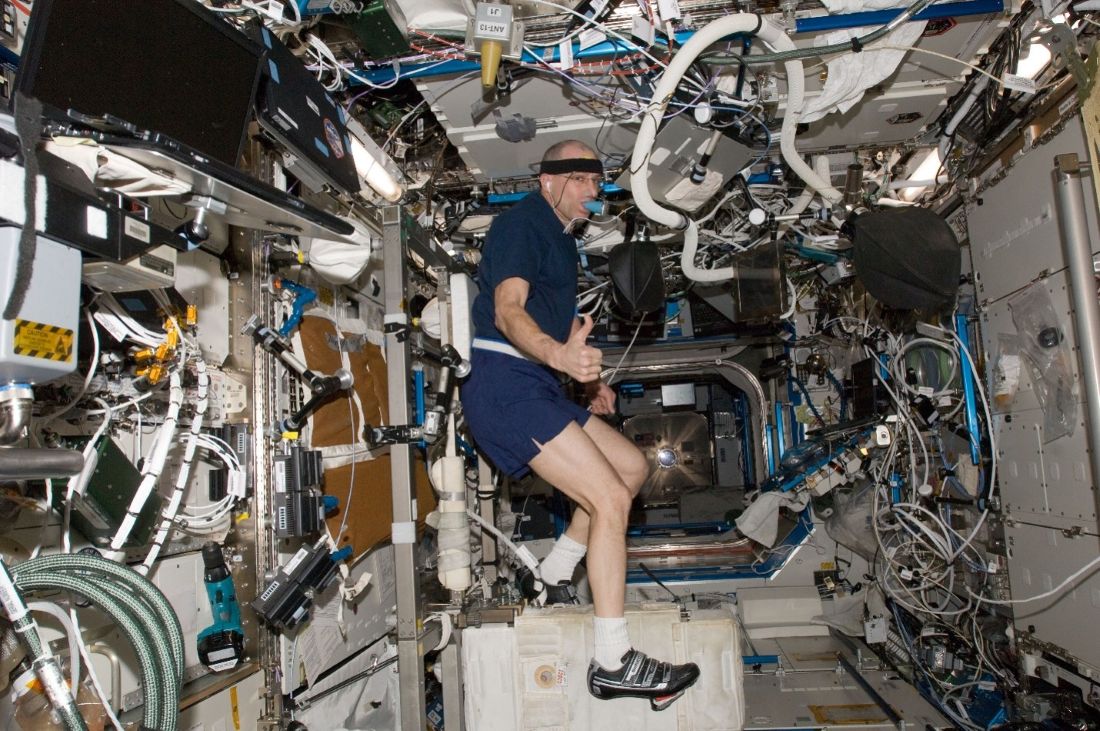
Олон улсын сансрын станцад тогтмол дасгал сургуулилт хийх нь сансрын нисгэгчдийн зүрхний бүтцийн өөрчлөлтийг нөхөж, таталцлын хүчний өөрчлөлтөд дасан зохицоход тусалдаг болохыг судалгаагаар тогтоожээ.
UT Southwestern Medical Center-ийн эрдэмтдийн Circulation сэтгүүлд нийтлүүлсэн судалгаагаар, сансрын бичил таталцлын нөхцөлд зүрхний булчин сулрах (cardiac atrophy) эрсдэлээс урьдчилан сэргийлэхэд өдөр тутмын дасгал сургуулилт чухал үүрэгтэйг тогтоожээ. NASA-гийн “Integrated Cardiovascular Study” хөтөлбөрийн хүрээнд 14 сансрын нисгэгчийн зүрхний үйл ажиллагааг зургаан сарын турш ажигласан байна. Судалгаанд оролцогчид нислэгээс өмнө болон сансарт байх хугацаандаа эхокардиографийн нарийвчилсан шинжилгээнд хамрагдаж, зүрхний ачааллыг хэмжжээ.
Сансрын нислэгийн эхний долоо хоногуудад бичил таталцлын улмаас зүрхний булчин бага зэрэг жижгэрч, үйл ажиллагаа нь өөрчлөгддөг болохыг ажигласан байна. Гэсэн хэдий ч өдөрт 45 минутаас нэг цагийн турш тэсвэр тэвчээр болон хүчний дасгал сургуулилт хийснээр энэхүү өөрчлөлтийг бууруулж, зүрхний хэвийн үйл ажиллагааг хадгалах боломжтой болжээ. Эрдэмтэн Бенжамин Левиний тайлбарласнаар, одоогийн дасгал сургуулилтын хөтөлбөр нь Ангараг гарагийн таталцлын нөхцөлд дасан зохицоход шаардлагатай зүрхний бэлэн байдлыг хангахад хангалттай гэж үзэж байна.
Энэхүү судалгаа нь Ангараг гараг гэх мэт алс холын сансрын аялалд хүний бие махбод, ялангуяа зүрх судасны систем хэрхэн дасан зохицохыг ойлгоход чухал ач холбогдолтой юм. Түүнчлэн сансрын нисгэгчдэд зориулсан энэхүү дасгал сургуулилтын арга барил нь Дэлхий дээрх удаан хугацааны хөдөлгөөний хомсдол болон цусны эргэлтийн эмгэгтэй өвчтөнүүдийн эмчилгээнд шинэ шийдэл болох боломжтойг судлаачид онцолжээ.
Дэлгэрэнгүйг эх сурвалжаас харах
↓Эх сурвалжийг нээх ↓
A study from UT Southwestern Medical Center shows that daily exercise during long-duration spaceflight can help preserve astronaut heart function under conditions similar to a future Mars mission. The research, published in Circulation, found that current exercise routines used aboard the International Space Station can help astronauts maintain cardiovascular performance after roughly six months in orbit.
Tracking How The Heart Adapts During Long Space Missions
Long journeys through space create major challenges for the cardiovascular system. In microgravity, the human body no longer experiences the same gravitational forces found on Earth, changing blood distribution and reducing the workload placed on the heart. Earlier studies showed that extended time in space could cause cardiac atrophy, with the heart becoming smaller and less prepared for the return to a gravitational environment.
The new research was conducted as part of NASA’s Integrated Cardiovascular Study, an initiative designed to examine how spaceflight affects heart structure, function and electrical activity. Researchers followed 14 astronauts, including nine men and five women, who spent about six months aboard the International Space Station. Their missions provided a close comparison to the expected travel duration of a future journey to Mars.
Before launch, each astronaut underwent detailed echocardiography with Doppler ultrasound testing. Scientists measured heart performance under simulated conditions representing weightlessness, Mars-like gravity and Earth gravity. During the mission, astronauts performed additional measurements at several points, including around two weeks, one month, two and a half months, and four and a half months after arrival in orbit.
Exercise Helped Reverse Early Cardiac Changes
The study found that astronauts experienced noticeable changes in their hearts during the first weeks of spaceflight. Their hearts became slightly smaller as their bodies adjusted to the lower physical demands of microgravity. Researchers linked these early changes to reduced gravitational stress and temporary limitations in exercise during the adaptation period.
As the missions continued, those effects gradually moved back toward preflight conditions. Astronauts followed structured training programs that included both endurance exercises and strength training, with sessions lasting around 45 minutes to one hour each day. These workouts were designed to maintain cardiovascular capacity and prepare astronauts for the physical demands of returning to a gravity environment.
Benjamin Levine, M.D., professor of internal medicine in the Division of Cardiology at UT Southwestern, explained the motivation behind the research:
“Our previous studies had demonstrated that the heart atrophies in both bed rest and in space—it becomes smaller and stiffer—and we were concerned that could be a problem over long-duration spaceflight, especially for missions to Mars. Our findings suggest that the exercise countermeasures we already have in place are enough to keep the heart in good working order for Mars’ gravitational loads,” said Benjamin Levine, M.D., professor of internal medicine in the Division of Cardiology at UT Southwestern, where he holds a distinguished professorship in exercise sciences.

Credit: UT Southwestern Medical Center or the UT Southwestern Newsroom
Preparing The Human Heart For Mars Gravity
A future mission to Mars would expose astronauts to a completely different environment after months of weightlessness. Mars has about 38% of Earth’s gravity, meaning astronauts would need to transition from microgravity to a planetary surface where their cardiovascular systems must once again support their bodies.
After returning to Earth, astronauts received final heart measurements using Doppler ultrasound under simulated gravity conditions. Researchers found that their cardiac structure and function remained within a range that suggested they could tolerate Mars-like gravitational conditions after a mission lasting about six months.
The findings, published in Circulation, provide additional information for future exploration missions beyond low Earth orbit. As space agencies develop plans for human missions farther from Earth, understanding how the heart responds to prolonged space exposure remains a major research focus.
Space Medicine Insights Could Improve Health On Earth
The research also connects space exploration with medical challenges faced on Earth. Benjamin Levine and his colleagues have studied conditions such as syncope and orthostatic intolerance, where people experience difficulty maintaining normal blood circulation when moving into an upright position.
Studies involving astronauts have helped researchers understand how the cardiovascular system responds when gravity changes. Exercise strategies developed for spaceflight may offer new approaches for patients affected by conditions linked to prolonged inactivity, changes in circulation or reduced tolerance to gravitational stress.
The findings demonstrate how preparing humans for deep-space exploration can also expand knowledge about cardiovascular health. As future missions target destinations such as Mars, maintaining astronaut fitness will remain a central part of designing safe and sustainable journeys beyond Earth.
Enjoyed this article? Subscribe to our free newsletter for engaging stories, exclusive content, and the latest news.

