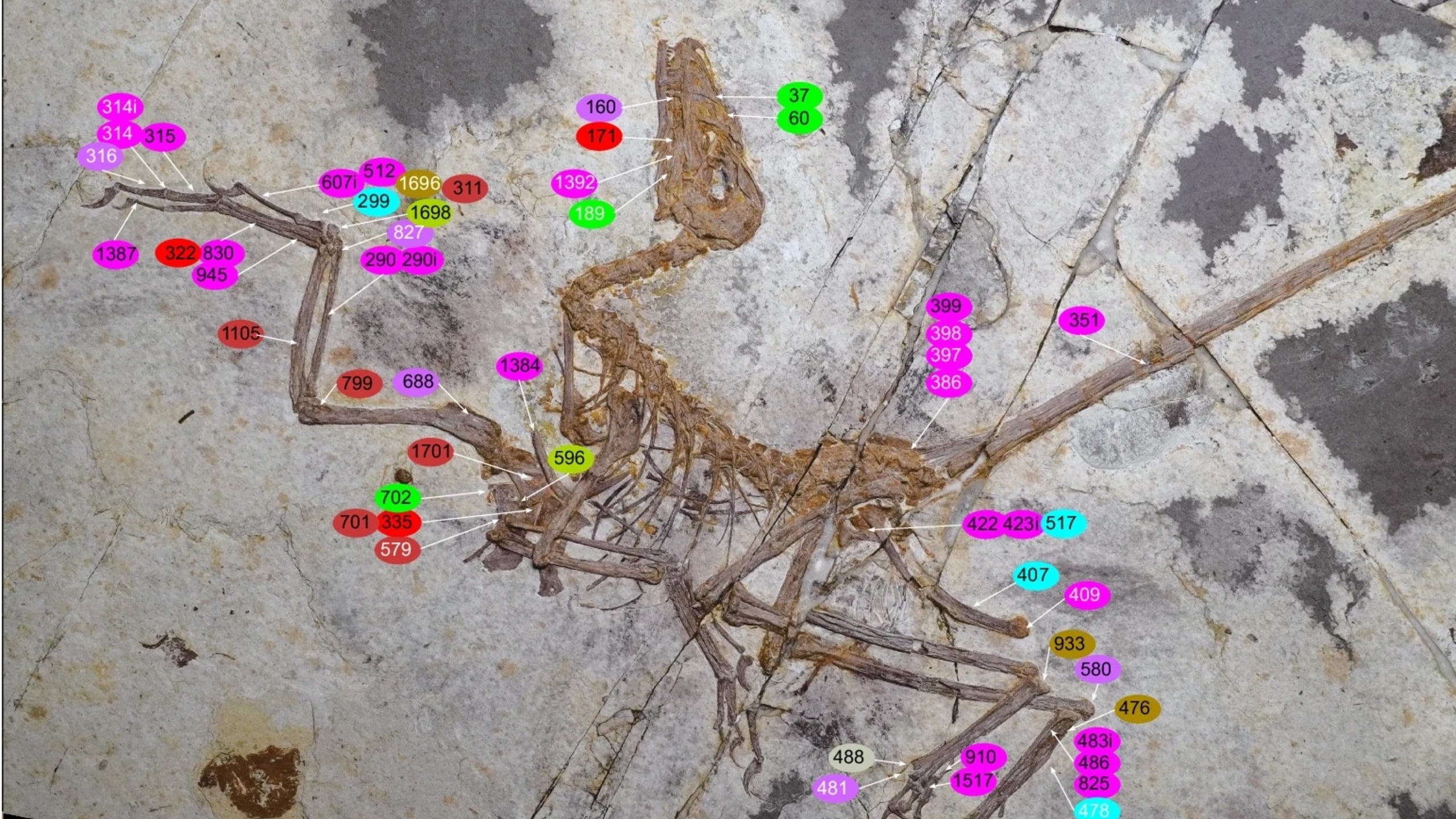
Хятадын зүүн хойд нутгаас олдсон өдтэй, нисдэг байж болзошгүй үлэг гүрвэлийн олдвор нь шувуудын нисэх чадвар хэрхэн хөгжсөн тухай онолыг эргэлзээнд оруулж байна.
Хятадын Геологийн шинжлэх ухааны академийн палеонтологич Сюри Ван болон түүний багийнхан Norellraptor barsboldi хэмээх шинэ төрлийн микрорапторыг илрүүлснээ “Nature Communications” сэтгүүлд нийтэлжээ. 57 см урттай энэхүү үлэг гүрвэл нь Paraves бүлэгт хамаарах бөгөөд урьдчилсан шинжилгээгээр түүний урд мөч болон сүүл нь нисэхэд зориулагдсан өдөөр бүрхэгдсэн байсныг тогтоосон байна. Сонирхолтой нь, энэхүү олдвор нь өсөлт нь бүрэн гүйцээгүй байхдаа үхсэн болохыг харуулж байгаа бөгөөд түүний далавчны хөгжил нь орчин үеийн шувуудынхтай харьцуулахад эрт зогсдог байсан нь тогтоогджээ.
Судлаачдын үзэж байгаагаар, микрораптор болон шувууд нисэх чадварыг нэг өвгөөс бус, харин бие даан, өөр өөр замаар хөгжүүлсэн байж болзошгүй юм. Энэ нь нисэх чадвар нь Paraves бүлгийн дунд хоёр ба түүнээс дээш удаа тусдаа хөгжсөн байх магадлалтай гэсэн таамаглалыг дэвшүүлж байна.
Энэхүү судалгаа нь нисэх чадвар бүхий үлэг гүрвэлүүдийн хувьслын замнал нь урьд өмнө төсөөлж байснаас илүү олон салаатай байсныг гэрчилж байна. Гэсэн хэдий ч энэ нь зөвхөн нэг олдвор дээр суурилсан таамаглал тул нислэгийн хувьслын нарийн механизмыг бүрэн тайлахад илүү их баримт нотолгоо шаардлагатай гэж эрдэмтэд тэмдэглэжээ.
Дэлгэрэнгүйг эх сурвалжаас харах
↓Эх сурвалжийг нээх ↓
An exquisitely preserved feathered raptor just discovered in north-eastern China could probably fly.
It’s also somewhat disrupted the evolutionary path we thought birds took to get into the air.
Norellraptor barsboldi, as the new dinosaur has been named, is a microraptor, which means it’s a small dinosaur with feathers and wings.
It’s also a member of the wider group Paraves, which includes a range of theropod dinosaurs, including some that are still thriving today: birds.
And, like its living relatives, Norellraptor could probably fly.
But close analysis of this remarkably detailed fossil suggests the evolutionary path to flight may be far more forked than we thought.
Norellraptor is described in a new paper by paleontologist Xuri Wang of the Chinese Academy of Geological Sciences and his colleagues. The paper is published in Nature Communications.
The microraptor’s body is 57 centimeters long (just over 22 inches), and based on its bones, the researchers think it hadn’t quite finished growing at the time of its death.
Its feathers are much less well-preserved than its bones, but from what the researchers could see, its forelimbs and tail seem to have been festooned with flight-related plumage, while other parts of its body were covered in straight, simple feathers.
Certain features in this Norellraptor’s bones, and a close look at where it sits in the Paraves family tree has led the researchers to question what we know about how flight evolved within Paraves.
The fact that both microraptors and birds evolved the ability to fly doesn’t necessarily mean they inherited the trait from the same ancestor.
Norellraptor‘s current position in the Paraves family tree suggests flight may have actually arisen at least twice, independently.
The steps it followed to reach the skies seem to be quite different from those taken by birds.
Another bit of evidence is that the development of the dinosaur’s forearm, or wing, seems to have stopped quite early in its life, which is the opposite of what we see in modern, flying birds.
“The sequences of flight-related novelties reconstructed along the two lineages differ consistently,” Wang and team write.
“Combined with histological evidence which might indicate a peculiar limb growth model in Microraptorinae, these results dismiss a shared developmental pattern driving the evolution of the flying dinosaurs and support multiple and independent selective regimes at the origin of the winged taxa in Paraves.”
In other words, there might have been some convergent evolution going on in the Paraves family.
That’s when two separate evolutionary groups reach a similar outcome via a totally different route. Think whales and fishes: both can swim using fins, but they arrived at that body plan from totally different paths.
Still, paleontologists can’t rely on just one fossil to rewrite evolutionary history.
A lot more evidence will be needed before scientists are convinced that birds and microraptors did indeed evolve flight entirely independently.
“Microraptorines have been advocated as models for investigating the origin and evolution of the avian flight,” the authors note.
“Yet, the evolutionary relationships between the flight apparatus of birds and the purported aerial adaptations of the microraptorines are controversial from both functional and phylogenetic perspectives.”
The research has been published in Nature Communications.

