Номхон далайн гүний Кларион-Клиппертоны бүс дэх полиметалл зангилаа бүхий экосистемээс шинжлэх ухаанд шинэ, 11,742 төрлийн вирусийг олж илрүүлсэн нь далайн гүний биологийн олон янз байдлыг танихад чухал ач холбогдолтой юм.
Чунцин их сургуулийн судлаачид Боуэн Хоу, Лилан Жан болон Хятадын Далай судлалын хоёрдугаар хүрээлэнгийн Дон Сүн нар тус бүсийн “виром”-ыг судалж, олж илрүүлсэн вирусийн 99 хувь нь өмнө нь огт бүртгэгдээгүй болохыг тогтоожээ. Уг судалгааг ирээдүйд явуулах уул уурхайн үйл ажиллагааны байгаль орчинд үзүүлэх нөлөөллийг үнэлэх суурь мэдээлэл болгох зорилгоор “Nature Communications” сэтгүүлд нийтэлсэн байна. Кларион-Клиппертоны бүс нь электроникийн үйлдвэрлэлд шаардлагатай металлын нөөцөөр баялаг тул уул уурхайн олборлолтын гол бай болоод байгаа юм.
Полиметалл зангилаанууд нь далайн ёроолын хөрсний үндсэн бүтэц болдог төдийгүй олон төрлийн бичил биетэн, амьтдын амьдрах орчин болдог. Судалгаагаар эдгээр вирус нь бактери болон архейн (archaea) төрлийн бичил биетүүдийг халдварлаж, тэдний бодисын солилцоо, дасан зохицох чадварт нөлөөлдөг болохыг тогтоожээ. Ингэснээр тэдгээр вирус нь нүүрстөрөгч, азот зэрэг элементүүдийн эргэлт болон металлын стресстэй орчинд тэсвэрлэх чадварыг зохицуулахад чухал үүрэг гүйцэтгэж байж болзошгүй байна.
Уул уурхайн олборлолт нь далайн ёроолын хөрсийг эвдэж, тунадасыг хөдөлгөх замаар экосистемд олон арван жилийн турш үргэлжлэх сөрөг нөлөө үзүүлж болзошгүйг эрдэмтэд анхааруулж байна. Одоогийн байдлаар вирус болон тэдгээрийн халдварладаг бичил биетүүд уул уурхайн үйл ажиллагааны дараа экосистемийг сэргээхэд ямар үүрэг гүйцэтгэхийг тодорхойлохын тулд нэмэлт судалгаа шаардлагатай байгаа юм.
Дэлгэрэнгүйг эх сурвалжаас харах
↓Эх сурвалжийг нээх ↓
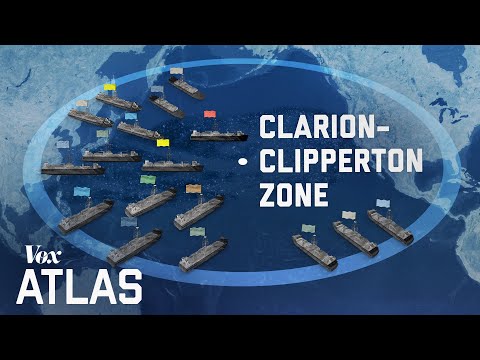
Deep in the abyss of the Pacific Ocean, the Clarion-Clipperton Fracture Zone is home to the world’s largest accumulation of polymetallic nodules.
Several countries are exploring it intensively because of the potential of its mineral wealth, but it’s also an incredibly unique habitat, with many recent scientific expeditions bringing back reports of never-before-seen lifeforms.
A new study adds a huge array of viruses to the biodiversity of this contested region, 99 percent of which have never been documented before.
The researchers – Bowen Hou and Lilan Zhang, of Chongqing University, and Dong Sung, of China’s Second Institute of Oceanography – investigated the ‘virome’ of the Clarion-Clipperton to establish what they call a “vital pre-mining baseline of microbial ecosystem for future environmental impact assessments.”
They’ve published their results in Nature Communications.
Polymetallic nodules are at the center of a race to mine the deep sea, because they’re full of metals that can be used to make electronics.
The International Seaboard Authority has granted 31 deep-sea mineral mining exploration contracts. Seventeen of these are in the Clarion-Clipperton Zone; five are held by China, which is probably why this study was funded by several of the country’s scientific agencies.
But polymetallic nodules also form the foundation of many deep-sea ecosystems, including those in the Clarion-Clipperton Zone. Where much of the deep-sea floor is a thick, fine mud, these solid nodules are literally the ground upon which many creatures build their lives.
They form gradually, with manganese and other metals like cobalt, nickel, lithium, and zinc precipitating from the seawater to build layers around a central nucleus (a microscopic bit of shell, tooth, or rock, for example).
For some speedy nodules, the layers of metal accumulate at a rate of about 250 millimeters per million years, while other kinds grow by one to five millimeters per million years.
The new study suggests viruses may play an important role in the biogeochemical processes in the sediments of polymetallic nodule fields.
Almost all of the 11,742 distinct viruses Hou and team discovered are entirely new to science, having very little overlap with other deep-sea habitats.
The sediment core samples for this study were collected in 2023 and 2024, and then the researchers extracted DNA and RNA for sequencing.
Then, they compared the data with samples collected from other parts of the deep ocean, and looked more closely at what the viruses might actually be doing with all these genes.
Viruses are an underappreciated component of ecosystems. The jury is still out on whether they even qualify as ‘alive’, but there are no doubts about their ability to influence life on Earth.
Every virus needs a host, and in the Clarion-Clipperton Zone, many of the viruses the scientists found seemed specialized for infecting prokaryotic creatures: bacteria and archaea.
These simple, single-celled microbes are involved in cycling carbon, nitrogen, phosphorus, sulfur, and even metals. And the viruses they carry may have a big influence on those ecosystem-shaping processes.
Viruses are known for being able to tweak the genetic machinery of their hosts, and have entirely re-routed the course of many species in this way.
“By infecting key functional microbes and encoding auxiliary metabolic genes,
viruses may modulate host metabolism and survival during infection, with
potential implications for biogeochemical processes in polymetallic nodule
field sediments,” the authors write.
It appears the deep-sea viruses found in the Clarion-Clipperton have also left their mark on their hosts, potentially providing the blueprint for coping with metal stress.
How all of this will be affected by mining activities, if they proceed, is unclear.
“Mining activities will induce physical disturbance, resuspension, and redeposition of surface sediments, and long-term disturbance experiments have shown that
the effects of such disturbance on nodule-field sediments can persist
for decades,” the authors write.
“Under this scenario, viral populations and functional modules shared between deeper and surface sediments could provide a potential source for partial reassembly of surface viral communities after disturbance.”
But, they caution, much more research is needed to how these viruses, the hosts they infect, and the ecological functions they may serve would be affected by mining if it were to go ahead.
The research has been published in Nature Communications.
This article was fact-checked by Fiona MacDonald and edited by Fiona MacDonald. While we pride ourselves on our process, we are only human. If you spot a mistake, please let us know.

