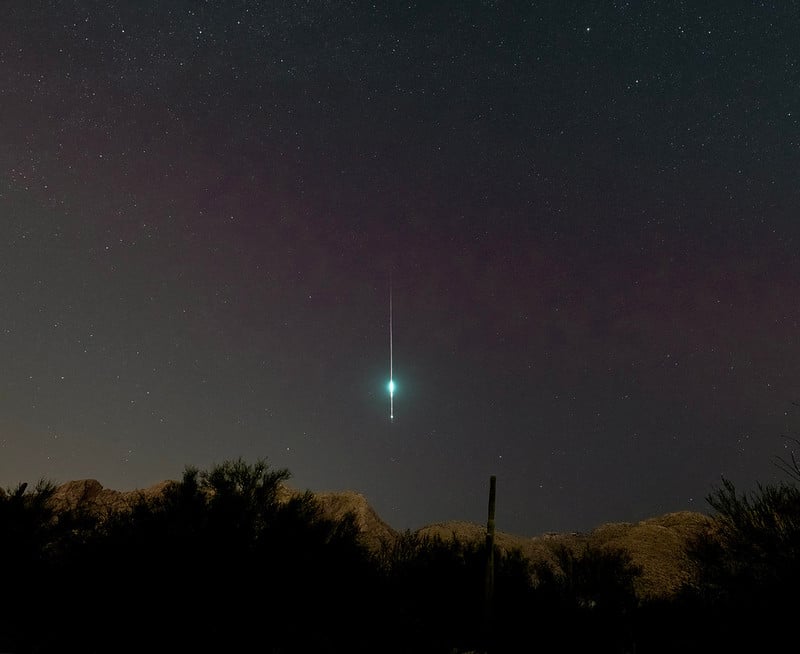
Аравдугаар сарын турш дэлхийн агаар мандалд тохиох хоёр томоохон солирын урсгал нь одон орон сонирхогчдод тэнгэрийн үзэгдлийг ажиглах боломжийг олгож байна.
Оринид солирын урсгал нь жил бүр тохиодог хамгийн алдартай үзэгдлүүдийн нэг бөгөөд 1P/Halley сүүлт одны үлдэгдлээс үүдэлтэй юм. 2026 онд энэхүү солирын урсгалын оргил үе аравдугаар сарын 21-ний орчимд тохиох төлөвтэй байгаа бөгөөд цагт 20 орчим солир унах магадлалтай байна. Бархасбадь гаригийн таталцлын нөлөөгөөр энэхүү урсгалын эрчимд өөрчлөлт ордог бөгөөд аравдугаар сарын сүүлчээр уг үзэгдэл идэвхтэй үргэлжилдэг.
Үүний дараа аравдугаар сарын сүүлээс арваннэгдүгээр сарыг хүртэл Таурид солирын урсгал идэвхждэг бөгөөд үүнийг 2P/Encke сүүлт одтой холбон үздэг. 3.3 жилийн тойрог замтай, хамгийн богино хугацаанд нарыг тойрдог энэхүү сүүлт од нь “Halloween-ийн галт бөмбөлөг” хэмээн нэрлэгддэг тод солируудыг үүсгэдэг. Таурид солирууд нь харьцангуй удаан хөдөлгөөнтэй, тэнгэрт урт мөр үлдээдэг онцлогтой бөгөөд 2027 оны хоёрдугаар сарын 10-нд сүүлт од наранд ойртох үйл явцтай холбоотойгоор энэ жил үзэгдлийн идэвх нэмэгдэж болзошгүй байна.
Солир ажиглахад тусгай төхөөрөмж шаардлагагүй бөгөөд зөвхөн тэвчээр болон харанхуй, тодорхой тэнгэр чухал юм. Камерын өргөн өнцгийн дуран болон интервалометр ашиглан солирын урсгалыг автоматаар буулгах боломжтой. Оринид нь Орион болон Ихэр ордны чиглэлээс, харин Таурид солирын урсгал нь Үхрийн орд болон Хилэнт загасны ордын чиглэлээс тус тус ажиглагддаг байна.
Дэлгэрэнгүйг эх сурвалжаас харах
Эх сурвалжийг нээх ↓
Two annual meteor streams offer good cause to watch the sky in October.
Fall meteor season has begun. Late October not only sees dusk falling ever earlier as ghouls and goblins walk the Earth on Halloween, but it also sees the peak of two fine annual meteor showers kicking off Halloween season: the Orionid and Taurid meteor showers.
The Orionids always make the top of the dozen or so annual meteor showers worth watching for. The source of the Orionids is that most famous of all periodic comets, 1P/Halley. On a 75 year orbit, Halley just reached aphelion over 35 Astronomical Units from the Sun out beyond the orbit of Neptune on December 9th, 2023. Halley’s Comet is actually the source of a second annual meteor shower, the springtime Eta Aquariids. Halley’s Comet now begins its long plunge sunward towards its next perihelion apparition in 2061.
Halley’s Comet, imaged from Arequipa Observatory in Peru in 1910. Credit: Public Domain.
In 2026, the Orionids are expected to top out at a Zenithal Hourly Rate (ZHR) of 20 meteors per hour. Jupiter seems to play a role in modifying the Orionid meteor stream, and we tend to see an enhanced uptick from the shower about mid-decade or so, as last occurred in 2006. The expected peak for the shower arrives around October 21st, but the shower is also active for most of the last half of October.
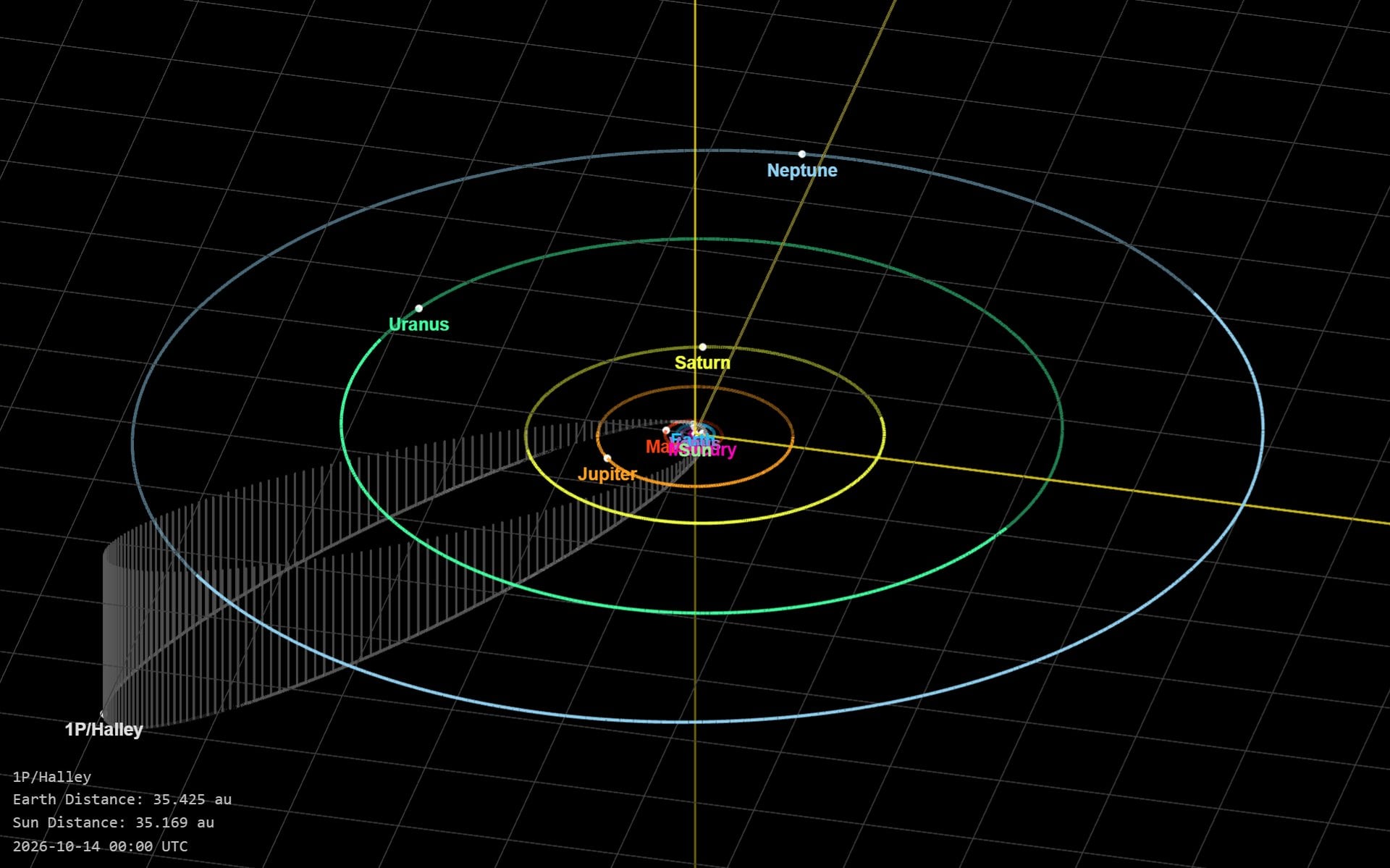 The orbit of Halley’s Comet, plus its position in 2026. Credit: NASA/JPL
If you can trace a meteor back to the club of Orion the Hunter and its junction with Gemini the Twins, then you’ve probably caught sight of an Orionid.
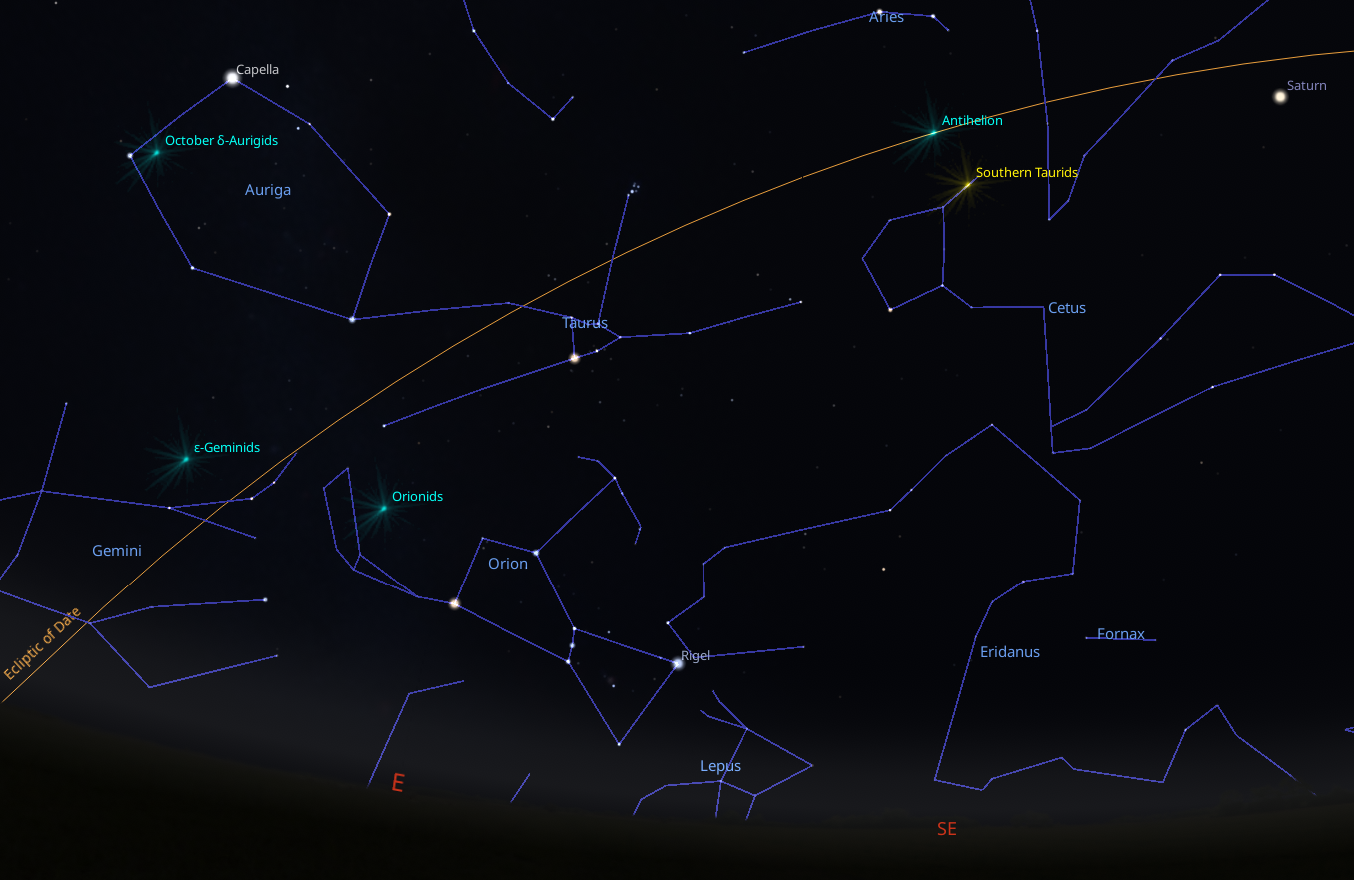 The Orionid, Taurid and antihelion source radiants in the sky. Credit: Stellarium
In 2026, the Moon is waxing gibbous at the Orionids’ peak, just 5 days prior to the Full Hunter’s Moon on October 26th.
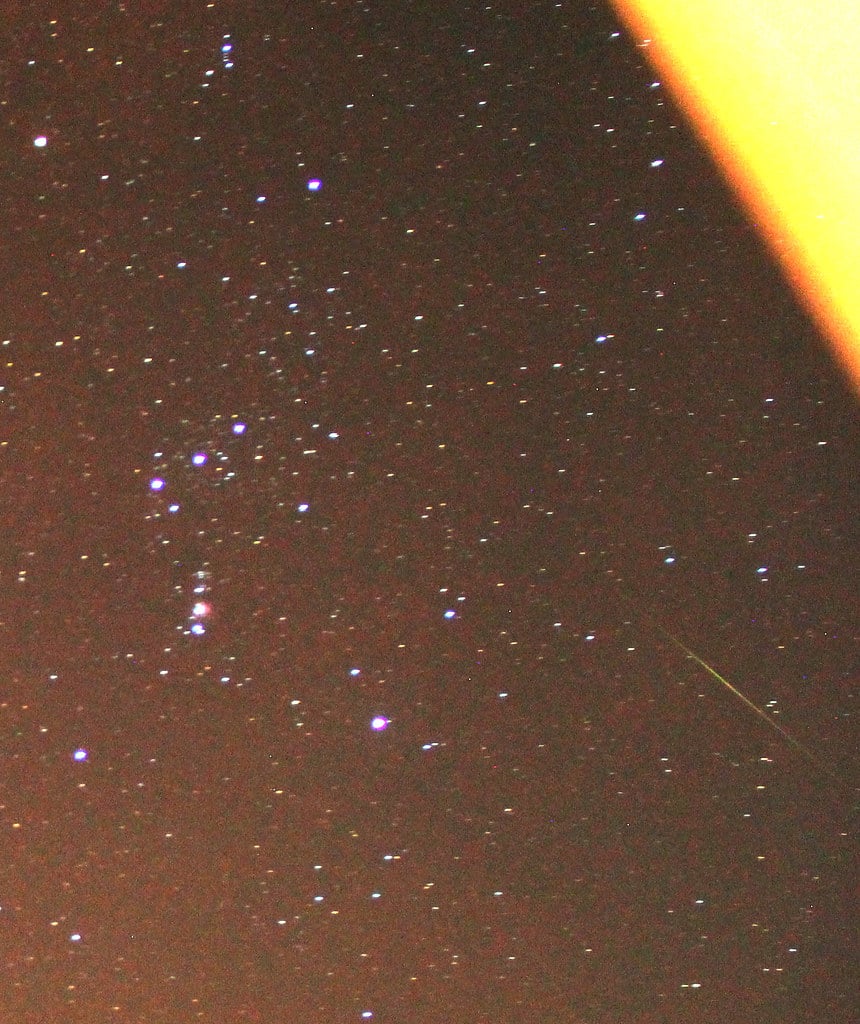 A 2022 Orionid. Credit: Filipp Romanov
Next up, the Taurid meteor stream is active in late October into November. These are the notorious ‘Halloween Fireballs’ which often light up social media as late Fall nights draw pedestrian skywatchers out after hours. The source of the Taurids is the second periodic comet on the tally, 2P/Encke. This comet also has the distinction of having the shortest known orbit of just 3.3 years.
Clearly, there’s something intriguing about the complex debris stream from Comet Encke. While the Taurids barely top a ZHR of 5 on most years barely above the background sporadic rate, they are also a prodigious producer of fireballs. Taurids are also slow movers, approaching the Earth from behind and frequently leaving long, stately trains across the sky.
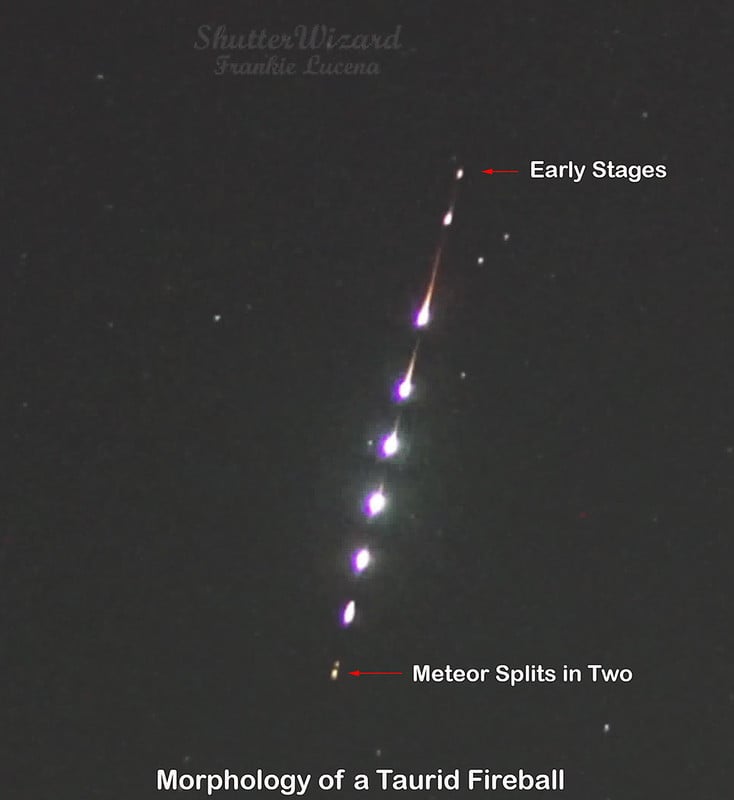 The morphology of a 2022 Taurid fireball. Credit: Frankie Lucena
2P/Encke reaches perihelion in just a few months on February 10th 2027, so we could be due for an enhanced showing from the northern and southern Taurids this year. Note that in late October, the antihelion source where many sporadics hail from is nearby along the ecliptic plane in the constellation Aries the Ram, while the Northern Taurid radiant drifts from Taurus into Aries, and the Southern Taurid point source lies nearby in Cetus the Whale.
Meteor watching requires nothing more than a set of working ‘Mk-1 eyeballs’ and patience. A camera with a wide-angle lens equipped with an intervalometer can automate the meteor capturing process, leaving you free to watch the sky.
It’s great to see these ghostly remnants of Halley’s and other forgotten comets of yore silently piercing the night. Be sure to watch for October meteors, and ponder the returns of two historic comets.

