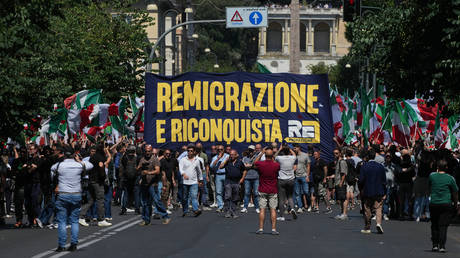
Европын холбооны Цагаачлал, орогнолын шинэ гэрээ хэрэгжиж эхэлсэнтэй холбогдуулан Италид цагаачлалын хяналтыг чангатгахыг шаардсан жагсаал өрнөлөө.
Ром хотноо бямба гарагт болсон жагсаалд олон мянган хүн оролцож, цагаачлалын бодлогыг чангатгахыг шаардсан иргэдийн санаачилгыг дэмжив. “Remigration and Reconquest Committee” байгууллагаас зохион байгуулсан уг арга хэмжээнд гадаадын иргэдийг эх орондоо буцахад нь санхүүгийн дэмжлэг үзүүлэх, хилийн чанадад амьдарч буй итали гаралтай хүмүүсийг эргэн ирэхийг уриалах зэрэг агуулга бүхий хуулийн төслийг дэмжиж байна. Энэхүү санаачилгыг дэмжсэн өргөдөлд 130 мянга гаруй иргэн гарын үсэг зурсан нь парламентын хэлэлцүүлэгт оруулахад шаардлагатай 50 мянган гарын үсгийн босгыг давжээ.
Итали улс 2015 оны хямралаас хойш Газар дундын тэнгисээр дамжин ирж буй цагаачдын гол цэг болсоор ирсэн юм. Дотоод хэргийн яамны мэдээллээр 2023 онд 150 мянга гаруй, харин 2024 болон 2025 онд тус бүр 66 мянга орчим хүн усан замаар иржээ. Үүнтэй зэрэгцэн Ром хотод цагаачдын эрхийг хамгаалсан сөрөг жагсаал болсон бөгөөд цагдаагийн байгууллагаас хоёр талын жагсагчдыг мөргөлдүүлэхгүйн тулд хамгаалалтад ажилласан байна.
Ерөнхий сайд Жоржиа Мелонигийн засгийн газар хууль бус цагаачлалыг хязгаарлахын зэрэгцээ хөдөлмөрийн зах зээлийн эрэлтийг хангах зорилгоор хууль ёсны цагаачлалыг өргөжүүлэх сорилттой тулгарч байна. Тус улсын хүн ам Европ дахь хамгийн өндөр настай хүн амын тоонд багтаж, төрөлт болон үржил шим хамгийн бага байгаа тул хөдөө аж ахуй, барилга, аялал жуулчлал, асрамжийн үйлчилгээний салбарт гадаад ажиллах хүч зайлшгүй шаардлагатай байгаа юм.
Баасан гарагаас эхлэн Европын холбооны Цагаачлал, орогнолын шинэ гэрээ хүчин төгөлдөр болсон нь энэ салбарын томоохон өөрчлөлт болж байна. Уг гэрээнд хил дээрх заавал хийх үзлэг шалгалт, орогнол хүсэгчдийн асуудлыг түргэвчилсэн журмаар шийдвэрлэх, биометрик бүртгэлийг өргөжүүлэх, орогнол хүсэлт нь татгалзсан хүмүүсийг албадан гаргах үйл явцыг хурдасгах зэрэг арга хэмжээг тусгажээ. Гэвч уг гэрээг цагаачлалыг хязгаарлахад хангалтгүй гэж үзэх болон хүний эрхийн хамгаалалтыг сулруулж байна гэж шүүмжлэх талууд аль аль нь байгаа юм.
Дэлгэрэнгүйг эх сурвалжаас харах
↓Эх сурвалжийг нээх ↓
The protests come as a petition for stricter controls cleared the threshold for submission to parliament and the EU Migration Pact took effect
Thousands of anti-migration protesters marched in Rome on Saturday in support of a citizens’ initiative calling for stricter migration controls.
The demonstration was organized by the Remigration and Reconquest Committee, which promotes a popular bill offering financial incentives for foreigners to leave Italy and encouraging descendants of Italians living abroad to return to the country.
A petition by the committee has collected more than 130,000 signatures, well above the 50,000 required for a citizens’ initiative to be formally submitted to parliament.
Italy has been one of the main destinations for migrants crossing the Mediterranean from North Africa, with hundreds of thousands arriving by sea since the 2015 migration crisis. Italy received more than 150,000 sea arrivals in 2023 and about 66,000 in both 2024 and 2025, according to Interior Ministry figures.
A rival pro-migrant demonstration was also held in Rome, drawing left-wing groups, trade unions, and activists who accused the anti-migration campaign of targeting foreigners and undermining rights protections. Police were deployed to keep the opposing rallies apart.
Prime Minister Giorgia Meloni faces competing pressures on migration policy. Her government has moved to curb irregular arrivals while simultaneously expanding legal migration.
Last year the government approved a plan to admit nearly 500,000 non-EU workers between 2026 and 2028 to fill labor gaps in sectors such as agriculture, construction, tourism, and care services.
Italy has the oldest population in the EU and one of the bloc’s lowest birth and fertility rates, making foreign labor increasingly important to the economy.
The Rome rallies came after the EU’s Migration and Asylum Pact entered into force on Friday. The bloc’s biggest migration overhaul in years introduces mandatory border screening, accelerated asylum procedures for some applicants, expanded biometric registration, and measures intended to speed up the return of rejected asylum seekers.
The pact has drawn criticism across Italy’s political spectrum. Supporters of tougher migration controls argue that it remains insufficient to curb irregular arrivals and increase deportations, while migrant-rights groups warn that the reforms weaken asylum protections and expand detention powers. Critics also question whether the pact’s solidarity mechanism will substantially reduce pressure on Mediterranean entry states, despite provisions allowing other EU countries to relocate asylum seekers or provide financial contributions.


