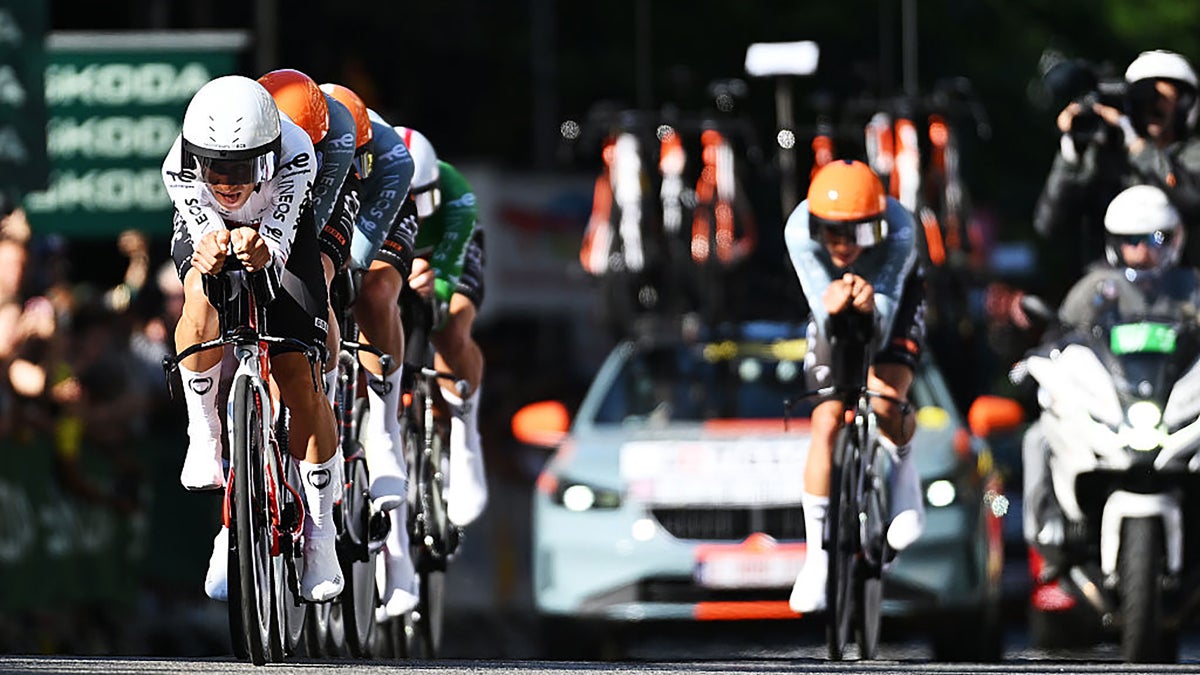
Испанийн Барселона хотноо эхэлсэн олон улсын дугуйн уралдааны үеэр тамирчид хэт халууныг даван туулах өвөрмөц аргыг хэрэглэжээ.
2026 оны долдугаар сарын 4-ний бямба гарагт эхэлсэн Tour de France тэмцээний эхний гурван гараа Испани улсад зохион байгуулагдав. Барселона хотын агаарын хэм 32 хэмээс (90 градус) давсан тул Netcompany-Ineos багийнхан уралдааны өмнө гараа хүйтэн усанд дүрж хөргөх аргыг сонгосон байна. Тэд 8.8 хэм бүхий хүйтэн усаар дүүргэсэн энгийн хуванцар савнуудыг ашиглан биеийн халуунаа бууруулжээ.
Уг баг нь өмнө нь Team Sky нэртэй байхдаа технологийн дэвшил, нарийн төлөвлөгөө, тухайлбал захиалгат гудас, дэр болон хоолны дэглэм зэрэг “marginal gains” буюу өчүүхэн давуу талыг бүрдүүлэх арга барилаараа алдартай байв. Гэвч энэ удаагийн тэмцээнд тэд харьцангуй энгийн, бага зардалтай хөргөх аргыг ашигласан нь олны анхаарлыг татлаа.
Хэдийгээр багийнхан уг арга барилаа нууцалж байсан ч Барселонад болсон хувийн цаг хэмжих уралдаанд Visma-Lease-a-Bike багт ялагдаж, найман секундын зөрүүтэй хоёрдугаарт орсон байна. Энэ нь тэмцээний түүхэн дэх технологийн өндөр хөгжүүлэлтээс илүүтэй цаг уурын хүнд нөхцөлд дасан зохицох шийдэл чухал болохыг харуулсан үйл явдал боллоо.
Дэлгэрэнгүйг эх сурвалжаас харах
↓Эх сурвалжийг нээх ↓
The 2026 Tour de France kicked off this past Saturday, July 4, with a team time trial through the streets of Barcelona—yes, that Barcelona. This year the Tour’s first three stages were held in Spain.
And as anyone who took a college term abroad in Europe will tell you, July is unbelievably sweaty along Spain’s Mediterranean coast. Temperatures in Barcelona topped 90 degrees for the Tour’s opener, and the soaring heat produced one of the more hilarious moments in recent Tour memory.
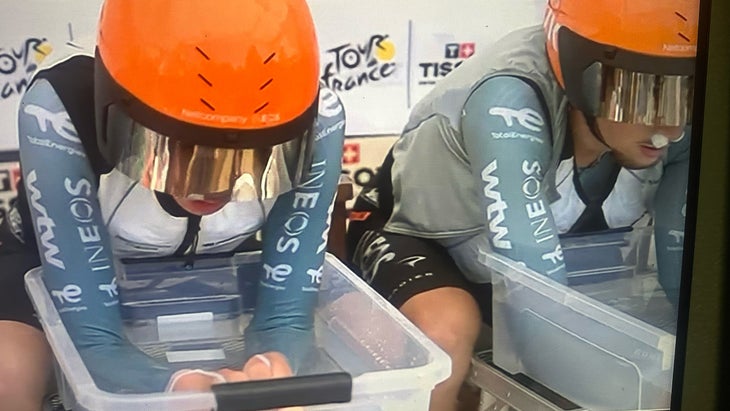
Yes, it involves the above image. I want you to take a break from reading and stare deeply at the screengrab. Once your brain asks What the hell am I looking at? you can return.
OK, these are riders on the British team Netcompany-Ineos, resplendently clad in their aerodynamic helmets and bodysuits, preparing for the scorching time trial by soaking their forearms in chilly water as a way to beat the Barcelona heat.
Context is everything in both cycling and comedy, so please let me explain to you all why this photograph is just about the funniest thing ever for a seasoned Tour de France nerd like myself.
A decade ago, Team Netcompany-Ineos was named for its previous sponsor, British broadcaster Sky TV. Team Sky steamrolled the Tour, winning the race’s coveted yellow jersey seven times between 2012 and 2019 with four different riders: Bradley Wiggins (2012), Chris Froome (2013, 2015, 2016, and2017), Geraint Thomas (2018), and Egan Bernal (2019). It was an unprecedented era of dominance in Tour history.
Team Sky was managed by a cadre of British coaches. You might assume that the country’s distinct cultural love of understated politeness and self-deprecation would prompt them to adopt an outward attitude of humbleness or modesty. WRONG. Team Sky’s bosses were arrogant as hell.
In interviews, public addresses, and even Harvard Business Review stories, Team Sky’s bosses adopted an attitude of—and I’m paraphrasing here—We’re so smart, nyah nyah nyah nyah nyah. I was the editor of the cycling magazine VeloNews at the time, and I had a front-row seat for the team’s cocky attitude.
This vibe stemmed from Team Sky’s dogged pursuit of so-called “marginal gains” as a way to win. Again, I’m paraphrasing here, but the overall sentiment was that amid standardizations in racing strategies, the best way to win the Tour de France was to pursue teeny tiny advantages on the margins of the sport, such as with gear, training, and even pillows.
Pillows? Yep. When traveling at the Tour, Team Sky brought its own mattresses, pillows, and duvet covers for its riders, arguing that the beds across France’s network of hotels were le yuck, and even an hour of extra sleep might spell the difference between victory and defeat. The squad brought its own laundry machines to the races, too, because French laundromats were supposedly contaminated with God-knows-what, and cleaner-than-normal Lycra bodysuits represented another marginal gain.
Team Sky pursued far too many other marginal gains to list all in one place. The team hired an army of chefs and nutritionists, who made sure that every morsel of food went toward a rider’s recovery and energy stores. The squad worked with bike brands to develop more efficient chain lube, bike seats, bodysuits, and of course bicycles. Every piece of fancy new gear—save for the mattresses and duvets—got tested in a wind tunnel and weighed to within a millionth of a gram.
“The whole principle came from the idea that if you broke down everything you could think of that goes into riding a bike, and then improved it by 1 percent, you will get a significant increase when you put them all together,” David Brailsford, the team’s primary architect, told theBBC in 2012.
Each new marginal gain was the subject of an interview or think piece, and these Type-A doodads were often unveiled in dramatic ways online. Team Sky’s very public focus on marginal gains, of course, obfuscated the fact that the squad had the biggest budget in the sport, and outspent the other Tour de France teams by a wide margin.
So this brings us back to 2026 and Barcelona. In a public display that was very Team Sky-coded, Netcompany-Ineos unfurled its pre-time-trial marginal gain shortly before the race started. Reporters from the website Cyclingnews were there to document the whole thing:
“A five-man team arrived at the warm-up area behind the start ramp with a trolley full of gear. A crowd assembled, watching on with confusion, as the crew proceeded to unfurl eight folding tables, place them in front of a row of chairs, put giant plastic tubs on top of them and fill them with water measured to a specific 8.8 degrees Celsius (47.84 degrees Fahrenheit).”
No, there was no customized pillow. No wind tunnel-tested bike lube. No battalionof expensive chefs doling out optimized meals. Just, like, some cold water sloshing around in the type of cheap plastic storage bins that you or I might use to store obsolete phone chargers or cat food. The setup looked like a first grader’s science fair exhibit. Or what you’d come away with after a disappointing trip to The Container Store.
Here’s the best part. Cyclingnews reporters asked the team representatives what the heck was going on with the tubs full of water, only to find the staffers tight-lipped.
“You’ll see,” a team staffer told them.
Alas, how far the mighty have fallen. In Barcelona, Netcompany-Ineos lost the individual time trial, finishing eight seconds behind winners Visma—Lease-a-Bike.
The post Temps Hit 90 Degrees at the Tour de France. One Team Found a Low-Tech Way to Cool Off. appeared first on Outside Online.

