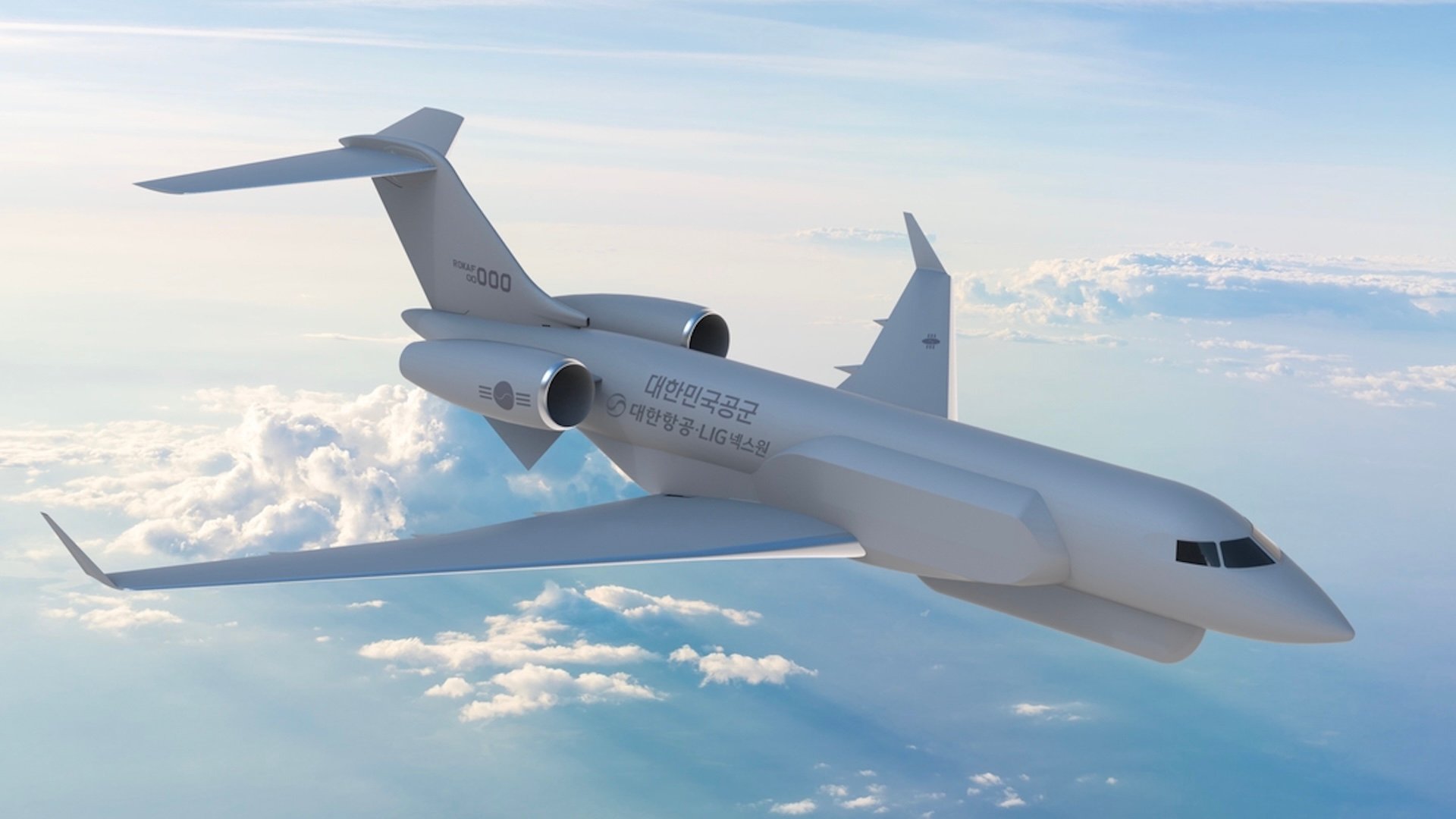
БНСУ-ын Батлан хамгаалах яам агаарын орон зайд дайсны дохиог алсаас саатуулах чадвартай хоёр ширхэг Bombardier Global 6500 онгоцыг худалдан авах гэрээ байгуулснаа зарлав.
Канадын Bombardier Defense компаниас нийлүүлэх эдгээр онгоцыг Korean Air компани цахим дайны тусгай зориулалтын хөлөг болгон тоноглох юм. Энэхүү төсөл нь Сөүл хотын аль хэдийн захиалсан агаарын эргүүл, хяналтын (AEW&C) дөрвөн онгоцыг нөхөж, агаарын довтолгооноос хамгаалах сүлжээг бүрэн хяналтад авах стратегийн зорилготой. БНСУ-ын Батлан хамгаалахын худалдан авалтын захиргаа (DAPA) 2025 оны дөрөвдүгээр сард баталсан энэхүү хөтөлбөрт 2034 он хүртэл 1.2 тэрбум ам.долларын хөрөнгө оруулалт хийхээр төлөвлөжээ.
Цахим дайны зориулалттай эдгээр онгоц нь дайсны агаарын довтолгооноос хамгаалах радар, команд удирдлагын төвүүд болон харилцаа холбооны сувгуудыг алсаас саатуулах чадвартай. Энэ нь агаарын ажиллагааны үеэр өөрийн нисэх хүчний аюулгүй байдлыг хангах, дайсны хамгаалалтын бүсэд нэвтрэх коридор үүсгэхэд чухал үүрэг гүйцэтгэнэ. Онгоцнууд нь AESA технологи бүхий өндөр хүчин чадалтай антеннуудаар тоноглогдох бөгөөд Солонгосын хойгийг бүхэлд нь хамрах 200 км-ээс багагүй зайд дохио саатуулах чадвартай байх шаардлагыг тавьж байна.
БНСУ-ын зэвсэгт хүчин стратегийн бие даасан байдлаа нэмэгдүүлэх хүрээнд АНУ-аас хараат байдлаа бууруулж, дотоодын батлан хамгаалах аж үйлдвэрийг хөгжүүлэхэд анхаарч байна. Шинэ SOJ онгоцнуудаас гадна тус улс Dassault Falcon 2000LXS загварт суурилсан Baekdu II тагнуулын онгоцуудыг хүлээн авахаар ажиллаж байгаа юм. Эдгээр арга хэмжээ нь Хойд Солонгосын агаарын довтолгооноос хамгаалах системүүд улам боловсронгуй болж буй нөхцөлд БНСУ-ын цэргийн бэлэн байдлыг хангах стратегийн чухал хэсэг гэж үзэж байна.
Дэлгэрэнгүйг эх сурвалжаас харах
↓Эх сурвалжийг нээх ↓
South Korea will further boost its airborne electronic warfare capabilities, buying another two platforms based on the Bombardier Global 6500 bizjet. These will eventually complement the four Global 6500-based airborne early warning and control (AEW&C) aircraft that Seoul has already ordered, and which you can read about here.
Canada’s Bombardier Defense announced today that its Global 6500 had been selected for a second South Korean special mission aircraft program. The aircraft have been acquired by Korean Air, which will modify them for the electronic warfare role. Specifically, these will be standoff jammer (SOJ) aircraft, intended to disrupt enemy electromagnetic signals from a safe distance.
“TheGlobal 6500aircraft is in demand around the world because of its performance and versatility, and we’re extremely proud that it was chosen for two very advanced, yet different defense missions in South Korea,” said Michael Anckner, vice-president of worldwide sales at Bombardier Defense. “This aircraft is trusted because of its proven military track record, yet it remains highly adaptable as defense needs evolve.”
The Global 6000 series is already a popular choice for military special missions adaptations. Outside of South Korea, prominent examples include the SaabGlobalEyeAEW&C aircraft, as well as the German Luftwaffe’s PEGASUS signals intelligence (SIGINT) aircraft. Meanwhile, the U.S. Air Force opted for a Global 6000-based solution for itsE-11A Battlefield Airborne Communications Node(BACN) program, and the U.S. Army ordered a Global 6500-based solution for itsME-11B High Accuracy Detection and Exploitation System(HADES), which will be the service’s next-generation intelligence-gathering aircraft.

All these applications are aided by the Global’s relatively high-altitude flight profile, which provides a significant standoff capability, increasing line of sight for the sensors, and helping keep the jet and its onboard operators further away from enemy air defense systems. In general, bizjet platforms are also becoming increasingly cost-effective, helped by steady improvements injet engine technology.
Both Korea Aerospace Industries (KAI) and Korean Air had presented offerings for the SOJ to the Defense Acquisition Program Administration (DAPA), which serves as the central administrative agency of the South Korean Ministry of National Defense.
DAPA had approved the plan for the development of the so-called Block I Electronic Warfare System Development Project in April 2025, with around $1.2 billion earmarked for the program by 2034.
As of September last year, KAI was teamed with Hanwha Systems and was pitching a design based on the Global 6500 airframe. Meanwhile, Korean Air was partnered with LIG Nex1 and, according to some reports, was proposing a platform based on the Gulfstream G550. Other reports suggested that both teams favored the Bombardier bizjet, which provides commonality with the new South Korean AEW&C aircraft.
KAI had argued that it was the best fit for the requirement based on its previous involvement in the Peace Eye program, which provided South Korea with a version of the E-7A Wedgetail AEW&C aircraft, as well as the forthcoming Baekdu II intelligence, surveillance, and reconnaissance (ISR) platform. KAI is also an established airframer, building the T-50/TA-50/FA-50 series as well as the KF-21 fighter and various helicopters.
Meanwhile, Korean Air is involved in heavy aircraft maintenance, military aircraft upgrades, and the development of drones, while LIG Nex1 developed advanced electronic warfare systems for the KF-21, as well as for warships, submarines, and reconnaissance aircraft.
From relatively early on, there had been indications that the Korean Air bid was favored. Reports in the South Korean media said that the proposal “scored higher” in the bid evaluation process by DAPA, which had been “evaluating each company’s electronic warfare equipment technology and airframe integration capability, among other factors.”
In the past, DAPA had said that the Republic of Korea Air Force (ROKAF) required four aircraft capable of “paralyzing enemy air-defense networks and wireless command and communication systems in times of crisis.” While Bombardier has said it is providing two Global 6500s for the program, it remains possible that more might be added. We have approached the company for clarification.
South Korea becomes the latest nation to invest in an SOJ platform, reflecting the growing interest in these capabilities, especially as higher-end and longer-range air defense systems proliferate.
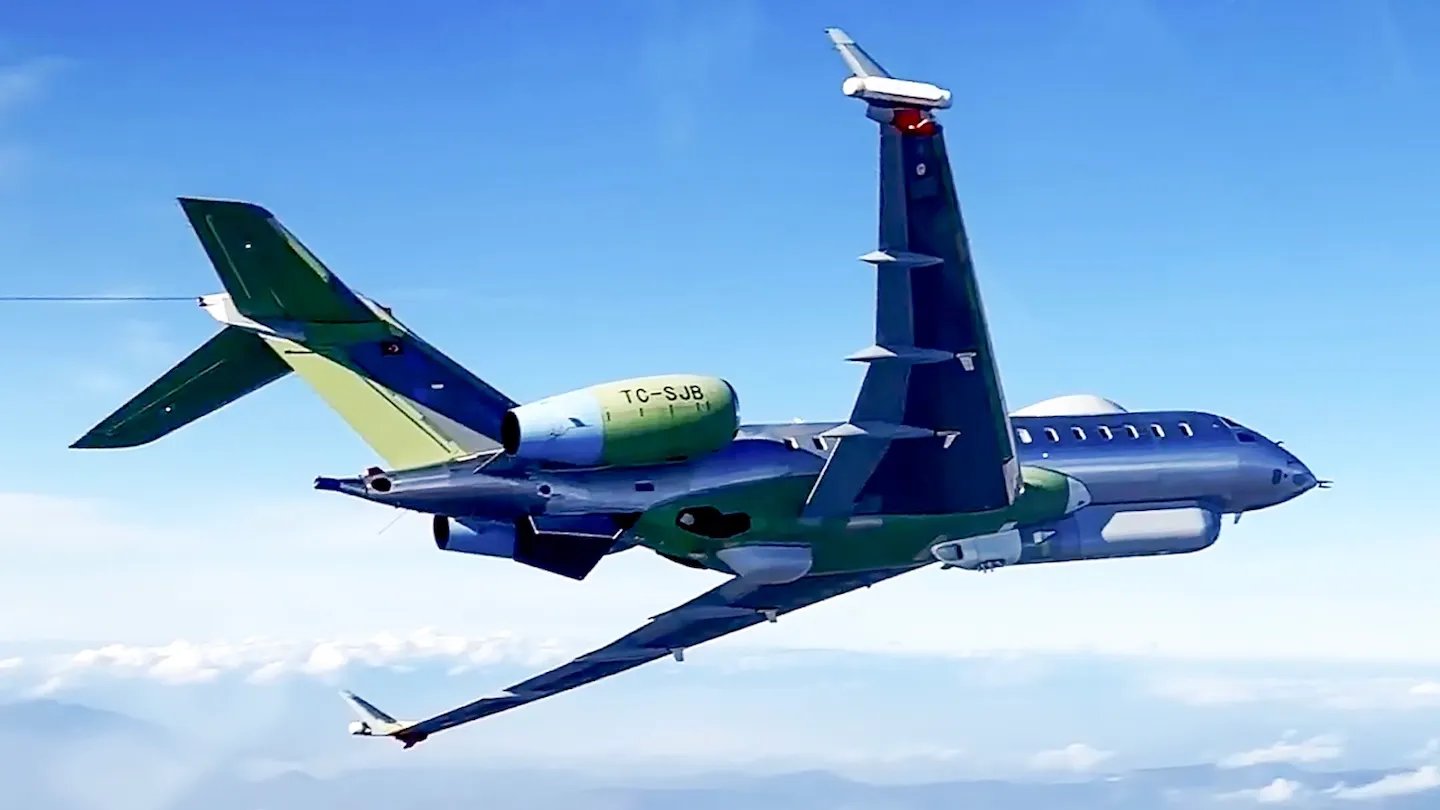
The U.S. Air Force has introduced the EA-37B Compass Call as a standoff electronic attack platform, while earlier this year we looked in detail at Turkey’s HAVA SOJ, based on the Global 6000 airframe and intended to undertake a similar kind of mission.
Typically, SOJ platforms are intended to support air operations by suppressing enemy air defense radars, disrupting command-and-control networks, and interfering with communications through long-range deception and noise jamming, all while remaining outside hostile airspace. By degrading an adversary’s sensing and coordination capabilities, they enable friendly aircraft to penetrate defended airspace through safer access corridors. In modern warfare, the effective use of SOJ platforms has become a critical capability, serving as a force multiplier and delivering significant asymmetric operational advantages.
In addition to jamming systems, the SOJ aircraft generally also have a surveillance capability, with passive electronic support measures (ESM) equipment, while some might include an onboard radar or other sensors. ESM, which is a passive system, can geolocate threats and communications nodes, and that data can be shared in real time with tactical aircraft and missile units to prosecute strikes.
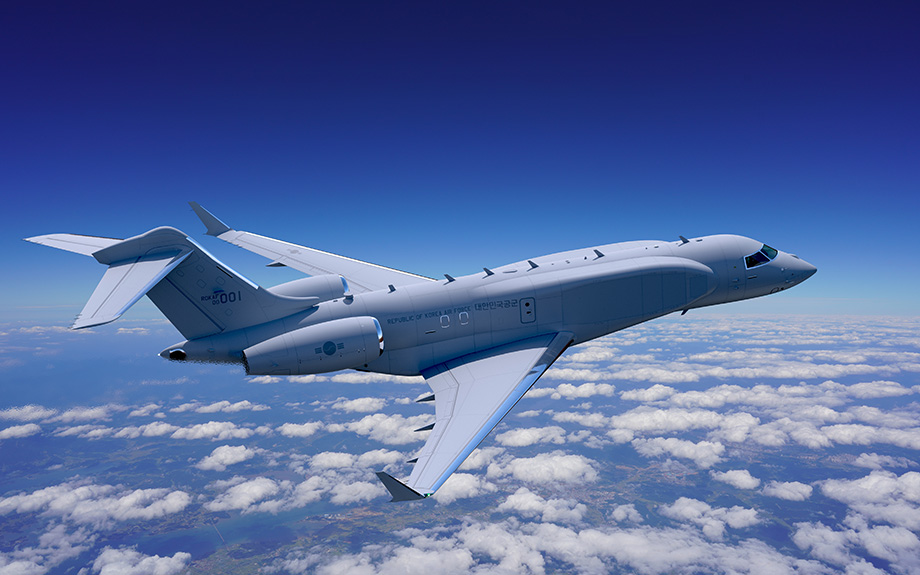
In its rendering of the aircraft, Korean Air presented a platform with prominent fairings alongside the fuselage sides as well as a canoe-type fairing below the fuselage. The fuselage fairings likely contain conformal antennas, which may well be associated with active electronically scanned array (AESA) technology.
AESAs can be used to send outhighly focused beams of electromagnetic energyto jam hostile radars and other radio-frequency sensors and emitters in the air, on land, and at sea. This is a capabilitywe have talked about beforein relation to the U.S. Air Force’s EA-37B. Potentially, these same AESA antennas could be used to trigger cyber attacks, a capability you can read more abouthere.
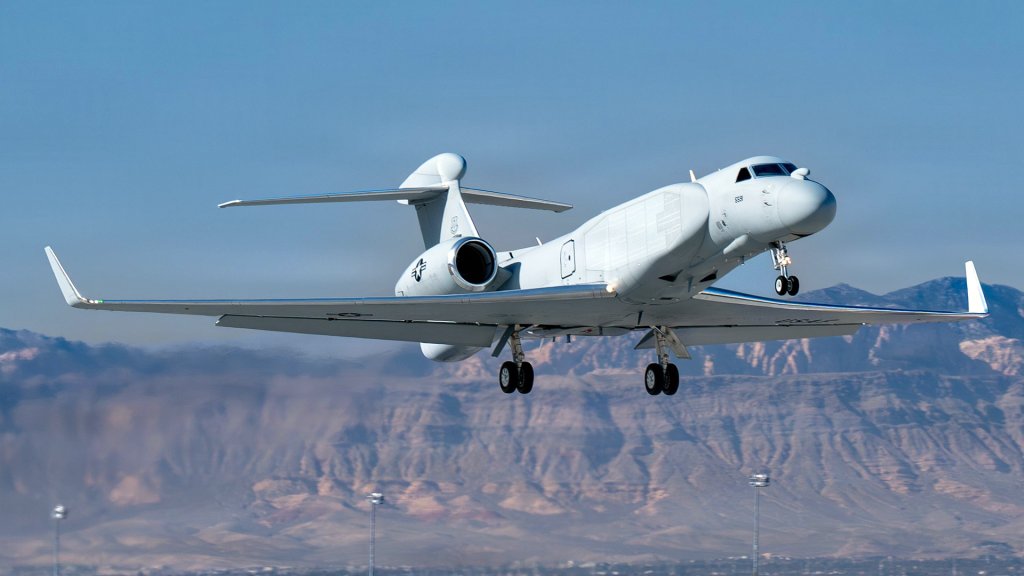
According to South Korean outlet Chosun, the aircraft should have a jamming range of “at least 200 kilometers [124 miles] to cover the entire Korean peninsula.” Additionally, “high-performance transmit-and-receive antenna technology is required to secure enemy electronic signals while disrupting the enemy by emitting powerful radio waves.”
While designed to work from outside hostile airspace, there have beenincreasing questionsabout the ability of specialized aircraft like these to survive against more capable air defenses, with the threat of long-range anti-air missile systemsonly set to grow. However, this kind of platform makes unique sense for South Korea, which has a very specific threat to counter: North Korean air defenses are becoming more capable, and hardened borders mean the geographic area that the new SOJ is expected to cover is clearly established. Criticism of aircraft survivability and range is less of an issue in this case.

At the same time, although South Korea has long relied heavily on the United States for defense, Seoul has increasingly emphasized greater strategic autonomy. This includes developing sovereign electronic warfare and AEW&C capabilities, reducing its reliance on U.S. military assets and American-provided equipment for these critical missions.
As well as the new SOJ and AEW&C platforms, the ROKAF is also set to receive four Baekdu II ISR aircraft. KAI is developing these in partnership with LIG Nex1 under a $675-million contract, with the mission equipment to be installed on the Dassault Falcon 2000LXS bizjet airframe.
The contract is due to be completed by the end of 2026, and the new ISR jets will replace the four Hawker 800XP Peace Pioneer signals intelligence (SIGINT) aircraft that first entered service with the ROKAF in 2001. These are known locally as the RC-800B Baekdu and are operated alongside a similar number of RC-800G Geumgang imagery intelligence (IMINT) aircraft provided under the Peace Krypton program.
Photos show the RC-800B Baekdu SIGINT aircraft:
A photo shows the RC-800G Geumgang IMINT aircraft:
Meanwhile, the ROKAF also operates two modified Dassault Falcon 2000S bizjets in a SIGINT role. These RC-2000s were also procured under the Baekdu project between 2011 and 2018 and incorporate a greater proportion of Korean-built electronics than the RC-800Bs. These aircraft are also specially equipped to detect North Korean missile launches.
A photo shows the RC-2000 SIGINT aircraft:
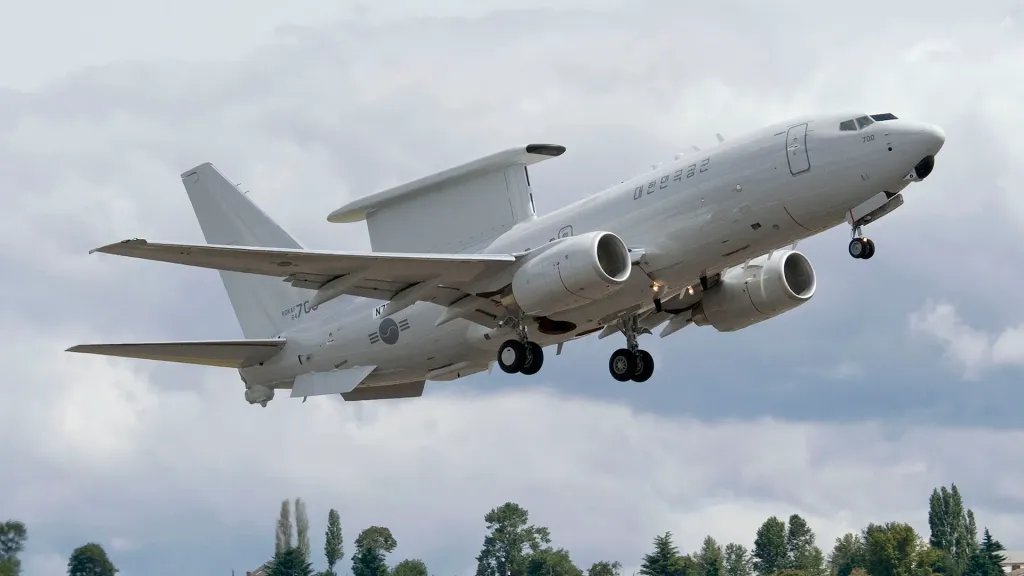
Then there is the AEW&C fleet, currently comprising four Boeing E-737s, and set to be bolstered by four new aircraft based on the Global 6500 airframe, valued at roughly $2.2 billion. As we have discussed in the past, these will be outfitted by L3Harris and will include the EL/W-2085 AESA radar from Israel’s Elta. This series of radars is already used in AEW&C aircraft operated byIsrael, Italy, and Singapore. The new radar planes are due to be introduced by 2032.
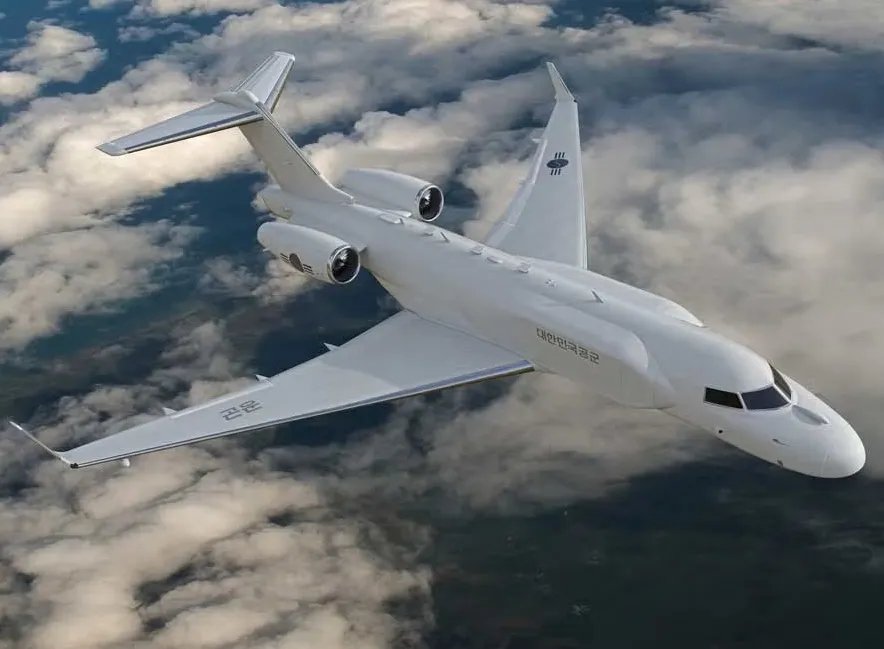
Returning to the new SOJ aircraft, the fact that North Korea possesses dense, layered air defenses concentrated near the Demilitarized Zone (DMZ) makes an electronic attack platform like this a key enabler for military operations. This is only becoming more important as North Korean defenses continue to mature.
Beyond enhancing operational effectiveness, the SOJ program strengthens South Korea’s defense industrial base, which is fast becoming a true global player.
Contact the author: thomas@thewarzone.com

