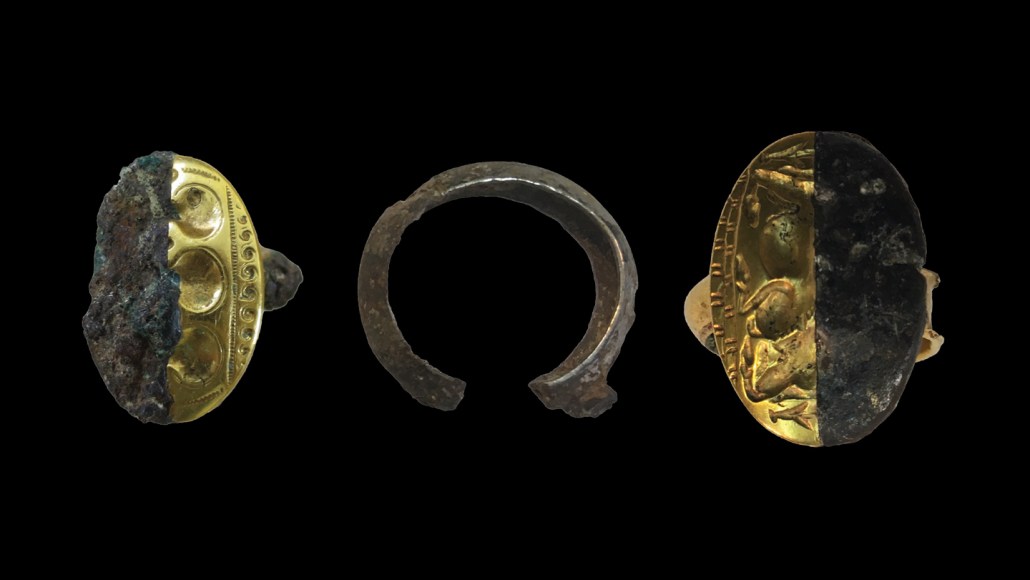
Судлаачид эртний Грек болон Крит арлаас олдсон 91 төмөр эдлэлийг шинжилж, солирын төмрөөр хийсэн байх магадлалтай 13 бөгжийг илрүүлэв.
Матьё Гунель болон Элени Манзурани нар 33 археологийн дурсгалт газраас олдсон төмөр эдлэлүүдэд рентген флуоресценцийн шинжилгээ хийжээ. Шинжилгээгээр 13 бөгжнөөс их хэмжээний никель илэрсэн нь эдгээр нь дэлхийн хүдрээс бус, харин солирын төмрөөр хийгдсэнийг гэрчилж байна. Эдгээрээс 10 бөгжийг солирын гаралтай гэж үзэх нь зүйтэй хэмээн дүгнэсэн бол үлдсэн гурвыг цаашид нарийвчлан судлах шаардлагатай байгаа аж.
Никель агуулсан төмрийг алт, мөнгө, хүрэл зэрэг үнэт металлтай хослуулан урласан нь тухайн үед эдгээр бөгжийг онцгой ач холбогдолтойд тооцдог байсныг илтгэнэ. Уг олдворууд нь Крит арлын Анемоспилия сүм болон эртний язгууртнуудын булшнаас олдсон нь тэдгээрийг Миной болон Микенийн соёл иргэншлийн эрх мэдэл бүхий хүмүүсийн бэлгэдэл байсан гэх таамгийг дэвшүүлэхэд хүргэжээ.
Грекийн нутаг дэвсгэрт солир ховор байдаг тул судлаачид эдгээр бөгжний түүхий эдийг Египетээс худалдааны замаар оруулж ирсэн байх магадлалтай гэж үзэж байна. Египетийн хаан Тутанхамуны булшнаас олдсон төмөр чинжаал ч мөн солирын төмрөөр хийгдсэнийг өмнөх судалгаанууд баталсан байдаг.
Хүрэл зэвсгийн үеийн төгсгөл буюу МЭӨ XII зуунаас хойш солирын төмрөөр хийсэн бөгж олддоггүй нь Микенийн соёл иргэншил мөхөж, нийгмийн бүтэц өөрчлөгдсөнтэй холбоотой байж болзошгүй гэж судлаачид тайлбарлаж байна. Энэхүү судалгаа нь тухайн үеийн дээдсийн хүрээнийхэн солирын төмрийг хэрхэн үнэлж, эд хэрэглэлдээ ашиглаж байсныг харуулсан чухал ач холбогдолтой юм.
Дэлгэрэнгүйг эх сурвалжаас харах
↓Эх сурвалжийг нээх ↓
Chemical analysis of 91 ancient iron objects from Greece and Crete identified 13 rings containing significant amounts of nickel, and researchers concluded that 10 were probably made with iron from meteorites. The other three require further study.
The objects were examined for the 2026 Journal of Archaeological Science study Iron in Greece in the second millennium B.C., by Matthieu Gounelle and Eleni Mantzourani. The researchers used portable X-ray fluorescence, or XRF, a nondestructive method, to measure the composition of iron objects from 33 archaeological sites.
Most of the objects contained no nickel. The researchers interpreted that as evidence that their iron came from terrestrial ores processed using early smelting techniques. Meteoric iron, by comparison, typically contains a much higher proportion of nickel.
Nickel Appears Only in the Rings
The 13 nickel-bearing objects were all rings or ring fragments. Many had been attached to large, flat pieces of engraved metal, indicating that they were signet rings. Of the 13, the researchers considered nine very likely and one quite likely to have a meteoritic origin, leaving three that need further examination.
Most were also made from more than one metal. Nickel-bearing iron was combined with gold, silver or bronze, placing the unusual iron alongside materials used in valuable objects.
The archaeological settings reinforced that association. The rings came from elite tombs, houses and a temple in southern Greece and Crete. One ring was recovered from the Anemospilia temple on Crete; the other nickel-bearing rings came from tholos and chamber tombs and were found with valuable objects.
The researchers suggest that rings probably made with meteoritic iron may have served as power symbols among prominent members of the Minoan and Mycenaean palatial elite. Mantzourani said the findings indicate meteoritic iron was treated as a precious material for objects of special value and for high-status people.
Researchers Propose Egypt as the Source of the Meteoritic Iron
Meteorites are scarce in Greece and Crete, leading Gounelle and Mantzourani to propose that the raw meteoritic iron was imported from Egypt, where meteorites are more numerous because of the extensive desert landscape. They connect that proposal with established Bronze Age trade networks rather than identifying a particular meteorite or shipment.
Egypt also provides a documented example of meteoritic iron being used for an exceptionally valuable Bronze Age object.
A 2016 study of Tutankhamun’s iron dagger used portable XRF to measure the blade. The analysis found iron with 10.8 percent nickel and 0.58 percent cobalt, a composition the researchers said strongly supported a meteoritic origin.

The dagger had been found in 1925 in the wrappings of Tutankhamun’s mummy. Its iron blade was paired with a finely worked gold handle and gold sheath. The 2016 researchers concluded that the object supported evidence that ancient Egyptians placed great value on meteoritic iron for precious objects.
That study did not establish that the Greek rings used Egyptian material. Gounelle and Mantzourani instead propose Egypt as the source because meteorites were rare in Greece and Bronze Age trade connected the regions.
Meteoritic Rings Disappear Around the End of the Bronze Age
The Greek study also found a distinction between the uses of meteoritic and smelted iron during the Late Bronze Age. The nickel-bearing meteoritic material appeared in refined rings, whereas smelted iron was generally used for less refined objects.
That pattern did not continue. Meteoritic iron rings dating after the 12th century B.C. have not been found in the region. Mantzourani said their disappearance occurred around the time of the Late Bronze Age collapse and the end of Mycenaean civilization in southern Greece.
Enjoyed this article? Subscribe to our free newsletter for engaging stories, exclusive content, and the latest news.


