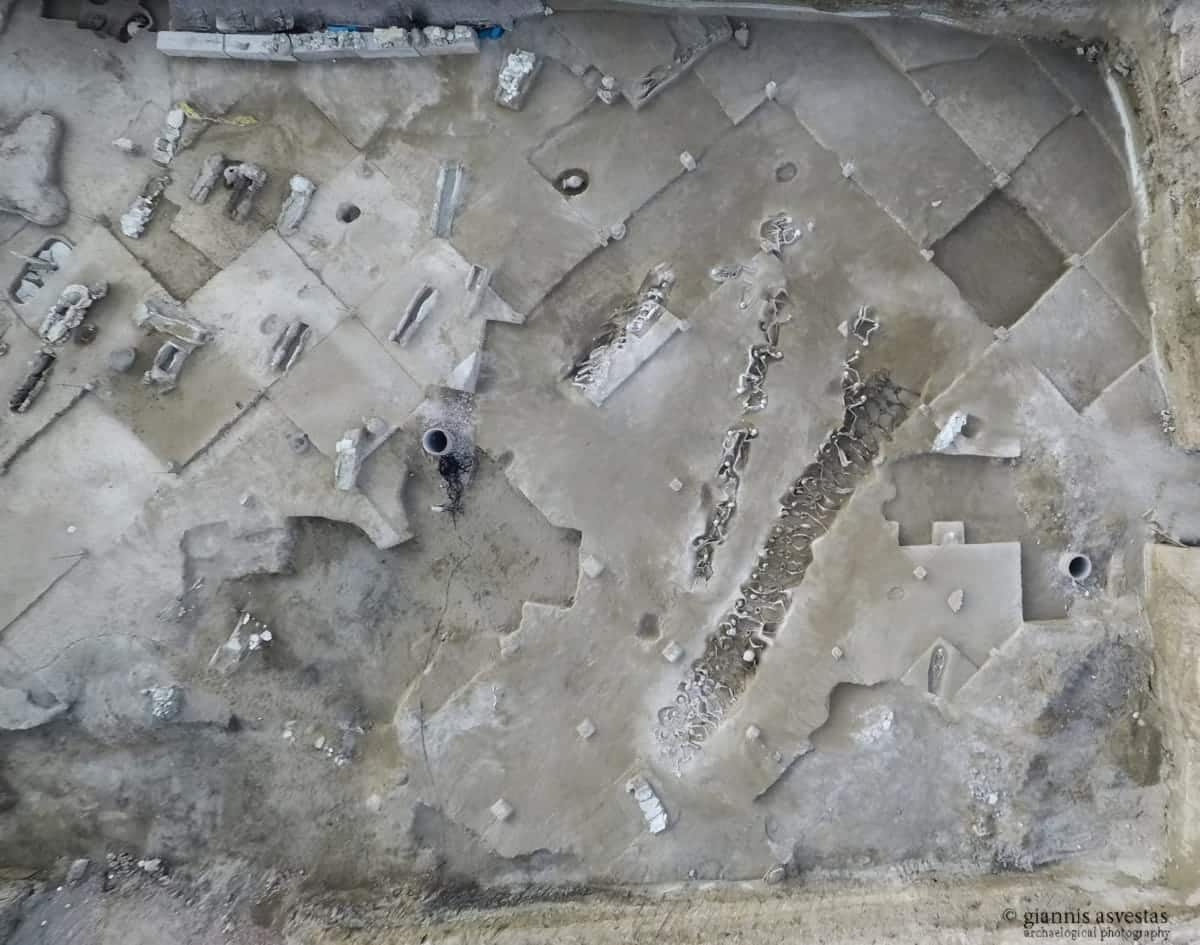
Шинэ судалгаагаар олон нийтийн цаазаар авах ял эдэлсэн байж болзошгүй эдгээр хүмүүс гаднын хөлсний цэргүүд эсвэл дайснууд биш, харин тухайн бүс нутагт өсөж торнисон хүмүүс байсныг химийн шинжилгээгээр нотлов.
2016 онд Афины ойролцоох Фалерон оршуулгын газраас археологичид гинжлэгдсэн байдалтай 79 эрэгтэй хүний цогцсыг олсон юм. Гурван эгнээгээр байрлуулсан эдгээр хүмүүс нь нийтийн цаазаар авах ялын золиос болсон гэж таамаглаж байсан ч тэдний гарал үүсэл тодорхойгүй байлаа. Аризонагийн их сургуулийн судлаач Жулианн Р. Стамер тэргүүтэй баг уг нууцыг тайлахаар шүдний пааланд агуулагдах стронцийн изотопын шинжилгээг хийжээ.
Шүдний паалан нь бага насанд бүрэлдэн тогтдог бөгөөд тухайн хүний өсөж торнисон газрын геологийн онцлогийг өөртөө хадгалдаг. Судлаачид Фалероны оршуулгын газраас олдсон 163 хүний, тэр дундаа гинжлэгдсэн 66 хүний шүдэнд шинжилгээ хийсэн байна. Үр дүнд нь нийт шинжилгээнд хамрагдсан хүмүүсийн 95.7 хувь нь Аттика бүс нутгийнх болох нь тогтоогджээ.
Гинжлэгдсэн 66 хүний 64 нь буюу 96.9 хувь нь орон нутгийн изотопын үзүүлэлттэй байсан нь тэднийг гаднын дайчин эсвэл дээрэмчид байсан гэх таамгийг үгүйсгэж байна. Энэхүү олдвор нь тухайн үеийн хүчирхийлэл гаднынхны эсрэг бус, харин бүс нутгийн дотоод нийгмийн зөрчилтэй холбоотой байсныг харуулж байна. Гэсэн хэдий ч эдгээр хүмүүсийг яг ямар шалтгаанаар цаазалсныг тогтоох боломжгүй хэвээр байгаа бөгөөд археологийн шинжилгээний үр дүн нь зөвхөн тэдний гарал үүслийг л тодорхойлсон болно.
Дэлгэрэнгүйг эх сурвалжаас харах
↓Эх сурвалжийг нээх ↓
Dozens of men found buried in chains near Athens were most likely raised in the surrounding region, rather than arriving as foreign mercenaries, pirates or invaders. Chemical analysis of their teeth shows that 64 of the 66 prisoners tested had signatures matching Attica.
Archaeologists uncovered the burial in 2016 at Phaleron, on the coast of Athens. Inside a shallow trench were the remains of 79 adult men, many still wearing metal shackles and arranged in three parallel rows. The unusual treatment of the bodies has led archaeologists to interpret the site as evidence of a mass public execution.
But the identity of the men remained uncertain. Researchers had considered several possibilities, including foreign mercenaries, pirates and political rebels. A new study now answers at least one part of that mystery: where most of them spent their childhood.
Their Teeth Kept A Chemical Record Of Childhood
To investigate their origins, a team led by Julianne R. Stamer of Arizona State University used strontium isotope analysis. Strontium comes from rocks and soil before entering water, plants, animals and, eventually, the human body.
Tooth enamel is particularly useful for this kind of research because it forms during childhood and does not renew. Its chemical composition can therefore preserve traces of the geological environment where a person grew up. The researchers analyzed dental enamel from 163 individuals buried at Phaleron. The sample included 66 men from the mass grave, known as the Esplanade, alongside 97 individuals from other burials in the cemetery.
The study reports that, using the more conservative of two statistical methods, 156 of the 163 people, or 95.7%, had strontium signatures compatible with Attica. Even with a stricter criterion designed to pick up subtler variations, 89% were still considered local.
Almost Every Tested Prisoner Grew Up Locall
The results from the shackled men were even more striking. Of the 66 Esplanade prisoners analyzed, 64, or 96.9%, produced local isotope values. Only two had signatures placing them outside Attica. Researchers also compared the prisoners with individuals buried elsewhere at Phaleron. They found no significant difference between the groups based on their strontium values. In other words, the chained men did not stand out from the wider cemetery population when it came to their geographic origins.
“Contrary to our expectation, those buried in the Esplanade are overwhelmingly locals from the region of Attica,” the authors wrote.

As the research team puts it, the social violence represented by the grave “was directed primarily inward,” toward people who were likely part of Attica’s existing social and physical landscape. The findings reported in the Journal of Archaeological Science challenge earlier suggestions that the men were foreign pirates or mercenaries. They also work against the idea that the burial represents foreign invaders defeated in battle.
Signs Of Migration Were Rare Across The Cemetery
Researchers also examined childhood mobility by testing multiple teeth from 28 individuals. Since different teeth form at different ages, variations between them can reveal whether someone moved between geologically different areas while growing up. For 26 of those 28 individuals, or 92.9%, every tooth tested fell within the local range. Only two showed a different pattern.
One person had a more radiogenic signature during early childhood before later values matched those found in Attica, suggesting that he arrived in the region after his first years. Another had a tooth formed during adolescence with non-local values.

Across the full sample, only seven of the 163 individuals were classified as non-local using the researchers’ conservative method. Their signatures pointed toward geologically different regions such as the Peloponnese or Western Macedonia, although poor bone preservation prevented a more precise identification.
The research paper does not establish exactly why the 79 men were executed. What their teeth do reveal is far more specific: nearly every prisoner tested had grown up in Attica, shifting the mystery away from foreign attackers and toward violence involving people from the region itself.
Enjoyed this article? Subscribe to our free newsletter for engaging stories, exclusive content, and the latest news.


