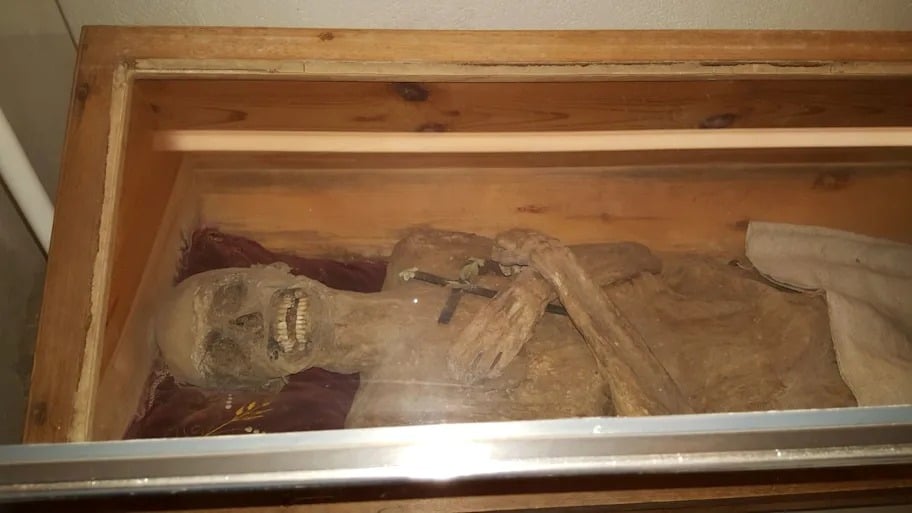
Судлаачид Австрийн сүмийн бунхнаас олдсон шарилыг хадгалахдаа өмнө нь бүртгэгдэж байгаагүй аргыг ашигласныг тогтоожээ.
Австрийн Сент Томас ам Блазенштайн сүмийн бунхнаас олдсон, 1746 онд нас барсан Франц Ксавер Сидлер фон Розенэгг хэмээх санваартны мумид Людвиг-Максимилианы их сургуулийн эмгэг судлаач, доктор Андреас Нерлих тэргүүтэй баг нарийвчилсан шинжилгээ хийжээ. Компьютерт томограф (CT), задлан шинжилгээ, нүүрстөрөгчийн он цаг тогтоох болон изотопын шинжилгээний тусламжтайгаар эрдэмтэд тухайн үеийн занданшуулах өвөрмөц техникийг илрүүлсэн байна.

Судалгаагаар мумигийн хэвлийн болон аарцгийн хөндийд модны үртэс, мөчир, даавууны өөдөс зэрэг гадны биетүүд байсныг тогтоожээ. Эдгээр зүйлсийг хэвлийн хөндийг нээх уламжлалт аргаар бус, шулуун гэдсээр дамжуулан хийсэн нь чийгийг соруулах, ялзралыг удаашруулах зорилготой байсан бололтой. Мөн хүчтэй хатаах үйлчилгээтэй цайрын хлоридыг ашигласан нь хадгалалтын өвөрмөц аргын нэг хэсэг болсон байна.

Шинжилгээний үр дүнд мумигийн дээд хэсэг маш сайн хадгалагдсан нь тогтоогдсон бол толгой болон доод мөчрүүд нь харьцангуй их ялзарсан байдалтай байжээ. Доктор Нерлигийн тайлбарласнаар, ийм төрлийн дотоод занданшуулах аргыг өөр муминуудад ч ашигласан байх магадлалтай боловч хожим ялзралын улмаас биеийн бүтэц алдагдаж, нотолгоо нь устаж үгүй болсон байж болзошгүй юм.

Түүхэн тэмдэглэлд шарилыг тээвэрлэх эсвэл удаан хугацаагаар байрлуулах зорилгоор “бэлтгэдэг” байсан тухай дурддаг ч яг ямар аргаар гүйцэтгэдэг байсан нь тодорхойгүй байв. Энэхүү олдвор нь тухайн үед шарилыг өөр сүм рүү тээвэрлэх төлөвлөгөөтэй байсан байж болзошгүйг харуулж байгаа боловч яагаад хэрэгжээгүй нь нууц хэвээр байна. Шинжилгээгээр талийгаач 35-45 насны, гол төлөв үр тариа, малын гаралтай бүтээгдэхүүнээр хооллодог, биеийн ачаалал багатай амьдралтай хүн байсныг тогтоожээ.
Дэлгэрэнгүйг эх сурвалжаас харах
↓Эх сурвалжийг нээх ↓
A remarkably preserved 18th-century mummy in an Austrian church crypt has revealed an embalming technique never previously documented by researchers. Inside the body, scientists found several things apparently used to absorb fluids and slow decomposition.
The mummy, kept in the crypt of a church in St. Thomas am Blasenstein, Austria, is thought to be Franz Xaver Sidler von Rosenegg, a local parish vicar who died in 1746. While parts of the body deteriorated after death, the upper body survived in exceptional condition, but what had preserved it so effectively?
A team led by Dr. Andreas Nerlich, a pathologist at Ludwig-Maximilians-Universität, investigated the remains using CT scanning, autopsy, radiocarbon dating and stable isotope analysis. Their study, published in Frontiers in Medicine, not only identified an unusual embalming procedure but also provided details about Sidler’s age, diet and possible circumstances near the end of his life.
A First-of-Its-Kind Embalming Technique
The explanation for the mummy’s condition was hidden within its abdominal and pelvic cavities. Researchers discovered foreign material there, including wood chips, twigs and pieces of dry fabric. Rather than entering the body through a conventional abdominal opening, the material had been inserted through the rectal canal. The purpose appears to have been practical: removing moisture from inside the corpse.
“Clearly, the wood chips, twigs, and dry fabric absorbed much of the fluid inside the abdominal cavity,” Dr. Andreas Nerlich remarked.
Researchers also identified zinc chloride, which has powerful drying properties, as part of the treatment. The substances created an embalming approach that the researchers said had not previously been documented. Preservation was not uniform across the mummy. The upper body remained particularly well preserved, while the head and lower extremities displayed considerable post-mortem decay.
Nerlich suggested that the same practice could have occurred elsewhere without being recognized. As he explained, subsequent decomposition in other bodies may have damaged the body wall enough to erase evidence that similar internal manipulation had taken place.
A Mummy Mystery Finally Solved
The investigation also allowed the researchers to examine who the mummified man was. Radiocarbon dating and stable isotope analysis supported his identification as Franz Xaver Sidler von Rosenegg and indicated that he was approximately 35 to 45 years old when he died.
The isotope evidence offered a glimpse into his diet. It consisted primarily of Central European grains and animal products, with inland fish also considered a possible component. His skeleton, meanwhile, showed no evidence of major physical stress. The findings indicated that the vicar probably lived a life characterized by relatively little physical activity.

This Mummy Was Prepared for a Final Journey
Researchers believe Sidler’s unusual treatment may have been linked to a possible plan to transport his body to his home abbey. Historical records mention that some bodies were prepared for transportation or extended display, but according to Nerlich, they provide no precise description of how these procedures were carried out.
The materials found inside the mummy offer physical evidence of one preservation method, although the exact reason for its use remains unknown.
“We have some written evidence that cadavers were ‘prepared’ for transport or elongated laying-out of the dead – although no report provides any precise description,” stated Nerlich. “Possibly, the vicar was planned for transportation to his home abbey, which might have failed for unknown reasons.”

Enjoyed this article? Subscribe to our free newsletter for engaging stories, exclusive content, and the latest news.

