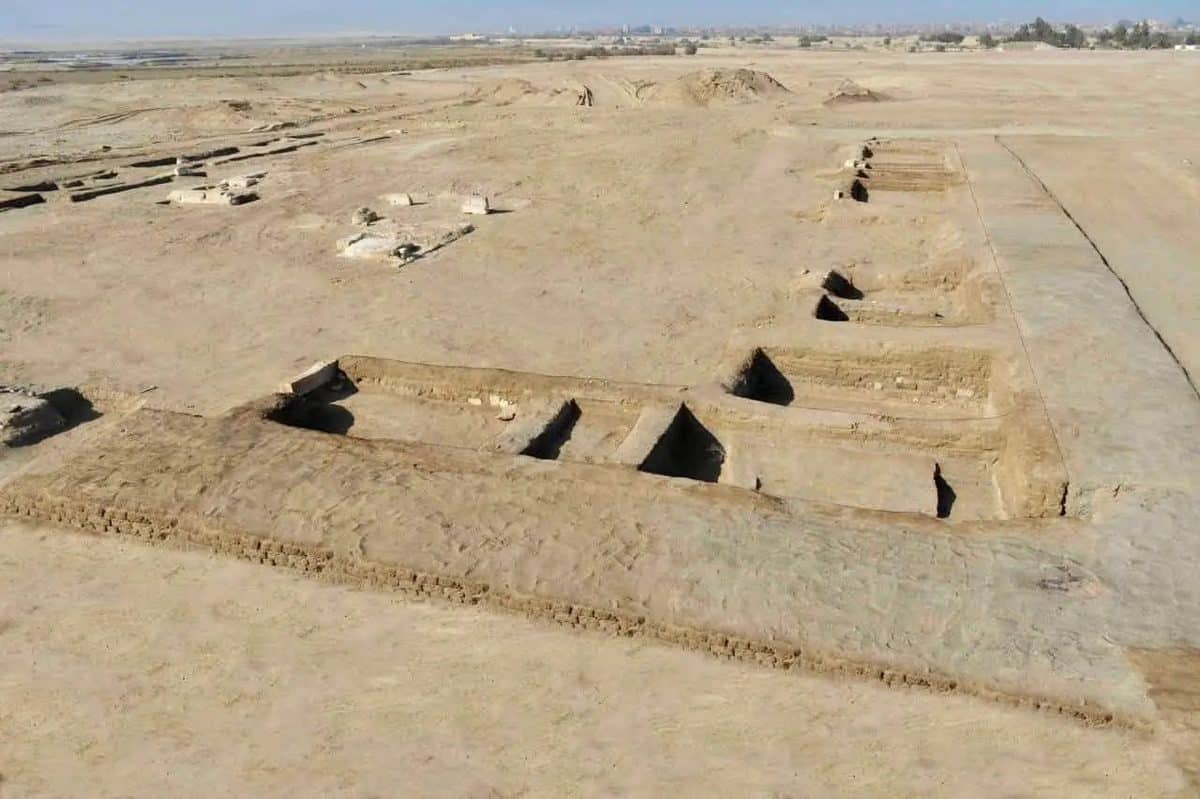
Археологичид эртний бичвэрүүдэд дурдагддаг боловч байршил нь тодорхойгүй байсан хотын үлдэгдлийг Телл Абу Сейфи орчмоос илрүүлсэн байна.
Египетийн аялал жуулчлал, эртний олдворын яамны мэдээлснээр, “Хорус бурхны зам” хэмээх түүхэн хамгаалалтын бүсээс олдсон чулуун бичээсүүд нь Месен хотын байршлыг тогтооход чухал баримт болж байна. МЭӨ 1570-1069 оны хооронд оршин байсан энэхүү хотын нэрийг агуулсан олдворууд нь тухайн бүс нутаг нь зөвхөн цэргийн зориулалттай бус, шашны болон худалдааны цогц төв байсныг илтгэж байна. Малтлагаар чулуугаар хучигдсан хоёр зам, агуулах болон сүмийн зориулалттай танхимуудын үлдэгдлийг илрүүлжээ.
Малтлагын явцад МЭӨ 1279-1213 онд төр барьж байсан Фараон Рамзес II-ын нэрийг дурдсан элсэн чулуун хэлтэрхийнүүд олдсон нь судалгааны багийнхны таамаглалыг улам баталгаажуулж байна. Ялангуяа “Месен хотын эзэн” хэмээн Хорус бурхныг нэрлэсэн бичээс нь тус газар нь эртний бичвэрүүдэд тэмдэглэгдсэн хот мөн болохыг харуулах гол баримт болж байгаа юм. Энэхүү суурин нь фараоны үеэс эхлэн Птолемей болон Ромын эрин үе хүртэл стратегийн чухал үүрэг гүйцэтгэсээр иржээ.
Археологич Хешам Хуссейн тэргүүтэй судалгааны баг олдворуудыг бүрэн дүүрэн баталгаажуулахын тулд нэмэлт судалгаа шаардлагатай гэдгийг онцолсон байна. Ромын үеийн барилга байгууламжууд тус газрын эртний давхаргыг ихээхэн гэмтээсэн нь судалгааны ажлыг хүндрүүлж байгаа аж. Судлаачид цаашид илрэх ваар сав зэрэг бусад олдворууд нь энэхүү түүхэн таамаглалыг эцэслэн батлах боломжтой гэж үзэж байна.
Дэлгэрэнгүйг эх сурвалжаас харах
↓Эх сурвалжийг нээх ↓
An inscription buried for over three millennia has resurfaced on Egypt’s eastern frontier, and it may finally answer a question that has puzzled Egyptologists for generations. At the site of Tell Abu Seifi, archaeologists have uncovered stone fragments naming Horus as guardian of a city called Mesen, a place long known from ancient texts but never definitively placed on a map.
The find comes from a broader excavation project focused on the Way of Horus, the fortified road that once ran along Egypt’s eastern border. According to Egypt’s Ministry of Tourism and Antiquities, the ministry believes the site corresponds to the lost city of Mesen, whose existence had until now been documented only through New Kingdom-era texts, a period spanning roughly 1570 to 1069 BCE.
Part of what makes the discovery difficult to confirm outright is the site’s troubled history: much of it was reportedly destroyed by later Roman-era construction, leaving archaeologists to piece together the story from what survived. Even so, researchers say enough has emerged to sketch the outline of a city that may have played a far larger role than previously assumed.
A Fortified Road With More Than Military Purpose
The Way of Horus functioned as a strategic military and commercial corridor, built to monitor and defend Egypt’s eastern approaches against foreign incursions. As explained in a translated statement, it’s along this very route that the excavation team uncovered two stone-paved roads, along with storage rooms and service chambers of a kind typically associated with temple architecture.
Those architectural remains suggest the site was more than a waypoint. The combination of storage facilities and religious service rooms points to a complex mixing border-post functions with cult activity, part checkpoint, part sanctuary. That dual identity, researchers argue, is exactly what would be expected of Mesen, a city said to have held a key strategic position for Egypt’s military campaigns while also serving as a sanctuary under the protection of Horus himself.
Ramses II and a Statue “Restored” in Stone
Among the most telling finds are sandstone inscription fragments explicitly naming Pharaoh Ramses II, whose reign lasted from 1279 to 1213 BCE. A direct reference to one of ancient Egypt’s most recognizable rulers lends real weight to the idea that Tell Abu Seifi is indeed the site of ancient Mesen.
A separate inscription found at the site goes further still, describing the restoration of a statue of Horus referred to as “Lord of the City of Mesen.” That phrase draws an explicit, direct line between the guardian deity and the very name archaeologists have spent so long trying to locate. Combined with the architectural evidence, the epigraphic finds sketch a picture of a settlement that endured across the Pharaonic, Ptolemaic, and Roman periods, each time retaining some strategic role, whether military, religious, or economic.

Why Certainty Is Still Out of Reach?
Despite the accumulating evidence, the archaeologists involved are urging caution. Hesham Hussein, general director of archaeology for the Delta and Sinai region, has said that further research is still needed before the identification can be considered definitive. Archaeology rarely proceeds through absolute certainty. More often, it advances through a gradual stacking of converging evidence.
Other specialists not involved in the project have suggested that additional artifacts, particularly dated pottery, could provide the decisive missing piece. Until then, the site is expected to keep yielding information gradually.

Egypt’s Minister of Tourism and Antiquities, Sherif Fathy, meanwhile stressed that this border region has played a strategic and civilizational role throughout Egyptian history, one that reaches far beyond archaeology to touch the country’s very sense of identity.
Enjoyed this article? Subscribe to our free newsletter for engaging stories, exclusive content, and the latest news.

