Палеонтологчид Испанийн Теруэл мужаас Европ тивд анх удаа баталгаажсан диплодок үлэг гүрвэлийн чулуужсан яс олсон нь эртний амьтдын тархалтын талаарх шинжлэх ухааны ойлголтыг өөрчилж байна.
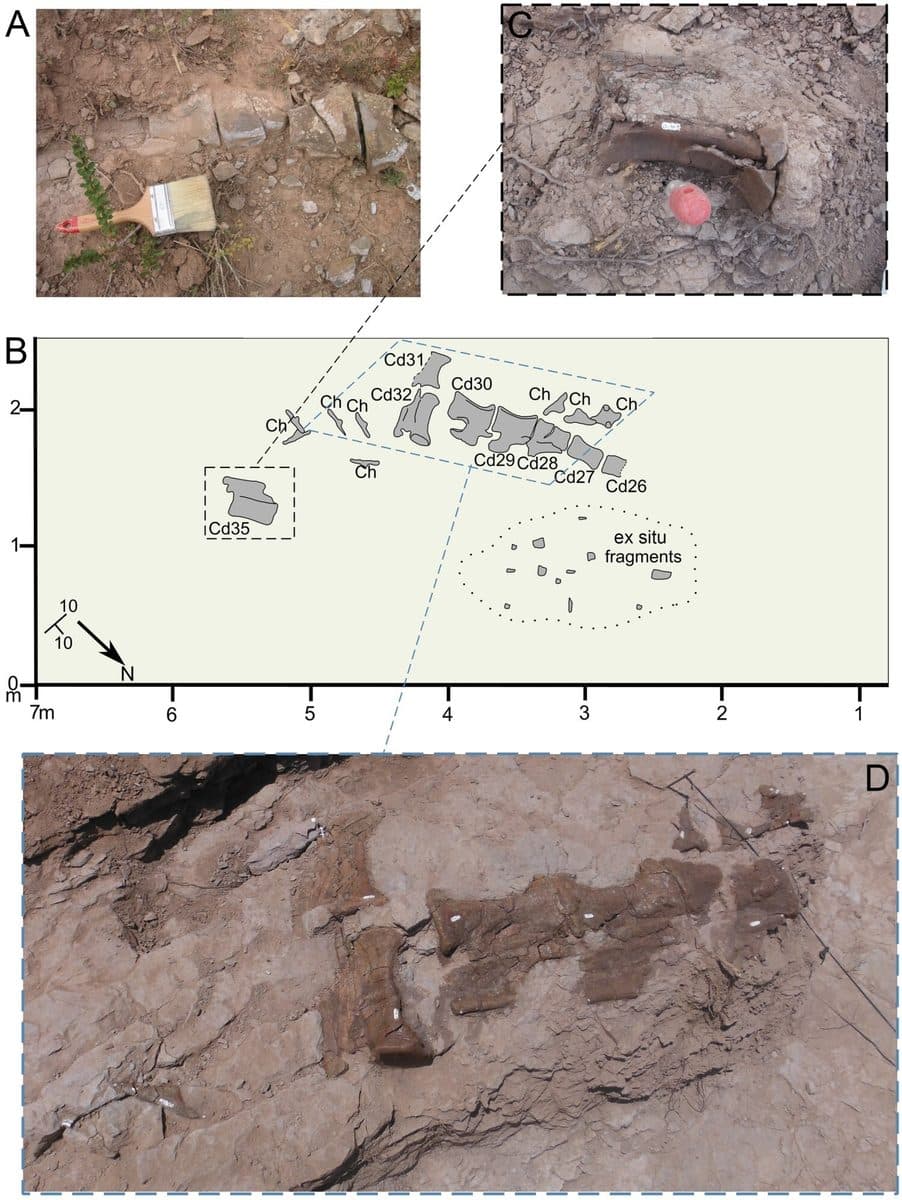
Испанийн “Fundación Conjunto Paleontológico de Teruel-Dinópolis”-ийн судлаачид Ла Тежериа хэмээх газраас 150 сая жилийн настай, диплодок төрлийн үлэг гүрвэлийн сүүлний 14 нугалам болон бусад ясыг малтан гаргажээ. Өмнө нь диплодок үлэг гүрвэлийг зөвхөн АНУ-ын баруун хэсгийн Моррисон формацийн бүс нутагт л амьдарч байсан гэж үздэг байсан бол энэхүү олдвор нь тэднийг Европ тивд амьдарч байсныг анх удаа баталж байна. Судлаачид анатомийн харьцуулсан судалгаа болон хувьслын шинжилгээний аргаар уг олдворыг диплодок төрөлд хамаарахыг тогтоожээ.
Ойролцоогоор 25 метр буюу 82 фут урттай энэхүү биетийн олдвор нь Хойд Америк болон Европын эх газрын хооронд үлэг гүрвэлүүд шилжин нүүдэллэж байсан байж болохыг харуулж байна. Тухайн үед үүсэж байсан прото-Атлантын далайд далайн түвшин буурах үед түр зуурын хуурай газрын гүүрүүд бий болж, том биетэй сауропод үлэг гүрвэлүүд тив дамнан нүүх боломжийг олгосон байж магадгүй хэмээн судлаачид таамаглаж байна.
Энэхүү олдвор нь тухайн бүс нутгийн Юрийн галавын үеийн экосистем болон сауроподын төрөл зүйлийн олон талт байдлыг ойлгоход чухал ач холбогдолтой юм. Одоогоор уг яс нь Теруэл дэх Динополисын палеонтологийн музейд олон нийтэд дэлгэгдээд байгаа бөгөөд цаашид үргэлжлүүлэн судлах эх сурвалж болох юм.
Дэлгэрэнгүйг эх сурвалжаас харах
↓Эх сурвалжийг нээх ↓
A team of Spanish paleontologists has uncovered the first confirmed Diplodocus fossils ever found outside North America. The discovery, made at a site in Teruel, Spain, includes fourteen tail vertebrae and several chevron bones and stands as one of the most complete diplodocid skeletons ever recovered on European soil. It suggests that dinosaurs once crossed between continents millions of years earlier than previously documented.
For nearly a century and a half, Diplodocus has been treated as an exclusively American animal. Every specimen bearing its name had turned up in the Morrison Formation, a rock unit stretching across the western United States that has produced some of the most iconic dinosaur skeletons on display in museums worldwide. That geographic pattern shaped much of what scientists assumed about where diplodocids lived and how they spread.
The new find, published in the Journal of Vertebrate Paleontology by researchers from the Fundación Conjunto Paleontológico de Teruel-Dinópolis, upends that assumption. It points to a period of faunal exchange between North America and Europe that had long been suspected but never confirmed with fossil evidence this direct.
A Painstaking Excavation in Eastern Spain
The bones were recovered at the La Tejería site in El Castellar, a small municipality in the province of Teruel that sits roughly between Madrid and Valencia. Over the course of the excavation, the Fundación Dinópolis team pieced together fourteen exceptionally preserved caudal vertebrae along with several chevron bones, the wedge-shaped structures that sit beneath the tail.
Sergio Sánchez Fenollosa, a doctoral student in biodiversity and evolutionary biology at Fundación Dinópolis who led the study, described the identification as a gradual process rather than a sudden realization.
“We are delighted with this discovery,” he said. According to Sánchez Fenollosa, the team noticed early similarities to diplodocine sauropods. “As we looked more closely at the anatomy, we began to identify a combination of features characteristic of Diplodocus species. Then, as we carried out different evolutionary analyses, they kept pointing in the same direction. With each new result, the picture became clearer: We were looking at a Diplodocus.”
The study, avaliable on Journal of Vertebrate Paleontology, dated the specimen to approximately 150 million years ago, right at the close of the Jurassic Period.
Crossing an Ocean That Was Still Taking Shape
What makes the Teruel specimen significant is not just its identity but what it implies about dinosaur movement. Sánchez Fenollosa stated that the discovery provides some of the strongest paleontological evidence yet for dispersal and faunal exchange between North America and Europe across the proto-Atlantic Ocean during the Late Jurassic.
At the time, the Atlantic was still a young and narrow feature of the planet, and researchers believe temporary land bridges emerged as the proto-North Atlantic went through regressive phases, periods when sea levels dropped enough to expose land connections between the two landmasses. Those intermittent corridors, rather than any single permanent route, would have allowed large sauropods like Diplodocus to wander from one continent to the other.

Sánchez Fenollosa noted that the finding helps clarify Iberian Mesozoic ecosystems and the range of sauropod diversity that once inhabited Jurassic Europe.
A Giant Among Other Giants of Teruel
Size-wise, the Spanish Diplodocus was no smaller than its American relatives. Dr. Alberto Cobos, managing director of Fundación Dinópolis and a co-author of the study, said the animal measured approximately 25 meters, or 82 feet, in length, putting it on par with its North American cousins.
Cobos pointed out that the specimen joins a lineup of other giant sauropods already known from the region, including Turiasaurus and Losillasaurus, dinosaurs with anatomies quite different from diplodocids. Taken together, he said that:
“The fossils of all these dinosaurs, including those of the new Diplodocus specimen, make Teruel a reference place for understanding this great diversity.”

Researchers relied on both traditional anatomical comparison and phylogenetic methods, including maximum parsimony and Bayesian inference, to place the specimen within the Diplodocus genus. The analysis identified it as a close relative of Diplodocus hallorum, based on features such as pneumatic cavities in the vertebrae, deep grooves running along the underside of the tail bones, and distinctively forked chevrons with unique medial fossae.
The fossils are now on public display in the dinosaur hall of the Museo Aragonés de Paleontología at Dinópolis in Teruel, where they will also continue to serve as material for further research.
Enjoyed this article? Subscribe to our free newsletter for engaging stories, exclusive content, and the latest news.

