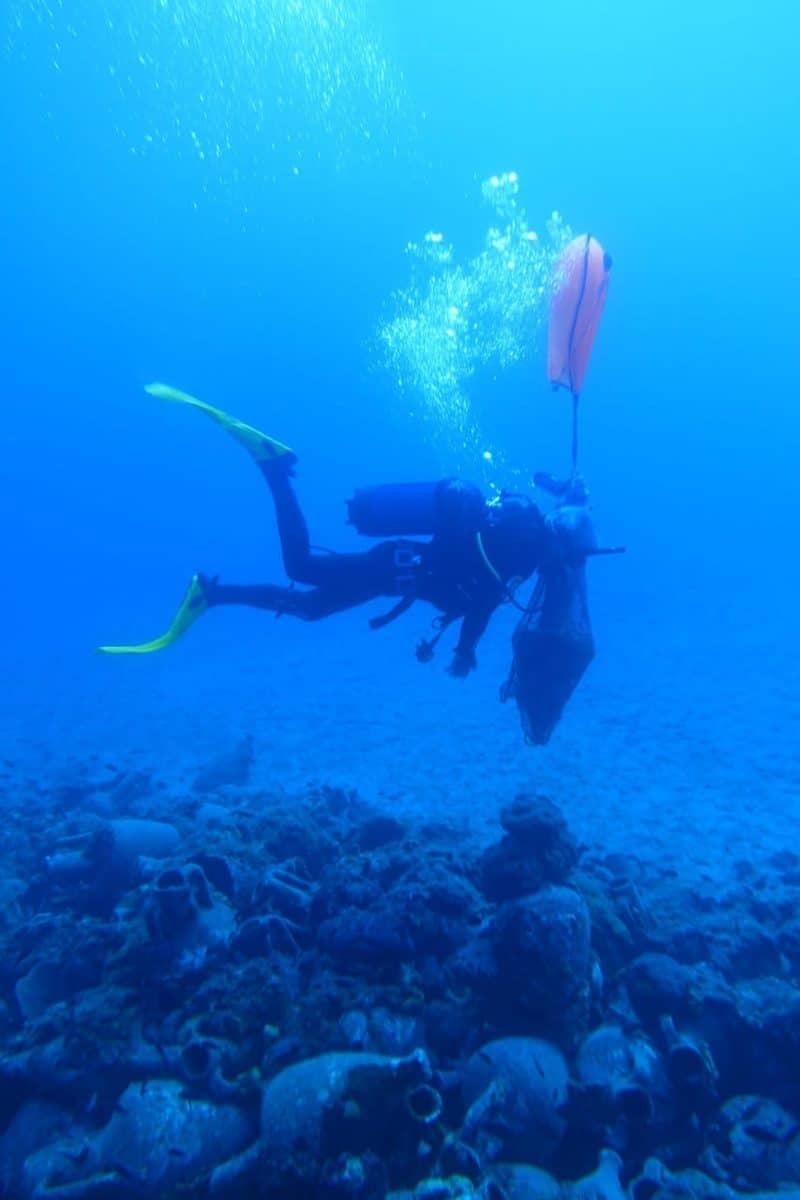
Далайн ёроолоос олдсон эртний Грекийн худалдааны хөлөг онгоцны ачаа нь тухайн үеийн бүс нутаг хоорондын эдийн засгийн харилцааг судлах ховор боломжийг бүрдүүлж байна.
Грекийн Андрос арлын ойролцоох далайн ёроолоос иргэний өгсөн мэдээллийн дагуу археологийн үнэт олдворууд бүхий эртний хөлөг онгоцны үлдэгдлийг илрүүлжээ. Грекийн Соёлын яамны харьяа Усан доорх эртний эдлэлийн хэлтэс (Ephorate of Underwater Antiquities) 39-44 метрийн гүнд хийсэн судалгаагаар уг хөлөг онгоц нь МЭӨ V зууны сүүлээс IV зууны эхэн үед хамаарахыг тогтоов.
Хөлөг онгоцны ачаа нь дарс, тос болон давсалсан бүтээгдэхүүн тээвэрлэхэд ашигладаг байсан 600 орчим амфора буюу хоёр чихтэй ваарнаас бүрдэж байна. Судлаачид эдгээр савыг Менде, Пепаритос болон Солоха-2 гэсэн гурван өөр төрөлд ангилсан нь тус хөлөг онгоц нэг бус, олон өөр эх сурвалжаас бараа цуглуулж байсныг илтгэж байна.
Археологич Эвангелистис Дионисиосоор ахлуулсан баг ваарнуудаас гадна эртний Грекийн усан онгоцны технологид хамаарах хар тугалган зангууны ишний хэлтэрхий болон хөлөг онгоцны тэнцвэржүүлэгч байж болзошгүй чулуунуудыг олжээ. Одоогоор хөлөг онгоцны модон хийцийн зарим хэсэг нь тунадасны дор хадгалагдан үлдсэн байдалтай байна.
Мэргэжилтнүүд олдворуудын бүтэц, шаврын гарал үүсэл болон ваар шатаах аргыг нарийвчлан судлахаар дээж авчээ. Олдворууд олон зууны турш далайн усанд байсан ч бүтэц нь харьцангуй сайн хадгалагдсан байна. Уг талбайг цаашид хамгаалалтад авч, хөлөг онгоцны бүтцийг судлах дараагийн шатны малтлагыг үргэлжлүүлэхээр төлөвлөж байна.
Дэлгэрэнгүйг эх сурвалжаас харах
↓Эх сурвалжийг нээх ↓
An ancient shipwreck has been confirmed off the Greek island of Andros. Its cargo of pointed-base amphorae is practically intact, lying between 39 and 44 meters deep. Specialists date it to the late 5th to early 4th century BC.
It all started with a report from a private individual, who alerted authorities to archaeological remains on the seabed. The Ephorate of Underwater Antiquities, part of the Greek Ministry of Culture, then carried out an official inspection of the spot.
A team made up of an archaeologist, a conservator and a diving technician traveled to the site. The operation followed strict archaeological methodology. The team first documented the find in situ, then the recovery of representative pieces for laboratory analysis. The wreck lies on sandy seabed, where visibility is limited and varies with the conditions on the day.
A Cargo of Three Amphora Types
The load consists entirely of commercial amphorae with pointed bases, standardized ceramic containers used to carry wine, oil or salted products. A visual count on site suggests between 600 and 650 pieces, complete or fragmentary, spread over just a few square meters. That is a medium-sized cargo for the period, compared with shipwrecks elsewhere in the Mediterranean holding more than a thousand containers.
Within this otherwise homogeneous set, divers recognized at least three types. Mende amphorae, from a city on the Chalkidiki peninsula in the northern Aegean, are slender, made of light clay, with a well-defined neck. Those from Peparithos, on the island of Skopelos in the Sporades, have a more bulbous profile and a rounded rim. As for the Solokha 2 type, less frequent in Aegean contexts, its name refers to a burial found in the Bosporus region.
As LaBrujulaVerde puts it, this mix gives researchers “a rare opportunity to study the economic interactions among regions” such as Chalkidiki, the Sporades and the Pontic area. Rather than a single-source shipment, it looks like the ship was carrying consignments gathered from different centers
Evidence From The Cargo
Specialists have narrowed the chronology of the three types to a fairly tight range, from the late 5th to the early 4th century BC. The dating relies on the formal evolution of rims, handles and bases, well documented in the ceramic workshops of the northern Aegean and the Hellespont. The period coincides with the end of the Peloponnesian War and the onset of Spartan hegemony, followed by the brief rise of Thebes.
The amphorae were not the only finds. As reported by a press release published by Hellenic Ministry of Culture,divers recovered a fragment of a lead anchor shank, a characteristic piece of Greek naval technology from the Classical and Hellenistic periods: a lead bar with a hole, used to weight the wooden anchor. A small number of medium-sized stones were also scattered among the amphorae.

Experts see them as possible ship ballast, though they don’t rule out that some came from seabed collapse or erosion of nearby cliffs. Of the ship itself, only a few wood fragments have been glimpsed beneath the sediment.
The Next Phase Of Study
The team took one complete example of each type for physicochemical analysis to determine the original contents, the origin of the clays and the firing techniques. Despite centuries of immersion, the pieces kept good structural cohesion, with no visible signs of severe erosion or extensive fractures.
Diving archaeologist Evangelistis Dionysios led the scientific work, conservator Tsombanidis Ángelos assessed the condition of the pieces and applied initial consolidation treatments, and diving technician Louis Mersenié handled safety, logistics and audiovisual documentation. Together they completed the inspection in a single day of diving.

The official statement also said that the site will remain under surveillance, with access restricted to unauthorized divers. The recovered pieces will go to the Ministry of Culture’s conservation laboratories for slow desalination, and authorities have announced that new campaigns will be scheduled to explore the ship’s structure further.
Enjoyed this article? Subscribe to our free newsletter for engaging stories, exclusive content, and the latest news.

