Ионийн тэнгисээс олдсон уг хөлөг онгоц нь 2000 жилийн турш бүрэн бүтэн хадгалагдаж ирсэн амфорын ачаатайгаараа Газар дундын тэнгисийн хамгийн том олдворуудын нэгд тооцогдож байна.
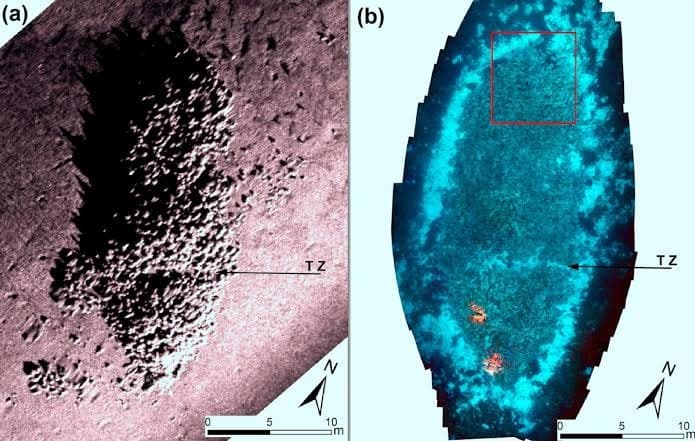
2013 онд Патрасын их сургууль болон Aquatic Scuba Diving Club-ын судлаачид Кефалиния арлын эрэг орчимд далайн ёроолын соёлын өвийн үнэлгээ хийх явцдаа өндөр нарийвчлалтай сонараар уг хөлөг онгоцыг илрүүлжээ. Олдвор нь Фискардо булангийн ойролцоо, 34 метр урт, 13 метр өргөн хэмжээтэйгээр илэрсэн байна. Сонарын дүрслэл болон ортофото мозайк зургаас харахад хөлөг онгоцны ачаа нь 6000 орчим амфороос бүрдэж байгаа бөгөөд тэдгээр нь маш сайн нөхцөлд хадгалагдан үлджээ.
Судлаач Ксенофонтас Димас болон түүний багийнхны Journal of Archaeological Science сэтгүүлд нийтэлсэн судалгаагаар уг олдвор нь МЭӨ 1-р зуунаас МЭ 1-р зууны хоорондох хугацаанд хамаарна гэж үзэж байна. Ачааны байрлал болон хөлөг онгоцны бүтцийн үлдэгдэл нь уг хөлөг онгоцыг далайн ёроолд шуурганд авталгүйгээр, аажмаар босоо чигээрээ живснийг илтгэж байна. Энэхүү олдвор нь тухайн үед Фискардо нь худалдааны чухал боомт байсныг гэрчлэх нэмэлт баримт болж байна.
Хөлөг онгоцны их бие нь 2000 жилийн турш бүрэн бүтэн үлдсэн нь түүнийг бат бөх хийцтэй байсныг харуулдаг бөгөөд энэ нь Газар дундын тэнгисийн зүүн хэсгээс олдсон хамгийн том хөлөг онгоцны олдвор гэдгээрээ шинжлэх ухааны өндөр ач холбогдолтой юм. Судлаачид хөлөг онгоцны живсэн нөхцөл байдал болон ачааны бүрэн бүтэн байдлыг судлах нь эртний далайн тээврийн түүхийг тодруулахад чухал үүрэгтэй гэж дүгнэжээ.
Дэлгэрэнгүйг эх сурвалжаас харах
↓Эх сурвалжийг нээх ↓
Some 2,000 years after it sank, a Roman merchant ship still loaded with about 6,000 amphorae has been found in the Ionian Sea. The wreck lies off the northeastern tip of Kefallinia Island in Greece, and it ranks among the biggest of its kind ever recorded in the Mediterranean.
The discovery came in 2013, when a team of underwater archaeologists and divers from the University of Patras and the Aquatic Scuba Diving Club ran a high-resolution sidescan sonar survey. The wreck sits about 2 km (1.2 miles) from the entrance of the Fiskardo embayment.
Named “Fiscardo,” the ship matters for its sheer size, but also for how well its cargo has held up. Here is what the researchers have pieced together.
A Shipwreck Spotted by Sonar
Nobody set out to find a shipwreck, or at least that’s the impression the survey gives. The team was carrying out an underwater natural and cultural heritage assessment along the coastal zone of Kefallinia. According to Dr. Xenophontas Dimas of the University of Patras and colleagues, the marine geophysical data revealed, among other seafloor features, a Roman wreck and its amphorae cargo.
The team’s paper appears in the January 2020 issue of the Journal of Archaeological Science and gives us the sonar picture that shows the outline of the cargo, with individual amphorae lying on a muddy sand seafloor. An orthophoto mosaic shows an oval pile of amphorae ringed by a rim of white carbonate sand. A trench-like zone, empty of amphorae, runs across the cargo.
Big Ship, Bigger Cargo
The numbers are hard to ignore. The merchant vessel measured 34 m (112 feet) long and 13 m (43 feet) wide. The pile of cargo on the seafloor is about 30 m (98 feet) long, 12 m (39 feet) wide and roughly 1.3 m (4.3 feet) high. Each amphora stands about 0.8 to 0.9 m (2.6 to 3 feet) tall and 0.4 m (1.3 feet) wide.
The type of amphorae dates the wreck to between the 1st century BCE and the 1st century CE. The researchers said that:
“The ‘Fiscardo’ shipwreck can be listed as one of the largest four found in the Mediterranean Sea and more specifically, the largest found to date in the eastern Mediterranean Sea.”

The cargo, estimated at about 6,000 amphorae, is “still in very good condition,” they add.
Roman Wreck Discovered
The way the cargo is laid out tells its own story. The mound of amphorae keeps the outline of a ship of that period, as defined by the side rail. Combined with the almost flat, gently sloping seafloor around the wreck, the scientists say this suggests the vessel sank very slowly and upright.
It came to rest on its keel and then gradually tipped to one side, with the hull keeping its overall structure intact. That leads them to speculate that the ship went down in good weather rather than in a storm.

The location also carries weight, because the researchers found the wreck lies off the present-day Fiscardo fishing port, where relicts dating between 146 BCE and 330 CE were recently found. As the study team stated this indicates that Fiscardo was an important port at that time.
Enjoyed this article? Subscribe to our free newsletter for engaging stories, exclusive content, and the latest news.

