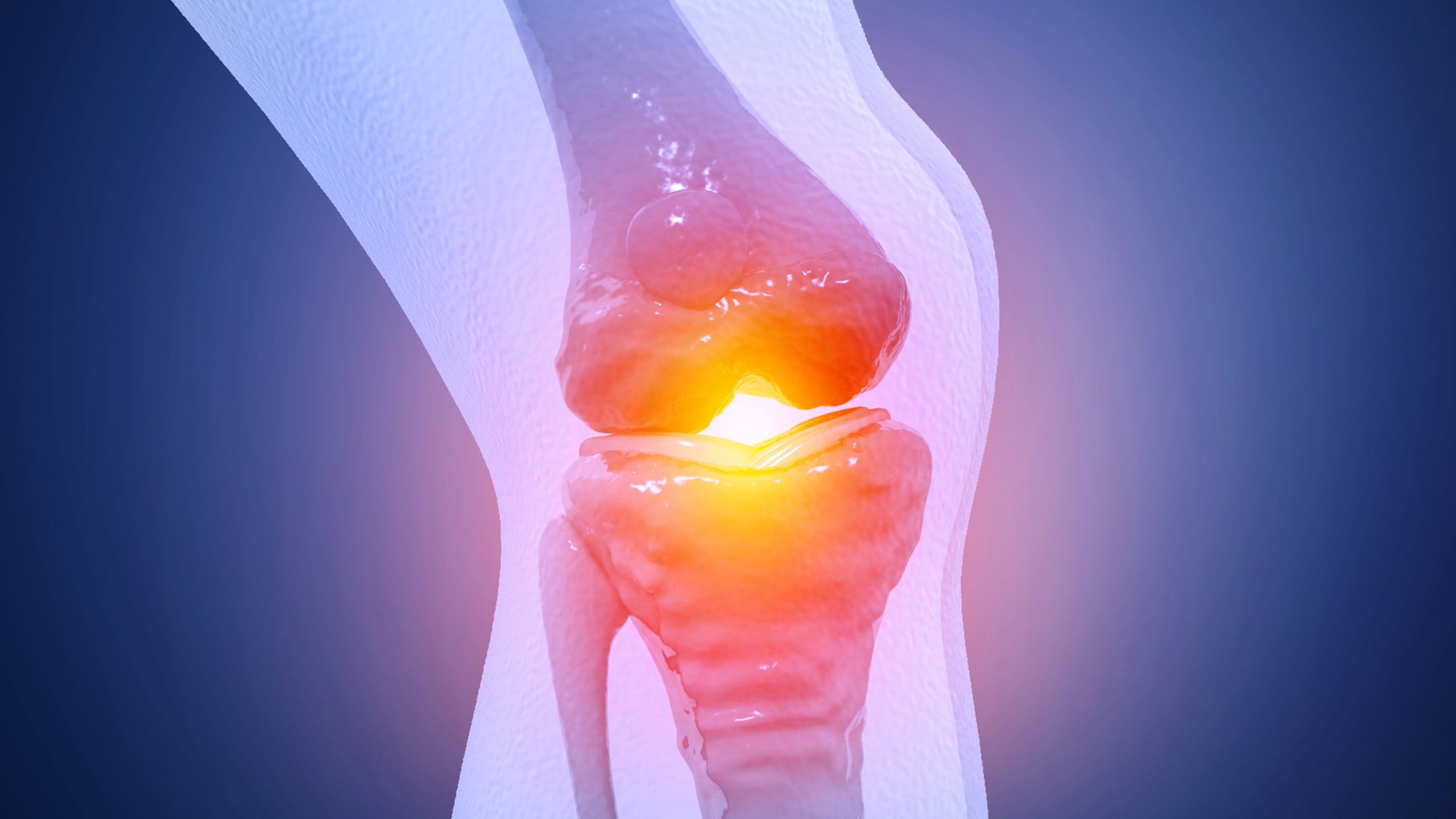
Йелийн Анагаах ухааны сургуулийн судлаачид эпилепсийн эсрэг “лакосамид” эм нь остеоартритын үед үе мөчний өвдөлтийг намдаахаас гадна гэмтсэн мөгөөрсөн эдийг нөхөн сэргээх чадвартай болохыг илрүүлжээ.
Bioactive Materials сэтгүүлд нийтлэгдсэн уг судалгаагаар, лакосамид нь натрийн сувгийг хаах замаар өвдөлтийн дохиог зогсоож, мөгөөрсөн эдийн задралыг удаашруулан, нөхөн төлжилтийг дэмждэг болохыг хулгана болон хүний мөгөөрсөн эдийн эс дээр хийсэн туршилтаар тогтоосон байна. Судлаач Чуан-Жү Лиугийн тайлбарласнаар, тус эм нь Nav1.7 хэмээх уургийн идэвхжлийг бууруулснаар үе мөчний үрэвсэл, гэмтлийн явцыг өөрчлөх боломжтой аж.
Тус багийнхан эмийг үе мөчинд шууд тарих гидрогель хэлбэрээр хэрэглэх нь илүү үр дүнтэй болохыг олж мэдсэн байна. Гидрогель нь эмийг тухайн хэсэгт тогтоон барьж, удаан хугацаагаар ялгаруулах нөөцлүүрийн үүрэг гүйцэтгэдэг тул өдөр бүр эм уух шаардлагагүй болж байна.
Одоогоор уг эм нь эпилепсийн эмчилгээнд батлагдсан тул остеоартриттай өвчтөнүүдэд чиглэсэн эмнэлзүйн туршилтыг богино хугацаанд эхлүүлэх боломжтой юм. Хэдийгээр эхний үр дүн эерэг байгаа ч остеоартриттай хүмүүс дээрх эмнэлзүйн туршилтууд шаардлагатай хэвээр байна.
Дэлгэрэнгүйг эх сурвалжаас харах
↓Эх сурвалжийг нээх ↓
Researchers are always looking out for drugs that can be repurposed for something else. The main benefit is that these treatments have already passed various safety tests, which means they can be made available more quickly for new conditions.
Now a team from the Yale School of Medicine in the US has discovered that the epilepsy drug lacosamide could also be effective in cases of osteoarthritis – not just easing the associated pain, but also reversing some of the damage it causes to joints.
Osteoarthritis is when the cushioning, lubricating cartilage between bones gets damaged and worn away. Current treatments can manage the pain, but there’s no real fix besides replacement surgery (which can come with its own issues).
The results of the lacosamide tests, published in Bioactive Materials, show that in mouse models and human cartilage cells in the lab, it’s capable of encouraging cartilage repair, slowing its deterioration, and reducing the pain that goes with it.
In addition, the researchers identified a ‘sweet spot’ where the drug was most beneficial, which will be useful in developing the treatment further.
“There is an optimal range where the drug helps restore balance without overcorrecting,” says musculoskeletal biologist Chuan-Ju Liu. “What stood out was not just its effectiveness, but how little of a dose was needed.”
“This tells us the system is finely tuned.”
The researchers were led to lacosamide because it’s a sodium channel blocker. In a previous study, some of the same researchers identified a sodium channel and protein called Nav1.7 as being involved in both sending pain signals to the brain and regulating how cartilage is built up and broken down.
Nav1.7 is active inside special cells called chondrocytes, which manage the balance of removing old tissue and adding new tissue. Osteoarthritis disrupts this balance, tipping the scales towards cartilage loss, and Nav1.7 is an important factor in that. In a joint affected by osteoarthritis, Nav1.7 is more active than it should be.
“When Nav1.7 becomes dysregulated, it contributes to both joint degeneration and pain,” says Liu.
“Our findings suggest that Nav1.7 is a dual-acting target. By blocking this single protein, we can potentially quiet the pain nerves and tell the cartilage cells to not only stop breaking down but start repairing as well.”
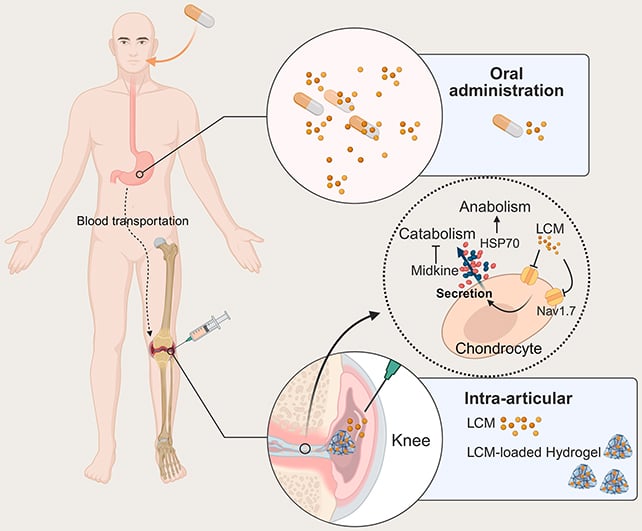
Essentially, lacosamide is dialing down the activity of Nav1.7, and the published research shows the impact it can have on cartilage and pain.
The team also wanted to find the best way to administer the drug, and found that injecting it directly into the affected joint in mice worked better than giving it orally, even at lower doses.
The catch was that it didn’t stick around for long once it was in there, meaning repeat injections were needed to keep it working.
In the injection tests, lacosamide was packed inside a gel to counteract the ‘leaky bucket’ nature of joints that can quickly dissipate any liquid treatments.
“The hydrogel acts as a local reservoir,” says Liu. “It holds the drug in place in the location it is needed most and releases it slowly over time. It transforms a daily pill into a long-lasting, local treatment that stays active for a month or longer.”
All of this needs to be tested on actual osteoarthritis patients, of course, but the early signs are promising. As we mentioned at the start, the status of lacosamide as an approved epilepsy drug means the time to clinical tests should be shorter.
Past research suggests lacosamide can indeed be effective as a painkiller, though the previous work was related to a different Nav1.7-related condition.
If the drug can be developed further for osteoarthritis, then the potential is huge for the hundreds of millions of people with osteoarthritis worldwide: a drug that doesn’t just numb the pain of the condition, but also brings back lost cartilage.
“There is a major unmet need in osteoarthritis,” says Liu. “We need therapies that don’t just mask pain but actually change how the disease progresses.”
The research has been published in Bioactive Materials.
This article was fact-checked by Fiona MacDonald and edited by Fiona MacDonald. While we pride ourselves on our process, we are only human. If you spot a mistake, please let us know.

