Пентагон 2,000 фунтын жинтэй JDAM-ER өндөр нарийвчлалтай бөмбөгийг бэхлэгдсэн байгууламж устгах зориулалтаар ашиглах боломжийг судлахаар төлөвлөж байна.
АНУ-ын Батлан хамгаалахын аюулыг бууруулах агентлаг (DTRA) 2027 оны төсвийн төсөлдөө GBU-64 JDAM-ER бөмбөгийн цохилтын чадавхыг үнэлэх, бэхлэгдсэн байгууламжийг нэвтлэх чадварыг сайжруулах чиглэлээр судалгаа хийх хүсэлт тусгажээ. Энэхүү зэвсэг нь далавчит иж бүрдлийнхээ ачаар алсаас цохилт өгөх боломжийг олгодог бөгөөд одоо байгаа JDAM-ER-ийн хүрээг улам өргөжүүлэх зорилготой юм.
Одоогийн байдлаар JDAM-ER-ийг ихэвчлэн ерөнхий зориулалтын бөмбөгтэй хослуулан ашигладаг бөгөөд АНУ-ын цэргийнхэн үүнийг Иран зэрэг улсын эсрэг агаарын цохилт өгөхөд өргөнөөр ашиглаж байна. Шинэ судалгаагаар тус бөмбөгийг бункер устгагч болгон хувиргаснаар байг алсаас онох, нам өнцгөөр довтлох боломж бүрдэж, улмаар цэргийн нисэх онгоцны аюулгүй байдлыг хангах давуу талтай юм.
Мөн DTRA нь “skip” буюу газрын гадаргуу эсвэл усны мандал дээр ойлгон цохилт өгөх тактикийг боловсруулахаар төлөвлөж байна. Энэ нь туннелийн ам болон бусад бэхлэгдсэн цэгүүдэд илүү гүн нэвтрэх боломжийг олгох бөгөөд Хятад, Орос, Хойд Солонгос зэрэг улсуудын газар доорх цэргийн дэд бүтцийн сүлжээ өргөжиж байгаатай холбоотойгоор ийм төрлийн зэвсэглэлийн хэрэгцээ нэмэгдэж байна.
Дэлгэрэнгүйг эх сурвалжаас харах
↓Эх сурвалжийг нээх ↓
The U.S. military wants to see if it can enhance the capabilities of the 2,000-pound-class Joint Direct Attack Munition-Extended Range (JDAM-ER) precision-guided bomb as a bunker-busting munition. JDAM-ERs already come with wing kits that allow them to glide dozens of miles to their targets, helping keep the launch platform away from threats. This would also open up new opportunities for low-angle, lateral attacks on hardened targets. In general, bunker-buster bombs are released relatively close to and above what are often higher-value and better-defended targets. TWZ has highlighted the inherent risks this entails on several occasions just in the context of the recent conflict with Iran.
Interest in expanding the role of the JDAM-ER as a bunker buster is tucked away in a section of the Pentagon’s proposed 2027 Fiscal Year budget covering requested funds for the Defense Threat Reduction Agency (DTRA). DTRA is a multi-faceted organization focused on responding to Weapons of Mass Destruction (WMD) threats. Since deeply buried and otherwise hardened facilities are often tied to WMD programs, a key area of the agency’s work is helping devise new and improved ways to hold those targets at risk. A prime example of this is the key role DTRA played in the development of the 30,000-pound-class GBU-57/B Massive Ordnance Penetrator (MOP) bunker buster bomb.
Now, DTRA wants to “evaluate current hard target defeat capabilities with 2000lb Joint Direct Attack Munition Extended Range (GBU-64 JDAM-ER) and provide recommendations on future JDAM-ER development to enhance HDBT penetration capabilities,” according to Pentagon budget documents.
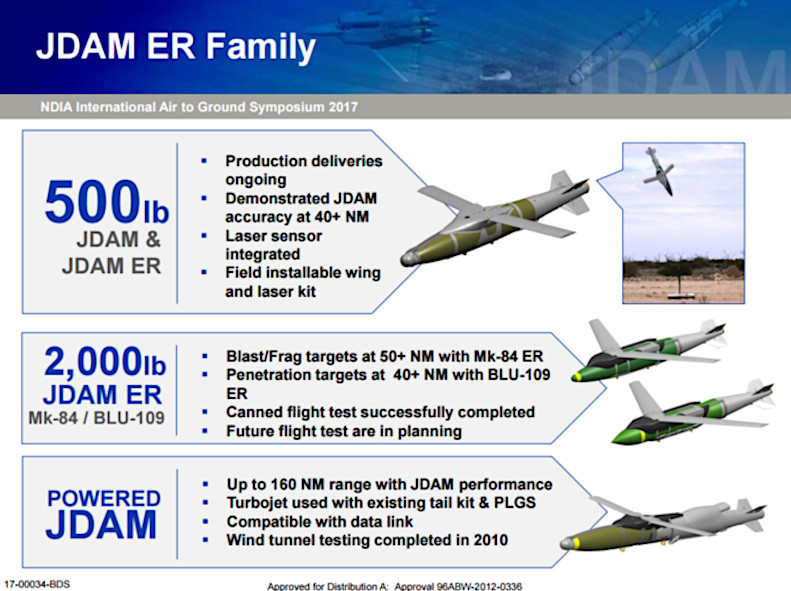
GBU-64/B is the formal designation the U.S. military has given to the 2,000-pound-class JDAM-ER. As is the case with standard JDAMs without supplemental wings, the JDAM-ER is a kit that turns various types of unguided bombs into ‘warheads’ for the resulting precision-guided munitions. Additional versions of the JDAM-ER kit are available for use with 500-pound and 1,000-pound-class bombs.
Prime contractor Boeing has said that the BLU-109/B bunker-buster bomb can be combined with the JDAM-ER kit, but it is unclear if that configuration is already in operational U.S. service. At the time of writing, the GBU-64(V)1/B still looks to be the only subvariant officially confirmed to be in use anywhere across the U.S. military. The GBU-64(V)1/B uses the Mk 64 Quickstrike air-dropped naval mine as its warhead. There is also a 500-pound-class GBU-62(V)1/B, which pairs a JDAM-ER kit with the smaller Mk 62 Quickstrike mine. You can read more about these versions, also called Quickstrike-ERs, here.

B-52 Deploys Quickstrike-ER Naval Mines (2019 OP TEST)
It’s not clear whether bunker-buster JDAM-ERs are in inventory today outside of the U.S. military, either. Versions of the JDAM-ER using general-purpose high-explosive bombs as warheads have been in service at least in Australia and Ukraine for years now.
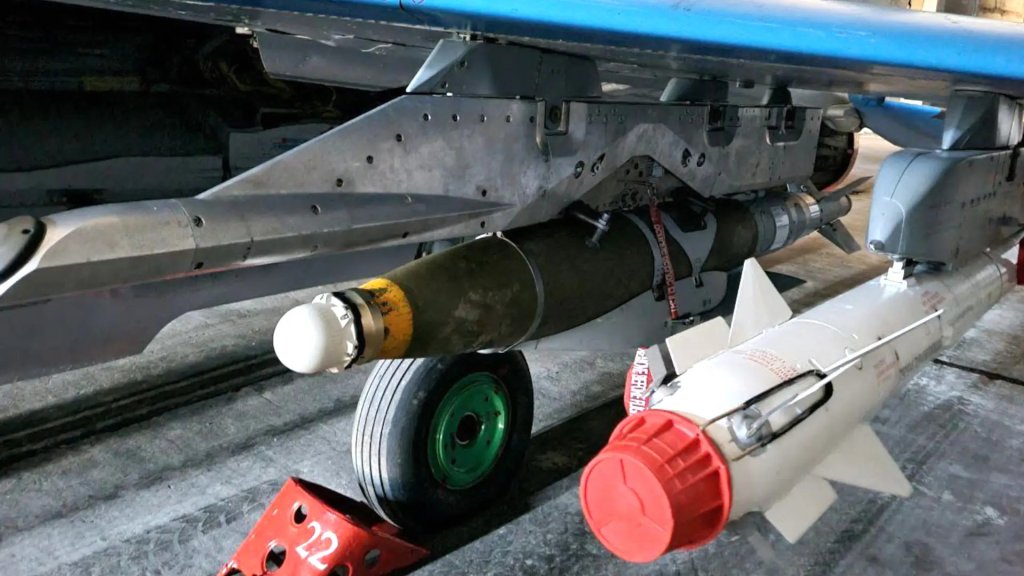
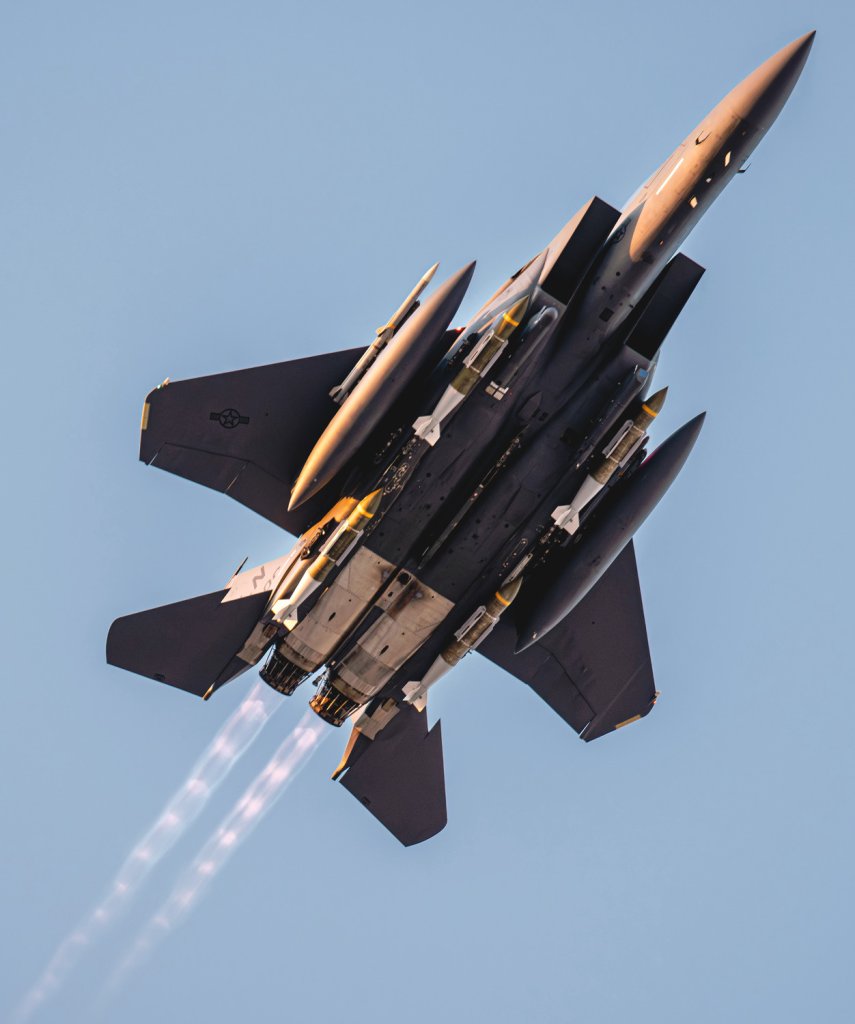
Wingless bunker-busting 2,000-pound-class JDAMs are a staple in the U.S. military’s aerial munition arsenal, and were very publicly employed in large numbers in strikes on Iran earlier this year. Tactical jets and bombers were used to deliver them.
If it has not been put into U.S. service already, a 2,000-pound-class JDAM-ER would offer clear benefits when configured as a bunker buster, in general. Depending on how it is released, a standard JDAM can hit targets up to 15 miles away, according to the U.S. Air Force. With the wing kit, JDAM-ERs have a maximum reach of roughly 45 miles, though the exact range is also dependent on release altitude and flight profile. As noted, being able to release bunker buster bombs further away from the target can help reduce risks to the launch platform.
The additional drag of the JDAM-ER wing kit could also reduce the bomb’s kinetic energy, which is important for bunker-busting. It is possible that the bombs could be programmed to glide to a certain point above the target before diving onto it for maximum effect.
At the same time, the gliding capabilities of a JDAM-ER open the door to additional operational possibilities enabled by low-angle attack profiles. Being able to focus the effects of a bunker buster bomb directly on the side of a structure rather than at steeper angles from the top could offer major benefits.
Furthermore, it would be possible to get the bombs deeper down inside the entrance tunnels and through the sides of other fortified structures, magnifying the warhead’s effectiveness. Lobbing precision-guided bombs into tunnels and cave entrances is already a well-established tactic, and one that can hamper access to underground targets that might otherwise be unreachable. This is something we will come back to in a moment. Striking dams, bridge pylons or even ships in port, among other targets, at shallow angles, would also be a new weaponeering option for heavy bunker buster warheads not often found on cruise missiles.
What further enhancements might emerge as a result of the JDAM-ER bunker-buster testing DTRA has planned remains to be seen. As an aside, the U.S. military also looks set to field a jet-powered derivative, called the GBU-75/B JDAM-LR, which features even greater range, as you can learn more about here.
With all this in mind, DTRA’s budget request notably includes a separate mention of plans “conduct R&D [research and development] in ‘skip’ bombing capability to develop new tactics and weaponeering options,” which could help in “enabling deeper access for penetrating weapons.”
Skip bombing specifically involves releasing munitions in a way so that they bounce off the ground or the surface of a body of water. This sends them further forward on a flatter trajectory that can be beneficial in various scenarios. The core tactic here is decades old now. British bombers famously used bombs specially designed for skip bombing attacks against German dams during World War II. During the war, skip bombing was also heavily used when attacking ships, especially by U.S. military aircraft in the Pacific Theater. Doing this could help ensure more serious hits on a target’s hull near the waterline.

Barnes Wallis – Bouncing Bomb Tests, Dambusters

Skip Bombs (1940-1949)

NEWSREEL: SKIP BOMBING TACTICS – DOCUMENT – ARCHIVE
Improved skip bombing tactics could be paired with new precision-guided bunker busters, including versions of the GBU-64/B, for further increased effect. Being able to penetrate deeper into tunnel entrances and other weak spots on the ground could create additional complications for an opponent trying to dig out key assets afterward.
In recent months, Iran has been observed working to regain access to nuclear and other facilities that the United States and Israel have targeted in the past year or so. This includes sites the U.S. military struck during Operation Midnight Hammer in June 2025. This has contributed to continued questions about the overall effectiveness of the aerial strikes on many of these targets.
It’s also worth noting here that Iranian authorities themselves took steps at various points to cover entrances and ventilation shafts to try to make underground facilities even harder to reach, including by any raiding forces on the ground.
While U.S. bunker-busting strikes on targets in Iran have been front-and-center in recent months, the new capabilities that DTRA is interested in would be applicable in conflict scenarios, as well. There’s something of a global trend, especially among America’s adversaries and competitors, toward more underground and/or hardened facilities. China, Russia, and North Korea, in particular, all have significant and still-expanding networks of subterranean military infrastructure, including air and naval bases, missile silos, command and control bunkers, and more.
This, in turn, has already been driving the U.S. military to pursue other new bunker-busting capabilities. These efforts are known to include a conventional Next Generation Penetrator (NGP) successor to the MOP and a new nuclear bunker buster bomb referred to currently as theNuclear Deterrent System-Air-delivered (NDS-A). The U.S. military has also added a new conventional 5,000-class bunker buster bomb, the GBU-72/B, to its arsenal in recent years.
Bunker-buster versions of the JDAM-ER would offer valuable additional options for U.S. commanders at the lower end of the capability spectrum, if they haven’t already entered service to a degree.
Contact the author: joe@twz.com