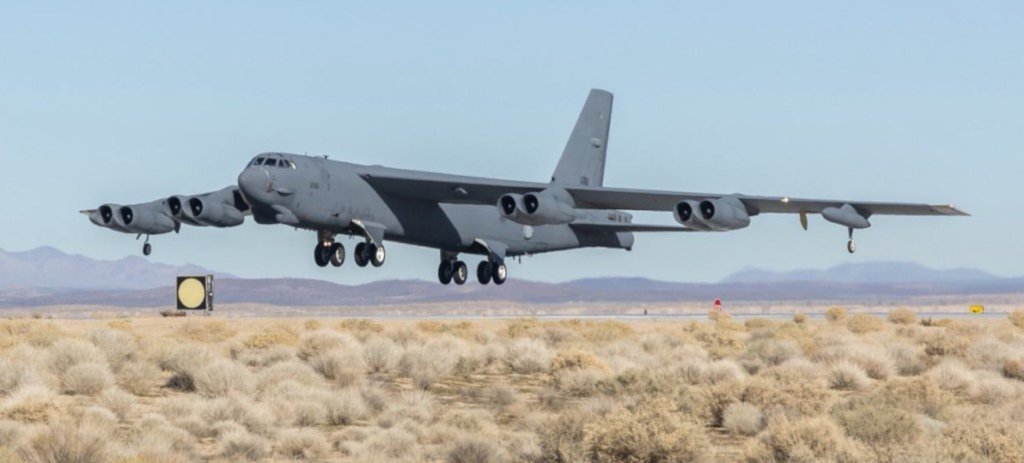
АНУ-ын Агаарын цэргийн хүчний Эдвардс баазад туршилтын нислэг үйлдэж байсан B-52H стратегийн бөмбөгдөгч онгоц хөөрөх үеэрээ осолдож, бүхээгт байсан найман хүн амиа алдсаны дотор Boeing компанийн хоёр ажилтан байсан нь тогтоогджээ.
Даваа гарагт болсон уг эмгэнэлт явдлын үеэр осолдсон агаарын хөлөг нь B-52 бөмбөгдөгч онгоцны Радарыг шинэчлэх хөтөлбөрийн (RMP) хүрээнд туршилтын нислэг үйлдэж байсан юм. Хөтөлбөрийн хүрээнд хуучин AN/APQ-166 радарын системийг орчин үеийн AN/APQ-188 AESA радар буюу идэвхтэй фазын удирдлагатай антенны системээр солихоор төлөвлөж байв. Эдвардс баазын 412-р туршилтын жигүүрийн мэдээлснээр, онгоц хөөрсний дараахан осолдож, галд автсан байна.
Энэхүү осол нь олон жилийн турш хойшлогдож, төсөв нь хэтэрч байсан B-52 бөмбөгдөгч онгоцны шинэчлэлийн томоохон хөтөлбөрүүдэд хүндрэл учруулж болзошгүй байна. АНУ-ын Агаарын цэргийн хүчин B-52 бөмбөгдөгч онгоцны флотыг 2050-иад он хүртэл ашиглахаар төлөвлөж байгаа бөгөөд хөдөлгүүр солих, холбооны систем болон радарын шинэчлэл зэрэг ажлуудыг эрчимтэй явуулж байгаа юм.
Одоогоор ослын шалтгааныг тогтоохоор мөрдөн шалгах ажиллагаа үргэлжилж байгаа бөгөөд баазын нислэгийн үйл ажиллагааг түр хугацаагаар зогсоогоод байна. АНУ-ын Агаарын цэргийн хүчин цөөн тооны B-52 онгоцтой тул ашиглалтын өндөр шаардлагыг хангахын тулд нөөцөд байгаа онгоцнуудыг эргүүлэн ашиглалтад оруулах шаардлагатай болж магадгүй гэсэн таамаг байна.
Дэлгэрэнгүйг эх сурвалжаас харах
↓Эх сурвалжийг нээх ↓
There are so many questions to be answered about what led to yesterday’s fatal mishap involving a B-52H bomber at Edwards Air Force Base. The crash was tragic on a level the base, which sits at the center of America’s flight testing ecosystem, has not experienced, at least to our knowledge, for 75 years. The human impact here is just hard to quantify at this time. At the same time, there will be a major developmental impact, too, especially when it comes to work that is being done to modernize the B-52. This is a constellation of programs that are seen as vital to U.S. national security, and are also already running far behind schedule and over budget.
At this time, we do know that the aircraft in question was being used to support the Radar Modernization Program (RMP), and its loss will have ramifications for that effort. The RMP has already suffered years of delays and major cost growth, the latter of which triggered a deep, legally mandated review. However, in the past year, the U.S. Air Force has been talking more positively about progress on this critical upgrade, as well as other parts of a larger B-52 modernization effort that have faced their own hurdles.
“It was a B-52 that was on initial takeoff, supporting the Radar Modernization Program,” Air Force Col. James Hayes, Deputy Commander of the 412th Test Wing at Edwards, said at a brief press conference yesterday. “It was a local test sortie. It took off, and immediately after takeoff, crashed and burst into flames.”
The 412th is the main unit at Edwards. As noted, the base serves as the Air Force’s main test and evaluation hub.
“After reviewing the footage of the crash, it was deemed that this was an unrecoverable crash and unsurvivable,” Col. Hayes added. The B-52 had “a mixed crew of military, government civilians, and government contractors supporting this test mission.”
“Right now, our thoughts and prayers are with the families of those that lost their loved ones,” he also stressed. “This is a tragedy.”
When reached by TWZ for comment today, Boeing reiterated a brief statement it made yesterday that confirmed two of its employees died in the crash. The company’s full statement is as follows:
“We extend our deepest condolences to the loved ones of the eight crew members who lost their lives in the B-52 crash at Edwards Air Force Base, California. It is with great sadness that we confirm two Boeing employees were among those on board. We are in contact with their families and are offering support.”
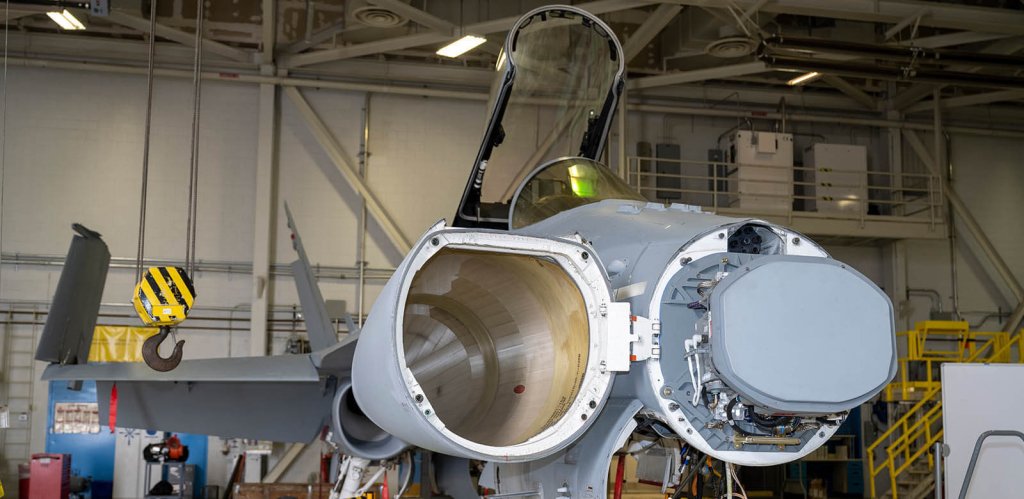
Boeing, the original manufacturer of the B-52, is serving as the prime integrator for the RMP. Raytheon is supplying the new AN/APQ-188 active electronically-scanned array (AESA) radar, which is derived primarily from the AN/APG-79. In the United States, versions of the AN/APG-79 are in service today on U.S. Navy F/A-18E/F Super Hornets and all EA-18G Growlers, as well as U.S. Marine Corps F/A-18A-D Hornets. The AN/APG-82 used on Air Force F-15E Strike Eagles and F-15EX Eagle IIs also builds on the AN/APG-79. The AN/APQ-188 will replace the mechanically-scanned AN/APQ-166 found on B-52s today.
The RMP is one of many major upgrades planned for the Air Force’s entire fleet of 76 B-52s in the coming years. The bombers are also set to get all-new engines, improved communication suites, and more. The changes will be so substantial inside and out that the designation of the bombers will switch from B-52H to B-52J in the process.
“It is too early to tell,” told TWZ today when asked about potential impacts to the RMP.
We have also reached out to Raytheon.
The publicly stated plan for the RMP has called for the integration of the AN/APQ-188 radar onto two B-52s to support initial testing. Modification of those bombers began in Fiscal Year 2023, and the first example with the new radar touched down at Edwards in December 2025. Air Force budget documents say the second radar test B-52 is expected to be ready some time in Fiscal Year 2026, which began on October 1, 2025. Whether that milestone has already been reached is unclear.
It is also not known how many AN/APQ-188s may be available at all at present. “The remaining test-phase radars are expected to be delivered through the summer of 2024,” Raytheon said in a press release back in 2023.
As noted, the RMP has already suffered significant delays. Under the original program schedule, flight testing was expected to start in 2024. The initial goal was for AN/APQ-188-equipped B-52s to begin flying operational sorties in 2027. As it stands now, the Engineering and Manufacturing Development (EMD) phase of the program is expected to run into the middle of 2029, with initial operational capability then coming in 2030.
These delays have also come along with substantial cost growth. In 2021, the estimated price tag for development of the AN/APQ-188 and integration of those radars onto the Air Force’s full fleet of 76 B-52s was pegged at nearly $2.4 billion, according to the Government Accountability Office (GAO). By 2023, the RMP’s costs had risen by 12.6 percent, per GAO. The program was eventually subjected to an extensive legally required review of its requirements and cost targets, which led to a scaling back of planned capabilities, at least initially.
“Part of what we did to control cost is to work at what are the main things that we need on this radar? As you may recall, we’re buying a radar that is largely a F-18 Hornet radar with some small modifications. We did that intentionally because that is what was on the market at the time,” Air Force Lt. Gen. Andrew Gebara, Deputy Chief of Staff for Strategic Deterrence and Nuclear Integration, explained in August 2025. “It would actually cost us more if we asked [a contractor] to design the new radar.”
Gebara’s remarks came during a virtual talk hosted by the Air & Space Forces Association’s Mitchell Institute for Aerospace Studies.
“Having said that, it doesn’t mean that we need everything on that radar that the Hornet had on it,” he continued. “We have a certain number of minimum things that we need to do to be able to do our B-52 mission. And so part of the cost saving [review] was looking at what are those things, to make sure that we’re prioritizing precious dollars on things that we need.”
Gebara said at that time that the revised RMP plan still kept the door open for “opportunities for growth in the future, if it comes to that.”
The AN/APQ-188 is still set to provide essential new capabilities, in part just by being a more modern AESA design. As TWZ has written in the past:
“In general, AESA radars offer greater range, fidelity, and resistance to countermeasures, as well as the ability to provide better overall general situational awareness, compared to mechanically scanned types. Increasingly advanced AESAs bring additional capabilities, includingelectronic warfare and communications support.”
“For the B-52, any new multi-mode AESA will improve the bomber’s target acquisition and identification capabilities, including when used together with targeting pods available for the bombers now. New radars for the bombers will also be helpful when it comes to guiding networked weapons over long distances to their targets and could provide a secondary ground moving target indicator (GMTI) and synthetic aperture radar surveillance capabilities. The radar upgrade could help defend B-52s from air-to-air threats, including through improved detection of incoming hostile aircraft.”
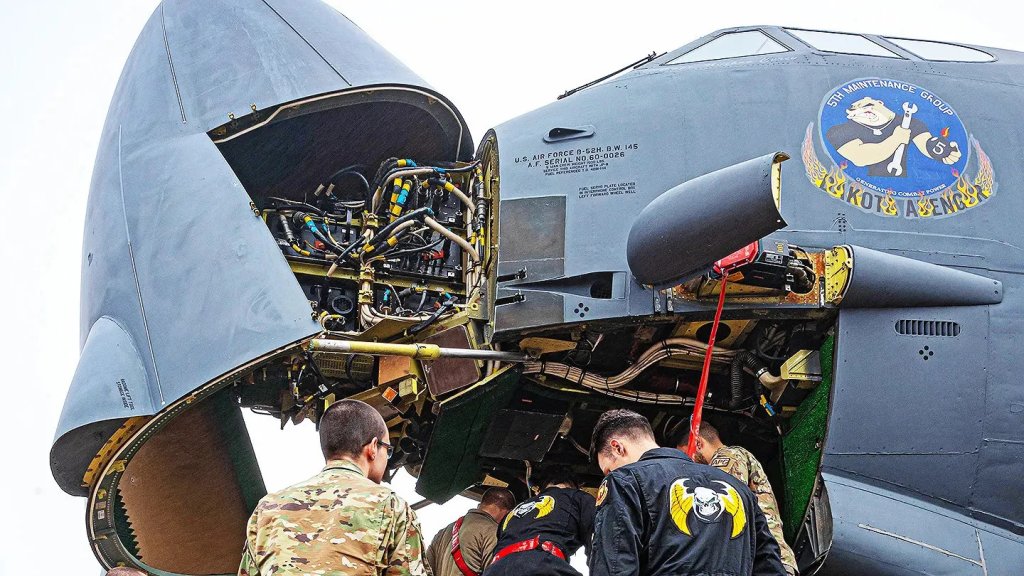
“Boeing has already looked at some schedule improvement that we’ve seen,” Air Force Gen. Dale White, the service’s Direct Reporting Portfolio Manager for Critical Major Weapon Systems, also told TWZ and others more recently at a roundtable at the Air & Space Forces Association’s (AFA) annual Warfare Symposium in February. White was speaking at the time collectively about progress on the RMP and the Commercial Engine Replacement Program (CERP) for the B-52 fleet.
At that time, Gen. White also highlighted how the relatively small size of the B-52 fleet, combined with the operational demands placed on it, had created additional challenges for modernizing the bombers. The B-52s are in high demand to support conventional combat operations, as underscored by their heavy use in the recent conflict with Iran. A portion of the fleet is also a key element of the air leg of America’s nuclear deterrent triad, which imposes additional hard operational requirements for available aircraft.
“The challenge with B-52 that I think everybody forgets, it’s such a small fleet that has such a tremendous requirement in terms of readiness,” White said. “You’ve got to have a certain number on the ramp. That’s a requirement.”
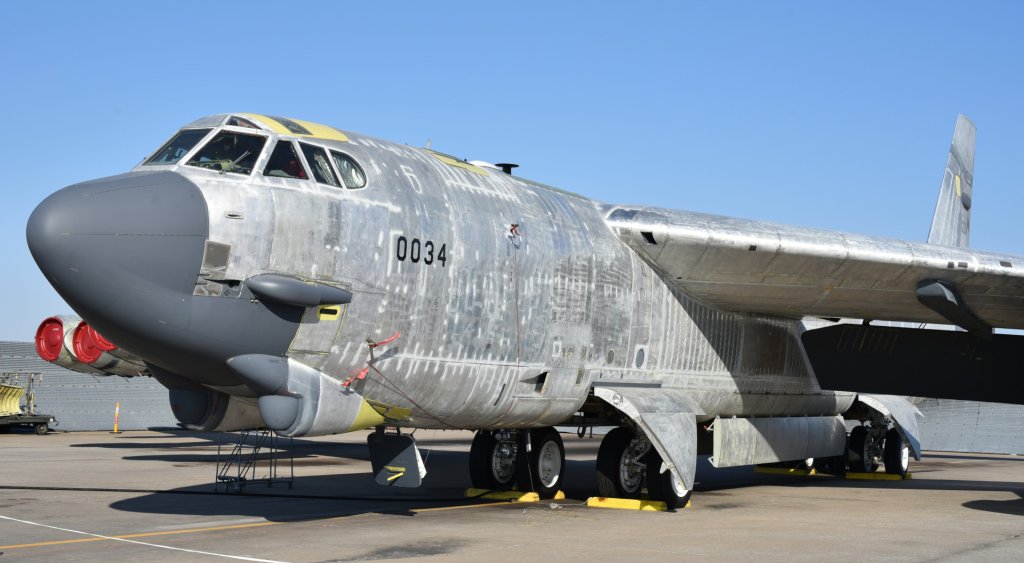
With the B-52 fleet expected to fly into the 2050s, it is extremely likely that the Air Force will move to regenerate a bomber from storage to replace the one lost yesterday, just to meet general operational demands. That is typically a weeks-long process, at best, for an aircraft of this type and size.
Since 2015, the Air Force has returned two other B-52s to service to make up for losses. One of these aircraft replaced a B-52 that crashed and burned at Andersen Air Force Base on Guam in 2016. The other one took the place of a bomber that was totaled on the ground when anelectrical fire broke out during routine maintenance at Barksdale Air Force Base in Louisiana in 2015. Thankfully, there were no fatalities in either of those mishaps.
With CERP and the other modernization efforts underway, there is high demand for resources to support B-52 test and evaluation work overall. This is reflected in a nearly tenfold year-over-year increase in the planned budgeting for B-52 test aircraft asset support at Edwards. The Air Force received just over $1.5 million to help pay for “the test aircraft, manpower, Bomber Modular Data Acquisition System (BMDAS), and facilities at the Air Force Test Center” in Fiscal Year 2026, according to official budget documents. The service is now seeking nearly $11 million in this same line item for the next fiscal cycle.
In the meantime, as mentioned, the Air Force has rightfully made clear that its immediate priorities following yesterday’s B-52 crash are engaging with the families of those who perished and working on the investigation, which could take months to complete. Edwards has also at least shut down flight operations today, primarily due to the state of the runway following the mishap.
The full scale and scope of the impacts to the RMP from yesterday’s loss remain to be seen.
Contact the author: joe@twz.com
The post B-52 Involved In Tragic Crash Was Heading Out On Radar Test Sortie appeared first on The War Zone.